In a recent post, I shared the results of some experiments we’re doing with smooth sumac management. Here, I’ll cover some recent experimentation with roughleaf dogwood (Cornus drummundii), western snowberry (Symphoricarpus occidentalis), and cattle grazing. For context, in both experiments we used variations on what we’re calling “open gate rotational grazing”, which you can read about here, if you’re interested.
I’ve long known that cattle like to browse on various species of woody plants. For example, we have numerous white mulberry trees (Morus alba) at the Platte River Prairies that are probably 20-30 years old but never get taller than about 15 inches because cattle graze any new growth that appears. On the flip side, cattle seem mostly uninterested in Siberian elms (Ulmus pumila), which is a real shame.
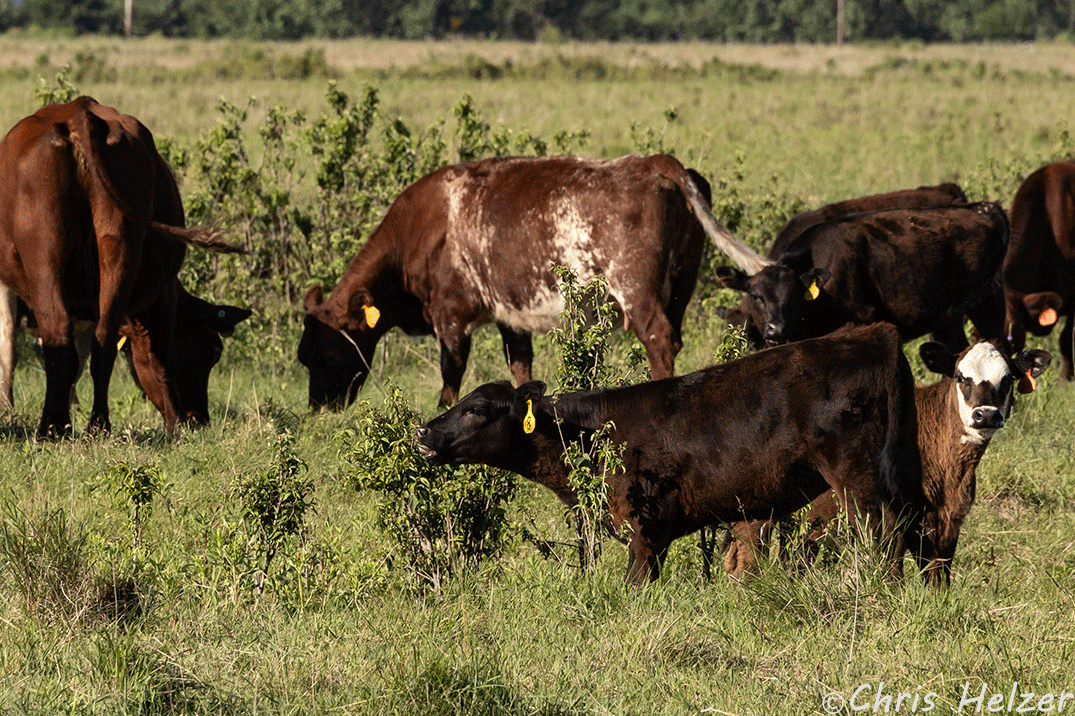
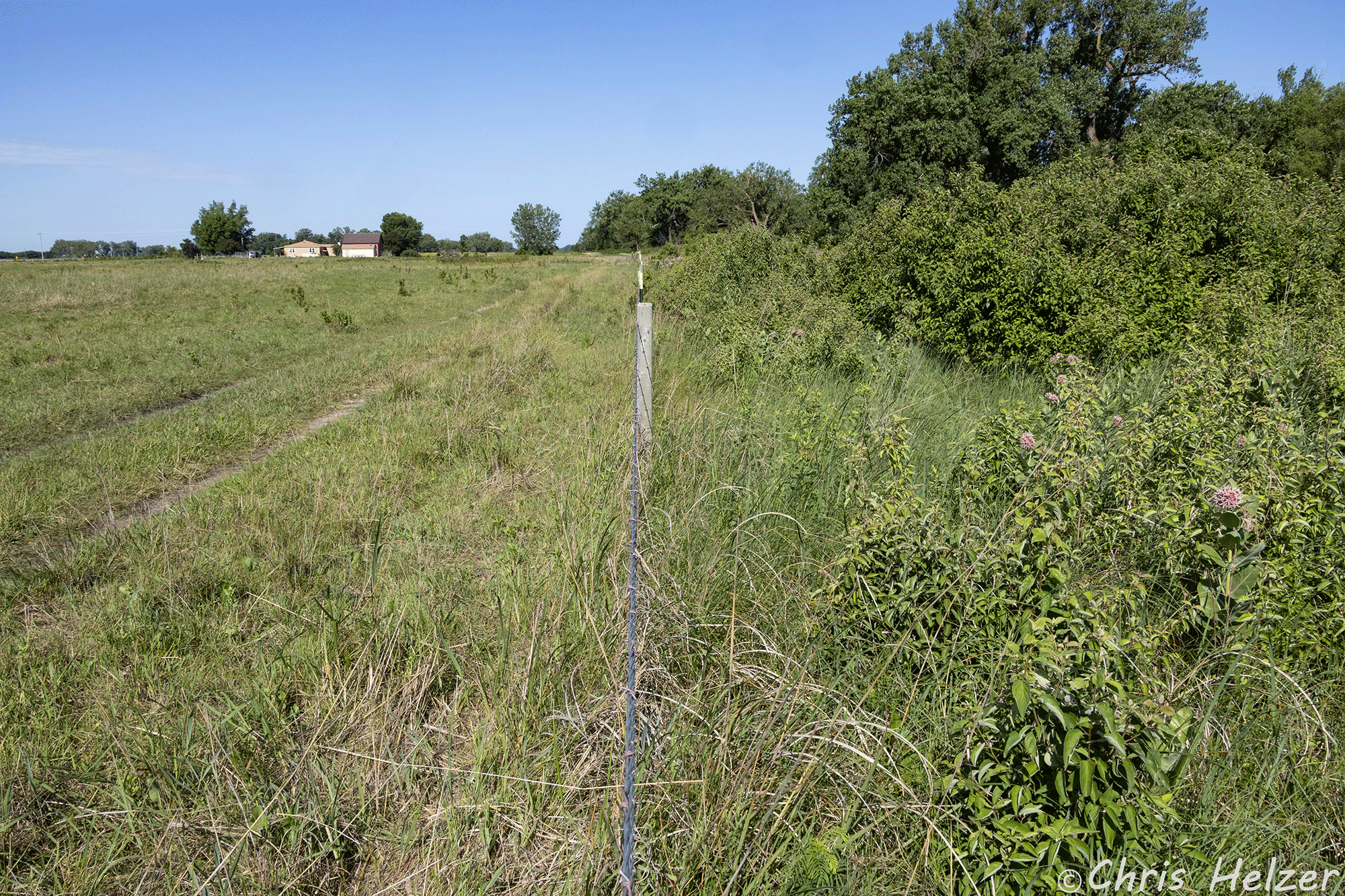
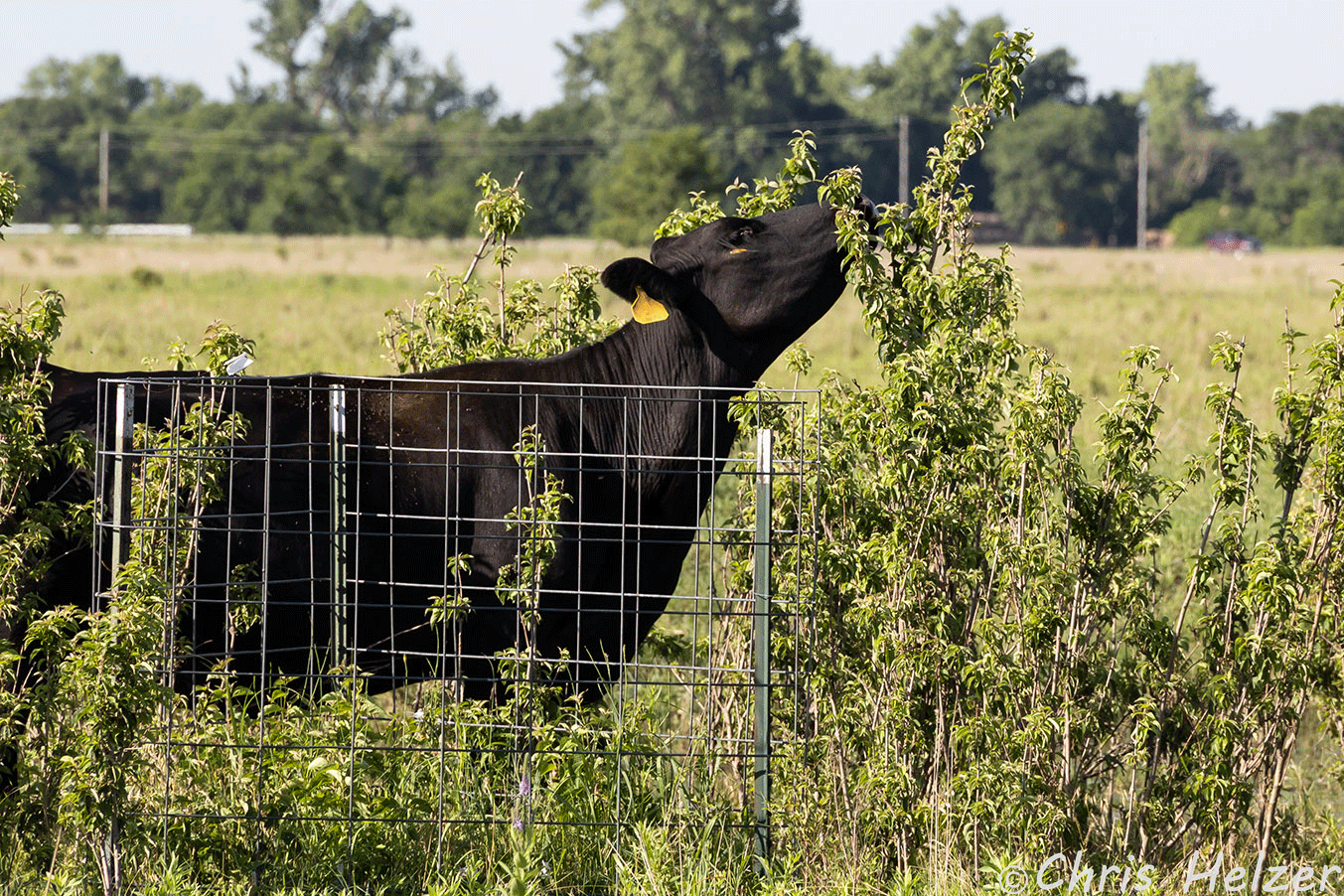
It’s easy to see that cattle sometimes graze dogwood just by looking at fencelines. The difference in height and density of dogwood between the grazed and ungrazed side of a fence is often dramatic. We’ve also seen dogwood grow very quickly inside small grazing exclosures we’ve built for various research/evaluation purposes. Last year, I decided it was time to learn more.
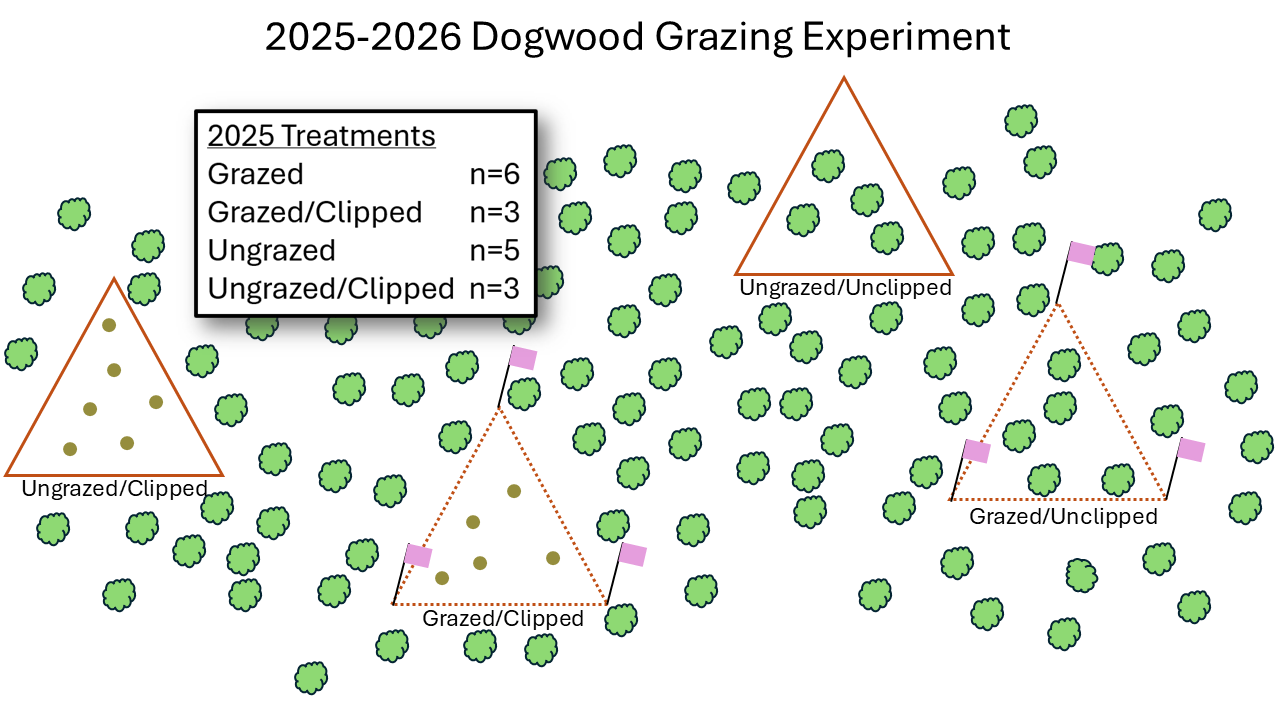
We wanted to see how grazing alone affected dogwood, but also how effective it might be to mow (or burn) dogwood prior to grazing. As a result, we set up a total of four treatments, which included combinations of grazing, exclusion of grazing, and clipping. All of the clipping took place in April, 2025 and cattle were introduced to the pasture about a month later.
In the figure below, you can see an illustration of our four treatments. Two of the treatments were contained within triangular grazing exclosures (clipped and unclipped) and two were set up in plots of the same size, but without any cattle panels to exclude grazing. The clipped stems were cut off at about 1 inch (2.5 cm) heights.
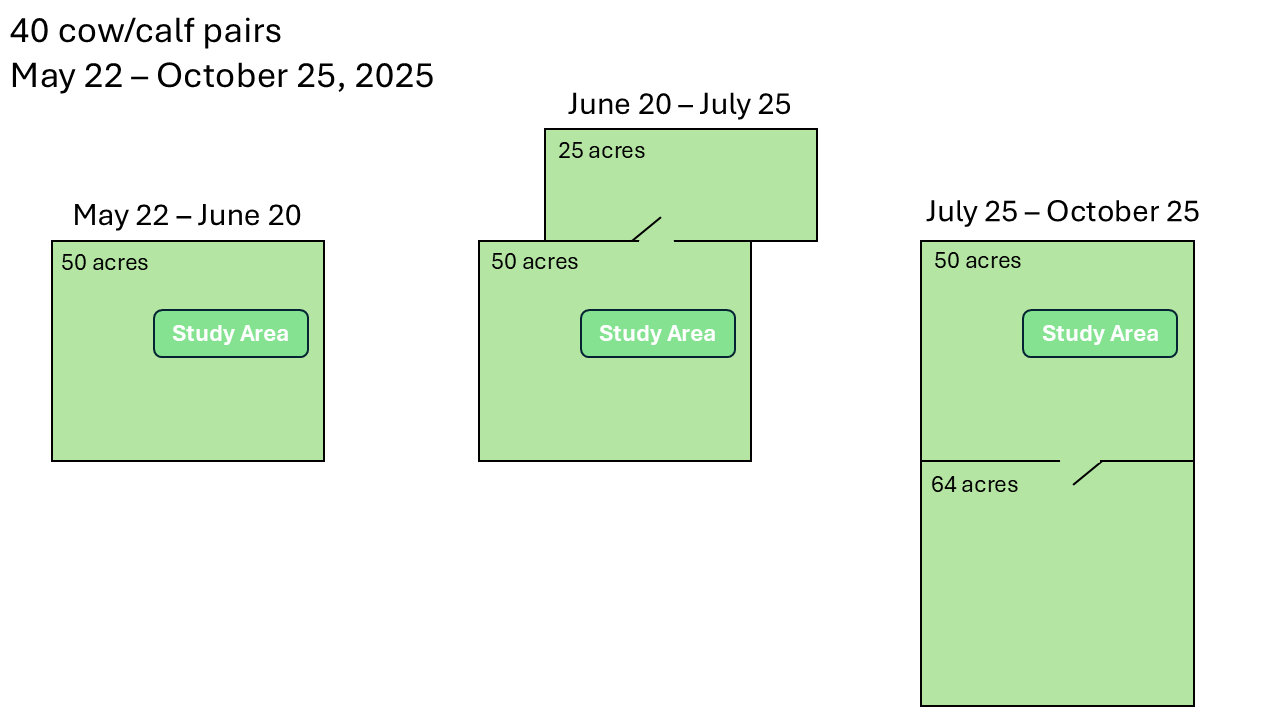
Forty cow/calf pairs had access to the pasture with our study plots in them between May 22 and October 25, 2025. As the season progressed, we opened gates to adjacent pastures to give cattle additional areas to graze. Cattle did use those additional areas, but continued to graze the initial pasture pretty aggressively throughout the growing season. This means dogwood stems were repeatedly grazed for the entire period as well. The pasture with the study plots was not grazed in 2026.
It’s important to recognize that this is a pilot study with very little replication. The point was to see if there are apparent patterns that we could later follow up on with more rigorous science. Keep that in mind as you read this.
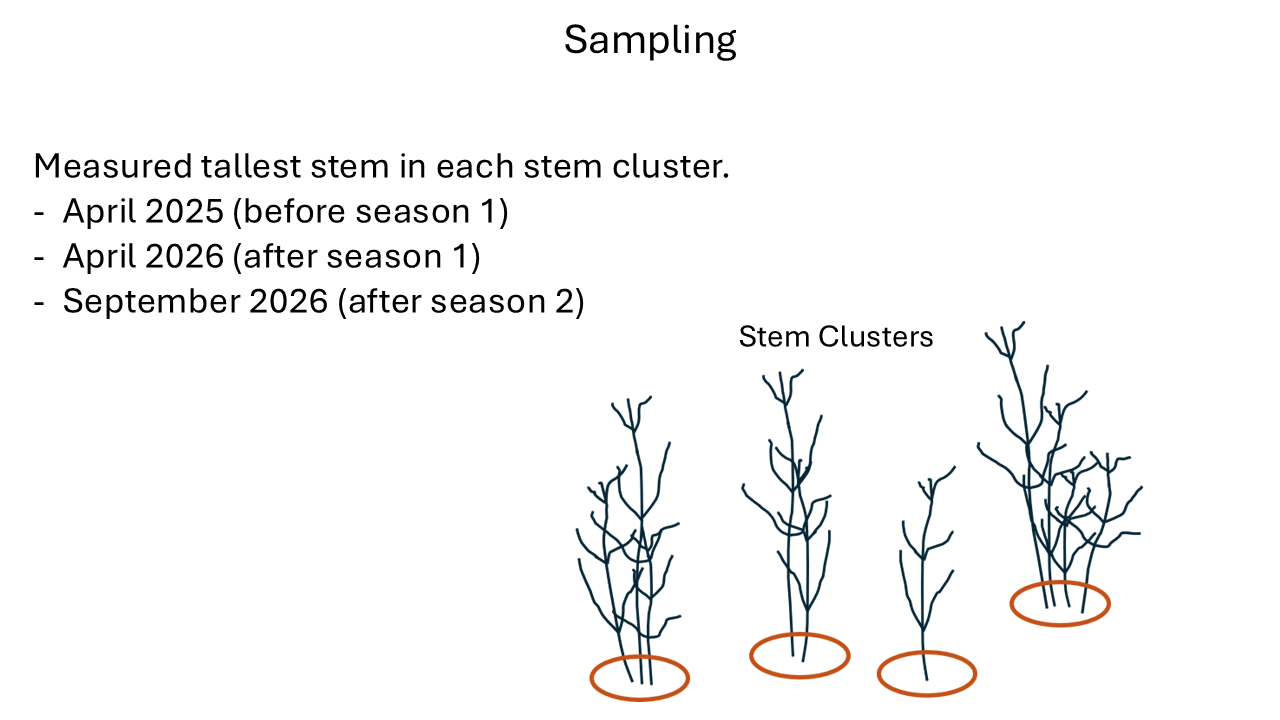
I measured the heights of dogwood stems three times. The first time was in April 2025, before we clipped or grazed any stems. I measured stem heights again in April 2026, which captured the results of the 2025 season. Finally, I collected data in September 2026, near the end of the 2026 growing season, during which there was no grazing or clipping.
The dogwood had all been burned and or otherwise disturbed in the past, which meant many of the stems were in clusters. Those clusters likely arose from plants being top-killed and then producing multiple suckers. I debated the best way to capture/lump data from those clusters of stems and eventually decided to just measure the tallest stem in each cluster. I’m not saying it’s the best way to go but it’s the way we went. For what we were trying to learn, I think it worked just fine.
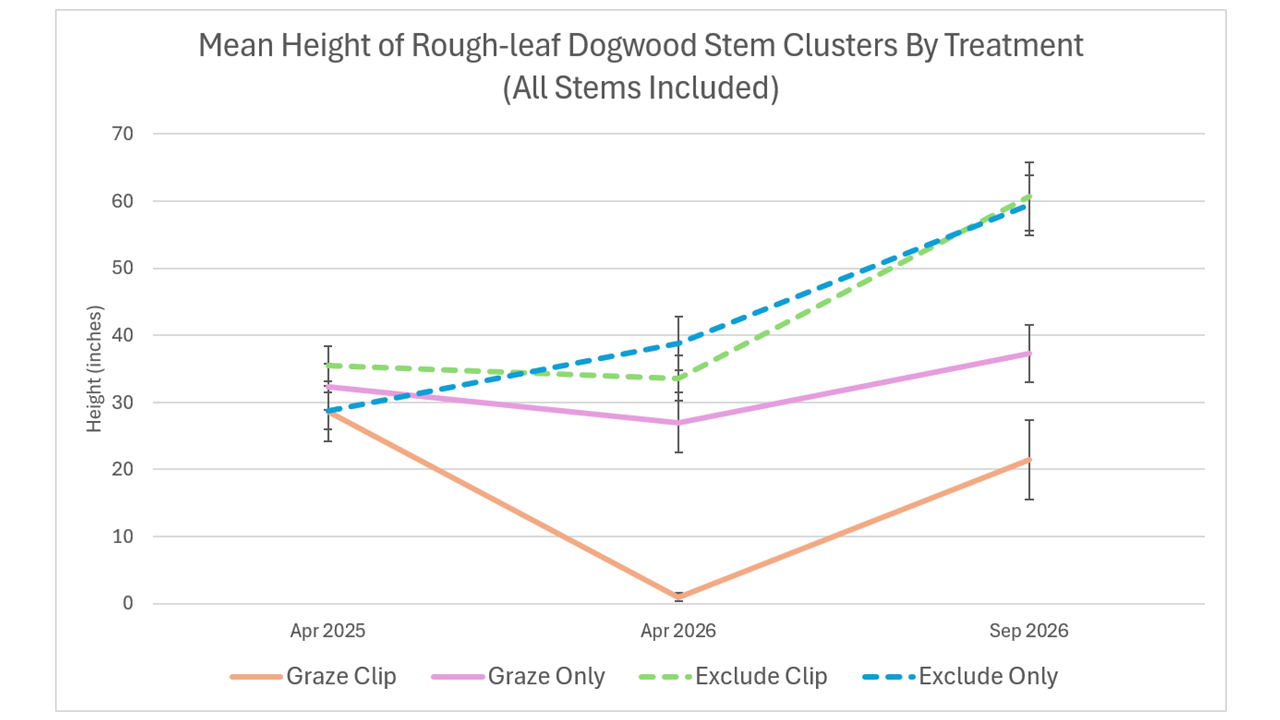
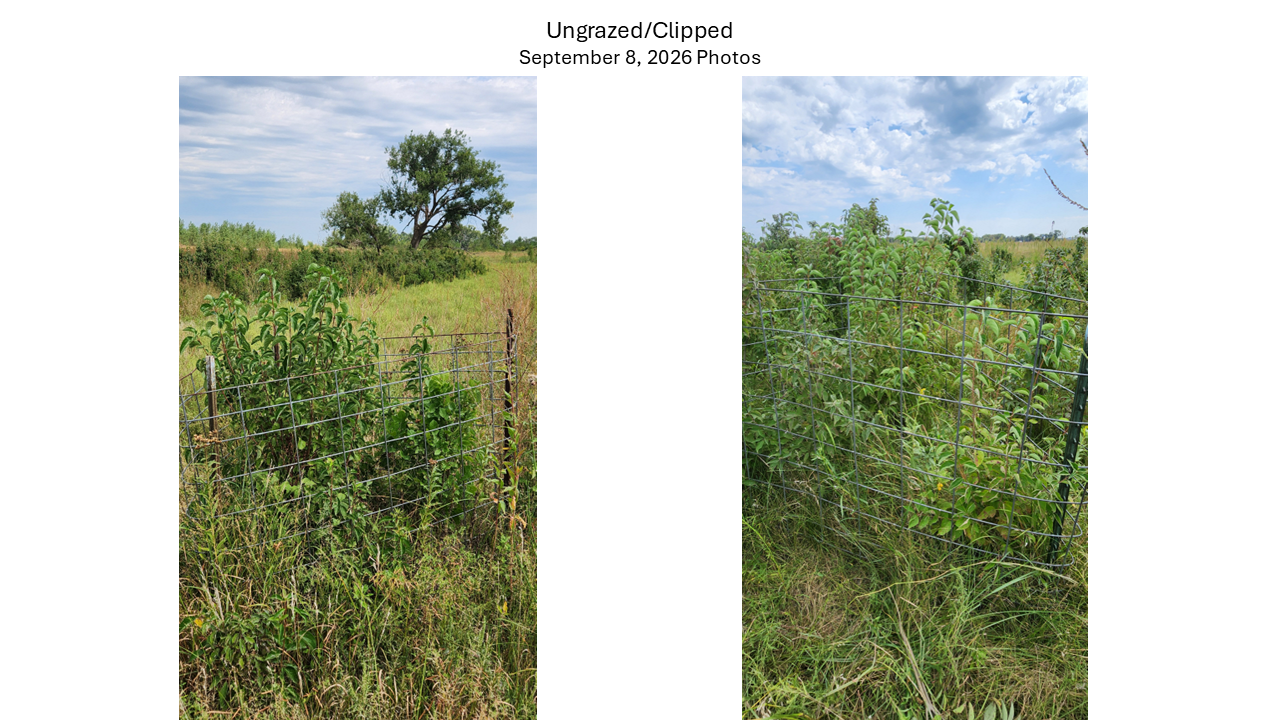
Below is a graph showing the heights of the dogwood clusters at the three sampling times. The solid lines show data from grazed dogwood stems and the dotted lines are those in exclosures. One telling result is that the ungrazed dogwood stems we clipped to the ground recovered very quickly – almost catching up with unclipped stems after one year and matching their height after two. Mowing dogwood in April, it would seem, is not a very effective suppression strategy if used in isolation.
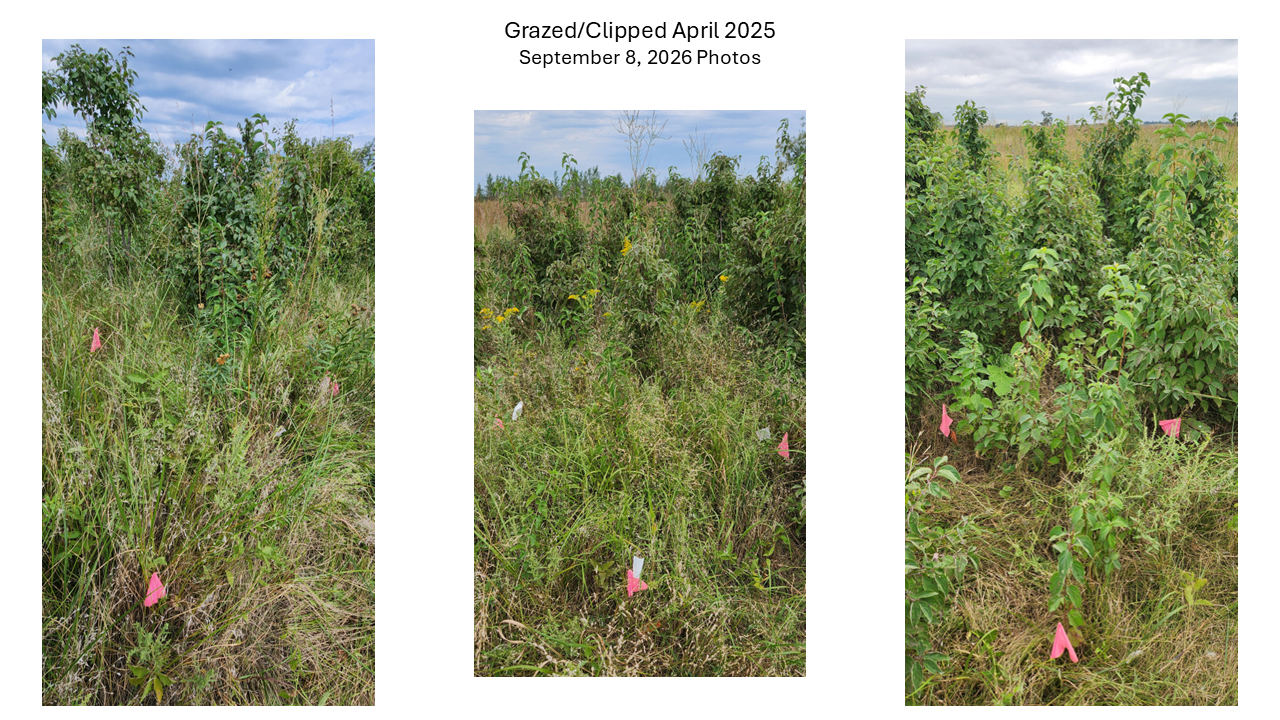
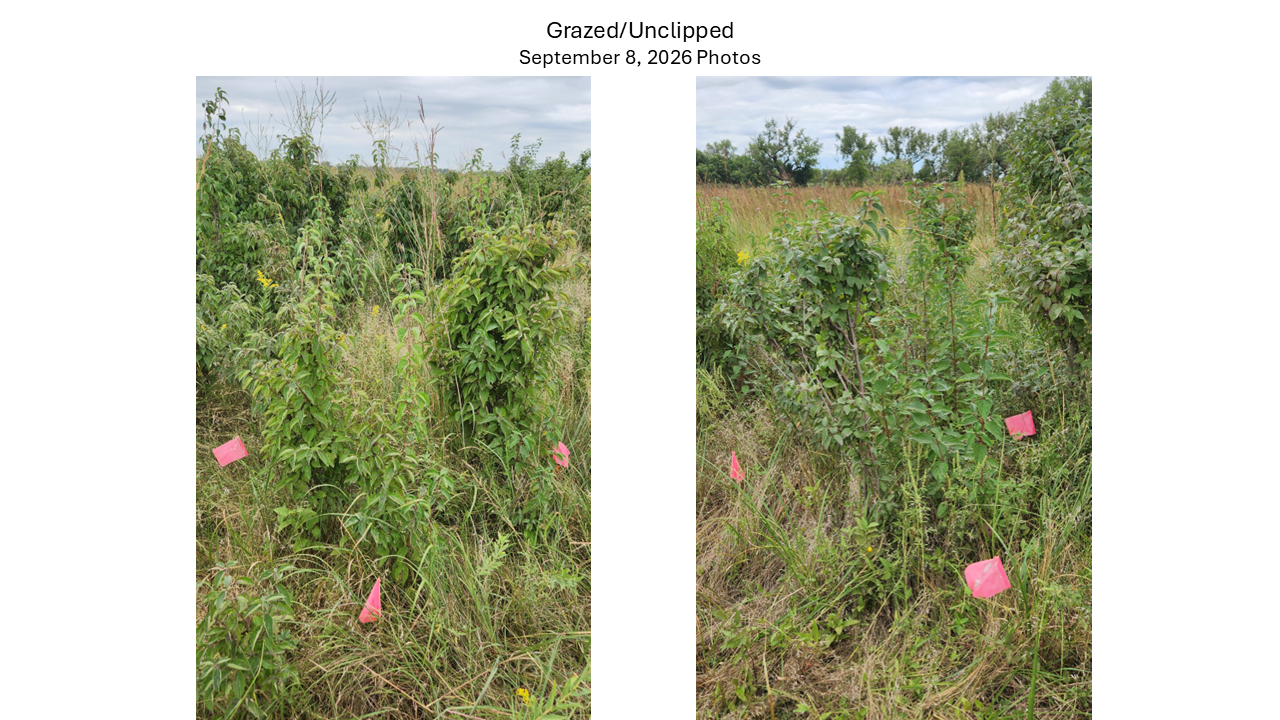
Grazing without clipping first definitely slowed the growth of dogwood. The average height of stem clusters decreased slightly during the grazing year and then grew much more slowly than ungrazed stems the following year, finishing at just over half the height of dogwood stems that weren’t grazed. Stems that were both clipped and grazed remained very short throughout 2026 and then started to recover in 2026, but ended at about 1/3 the height of ungrazed stems.
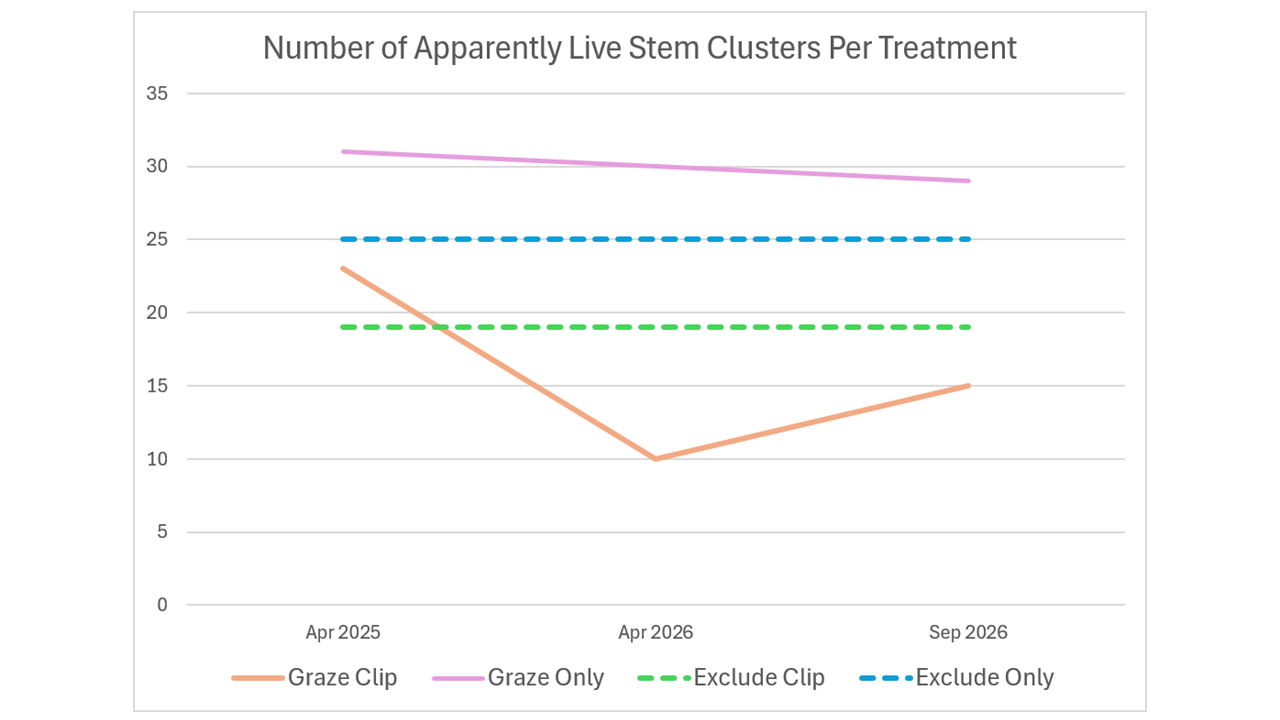
An unexpected bonus from clipping and grazing was that a number of dogwood stems apparently died off after treatment (see below). Less than half of the stems clipped in April 2025 and then grazed all season showed any green growth in April 2026, though several did end up recovering by the end of 2026. Even the unclipped grazed stems showed a little mortality.
The stem mortality meant there were two ways to analyze the data in the first graph. What that graph shows is the average height of stems including those stems that seemed to have died. When I removed the dead stems, the results shifted only slightly so I am not showing you that second graph. If you’re really curious, shoot me an email and I’ll send it to you as a special gift.
Below are some photos of each of the treatments to let you visualize the results. All photos were taken in September, 2026 after a year of no grazing (which followed the grazing year of 2025). The plots are marked by either pink flags or by the exclosure fence.
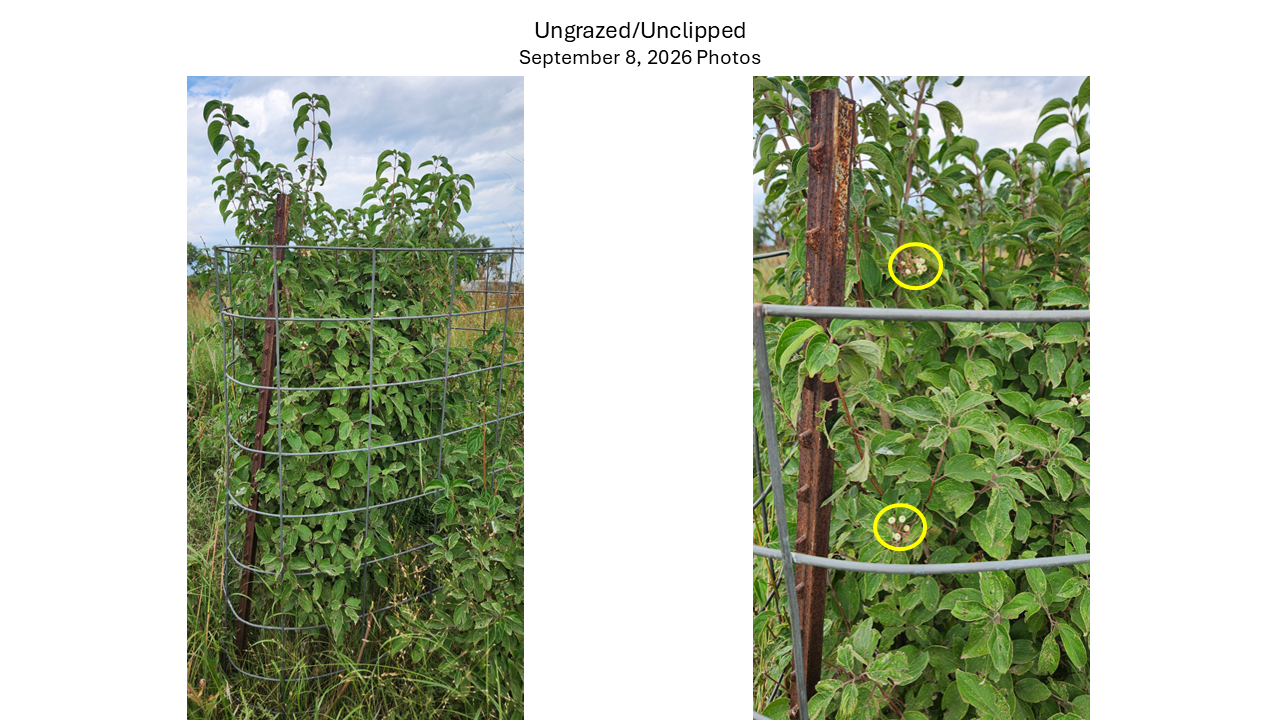
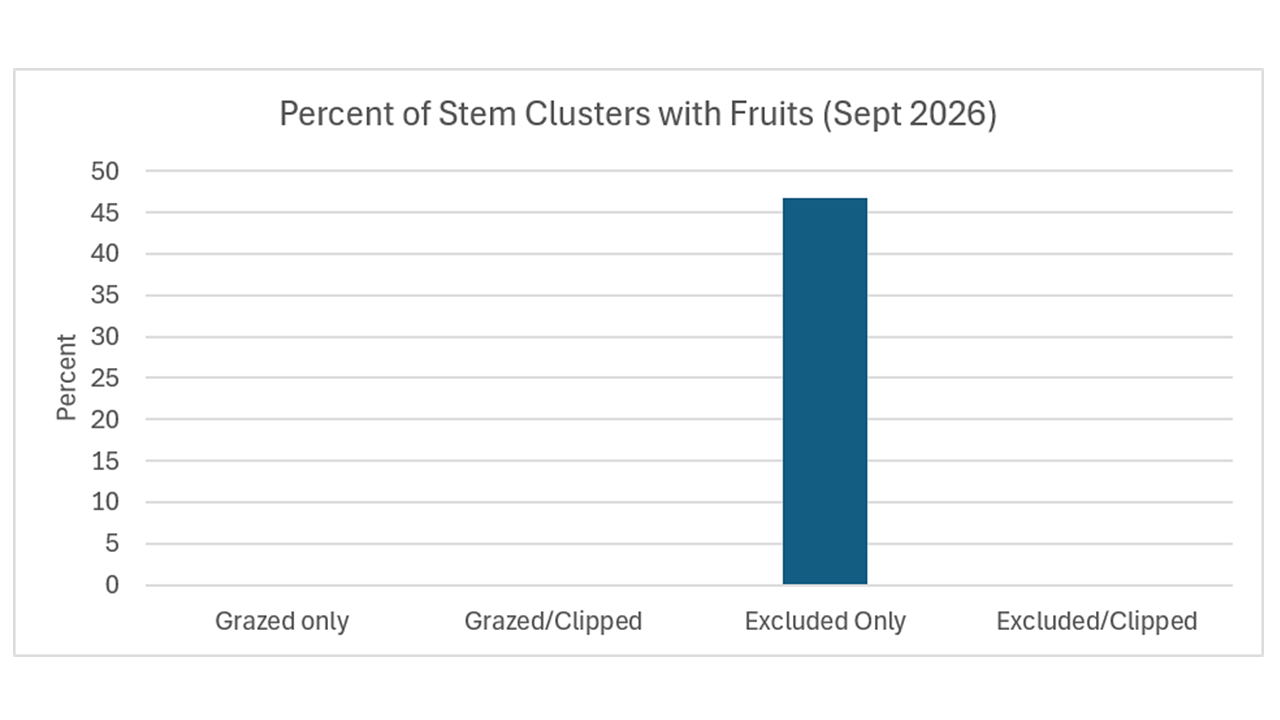
The graph below is mostly performative but does illustrate an important story. None of the dogwood stems that were either clipped or grazed (or both) produced any fruits in 2026. In contrast, about half of the stems that were both ungrazed and unclipped produced fruits. This is, of course, important in terms of their ability to spread more widely across the landscape.
To wrap up what we’ve learned so far from this dogwood grazing work, I think it’s clear cattle grazing helped suppress dogwood growth. The combination of clipping and grazing really did a number on dogwood height, but also (based mostly on observation, not data) on the density and vigor of the plants. Those stems that did grow back in 2026 after being clipped and grazed in 2025 were mostly very skinny, as well as short. They blended into the surrounding vegetation in a way that probably had minimal impacts on the habitat requirements of most wildlife species.
That means that clipping and grazing resulted in at least two years of strong suppression of dogwood. In 2026, we did some larger scale mowing ahead of grazing and saw similar results (all the mowed plants stayed short for the whole season because of repeated grazing). I assume burning plus grazing would produce similar results but we didn’t test that here.
One big question, of course, is whether you’d see similar results with other grazing approaches – especially those with lower stock density and/or shorter grazing periods. I don’t know the answer to that yet. I also assume that there’s a threshold of dogwood abundance in a prairie, beyond which cattle wouldn’t graze them all. That’s another big question I can’t yet answer.
There is some evidence that the dogwood grazing we saw was not just because we happened to have a herd of cattle who liked dogwood. I know of two other sites in our Platte River Prairies where patch-burn grazing or approaches similar to open-gate grazing have kept dogwood clones suppressed for many years. Those two sites have herds owned by different people and that represent a mixture of cattle breeds.
Lots of questions remain, but I’m excited by our early results. The vast majority of prairies in Nebraska – and throughout the Great Plains – are managed with cattle grazing. That gives us a lot of potential to experiment with how to use those cattle to help us manage our increasingly-shrubby prairies. More to come.
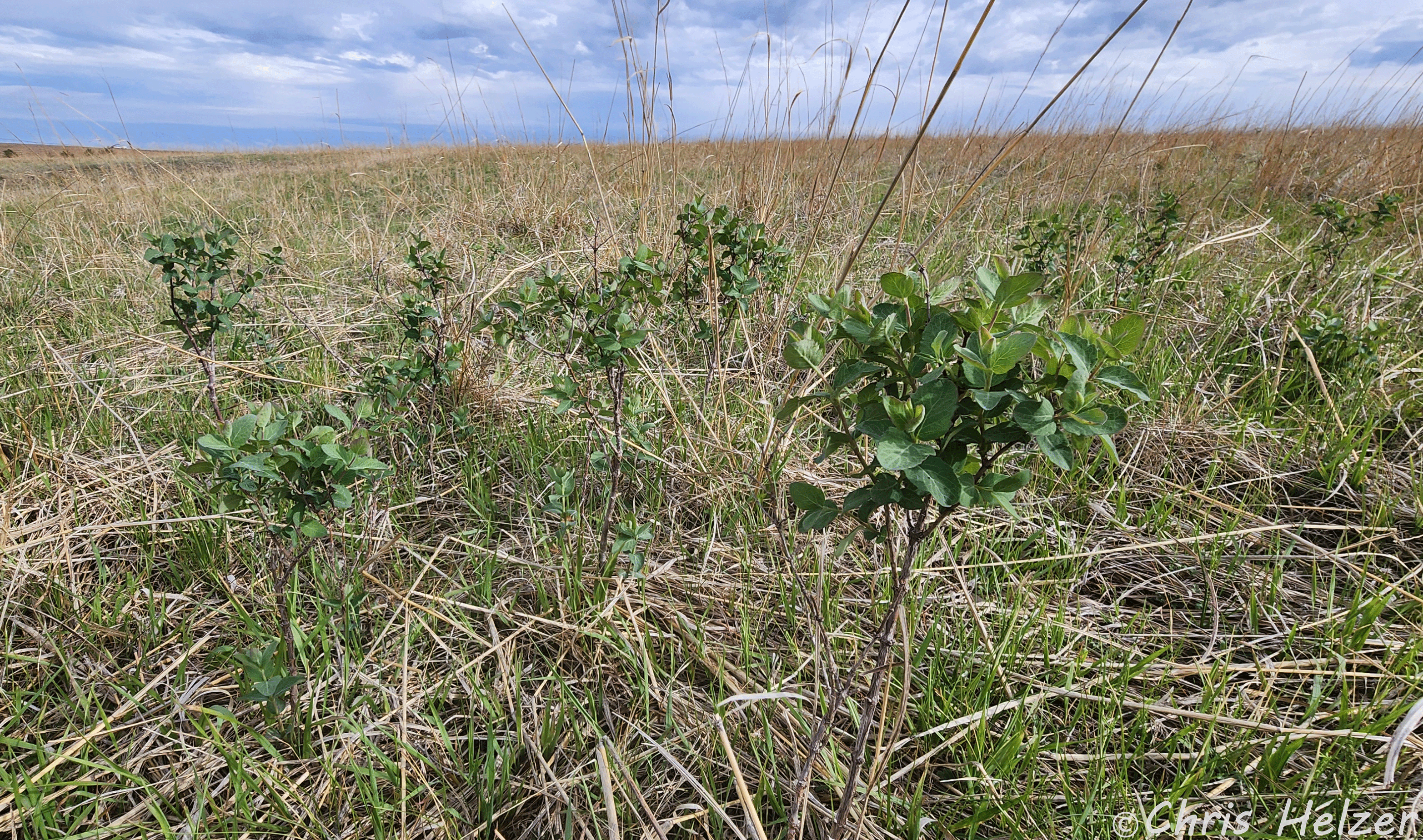
Switching over the western snowberry, here’s a very quick summary of an initial attempt to see if an approach similar to what we used with dogwood would suppress western snowberry. This experiment took place on my family prairie, where we have a lot of western snowberry, though the colonies stay relatively short and well-dispersed (maybe because of our grazing?)
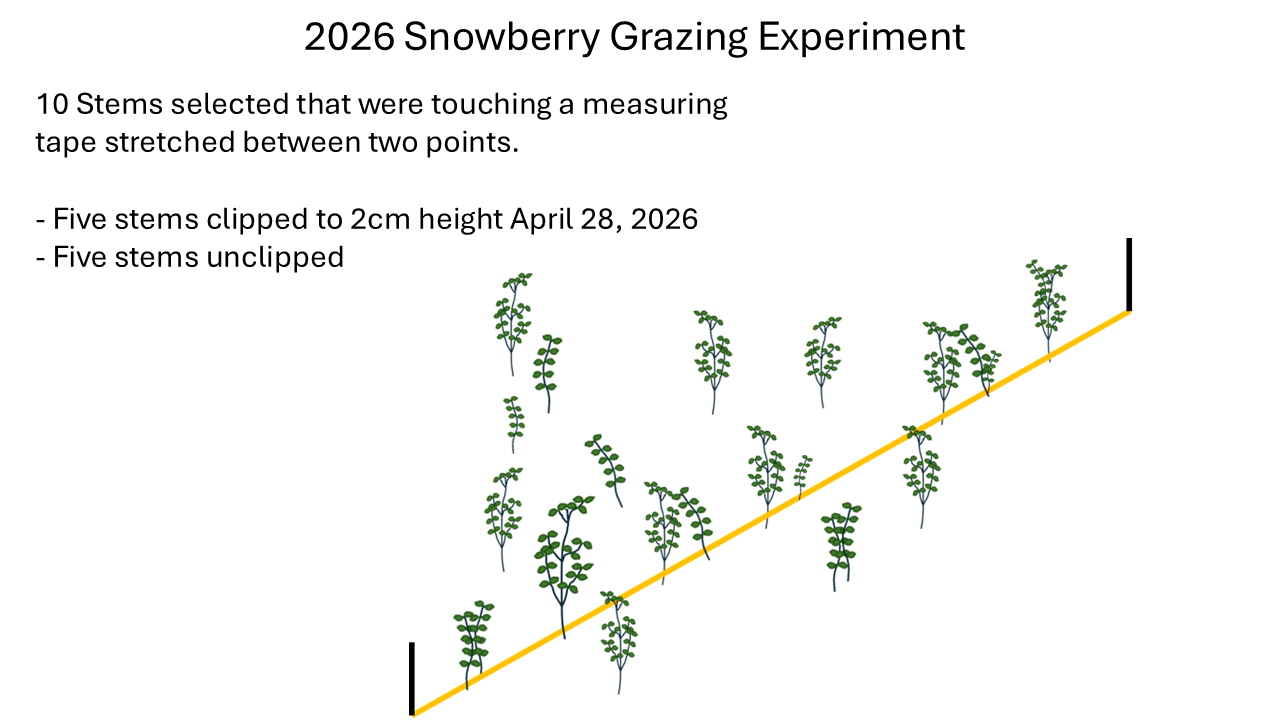
This was a very quick-and-dirty experiment. In April, 2026, I found a patch of snowberry, laid out a measuring tape, and identified 10 plants that were touching the tape. I clipped five of them to the ground and left the other five alone. I then marked the ends of the transects so I could precisely recreate it again at the end of the grazing season. The site was then grazed in a very similar way to what was described above for the dogwood experiment (details below).
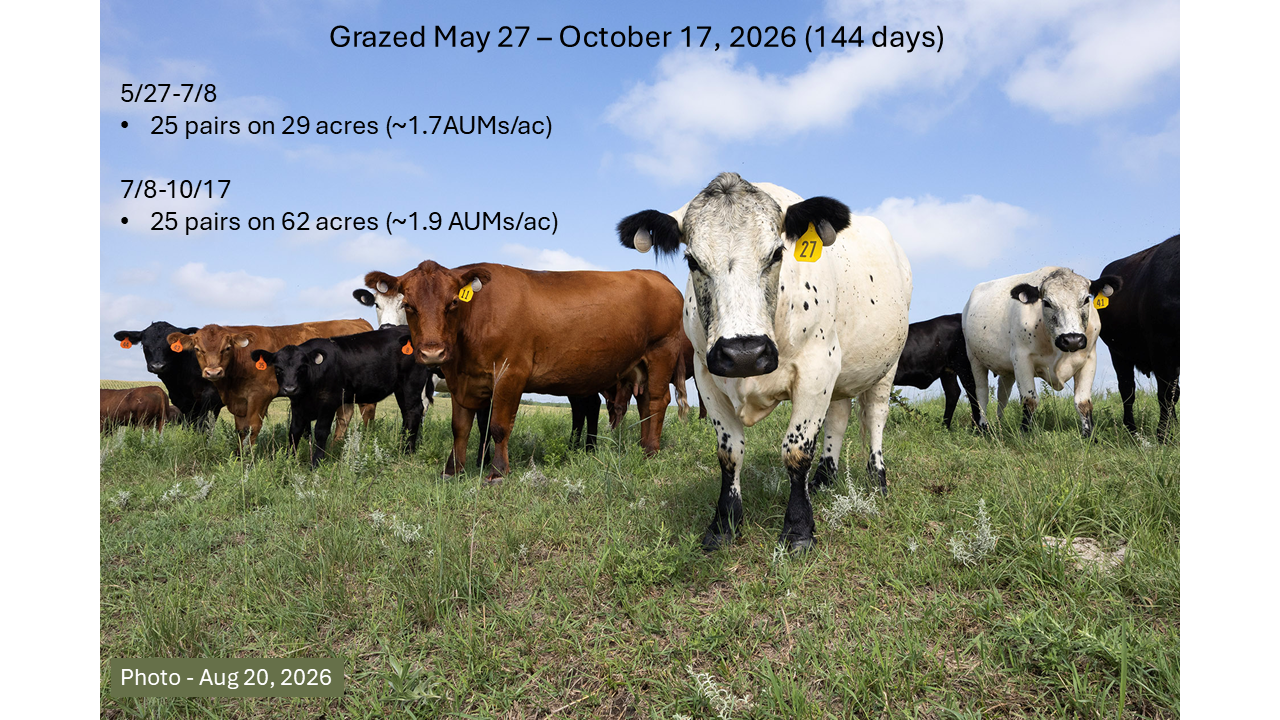
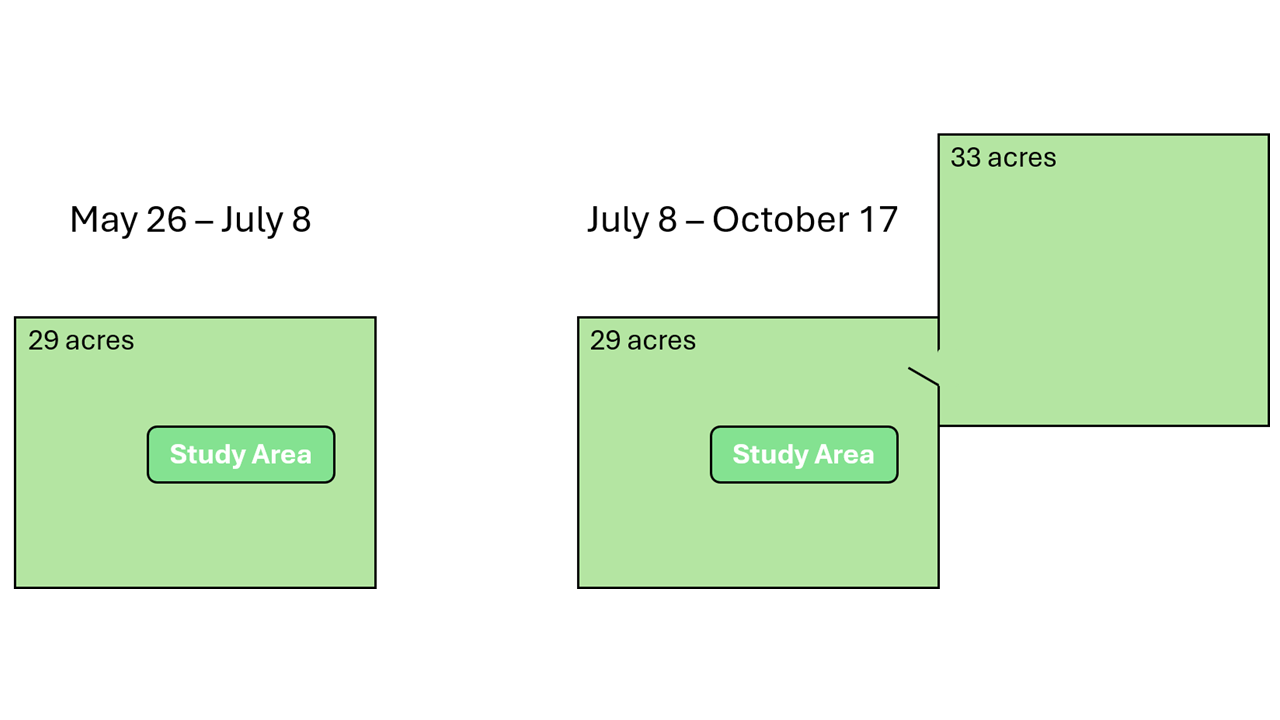
Because I’m writing this in November, 2026, I’m obviously only able to show you results from the first year of this experiment. Still, I’m happy with those results. Most people I’ve talked to don’t think of snowberry as a shrub that cattle graze much, so I wasn’t sure I’d see much effect at all.
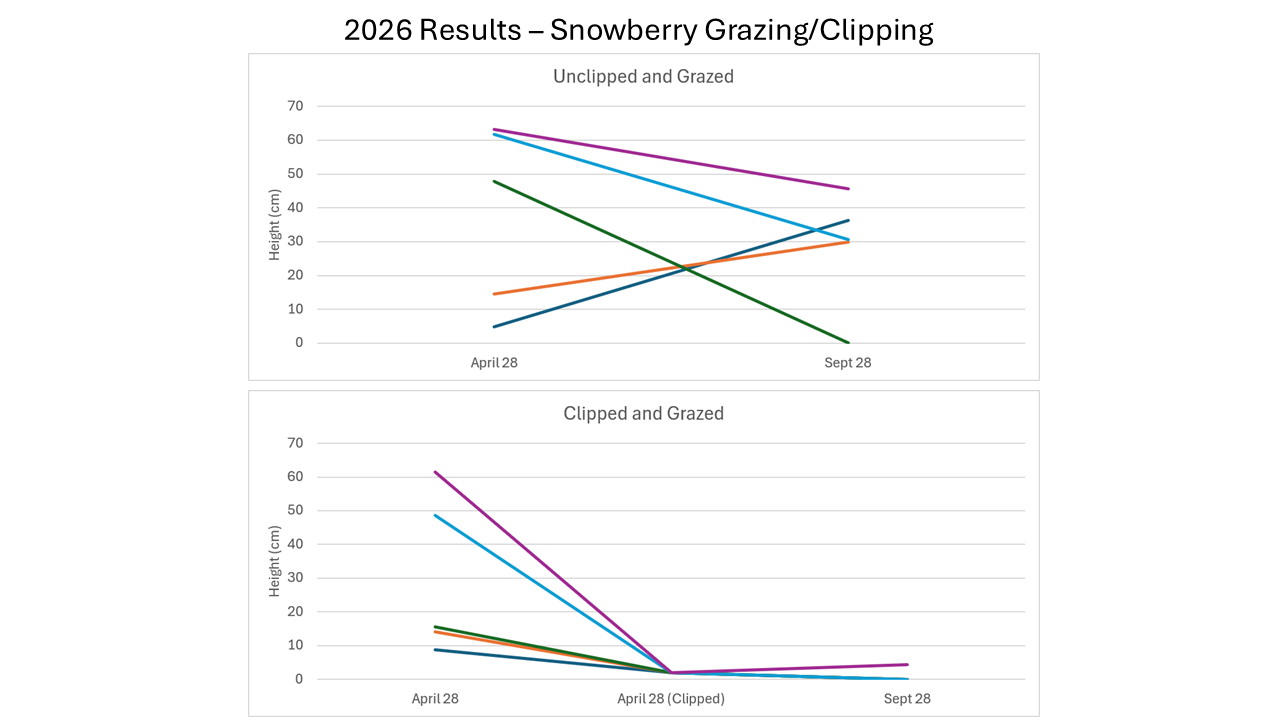
I only looked at 10 plants, of course, so this has even less scientific rigor than the dogwood study, but the results are pronounced enough that I think they’re worth paying attention to. In the graph below, you can see that among the unclipped plants, 3 out of 5 ended the 2026 season shorter than they’d started. One of those appeared dead by September. Two of those plants increased in height but I don’t have exclosures to compare to, so I can’t say if grazing impacted their growth rate at all.
All the clipped plants stayed short throughout the season. Only one of them appeared alive by September, which is really interesting. I won’t be surprised if some or all of them put out suckers in 2027, similar to what we saw with dogwood, but the cattle still did a number on them.
Below are photos that give you a little more context around the above results.
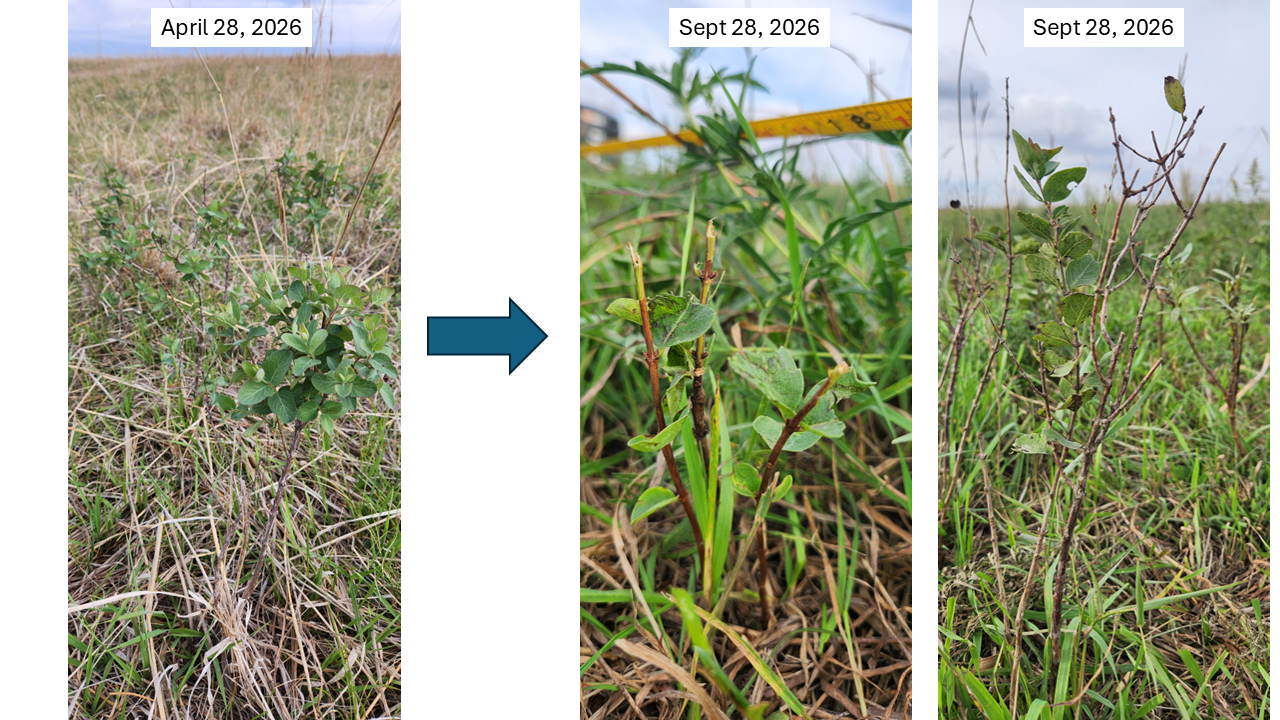
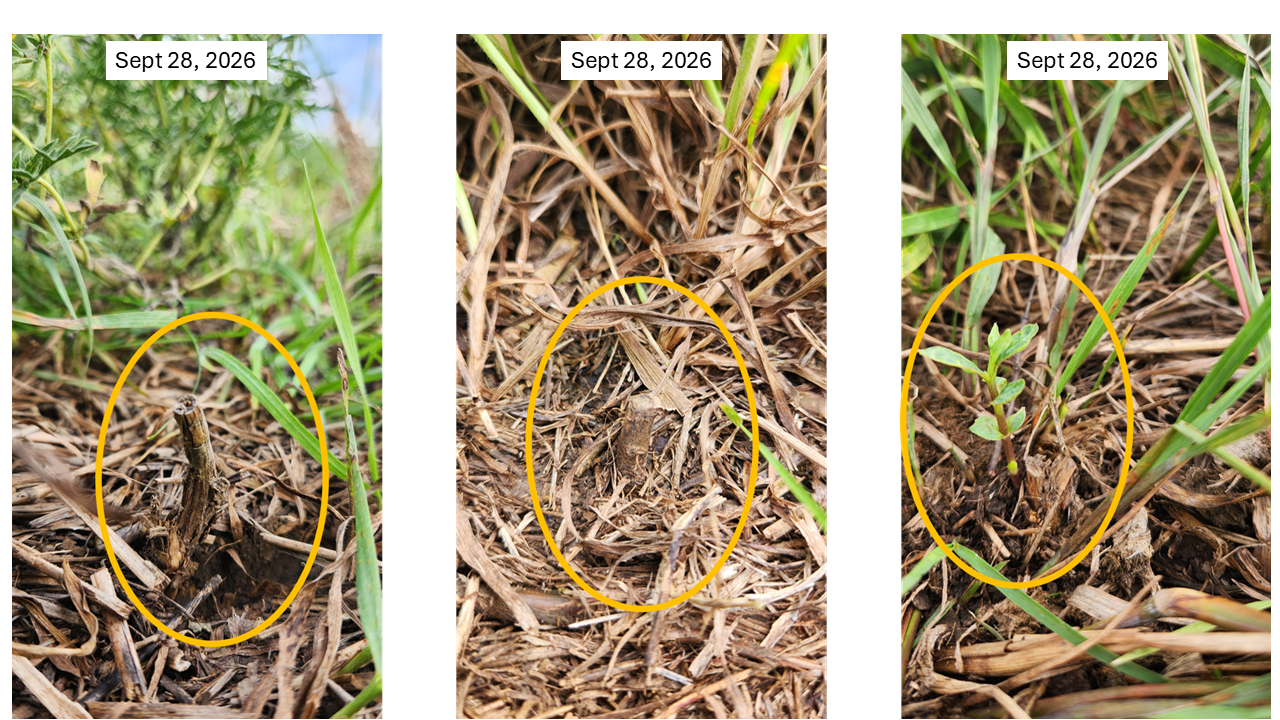
Again, all of these data should be seen as very preliminary because of my small sample sizes and lack of replication. That said, there’s a lot to build on here. The fact that cattle (across many different common breeds) show potential to help manage the height and density of deciduous shrubs is very encouraging.
We’ll be continuing to track these experiments and building more (and better) examples in the coming years. Please let me know if you’re seeing anything similar or different in the sites you’re familiar with.

