
Last week, I attended a conference aimed at creating a statewide conservation plan for monarch butterflies. The meeting was really informative and thought-provoking. I learned a great deal about the ecology and conservation needs of monarchs from Chip Taylor of Monarch Watch and others, and was part of some good discussions about potential strategies to help the species recover. I thought I’d share some of what I learned from those discussions because they helped me better understand the issues surrounding monarch conservation. Any errors in the following are a result of my misunderstanding what smart and knowledgeable people told me, and I apologize in advance.

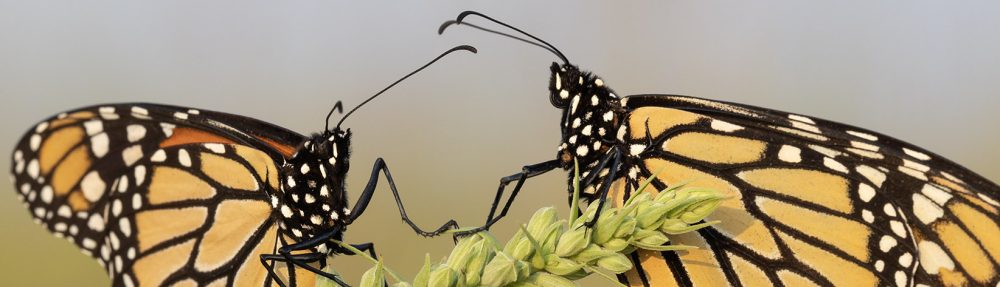
Monarch butterflies on a summer morning. The Nature Conservancy’s Platte River Prairies, Nebraska
Monarch Migration
The monarch butterfly is a migratory species, but it takes multiple generations to make the migration from parts of North America to Mexico and back. Here in Nebraska, we’re part of the Eastern Population of monarchs, which extends from roughly the east edge of the Rocky Mountains to the east coast. The butterflies in this population leave their Mexico wintering grounds in late February each year and head north. They lay eggs in the southern United States and the monarchs produced by those eggs then head north into the northern half of the U.S. and the southern edge of Canada during May and early June.
During the summer, there are a couple generations of monarchs that mature and lay eggs without migrating. However, in mid-August and September, monarch adults get the urge to migrate and start heading south. Those that survive the trip usually reach the Sierra Madre Mountains of Mexico by early November.
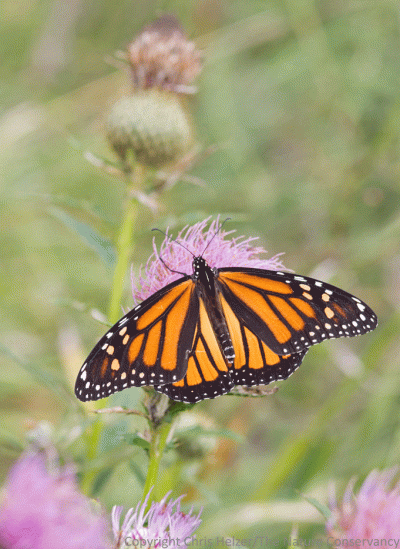
This migratory monarch is fueling up on a native thistle. Thistles are among the top food sources for monarchs and other butterflies. Allowing non-invasive thistles to persist in natural areas is an important part of pollinator conservation efforts.
Threats to Monarchs
There are two categories of threats to Monarchs: 1) Factors we can control, and 2) Factors we can’t. The big factor we can’t control is weather and the way it interacts with migration timing and butterfly survival. Weather can have a tremendous impact on butterflies, and many millions of butterflies are killed by hot weather, storms, or other events. However, since we can’t control the weather, we have to focus on what we can control.
There is a long list of human-induced factors that affect monarch populations. Those include the conversion of grasslands, roadsides, and field edges to row crops (largely facilitated by government policies) as well as farming practices that have nearly eliminated milkweed from farm fields. Pesticide use is another factor, including pesticides used for farming and pesticides used for other purposes, including mosquito control. Logging of forests in the wintering grounds of Mexico is another important issue.
I’d heard that the loss of milkweed from crop fields was a big deal for monarch butterflies, but hadn’t really understood why. At the conference, we heard that research has shown that about four times as many eggs/plant are laid on milkweed plants in crop fields as on milkweed plants in other habitats. (I’m not sure anyone understands why.) In addition, while the eastern population is spread across a huge area of North America, about 50% of the butterflies that reach Mexico are born in the cornbelt of the U.S. – the intensively farmed Midwestern states. Prior to the widespread use of glyphosate-resistant crops, milkweed was a pretty common inhabitant in crop fields throughout this prime breeding area for monarchs. Now that farmers are so much more efficient at weed control, we’ve lost the most productive egg-laying habitat in the country’s most important breeding area for monarchs.
Conservation Strategies
Because monarchs can only be raised on milkweed, getting more milkweed plants in the landscape, especially within the cornbelt states, is a key part of increasing the monarch population. It’s likely that more than a billion additional milkweed plants will be required to stabilize the monarch population. Increasing milkweed populations to that extent will require a wide range of strategies. In addition, protecting and restoring the wildflower-rich grasslands and other natural areas that provide food for adult monarchs, as well as for thousands of bee and other pollinator species, is also vitally important.
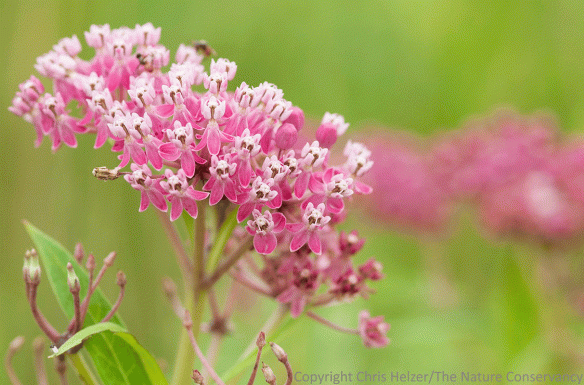
It is critically important to increase the number of swamp milkweed (Asclepias incarnata) and other milkweed species available for monarch egg-laying.
One clear strategy is to plant more of monarchs’ favorite milkweed species in gardens, parks, roadsides, nature centers, and many other sites. In the north-central U.S., milkweed species such as common (Asclepias syriaca), showy (A. speciosa), and swamp milkweed (A. incarnata), are known to be favorites, while green antelope horn (A. asperula) is important in more southern states. You can find sources of seeds and plants at Monarch Watch or from the Xerces Society’s Project Milkweed website. Sites like monarchgard.com can help with garden and landscape design ideas.
More milkweed in gardens and landscaping can make a big difference, but an even bigger part of monarch recovery needs to come from a change in the way milkweeds – and the weedy, edge habitats they thrive in – are perceived by the public. Elimination of milkweed from roadsides, field edges, and odd corners and margins of our landscapes happens because we are uncomfortable with the “messiness” of those areas if they aren’t frequently mowed and/or sprayed with herbicides to make them look uniform in height and composition. Allowing milkweed and other wildflowers to thrive in those odds-and-ends habitat areas can have a huge impact on monarchs and other pollinators, along with pheasants, song birds, and many other wildlife species. Reducing mowing frequency and spot-spraying truly invasive plants – instead of broadcast spraying to kill anything that’s not grass – in these habitats saves both money and time as well.

“Sanitized” monoculture roadsides like this offer no benefit to monarch butterflies or other pollinators. We need to change our cultural aesthetic and acknowledge the value and beauty of roadsides that actually offer habitat values to monarch butterflies, pollinators, pheasants, and other wildlife and invertebrate species.
The Role of Prairies?
Last week’s meeting also encouraged me to focus even harder on an additional aspect conservation I’ve already been working on – improving the contributions of native prairies and rangeland to pollinators. The experts at our meeting, along with other sources of information on monarchs, seem to be focused largely on milkweed and the kinds of farm fields, edge habitats and landscaping mentioned above. While all those are very important, I can’t help but think about the value of native prairies – especially in places like Nebraska where we still have millions of acres of grassland.
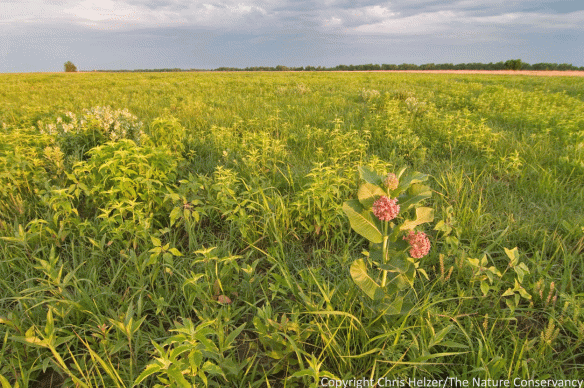
Many of our restored Platte River Prairies maintain milkweed populations for many years after establishment, even under fire and grazing management. Figuring out what management strategies facilitate survival of milkweed may be a very important part of successful monarch conservation.
A healthy prairie with a diverse wildflower community is invaluable to bees and other pollinators, and also provides nectar resources needed by monarch butterfly adults. If that prairie contains vibrant populations of milkweed species that provide egg-laying habitat to monarchs, that’s even better. Many prairies don’t currently have strong milkweed populations. Some milkweed species are not strong competitors in a tight-knit plant community, and certain grazing and other management practices tend to further discourage milkweeds. Over the next several years, I am hoping to learn more about how to make prairies support stronger milkweed/monarch populations. Hopefully, we and others can help make North American prairies even better contributors to the survival of monarch butterflies.