
If you read this blog frequently, you know I manage many of our prairies with combinations of prescribed fire and grazing. I like the heterogeneous habitat structure I get from patch-burn grazing, and have documented benefits to plant diversity in our prairies. (I’ve summarized the experiences I’ve had with multiple variations of patch-burn grazing here.)
Patch-burn grazing with cattle is still viewed with skepticism by many people – especially some in eastern tallgrass prairies. I can understand why people would be concerned about the potential impacts of cattle grazing on some plant species and prairie communities, and I certainly don’t advocate cattle grazing for all prairies. However, I also think that many common concerns stem from limited experience with cattle grazing. If the only cattle grazing I’d ever seen was the kind that annually beat grasslands down to the ground and resulted in soil erosion and a gradual loss of native plant diversity I’d be skeptical too – to say the least!
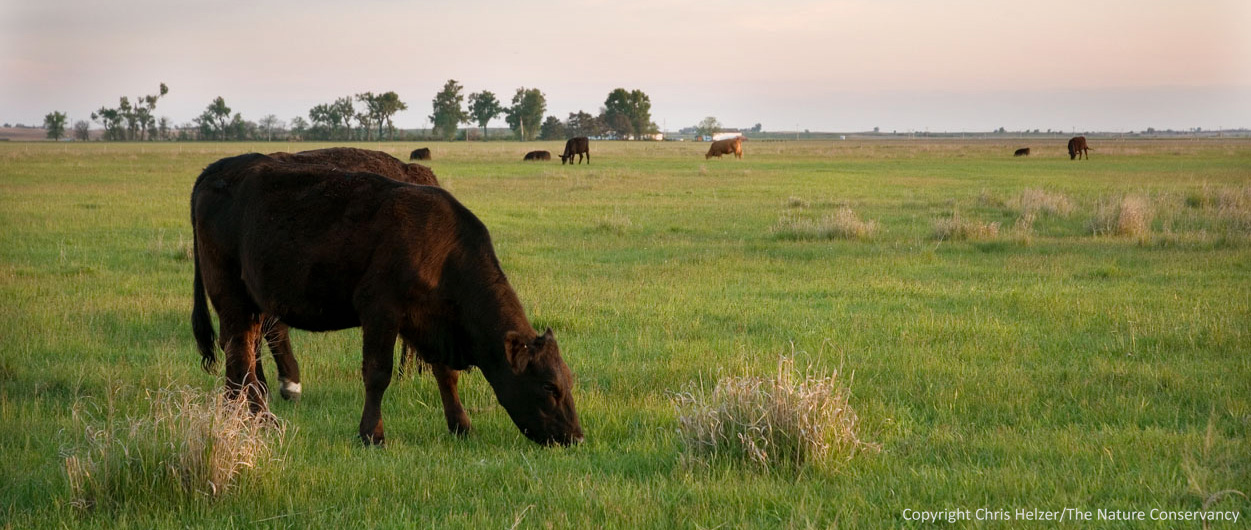
When you see a prairie like this, it's easy to see how prairie enthusiasts could be nervous about cattle grazing. This Nebraska prairie has never been plowed, but it's missing many prairie plant species - though that is likely due more to past herbicide practices than cattle grazing.
However, chronic overgrazing is one extreme in a broad spectrum of grazing regimes, and cattle can also be used in ways that produce very positive results for plant diversity and wildlife habitat. The first time I saw a prairie being stomped and chomped by lots of cattle it was pretty unsettling. However, watching that prairie recover the next year after cattle had been removed gave me a much greater respect for prairies than I’d had before. Over the last 20 years, I’ve seen that process over and over in many tallgrass and mixed-grass prairies, and the resilience of prairie plants never ceases to amaze me. Of course, I’ve also seen instances where repeated overgrazing has degraded prairie communities, but that degradation has usually come from not giving plants sufficient opportunity to rest and recover from grazing bouts – not from grazing per se. (And often because of a history of broadcast herbicide use as well.)
Most of my personal experience with grazing (and patch-burn grazing in particular) has come from mixed-grass and lowland tallgrass prairies in east-central Nebraska. I’ve also seen a lot of grazing on western tallgrass prairies in Kansas and Oklahoma. However, my experience with cattle grazing in eastern tallgrass prairies is much more limited – mostly because it is such a rarity. This summer has given me two chances to observe the impacts of patch-burn grazing on eastern prairies in Indiana and Missouri. I wrote briefly about the Indiana experience in a previous post, but I want to spend more time on what I saw in Missouri last week.
The Missouri Department of Conservation (MDC) began a research project on the use of patch-burn grazing on public lands prairies back in 2005. One of their hopes was to increase the habitat quality of those grasslands for prairie chickens and many other grassland species without hurting the diversity or quality of the plant communities. Many of the prairies they grazed during the project were considered to be some of the higher-quality prairies in Missouri (botanically speaking) so protecting the diversity of those plant communities – and the rare and conservative plant species in them – was extremely important. Several people, including me, with prior experience using patch-burn grazing provided input to MDC as they designed the project. During the summer of 2007, I finally got the chance to see some of the grazed prairies during the third year of the research project. One of those prairies was Taberville Prairie, north of Eldorado Springs.
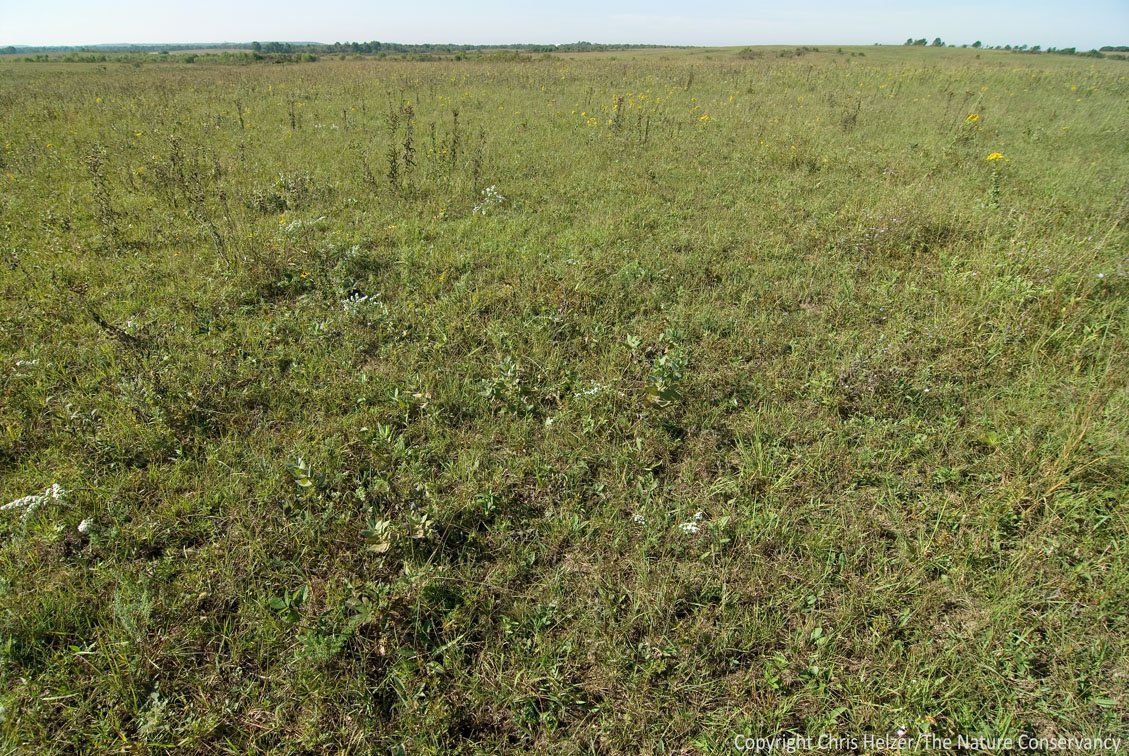
The burned patch of Taberville Prairie in 2007 (part of the MDC's patch-burn grazing research project). The grazing was pretty intensive in the burned patch, with only a few plant species remaining ungrazed. Even I was a little unsettled by the way the prairie looked. (Sorry about the photo quality, the tour was during the middle of a bright sunny day...)
I remember being a little shocked as I walked around Taberville Prairie back in September 2007, because the cattle had grazed it much harder than I’d expected to see. The most recently burned patches of the prairie were nearly universally cropped close to the ground, with only a few plant species remaining lightly grazed or ungrazed. That was pretty different from my own sites, where our relatively light stocking rates lead cattle to graze pretty selectively in burned areas, leaving many forb species ungrazed – even many that are typically considered to be favorites of cattle. At Taberville, even unburned portions of the prairie showed evidence of moderate grazing, and it was difficult to find conservative plant species such as compass plant, purple coneflower, blazing star, and leadplant. What I was seeing at Taberville made me wonder whether MDC had pushed the prairie a little further than was prudent. Of course, the plan was to rest the prairie for several years following the three years of patch-burn grazing, so logic and experience told me this was something the prairie could easily recover from – but even so, I’ll admit it was a little disturbing to see.

This photo shows the patch that was burned in 2006 (the year before the photo was taken). Though grazed less intensively than the 2007 burn patch, there are still few conservative plants visible.
Since my 2007 trip there has been considerable discussion (to put it mildly) among prairie enthusiasts and biologists in Missouri about the impacts of cattle grazing in those prairies where patch-burn grazing was tested, especially on conservative plant species. I can easily understand why people were concerned – especially after my own experience at Taberville. I was anxious to see for myself how the prairies had recovered, so I was glad to accept an invitation from MDC to participate in a grassland ecology workshop last week. The day before the workshop started, I got a tour from Len Gilmore and Matt Hill of MDC, and made my return to Taberville prairie.
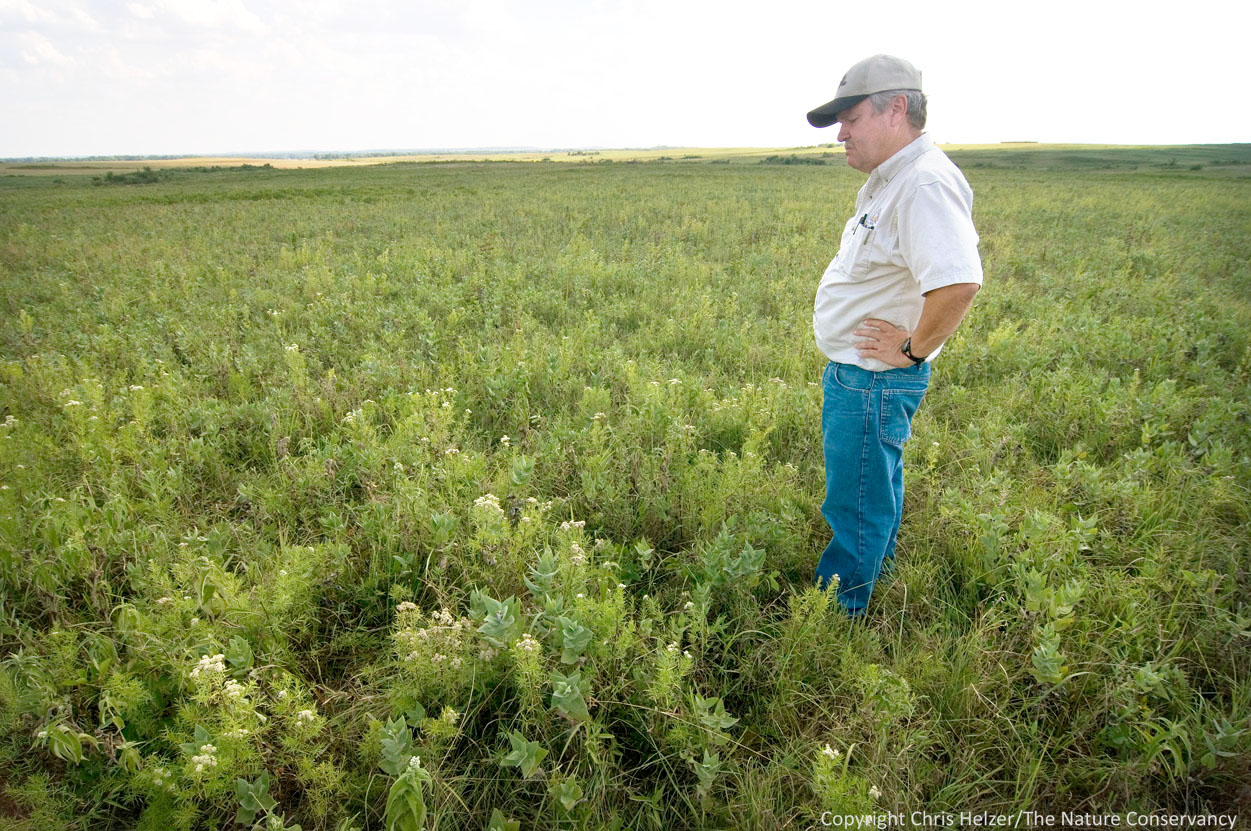
MDC's Len Gilmore manages Taberville Prairie. In this photo, he's showing me the kind of vegetation structure favored by nesting prairie chickens. This is a portion of the prairie currently open to cattle - but is not the most recently burned patch.
We started the tour in a portion of Taberville than had not been included in the grazing back in 2005-2007, but that was currently in year three of a patch-burn grazing rotation. Len, who manages Taberville Prairie, showed me the kinds of habitat structure they’re trying to create with patch-burn grazing, including nesting habitat for prairie chickens. We also discussed other aspects of patch-burn grazing MDC is concerned about (and testing) – including potential impacts to headwater streams, most of which are currently fenced out. The overall look of the prairies under patch-burn grazing this year was similar to those I saw in 2007. This time, however, I looked harder for conservative plants, and was able to find them in the patches that weren’t the most recently burned. Most weren’t blooming, but they were certainly alive and well.

This is the most recently-burned patch in the current grazing area at Taberville Prairie. The grazing was obviously very intense (the cattle had been removed the week before my visit).
What I really wanted to see, however, were the portions of the prairie I’d seen in 2007 that had been rested (with one burn) since I’d last seen them. When we arrived, I think I let out an audible sigh of relief. The prairie looked great. Even in what was a very dry summer, the prairie looked like my visual image of Missouri tallgrass prairie. Lots of showy blazing star flowers and abundant conservative plants, including leadplant, compass plant, purple coneflower, rattlesnake master, and others. Len took me to several locations where they had built grazing exclosures during the original patch-burn grazing research project. The exclosures had allowed MDC researchers to compare the ungrazed plant community inside the exclosures to adjacent plots that were exposed to cattle grazing. Even without seeing the data, being able to walk through and compare those areas that had never been grazed with those that had been exposed to three years of patch-burn grazing (the exclosures had been removed but their locations were still marked) was a powerful testament to prairie resilience. I looked hard for differences, but the truth is, if Len hadn’t told me which areas had been the grazed areas and which had been the exclosures, I never would have known.

This is the portion of Taberville prairie shown in my 2007 photo above when there was almost nothing taller than a couple inches. Several years of rest (and a fire) following the three years of patch-burn grazing changed the look of the prairie considerably. Even in a summer during which the prairie had almost no rain in June or July, the plant community looks tall and vibrant.
.

The same portion of Taberville Prairie. Compass plant, and many other conservative plant species were abundant.
.
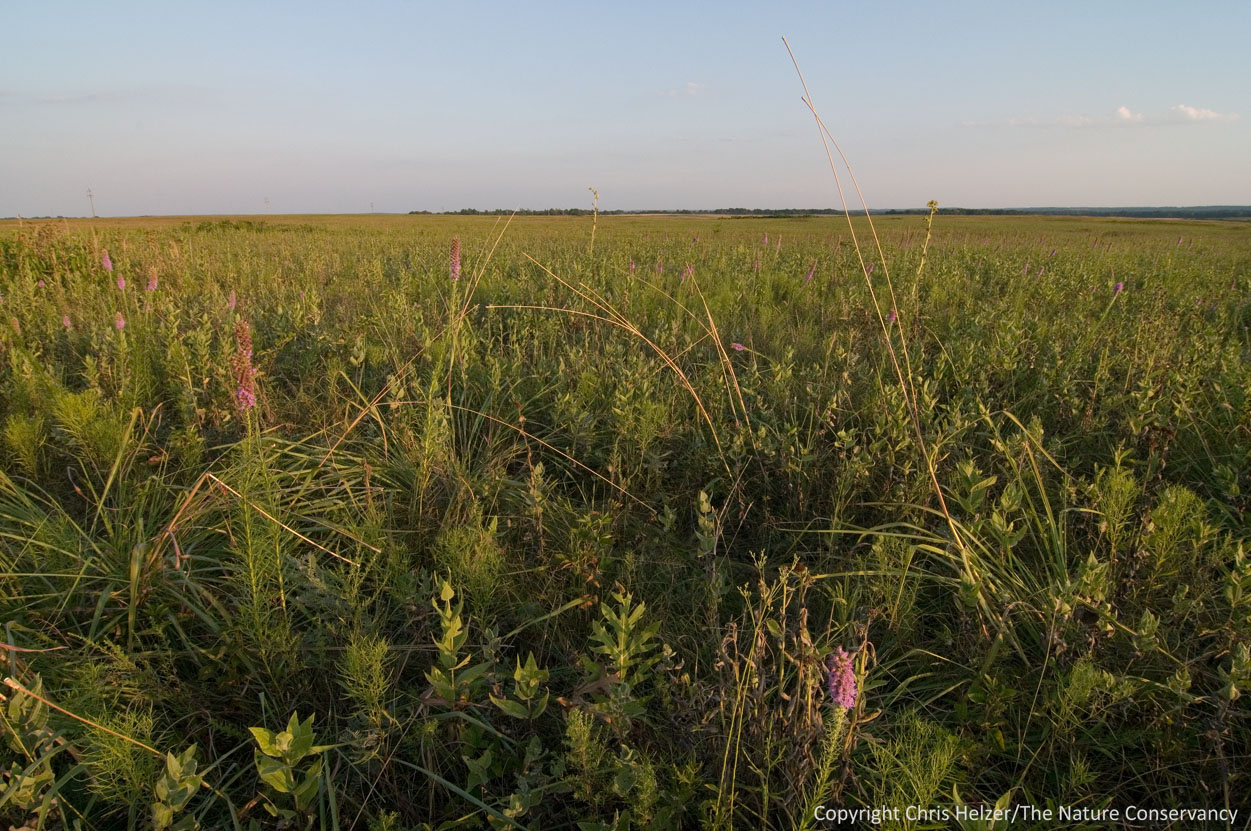
Another photo from the same portion of Taberville Prairie (grazed 2005-2007, but rested since then.) Eastern gamagrass (the thick leafy grass with tall stems) was abundant and full of vigor across the prairie. In the burned/grazed patches of Taberville and other MDC prairies gamagrass was being grazed extremely hard - even to the point where I could see rhizomes the cattle had pulled out of the ground. Clearly, gamagrass recovers well from that kind of treatment...
.

A final photo from the area grazed 2005-2007 but rested (and burned once) since. This photo shows leadplant in the foreground. Rattlesnake master and purple coneflower (two other conservative plants) were also abundant, but not shown in these photos.
During the next several days at the grassland workshop, I listened to MDC biologists from wildlife and fisheries divisions talk about what they like and don’t like about their experiences so far with patch-burn grazing. One of the interesting issues they (and I) are wrestling with has to do with the appropriate length of grazing and rest periods. Figuring out how to mix grazing and rest periods in a way that allows all plant and animal species to “win” periodically is a major challenge. There was also considerable discussion about how to better evaluate potential impacts to plant communities and streams – as well as exploration of ideas about how to modify current management to better address needs of pollinators, amphibians, and other species. I think those who are worried about patch-burn grazing in Missouri would have been comforted to hear the thoughtful discussion and see the obvious dedication of MDC staff to the prairies in their charge.
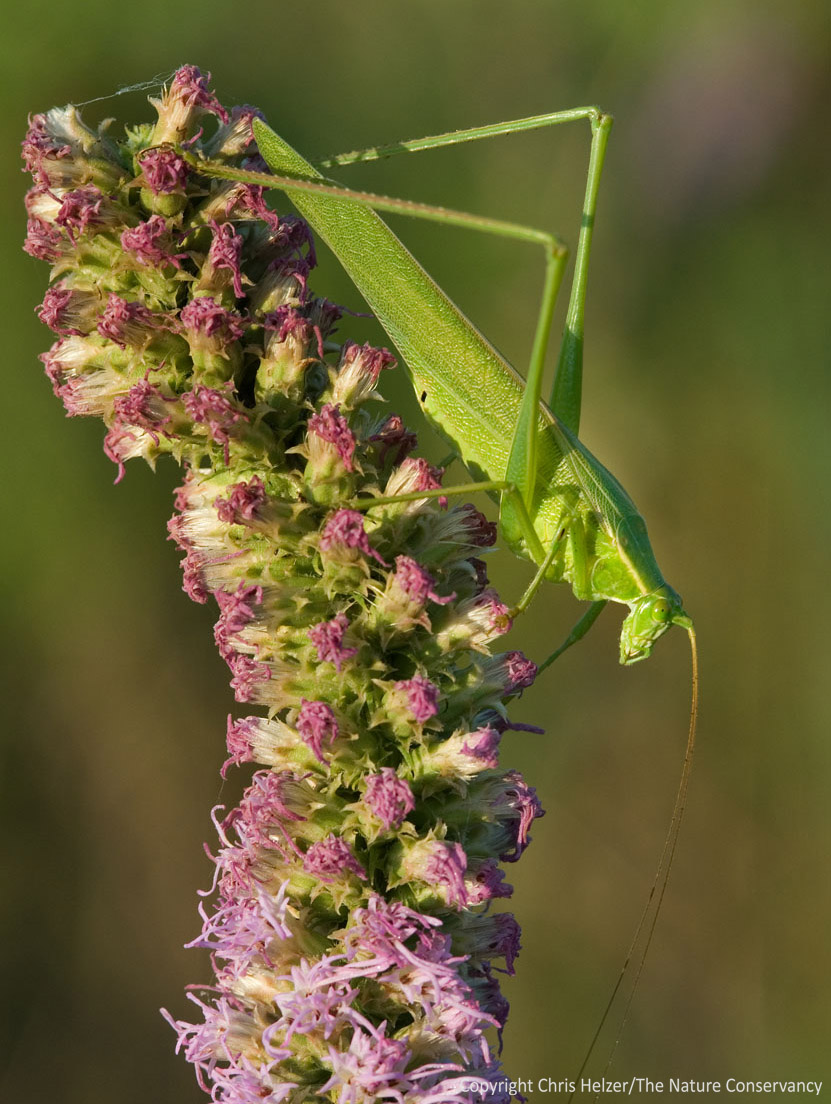
This bush katydid was one of many insects I saw at Taberville Prairie. I don't think this species is necessarily rare or conservative, but the regal fritillary and Henslow's sparrow I saw nearby are (not that seeing one of each necessarily determines success...)
There are still plenty of important questions about whether, where, and how cattle grazing should be used to manage eastern tallgrass prairies, but the Missouri Department of Conservation is leading the effort to answer some of those. Early results show improvements in habitat structure for many species of insects and animals, including greater prairie chickens – where they occur. MDC has asked faculty from two universities to help evaluate impacts on streams, and is fencing out the majority of headwater streams until that evaluation is complete. The responses of plant species and communities to various fire, grazing, and rest treatments is still being evaluated, and probably will be for some time. In the meantime, it was good to see confirmation of the ability of plants to bounce back from periodic grazing, even in prairies that are pretty different from the ones I know best. I think the knowledge that plants (even conservative species) don’t immediately die from being grazed for a season or two gives us a little cushion as we forge ahead with our attempts to find appropriate tools and strategies for maintain the broad array of biological diversity in what remains of tallgrass prairie. If you live and/or work in the tallgrass prairie region, I hope you’ll be a productive part of that effort. We need all the help we can get.


