

Plains sunflower (Helianthus petiolaris). This species is dismissed by many as a roadside or cropfield weed.
Sunflowers are seen by some people as big beautiful flowers, and by others as big ugly weeds. Regardless of aesthetic opinions, however, sunflowers appear to be pulling their weight, and more, in the ecology of the Nebraska sandhills prairies this year. After a long dry year, there’s not much green, let alone blooming, in the sandhills right now. The biggest and most obvious exception is the plains sunflower (Helianthus petiolaris).

Plains sunflower, an annual, is one of the few flowers still blooming in the dry sandhill prairies this summer. Most other plant species have already gone dormant.
While most other plants have given up on this year’s growth because of the very low soil moisture, these annual sunflowers are acting like it’s party time. I imagine the long taproot helps the plant get deep moisture, but its root system isn’t any bigger or deeper than many other sand prairie plants, which sit brown and withered in the surrounding landscape. Of course, being annual plants, plains sunflowers don’t really have the option that perennials do to just shut down for the remainder of the season during stressful years. Once a plains sunflower seed germinates, it’s got exactly one growing season to flower and make seeds before it dies. If it had a motto, it would be something like “Live like there’s no next year!”
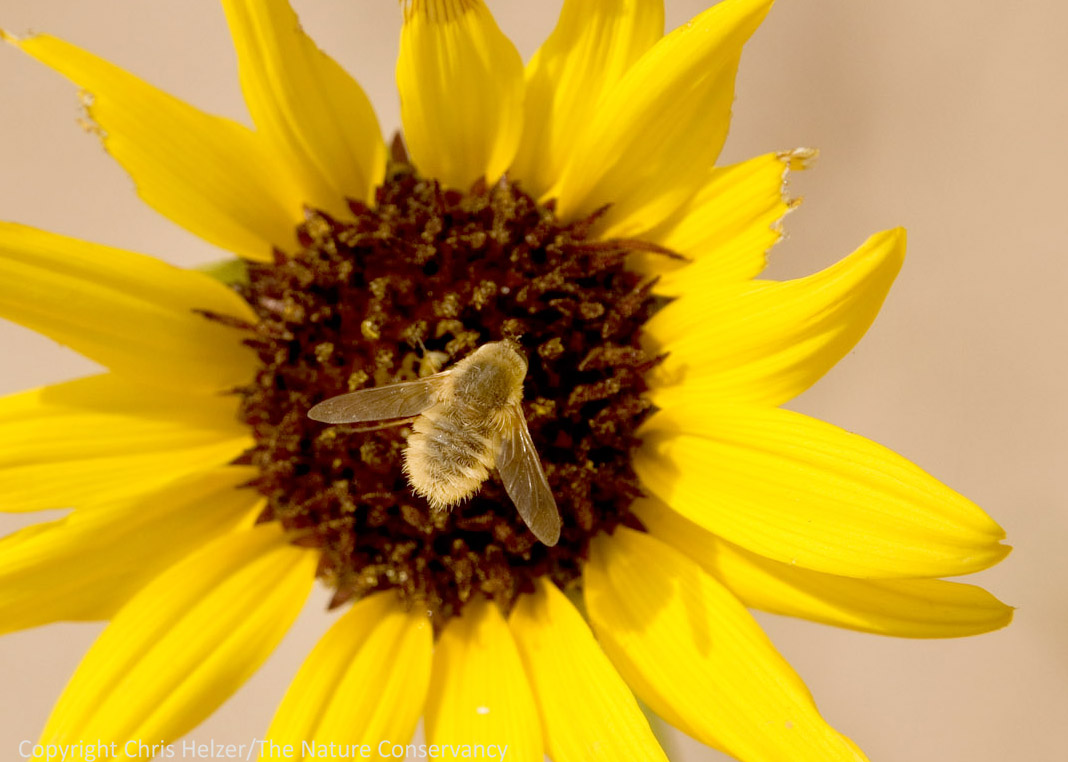
A bee fly feeding on a plains sunflower.
.

I’ll bet this fly is grateful for sunflowers.
There are a lot of insect and other species that should be awfully thankful for the ostentatious blooming of the sunflowers this year. Sunflowers are probably the only thing keeping most pollinators alive at the moment, for example. That’s great for those pollinator species, of course, but also for the predators and parasitoids that live of those insects.
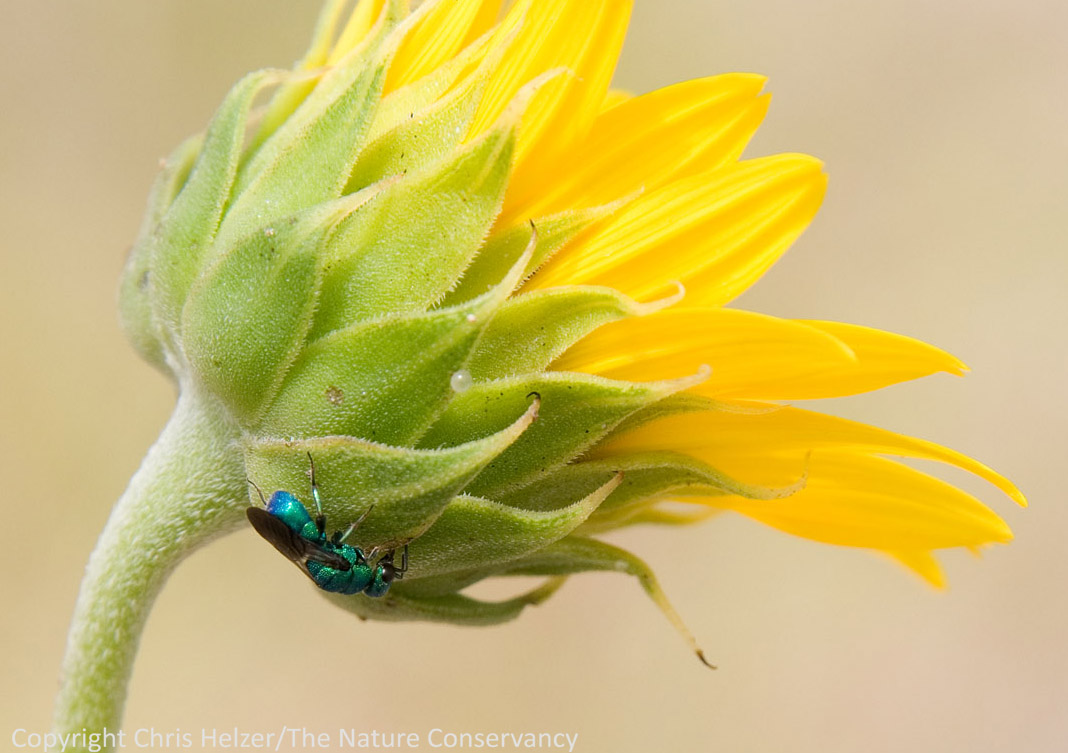
A cuckoo wasp rests on an annual sunflower. These wasps lay their eggs in the nests of solitary bees, and the wasp larvae hatch and devour the young bee larvae and their provisioned food. Thanks to Mike Arduser for the identification.
.

This grasshopper is probably more glad about the green foliage than the flowers – although it may feed on the flowers as well.
.

An ant on a sunflower petal. While it makes a good photo, I don’t think the ant was actually interested in what was on the front of the flower.
Ants have their own reasons for appreciating sunflowers – largely independent of the big showy flowers. Sunflowers produce and excrete sweet sticky sap (known as extra-floral nectar) that attracts hungry ants. It’s thought that attracting ants in this way might help repel herbivorous insects that might otherwise feed on the sunflower’s leaves and stems. Ants are not predators to mess with if you’re a hungry caterpillar or other plant-eating insect…
You can read more about prairie ants here.
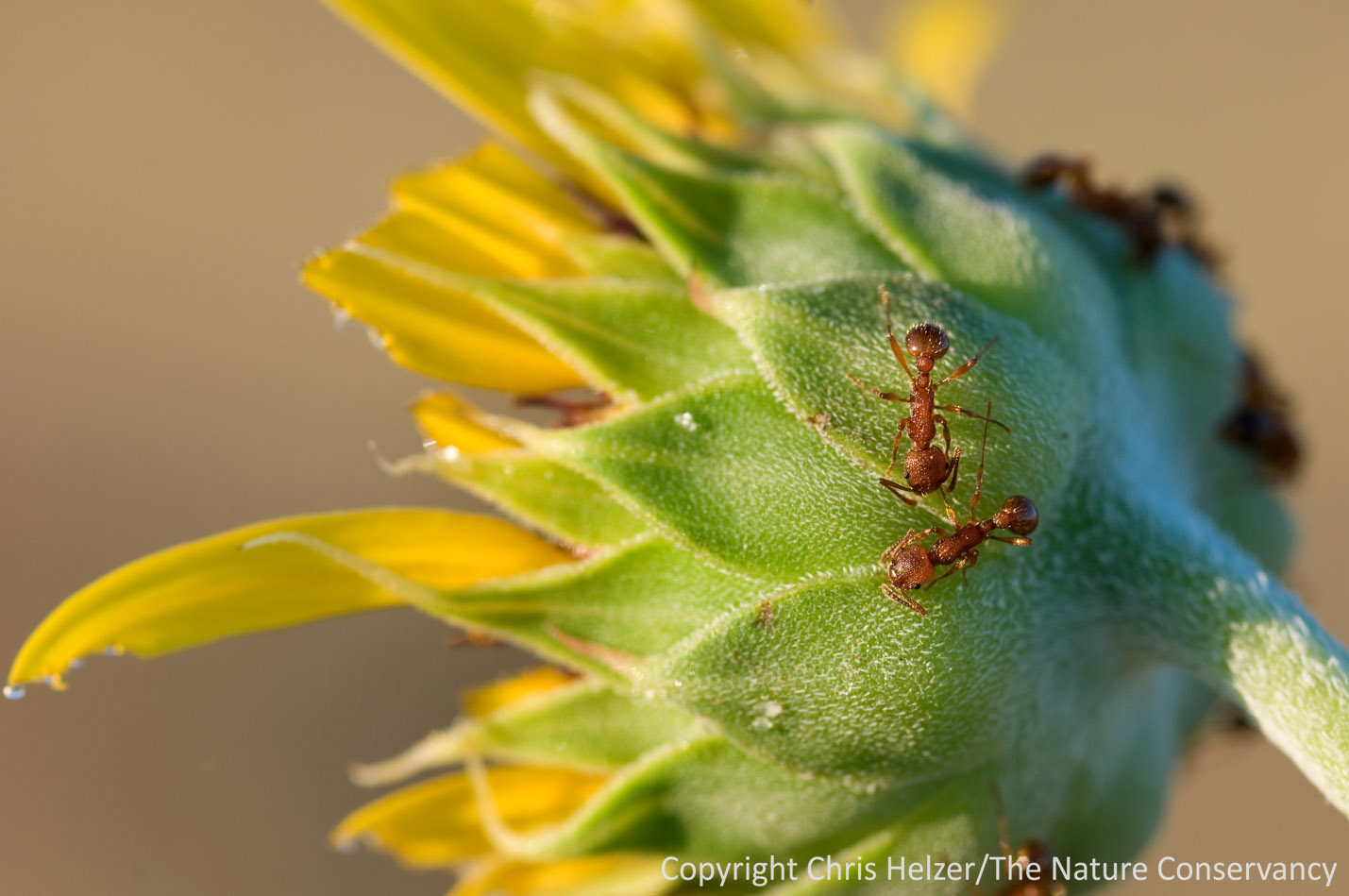
Ants collecting extrafloral nectar from the backside of a sunflower blossum.
.

The density of ants on some sunflowers was pretty impressive. I’m not sure if this is out of the ordinary because other food sources are limited, or if I was just noticing more of them because there wasn’t much else to look at…
.

This assassin bug (a predator) is also taking advantage of the attractiveness of sunflowers to other insects.
.

Not only are the sunflowers stil blooming – there are more flowers yet to come! What an amazing plant.
While sunflowers are filling an important role this time of year, that importance might actually increase this fall and winter. The seed crop for birds and other wildlife is going to be pretty paltry this year. Sunflower seeds are always a favorite of migrating and wintering animals, but this year, they will be especially critical. So – party like there’s no tomorrow, sunflowers. And, on behalf of the inhabitants of the sandhills prairies… thank you!
.


