
Photo of the Week – October 26, 2012

The plains lubber (Brachystola magna) is Nebraska’s largest grasshopper.  At about 2 1/4 inches long, and brightly colored, it’s hard to mistake for other species.  In fact, of the 108 grasshopper species in Nebraska, the plains lubber is the only one that is not in the family Acrididae.  Truly a unique individual.
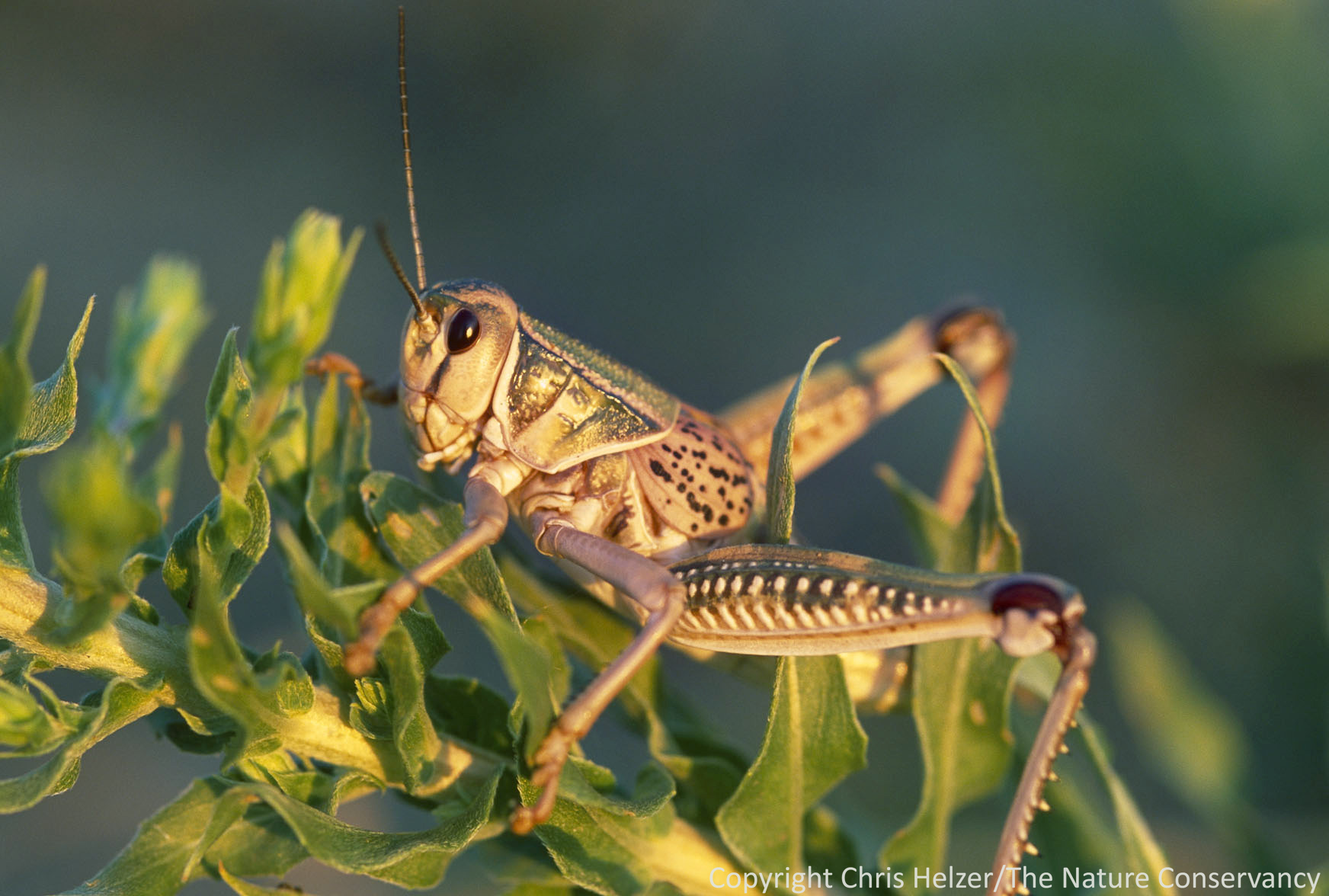
The plains lubber grasshopper. The Nature Conservancy’s Niobrara Valley Preserve.

Grasshoppers tend to have a bad reputation among many farmers and ranchers because they’re seen as competitors to livestock or as damaging feeders on crops.  In truth, only a handful of grasshopper species cause any significant “damage” to agricultural crops or pastures.  You’d think that a grasshopper the size of a lubber would eat an awful lot of grass, but in fact, the lubber primarily eats the leaves of wildflowers many people would consider weeds – especially annual sunflowers, but also kochia, hoary vervain, and prickly lettuce.  Hardly a pest, if you’re a rancher, though I hear it can sometimes be hard on cotton crops down south.

Lubbers are mostly found in the western portion of Nebraska, in mixed-grass and shortgrass prairie.  Because they have very short wings, they’re unable to fly, but are sometimes seen “migrating” on foot in large numbers.

The information I used for this post came mostly from The Grasshoppers of Nebraska, by Matthew Brust, Wyatt Hoback, and Robert Wright.It’s 

Intercontinental Insect Migration (!)

Insect migration is a world we’re just starting to discover, and the more we find, the more fascinating that world is.  One of the most recent discoveries involves Painted Lady butterflies (Vanessa cardui), a species found on every continent except Australia and Antarctica.  Scientists in the United Kingdom knew that millions of painted ladies migrated north from North Africa each year.  Until recently, they assumed it was a one-way trip.  Now, innovative radar techniques show that the species migrates back to North Africa, taking advantage of high-altitude winds (up to 500 meters off the ground).  

A painted lady butterfly in Nebraska – feeding on Baldwin’s ironweed (Vernonia baldwinii).

In case you’re wondering why painted lady butterflies would bother making the trip, the results from radar readings showed that in one year about 11 million butterflies came from Africa to the United Kingdom, and 26 million went back – so the species apparently benefits from migrating.  (The butterflies that return are the offspring of the ones that come).  You can a further description of the study here from Science Magazine’s website, and link from there to the full scientific article.

Back in May, I posted about what is being learned about how moths and butterflies migrate in North America.  The story is similar, except that (at least at this point!) we think the majority of species migrate northward in the spring, but don’t return south.  Sounds like a great project for someone to look into!

Monarch butterflies in the Platte River Prairies – Nebraska.

I’m particularly fascinated by multi-generational migrations.  In North America, we’re familiar with the monarch butterfly migration, which takes place over four generations – each successive generation traveling the next leg of the journey.  The fact that each new generation of butterflies knows where to go and how to get there, without having been taught, is about as fantastic a natural phenomena as I can think of. 

Monarchs are not the only four generation insect migrant.  In fact, there’s a fantastic story about the globe skimmer dragonfly that migrates back and forth from India to Africa over four generations as well – using high-altitude wind currents like the painted lady butterfly.  You can read more about that dragonfly migration here.

Continuing advances in technology are allowing us to learn more and more about the lives of insects and other small creatures.  We’re starting by looking at the migrations of large showy insects such as butterflies, moths, and dragonflies, but I wonder how many smaller, less charismatic species are making long-distance trips that we’ve just never noticed.  I’m looking forward to reading many more fascinating stories as the data keeps coming in.

Don’t you just love science?