Sand Wasps

I was introduced to sand wasps (Bembix sp) by Mike Arduser when he came to visit the Platte River Prairies back in 2012.  As we stood together in a sand prairie, a bee-like creature was zipping around us with incredible speed.  Mike explained that it was a sand wasp, and that it wasn’t interested in us, but rather was looking for flies that might be hanging around us.  Since that day, I’ve paid much more attention to sand wasps and have seen them all over the place in sandy places.

Sand wasp (Bembix americana spinolae) burrowing in sand in a blowout. The Nature Conservancy's Niobrara Valley Preserve.

Sand wasp (Bembix americana spinolae) burrowing in sand in a blowout. The Nature Conservancy’s Niobrara Valley Preserve.  This wasp was about 1/2 inch long.

While we were exploring a big sand blowout last week at the Niobrara Valley Preserve, there were lots of sand wasps buzzing around, and we found some of their nest burrows.  I took a little time to sit near a couple nests and photograph the females as they worked to excavate them.  The wind appeared to be blowing just as much sand back into the holes as the bees were digging out…

Here's the same wasp as above as it digs sand out of its burrow.

Here’s the same wasp as above as it digs sand out of its burrow.

The video below shows both the blowing sand and the valiant effort of the wasp to excavate its burrow despite the wind.  If the video doesn’t appear correctly, try clicking on the title of this post to view it through an internet browser.

Mike tells me these sand wasps and their relatives catch and paralyze flies for their young.  They lay eggs in their burrows and provide the flies as food for the larvae.  Females, of course, do all the work to create the burrows, catch the flies and lay the eggs.  The males are just around for mating purposes.  While the wasp larvae eat flies, both the adult males and females feed on nectar and pollen.

Here are a few more images of the sand wasps we saw last week, along with the blowout they were living in.

A big blowout where wind keeps sand moving and open.

A big blowout where wind keeps sand moving and open.

The sand wasp shown earlier takes off and twists its body to zip away.
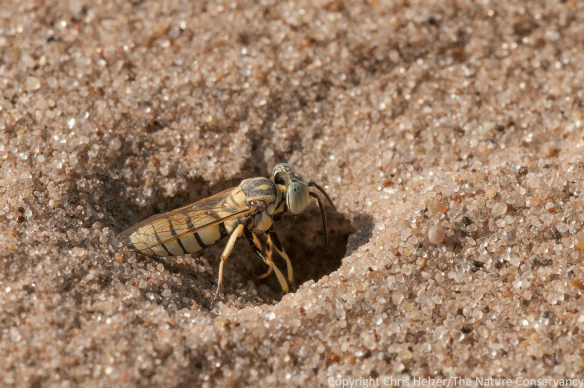
The sand wasp shown earlier takes off and twists its body to zip away.

This was a little smaller wasp from a different species that was nesting in a different part of the blowout from the first wasp.

This was a smaller wasp from a different Bembix species that was nesting in the same blowout as the first wasp.

...and that wasp was also digging its burrow.

…and that wasp was also digging its burrow.

As often happens with invertebrates, once I’ve been introduced to a creature, I start seeing it everywhere.  Even better, I’ve yet to meet an invertebrate that doesn’t have a fascinating background story.  It’s an awesome world we live in, and we share it with some pretty great neighbors.

Thanks, as always, to Mike Arduser for his help with identification and ecology.
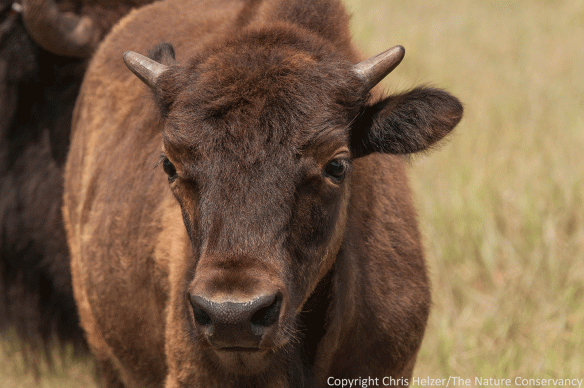
Photo of the Week – August 11, 2016

I made a quick trip up to the Niobrara Valley Preserve this week.  As always, there was a treasure trove of unexpected finds.  Here are some of them.

Bison calves are growing fast. Their coats have darkened to match the adults, and their horns are starting to look like more than just little bumps.

Bison calves are growing fast. Their coats have darkened to match the adults, and their horns are starting to look like more than just little bumps.

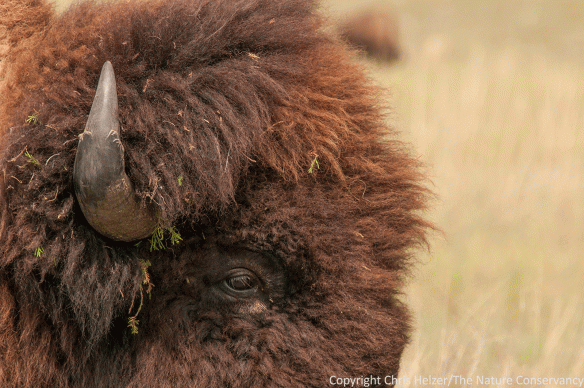
Bison tend not to hang around wooded areas for shade, but they also like to rub on trees aggressively enough to keep them stunted or even kill them. This bull was one of several bison that had evidence of recent rubbing on eastern red cedar trees.

Bison tend not to hang around wooded areas for shade, but they also like to rub on trees aggressively enough to keep them stunted or even kill them. This bull was one of several bison I saw this week that had apparently been recently rubbing on eastern red cedar trees.  Good for them.

Robber flies are amazing predators and always fun to photograph, but this might be my favorite of all time. This gorgeous robber fly landed in a sand blowout and was consuming a leaf hopper.

Robber flies are amazing predators and always fun to photograph, but this might be my favorite of all time. This gorgeous robber fly landed in a sand blowout and was consuming a leaf hopper.

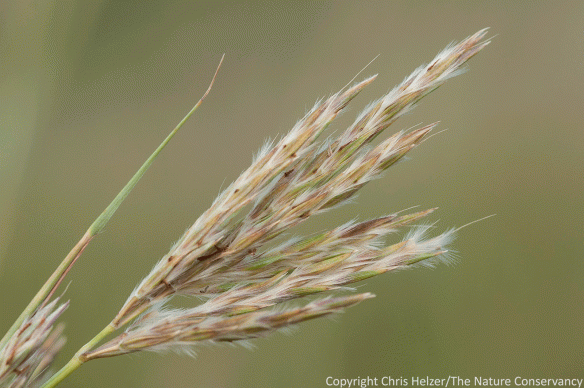
Sand bluestem (Andropogon hallii) is sometimes lumped with big bluestem (Andropogon gerardii) and sometimes considered a separate species. I'm not entering that argument. However, sand bluestem (shown here) does tend to have much hairier flowers.

Sand bluestem (Andropogon hallii) is sometimes lumped with big bluestem (Andropogon gerardii) and sometimes considered a separate species. I’m not entering that argument. However, sand bluestem (shown here) does tend to have much hairier flowers.

How many of you noticed the small larva in the above photo?  I didn’t, until I was going through the photos on the computer the day after taking them.  Look below for a more close-up view of the larva.  You can see it at its original scale just to the left of the bottom left of the inset image.

Fly larva? Whatever it is, it sure is small. Wouldn't you love to know what it's doing there?

Fly larva? Whatever it is, it sure is small. Wouldn’t you love to know what it’s doing there?

This tumbleweed (Russian thistle, aka Salsola iberica) was lodged up against a fence in a big sand blowout.

This tumbleweed (Russian thistle, aka Salsola iberica) was lodged up against a fence in a big sand blowout.

This tiny pale bee (Perdita perpallida) is a specialist in prairie clovers (Dalea species) but I've only seen it on one species - Silky prairie clover (Dalea villosa)

This tiny pale bee (Perdita perpallida) is a specialist in prairie clovers but I’ve only seen it on one species – Silky prairie clover (Dalea villosa).  Its pale color helps it blend in very well. Thanks to Mike Arduser for ID and information.

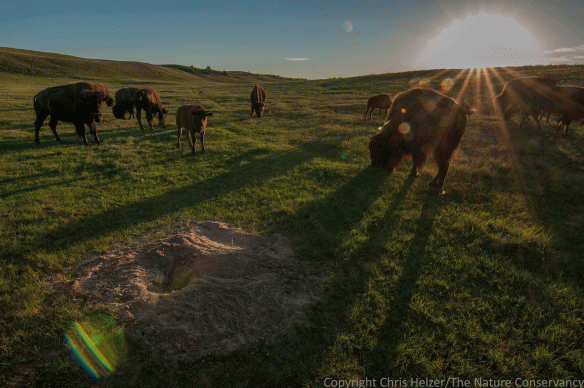
What is more evocative of the Great Plains than bison grazing in a prairie dog town as the sun goes down over an expansive grassy landscape?

What is more evocative of the Great Plains than bison grazing in a prairie dog town as the sun goes down over an expansive grassy landscape?