
Photo of the Week – July 30, 2015

During our trip to the Grassland Restoration Network workshop in Minnesota last week, several of us got up early enough to catch sunrise at The Nature Conservancy’s Bluestem Prairie on two beautiful mornings.  I shared a few photos from those outings last week, but thought I’d post a few more today.  I’ve got lots more…it wasn’t hard to find subject matter to photograph!
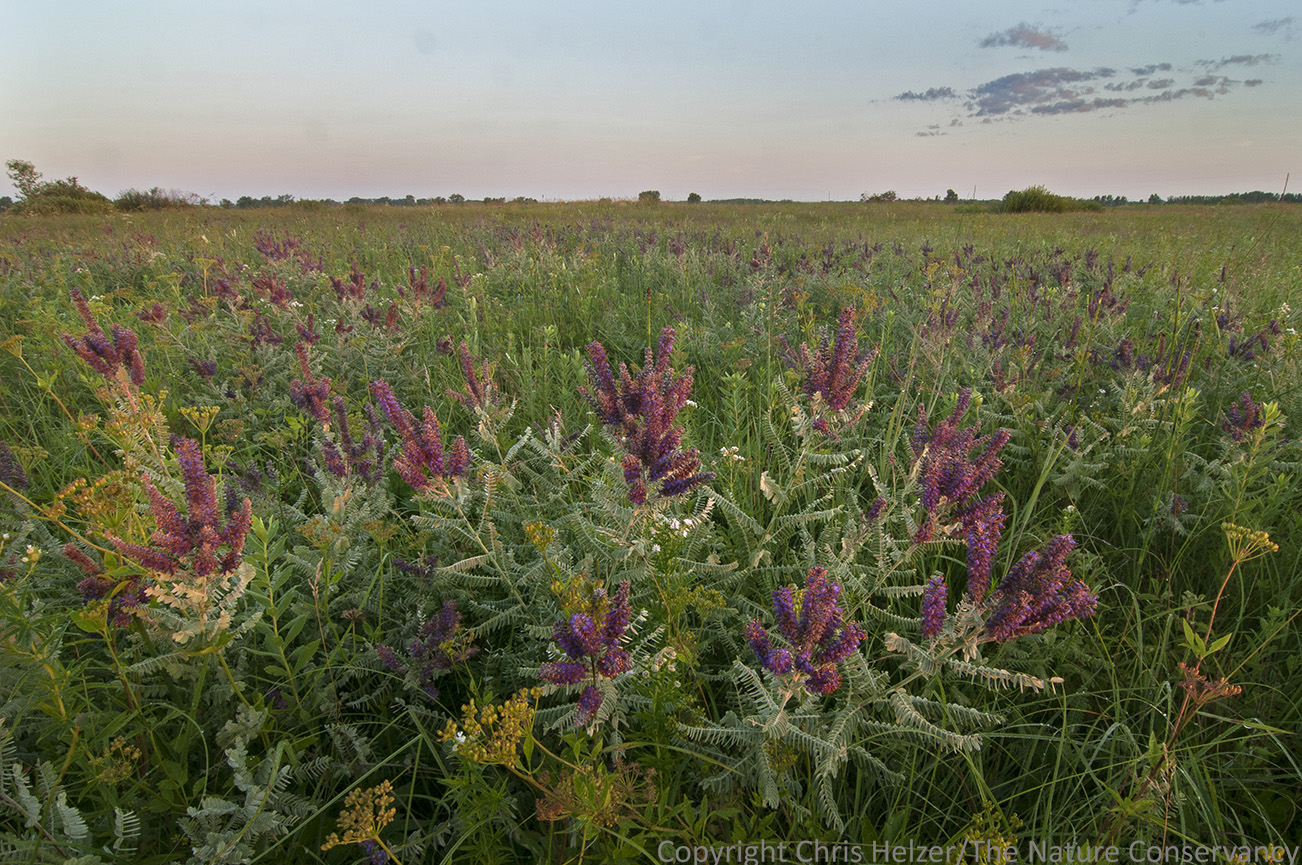
Leadplant and wildflowers.  TNC Bluestem Prairie, Minnesota.

Leadplant (Amorpha canescens) and other wildflowers abound on The Nature Conservancy’s Bluestem Prairie near Glyndon, Minnesota.

Woundwort (Stachys palustris).

Marsh hedge nettle, aka woundwort (Stachys palustris).
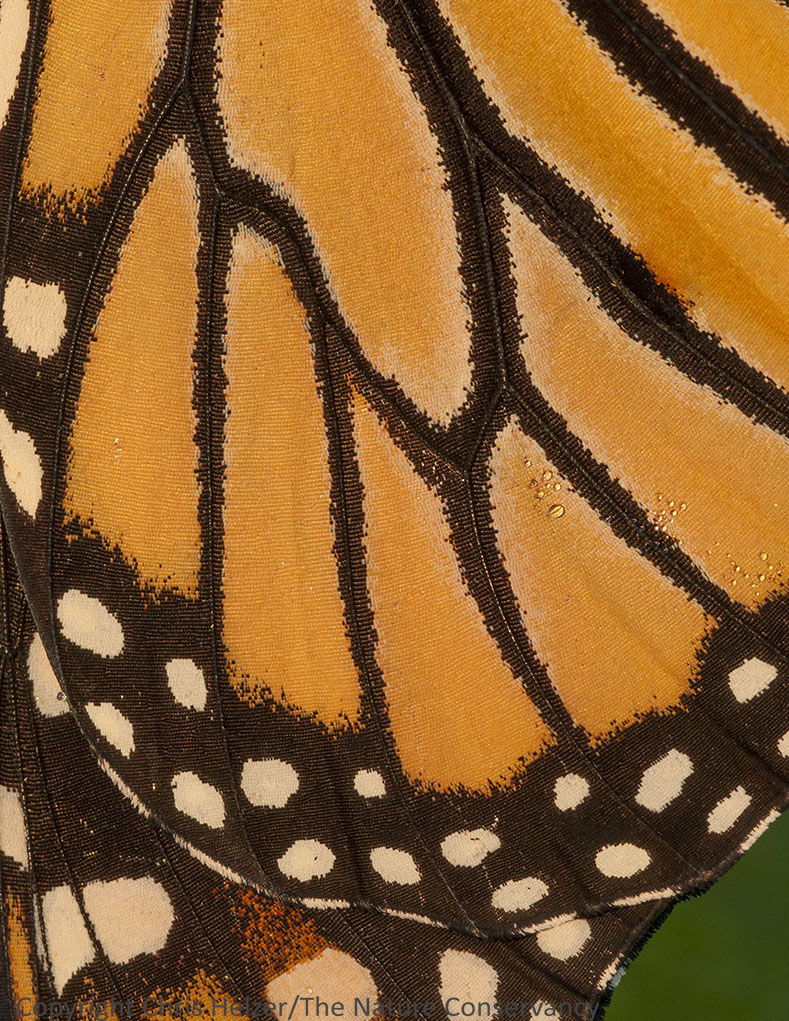
The cool dewy morning allowed me to get pretty close to this resting monarch butterfly...

The cool dewy morning allowed me to get pretty close to this roosting monarch butterfly…
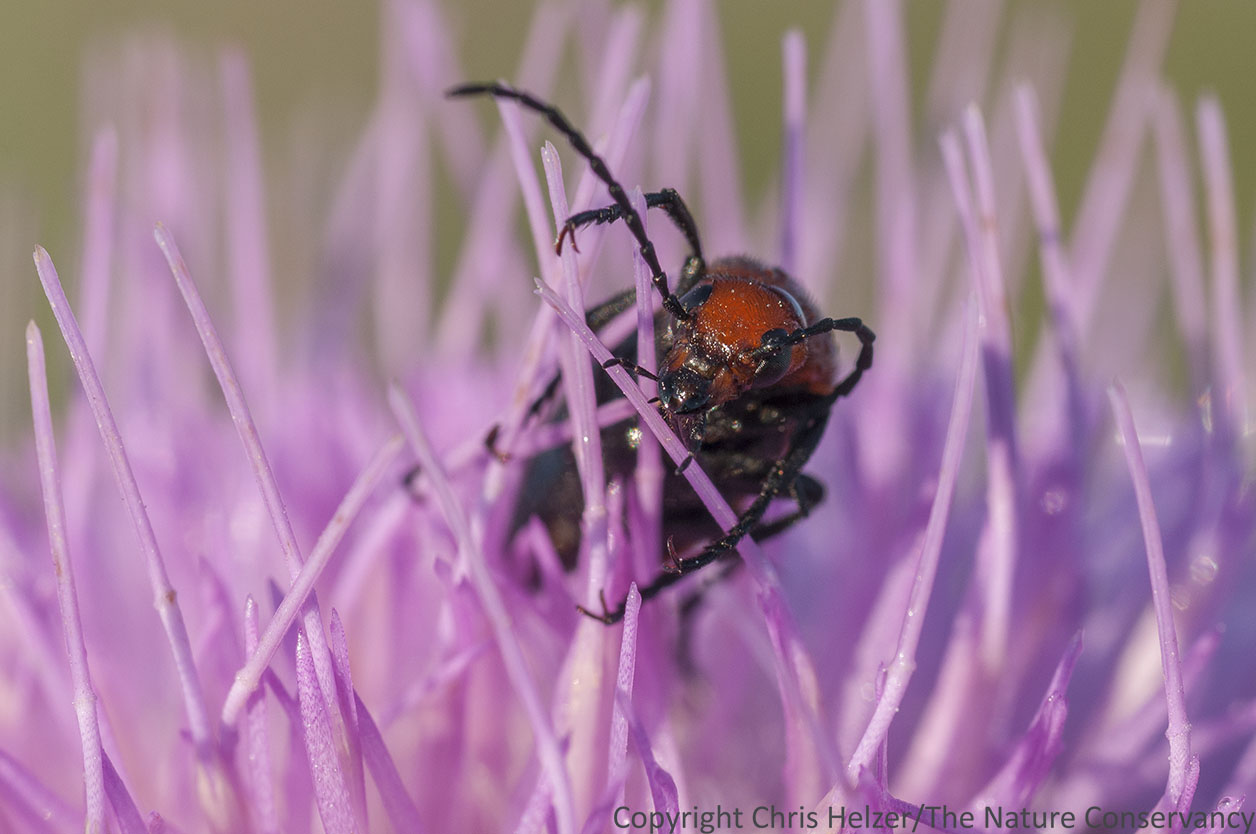
Beetle on Flodman's thistle.  TNC Bluestem Prairie, Minnesota.

This beetle was feeding its way across the top of this Flodman’s thistle (Cirsium flodmanii) – at least I think that’s what I think the thistle species was… it’s always dangerous to guess when I’m far from home.

Common milkweed.  The Nature Conservancy's Bluestem Prairie - Minnesota.

Common milkweed flower buds can be just as attractive as the open flowers…

Bee on milkweed.  TNC Bluestem Prairie, Minnesota.

This bee spent the night on a milkweed leaf and wasn’t quite warm and dry enough to fly off when I spotted it.  If you look carefully, you can see pollinia stuck on two (maybe three?) of its feet.  If you’re not familiar with the fascinating (and unlikely) story of how milkweed is pollinated, you can learn more here.

Purple coneflower (Echinacea angustifolia).  The Nature Conservancy's Bluestem Prairie - Minnesota.

Purple coneflower (Echinacea angustifolia).  This is a species we don’t find very often in the Platte River Prairies (though it’s fairly common nearby) so I always enjoy seeing and photographing it when I can.  As with other “composite” flowers, coneflowers are actually collections (composites) of two kinds of flowers – the ray flowers that look like petals and the disk flowers in the center.  Occasionally, as in this case, a genetic signal gets crossed and ray flower pops up where a disk flower should be.

If you find yourself traveling to or through northwestern Minnesota (just east of Fargo, ND), I encourage you to make the time to visit Bluestem Prairie Scientific and Natural Area.  You can find directions and more information on the site here.  The Nature Conservancy owns about 6,000 acres of prairie there, and their ownership is bolstered by several other tracts of conservation land right next door.  The prairie hosts nesting prairie chickens and beautiful tracts of northern tallgrass prairie.  It’s worth the trip to see it.

Photo of the Week – July 16, 2015

Scaly blazingstar (Liatris squarrosa) is just starting to bloom in the Platte River Prairies.  It has beautiful and intricate flowers with very long anthers protruding from its tiny blossoms.  At least it usually does…

Blazing star (Liatris squarrosa)  The Nature Conservancy's Platte River Prairies, Nebraska.

Scaly blazingstar (Liatris squarrosa). The Nature Conservancy’s Platte River Prairies, Nebraska.

I was photographing some blazingstar flowers earlier this week when I saw one with a grasshopper sitting on it.  It sat still long enough for me to get a few photos of it.

Grasshopper on blazing star (Liatris squarrosa)  The Nature Conservancy's Platte River Prairies, Nebraska.

A grasshopper standing innocently(?) on top of scaly blazingstar.

Only when I looked the above photo on my computer screen did I notice the absence of most of the long white anthers I’d seen on other flowers.  Surely, I thought, it’s not a coincidence that the grasshopper is present but the anthers are not…?

Grasshopper on blazing star (Liatris squarrosa)  The Nature Conservancy's Platte River Prairies, Nebraska.

The grasshopper eating one of the long anthers.

Sure enough, looking back through my other images, I found one of the grasshopper eating an anther.  Caught red-handed!  (So to speak.)

Just because they are called “grass”hoppers doesn’t mean that’s all they eat.  In fact, many grasshoppers eat pollen and other parts of wildflowers.  Some are fairly specialized, while others are generalists in terms of the plant species they feed on.  Even among the grass-feeding grasshoppers, there is great variety in which grass species and which parts of those grasses each species eats.

For the sake of the scaly blazing star (and our seed harvest efforts this year), I hope at least some of the anthers survive uneaten so the plants can make seed.  As more flowers open, maybe their abundance will be more than the grasshoppers can keep up with.  At least in past years, we’ve usually gotten pretty good seed harvests from blazingstar, so I’m not too worried.

Just interested…