Photo of the Week – May 12, 2016

Being a nature photographer sometimes means I can plan trips to interesting places and spend extended periods of time focusing on nothing but photography.  More often, however, my photography comes in short opportunistic bursts in the middle of other activities.  Fortunately, my family and coworkers are (mostly) patient with me when these opportunities arise and I briefly break away from whatever we’re doing.

Spider on a foggy morning. The Nature Conservancy's Niobrara Valley Preserve, Nebraska.

Spider in foggy prairie. The Nature Conservancy’s Niobrara Valley Preserve, Nebraska.

This week, two of my coworkers and I spent a couple days at our Niobrara Valley Preserve working on some strategic planning.  Our time together was really productive, but we were in one of the most scenic places in the world with almost no time to get outside and enjoy it.  When I woke up Tuesday morning, it was foggy outside, but bright enough that the sun was just barely visible through the fog.  My two coworkers were nowhere to be seen, so I made an executive decision that it was a great time for photography and slipped out the door and up the hill to a beautiful prairie ridgetop.
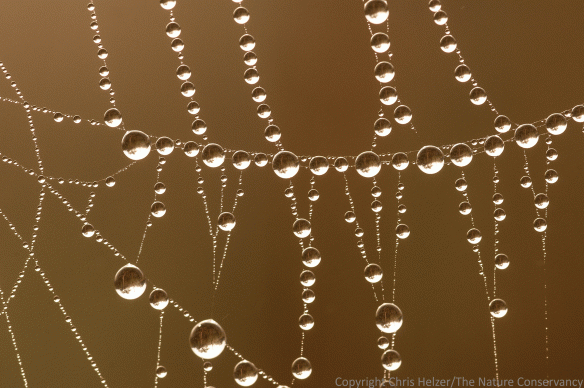
This web seemed to be uninhabited except by hundreds of water droplets.

This web seemed to be uninhabited except by hundreds of water droplets.

Water droplet at the tip of a grass leaf.

A single water droplet at the tip of a grass leaf.

I spent about 20 minutes photographing spiderwebs and other dew-covered natural wonders before slipping back into our cabin, ready to resume the meeting.  Fortunately, the other two – including my boss – hadn’t started without me.  Throughout the rest of the morning, I only sighed aloud a few times as I watched the fog slowly break up over the river and bluffs just outside our cabin, and I’m pretty sure I only pointed out the beautiful photography light seven or eight times.  Other than that I was completely focused and productive…

The same spider as shown in the first photo, but from a different angle. As long as my knees were wet from the dewy grass and the spider seemed ok with my presence, I figured I'd better shoot as many angles as I could...

The same spider as shown in the first photo, but from a different angle. As long as my knees were wet from the dewy grass and the spider seemed ok with my presence, I figured I’d better shoot as many angles as I could…
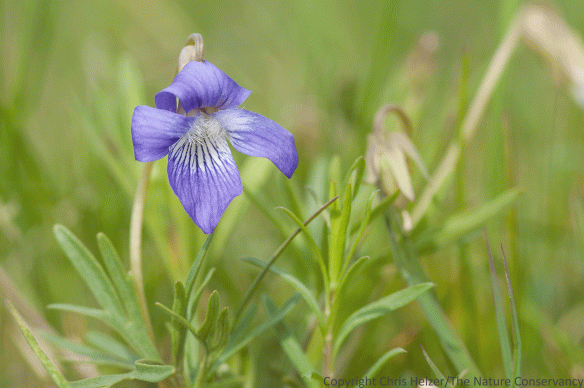
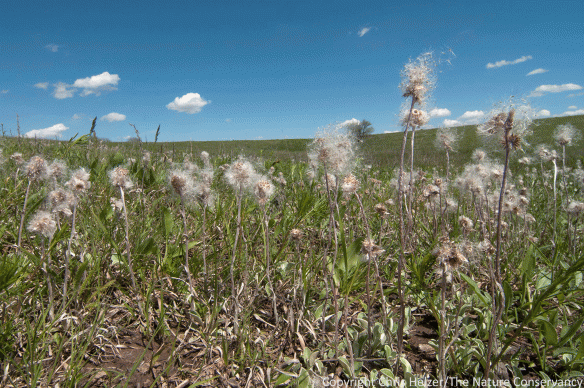
Photo of the Week – May 5, 2016

Wildflower viewing this time of year, at least in the prairies I know best, is more like an Easter egg hunt than a fireworks show.  Spring wildflowers tend to bloom within just a few inches of the ground, nestled among the early growth of grasses and wildflowers that will literally overshadow them within just a few weeks.  Their short stature, small blooms, and (usually) solitary nature don’t detract from their beauty, however, and each “egg” is well worth the hunt.  Earlier this week, I enjoyed a pleasant hour or so finding these colorful little surprises at our family prairie.

Prairie violet is scattered across the prairie, but numbers are highest near

Prairie violet (Viola pedatifida) is scattered across our prairie.  I assume some host caterpillars of regal fritillary butterflies, which are common in our prairie and can only feed on violets, but I’ve never actually found a caterpillar on a violet.  They’ve got to be there.  Somewhere.

Broad patches of pussytoes (Antennaria neglecta) have already gone to seed.

Broad patches of pussytoes (Antennaria neglecta) have already gone to seed.  Competing vegetation is kept short within pussytoes patches because the species is allelopathic, meaning that it releases chemicals to stifle growth of other plants.

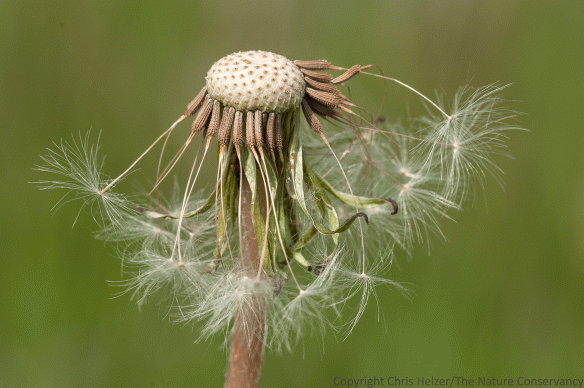
Most dandelion (Taraxacum officianale) plants have also gone to seed. While they were blooming, they were a major source of food for early spring pollinators.

Most dandelion (Taraxacum officianale) plants have also gone to seed. While they were blooming, they were a major source of food for early spring pollinators.

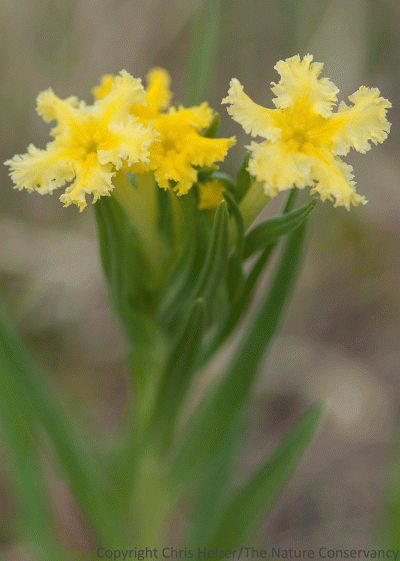
Fringed puccoon, aka narrow-leaf puccoon (Lithospermum incisum) is on the downhill side of its blooming period.

Fringed puccoon, aka narrow-leaf puccoon (Lithospermum incisum) is on the downhill side of its blooming period but is among the most abundant of spring flowers at our prairie right now.

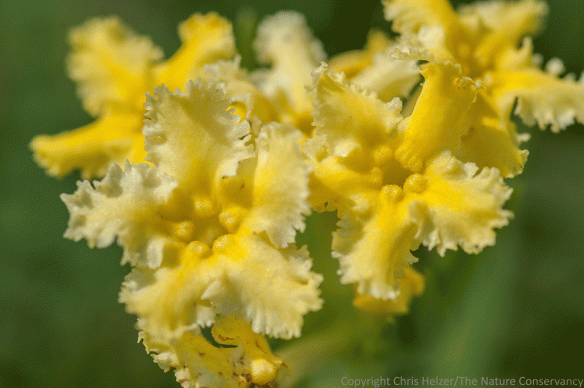
It's not hard to see where fringed puccoon gets its name.

It’s not hard to see where fringed puccoon gets its name.

American vetch (Vicia americana) seems to sprawl awkwardly across its neighboring plants.

American vetch (Vicia americana) seems to sprawl awkwardly across its neighboring plants.  It never seems to be abundant, but I seem to stumble across a few plants each year – and often in different places than I remember seeing them before.

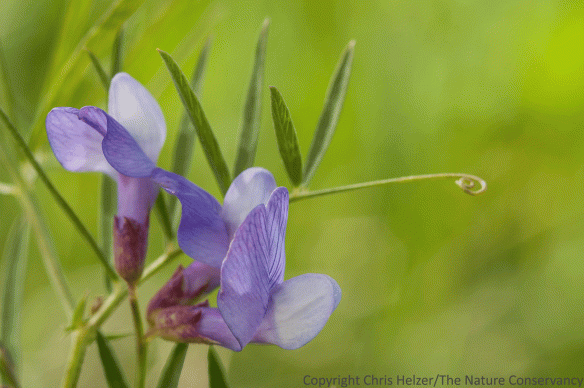
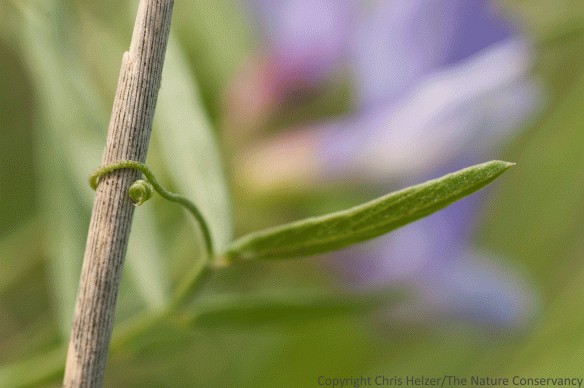
Tendrils on the tips of American vetch leaves wrap tightly around stems of adjacent vegetation.

Tendrils on the tips of American vetch leaves wrap tightly around stems of adjacent vegetation.  I’m not sure what benefit this might provide the vetch plants.

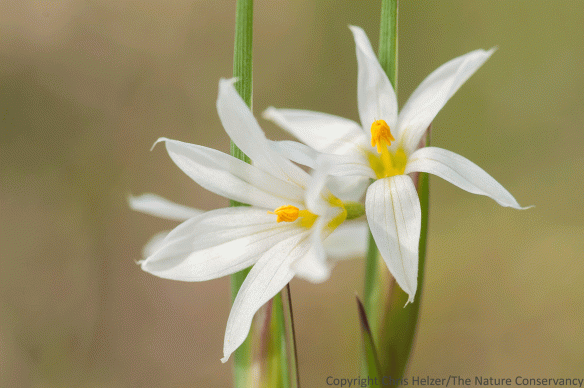
Blue-eyed grass (Sisyrinchium campestre) might be the most elegant of the flowers currently blooming in our prairie.

Blue-eyed grass (Sisyrinchium campestre) might be the most elegant of the flowers currently blooming in our prairie.