On Monday, I took advantage of very pleasant weather to visit one of our Platte River Prairies I hadn’t seen for a while. The warm sunny day felt great to me, but apparently also invigorated a lot of other creatures. Wild turkeys were in full display mode, with males showing off to each other and to nearby females, and I flushed a prairie chicken from near where it and others had been lekking earlier in the day.
More interestingly, I saw all kinds of insect activity. Big green darner dragonflies were zipping around wetlands adjacent to the river, and nearby patches of bare sand were full of small hordes of brightly colored tiger beetles chasing after flies and other tiny insects. I wondered whether the adult insects I was seeing had spent the winter as adults, and if so, how. Green darner dragonflies are migratory, so the ones I saw might have moved back north from wherever they go during the winter. I’m pretty sure the tiger beetles I saw had spent the winter as adults, sheltered in their burrows.
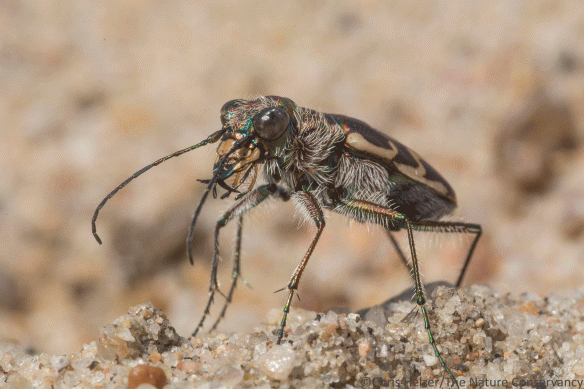
I’m pretty sure this is the bronze tiger beetle (Cicindela repanda) because it fits both the visual description and the habitat (bare moist sand near the river). This was the most common tiger beetle I saw.
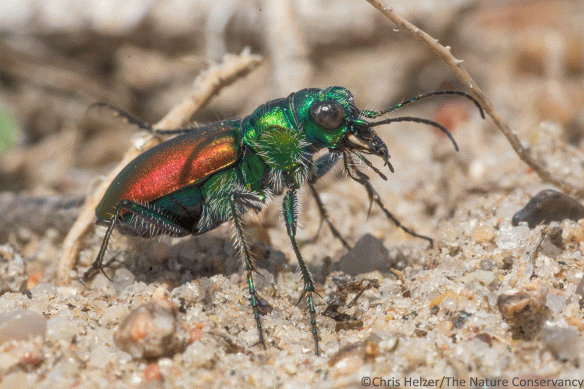
There many fewer festive tiger beetles (Cicindela scutellaria), but they were certainly the most colorful.
As I was crawling through the sand on my belly, trying to get close enough to photograph tiger beetles, I occasionally flushed band-winged grasshoppers that were hanging around on the same patches of bare ground. I managed to photograph both green and brown ones, which I assumed were different species until I got home and looked more closely at the photographs. Despite the different colors, the patterns and textures of the grasshoppers looked identical to each other, so I sent the photos to a couple friends who have shown themselves willing to put up with my grasshopper questions in the past.

The brown form of the greenstriped grasshopper was much more common (and harder to see against the mostly still brown grass) in the prairies this week.
Both Ellen Welti and Angela Laws responded and let me know that both the green and brown grasshoppers were greenstriped grasshoppers (Chortophaga viridifasciata). Greenstriped grasshoppers are band-winged grasshoppers, which are known for their colorful wings and their habitat of crepitation (loud snapping noise) as they are flushed and fly away. Band-wings also tend to hang out in areas of bare ground, which matches where I found them this week.
The greenstripped grasshopper is very common and abundant in the eastern United States, but it is found in much more scattered populations out here in the west where it tends to be tied to areas of moist soil. The grasshoppers hatch from eggs in mid-summer and then overwinter as late stage nymphs. Once they emerge in the spring, they molt into their adult form. During the winter they are in diapause (a kind of dormant state) that is apparently broken in the spring, not by temperature, but by increased photoperiod (daylength). All of this means that greenstriped grasshoppers have to be extremely cold tolerant. They have to survive the winter, of course, but even after they emerge in the spring they still have to face the kinds of spring cold snaps we’ve been dealing with this year. During those cold periods, the grasshoppers find a place where they can nestle into some prairie thatch until temperatures rise again. Then they bask in the sun until they’re warm enough to resume their regular activities.
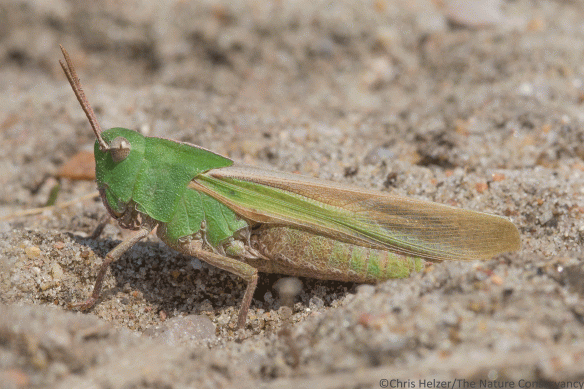
In its green form, the greenstriped grasshopper is sure handsome, isn’t it?
Ellen shared a great anecdote about how cold tolerant the greenstriped grasshopper can be. While doing grasshopper research at Konza Prairie (near Manhattan, KS), she put a batch of caught grasshoppers in the freezer – a standard way to kill insects before sorting, identifying, and pinning them. Three days later, when she brought the bag of frozen insects out to work through them, a greenstriped grasshopper started kicking its legs! Ellen said she felt bad for the grasshopper and ended up taking it back out to the prairie, where it seemed to be completely unphased by the whole experience and hopped back into the grass.
Seeing how quickly insect activity resumes after cold snaps during the spring is a great reminder of how resilient and well-adapted those creatures are. We complain about having to put up with wild temperature swings, but we’ve got cozy homes and appropriate clothing to help us cope. Birds, insects, and other animals don’t have the advantages we have – they’re just tougher than we are. While not all of them can stand being frozen solid like the greenstriped grasshopper (though many of them can), they have been dealing with crazy weather events for many thousands of years, and will likely continue to do so in the distant future. I bet they whine a lot less about it too.





 The Prairie Ecologist