I recently wrote an article for NEBRASKAland magazine about milkweed and the surprising number of milkweed species that can be found in Nebraska. (See the most recent online issue here). In total, there are seventeen species known to the state, and only a handful look anything like most people’s mental vision of milkweed – tall, with broad oval leaves and big pink flowers. Milkweed can be found in habitats ranging from wetlands to woodlands to dry sandy prairies, and can have flower colors of green, white, and orange (and, of course, various shades of pink and red).
Growing concern over monarch butterflies has raised awareness of milkweeds and their importance, but milkweeds are far more than just monarch caterpillar food. They have an incredible (in the sense that it doesn’t seem possible) pollination strategy, host an array of insect species that have evolved to handle the toxic latex produced by milkweed plants, and are among the most important nectar plants to many butterflies and other pollinators. We’re still learning about the relative value of each milkweed species as monarch caterpillar food, but there is no question about their overall beauty and diversity.
This is a great time of year to find many different milkweed species in bloom. See how many different milkweed species you can find in your favorite natural areas.
Here is a series of milkweed photos I’ve taken over just the last couple of weeks.
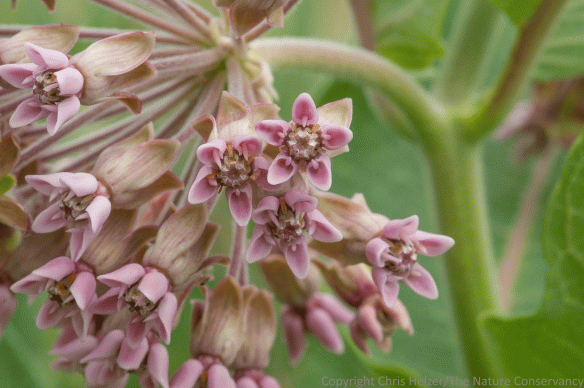
Common milkweed (Asclepias syriaca)- the species most people envision when they think of milkweed.
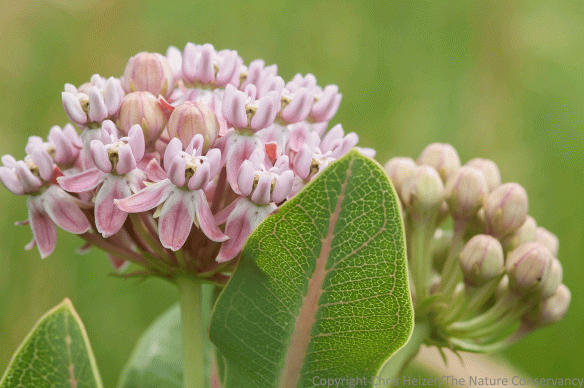
Sullivant’s milkweed (Asclepias sullivantii) looks much like common, but the leaves are waxy smooth and completely without fuzz. It is a much less common species in Nebraska.

Sand milkweed (Asclepias arenaria) is common on dry sandy hilltops in the Nebraska Sandhills.
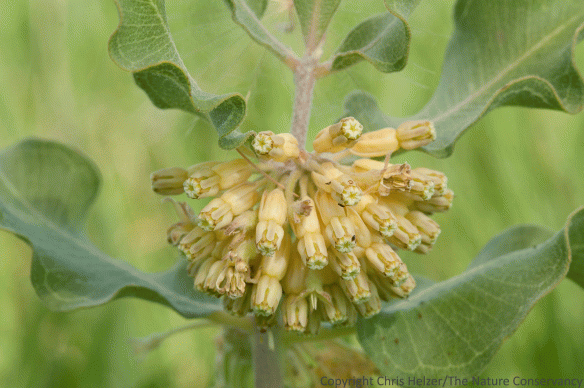
Green milkweed (Asclepias viridiflora) is common in the mixed-grass portion of Nebraska, but also many other places. It’s creamy whitish-green flowers hang downward from the stems.
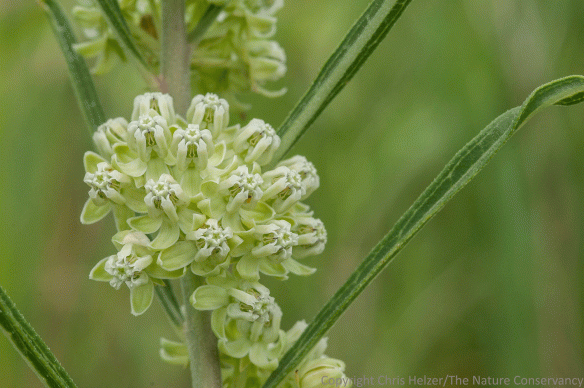
Narrow-leaf milkweed (Asclepias stenophylla) has very long slender leaves.

Whorled milkweed (Asclepias verticillata) is small, with tiny skinny leaves that whorl around the stem.

 The Prairie Ecologist