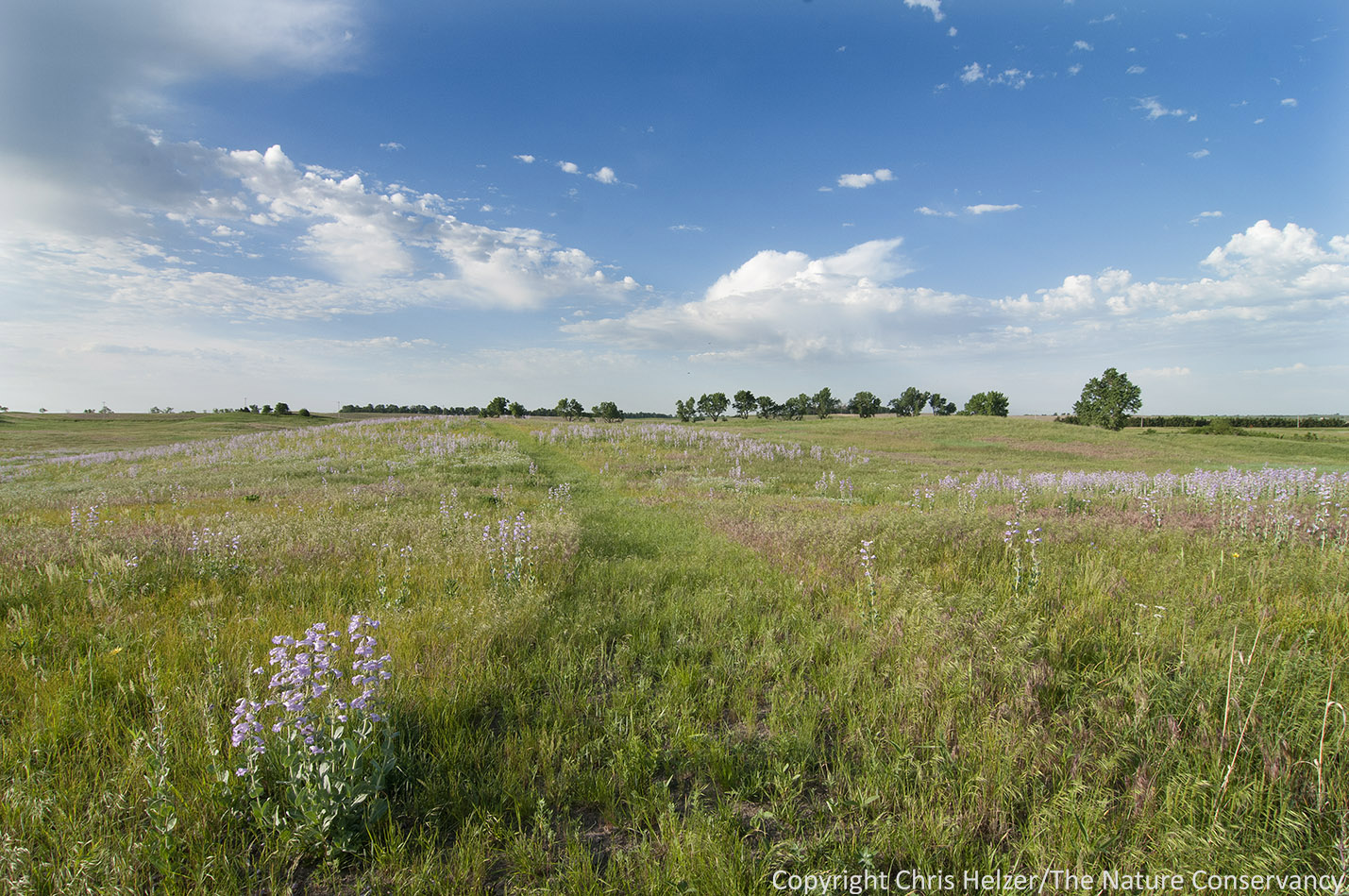
Back in February, I wrote about our new Hubbard Fellowship program. Anne Stine and Eliza Perry joined us in early June as our first two Fellows, and have been enthusiastically soaking in the prairie life ever since. Anne comes from northern Virginia, but just graduated with a Master’s of Science degree from Duke University. Eliza is from Maine and completed a Bachelor’s degree from Bates College.
We are in the process of setting up a blog for the Hubbard Fellowship, through which Eliza and Anne will be able to share their experiences over the next year – and those experiences are already coming fast and furious. During their first three weeks, they have controlled invasive thistles with spades and herbicide, killed trees with PVC herbicide wands ( “kill sticks”) and chainsaws, harvested seeds, learned to drive an ATV and tractor, attended conference with staff of The Nature Conservancy from twenty-three states, got a guided tour of lands managed by the Prairie Plains Resource Institute, wrangled a cow wrapped in fencing wire, herded cattle, repaired and erected electric fences, observed a prescribed burn, and have been learning the basics of grassland ecology and management. Since the Fellowship blog isn’t up and running yet, I asked Anne and Eliza to write down some brief thoughts about their experiences so far and am sharing them here:

Anne Stine (left) and Eliza Perry (right), dressed up for a prescribed fire – one of many new experiences during their first three weeks on the job.
Eliza:
The sky in Nebraska is without a doubt “bigger” than it is in Maine, where I hail from. As much as I love watching the sun rise over the ocean, I have experienced few sunsets that rival those here in the prairie, which spread melting color 360 degrees around the sky. Every day here has been another new and blissfully challenging adventure. I have entered a whole new landscape, ecosystem, and culture (and time zone!). As a student of Environmental Studies with a focus on environmental ethics and philosophy, I am always curious about the differing interests of those living in both the human and non-human communities I get to work with in the coming months. The “Midwestern hospitality” mindset that I heard about before my arrival certainly extends into Nebraska, even if there is controversy over whether it is a Midwestern state. Folks here really know how to make a newcomer feel welcome and at home, which is especially appreciated on my end.
I had always assumed there to be a well-established, precise order to the world of professional conservation, and while the staff here have extensive experience with grasslands, it is clear that their jobs present just as much of a learning experience as mine. At a Nature Conservancy conference not long after we arrived, I was privileged to listen in on a fascinating conversation between Chris and two other Great Plains ecologists about grazing strategies. Grazing is a staple management tool for grassland conservation. All three are veteran scientists, and they exchanged an amazing amount of insight during a back and forth discussion of the advantages and disadvantages of permitting cattle to graze in one area for an extended period of time versus quickly moving them along a specified route. I would have thought a resolution had long been set in stone, but the more I learn, the more I understand how complex and dynamic this ecosystem is, which is an awareness I was lectured on but rarely felt or experienced during my undergraduate coursework. At this point, I am not yet grazing or grassland savvy enough to offer my perspective on the matter, but the conversation itself demonstrated some general trends within the event, namely that TNC folks love their jobs and are eager to engage with topics of their own and others’ expertise. I have not encountered such enthusiasm anywhere that I have worked in the past and it was extremely energizing to see.
Yet as exciting as everything is and continues to be, inexperience is a strange—though exhilarating—feeling, and I am looking forward to the day when I can glance down and identify more than ten species at my feet, or fix an ATV or a fence without calling for help every step of the way (we work with some divinely patient people). That day is close, that much I know!
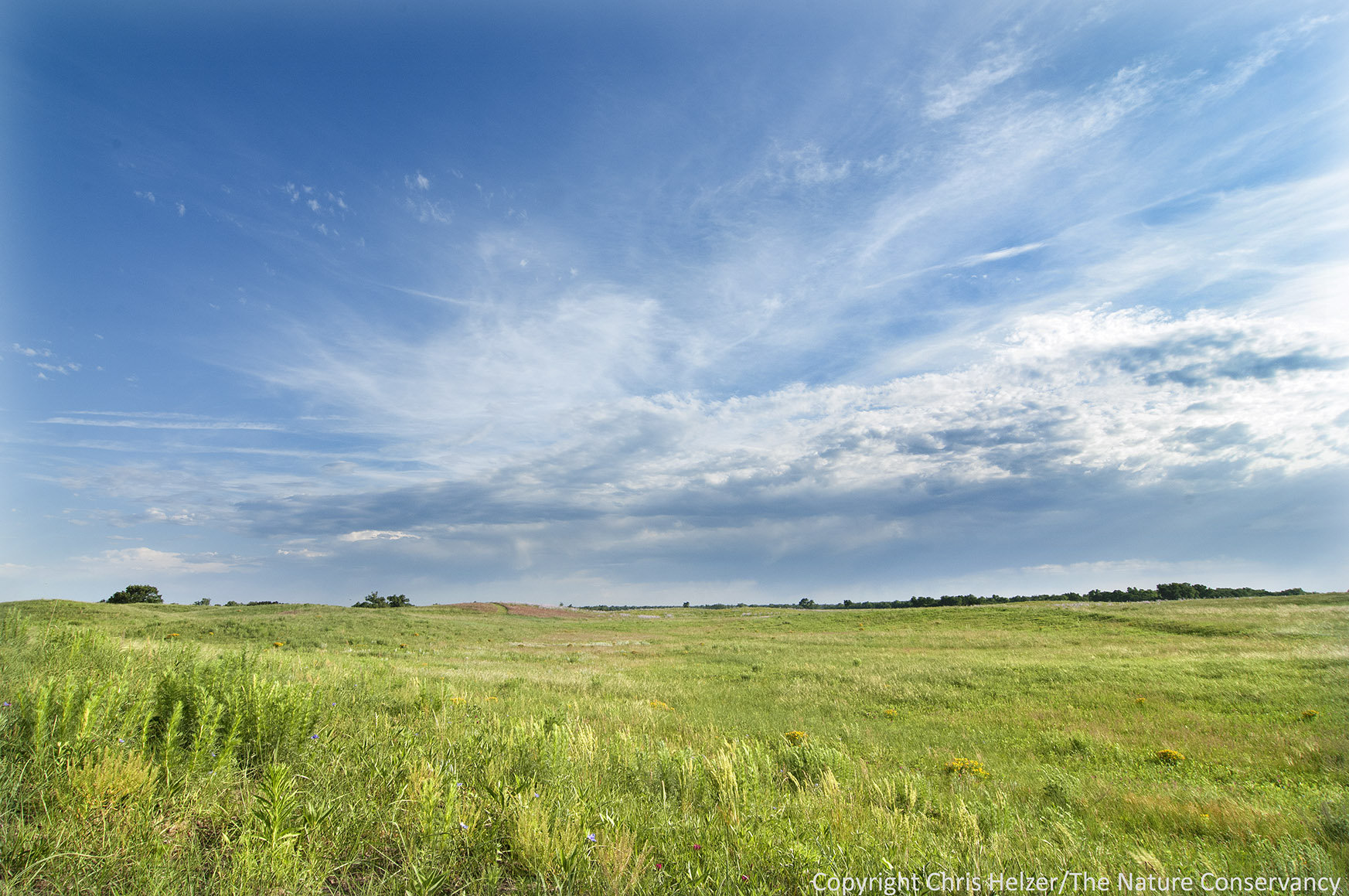
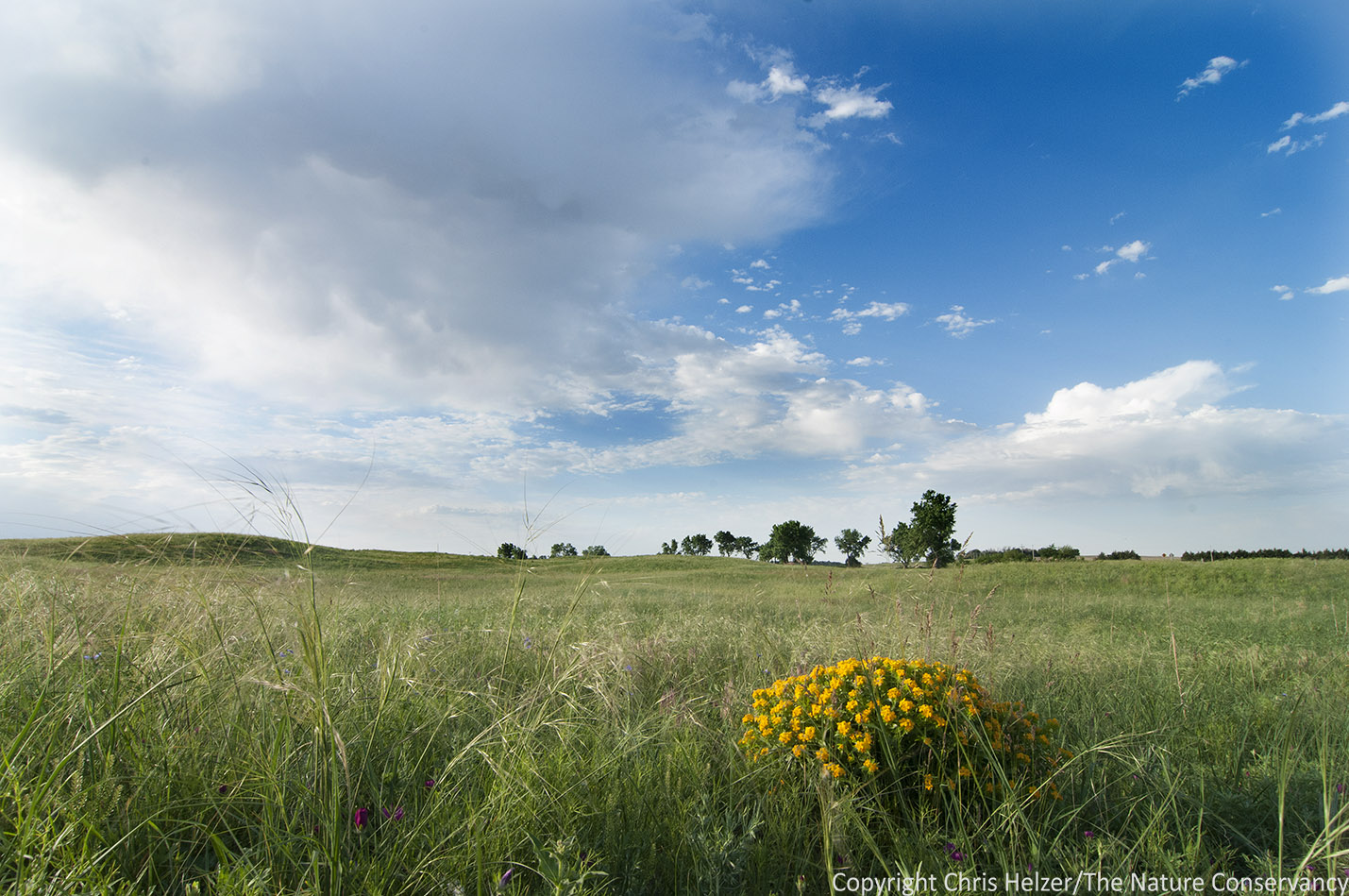
The Nature Conservancy’s wide open prairies along the Platte River are very different from the landscapes where Eliza and Anne grew up. They seem to be adapting just fine…
Anne:
I drove cross country three times before I stopped in the prairie. I zipped along the Gulf Coast to the Four Corners and California, only noting the silted up Americana along Rt. 287 from Dallas to Amarillo and the steppes and mesas of Northern New Mexico in the southern plains. Other than that, I was target oriented. Eyes glazed, listening to podcasts and classic country on the radio from DC to Arizona.
When I first arrived in Nebraska to interview for the Hubbard Fellowship it was April, and the great Sandhill Crane migration was underway. I saw long-legged, long-necked grey birds picking through the brown cornfields, I could hear them croaking to each other in flight overhead, and I could see what I thought was their grey feathers in coyote scat along mown trails in the brown prairie. I didn’t know what to make of this early spring grassland, but I was excited about the Fellowship and I decided to gamble on the unknown.
Returning to the prairie in June meant landing in a wide green meadow of wildflowers and sloughs. During my run along the Platte on my first morning, I saw two deer, three rabbits and a turkey. Nebraska seemed like a rich place for me to live out my Huck Finn adventures—I’d go fishing in the creek (done), hunting in the fall (enrolled in Hunter’s Education), and canoeing in the Platte (impossible, but more on that later). I’d learn every grass and flower, fix fences and help with restoration. The early summer greenness urged me to fully immerse myself in prairie life.
I am eager to learn more about this new world in which I am privileged to reside for a full turn of the seasons. This is a subtle landscape that one must inhabit to know, about which Willa Cather famously wrote:
“There was nothing but land; not a country at all, but the material out of which countries are made.”
― Willa Cather, My Ántonia