Photo of the Week – June 7, 2013

Prairies demonstrate their resilience regularly, but usually in a fairly subtle way.  They tend to adjust their plant composition after fire, grazing, or drought in ways you might not notice unless you were a botanist.  Once in while, however, prairies take it to the next level and really show off.
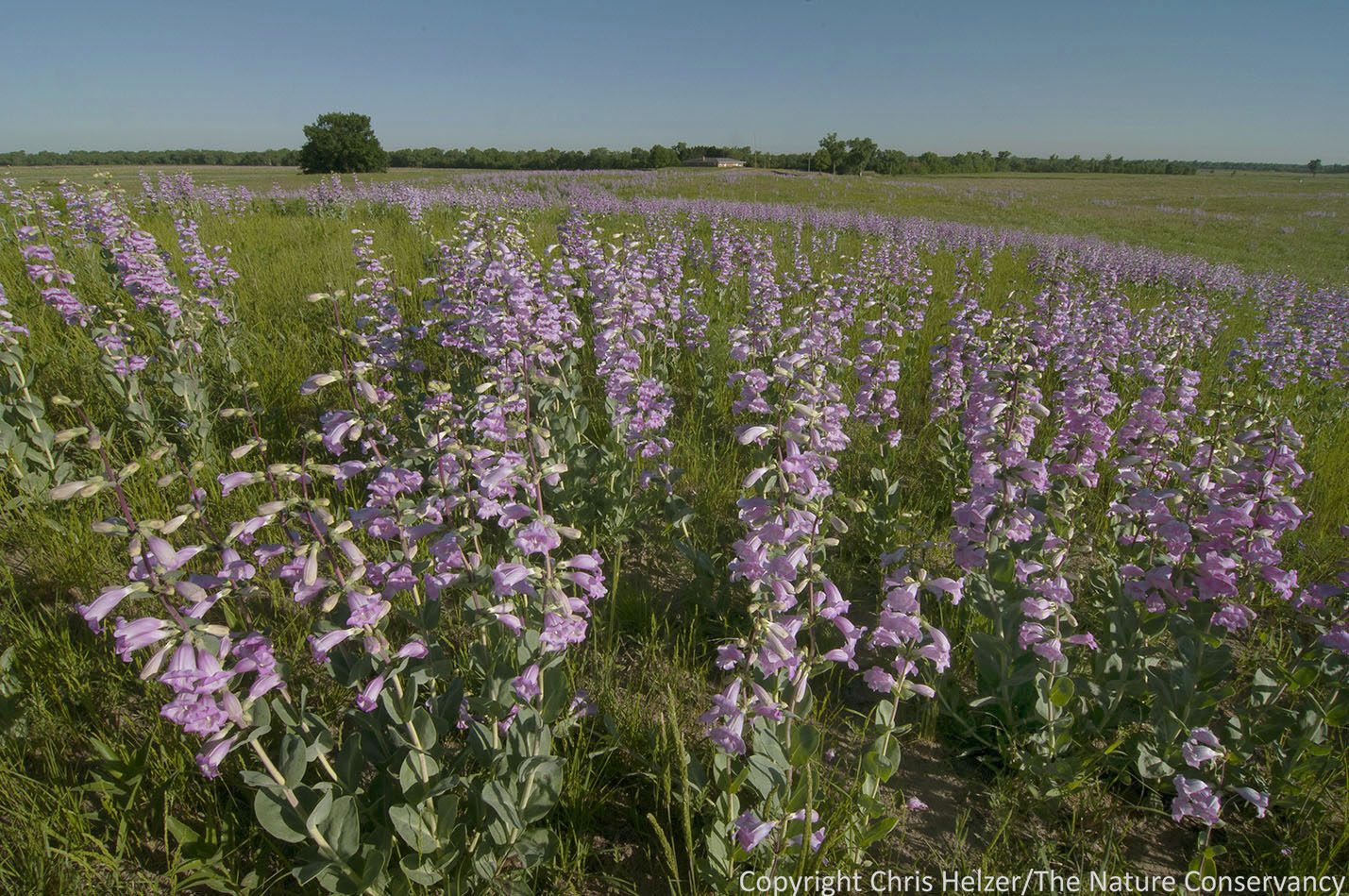
A profusion of penstemon in restored sandhill prairie at The Nature Conservancy's Platte River Prairies.

A profusion of penstemon in restored sandhill prairie at The Nature Conservancy’s Platte River Prairies.

Last year was the driest year on record for this area.  We had less than half of our average annual rainfall, and most of that came early.  By late August, very little green was left in most of our sites.  The prairie shown above had been burned in the spring and grazed most of the season.  Many people seeing it for the first time would have assumed it was dead and gone (see photo below).
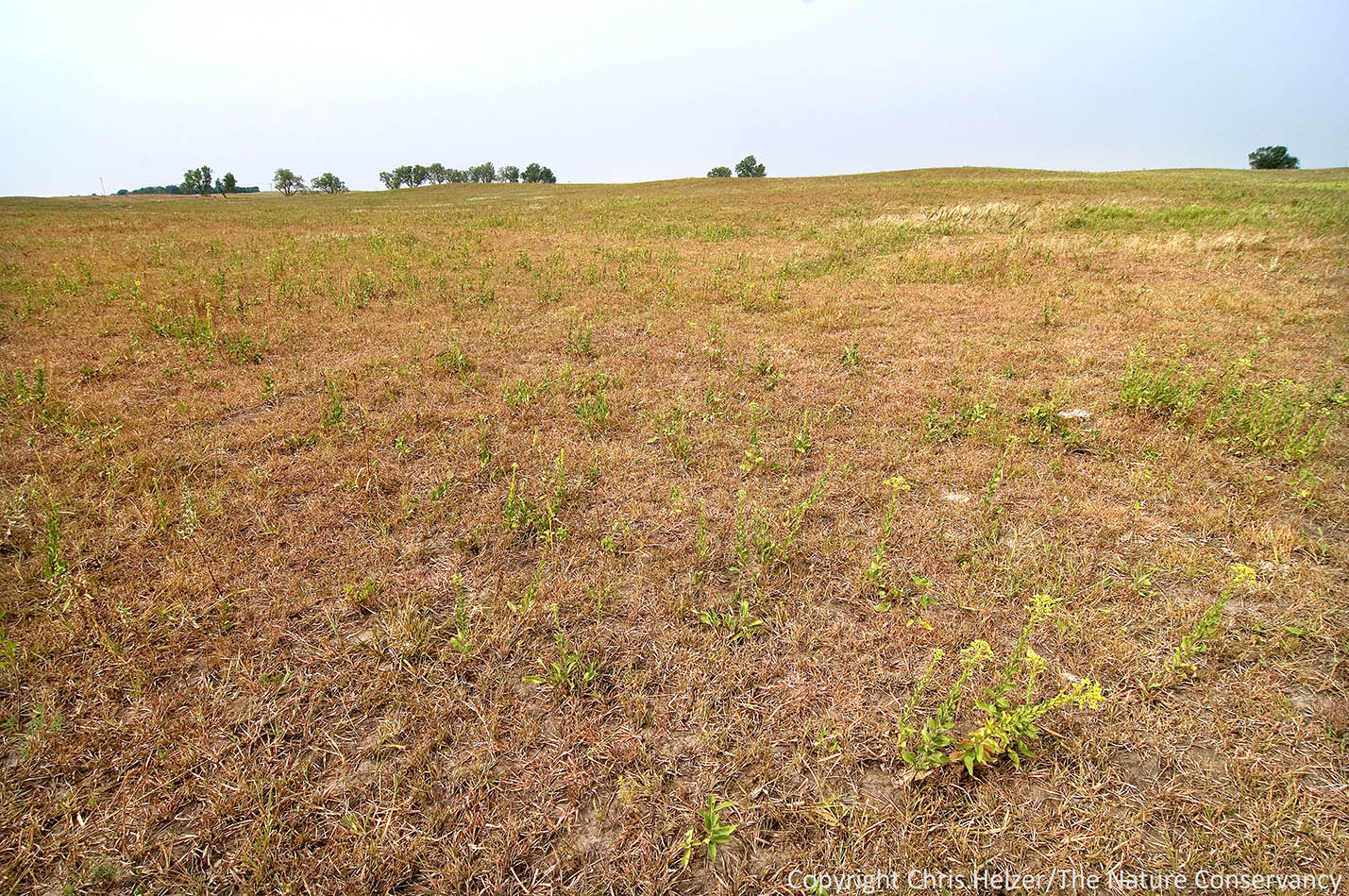
This is the same portion of prairie shown in the first photo, but this images was taken August 24, 2012 after a year of fire, grazing, and severe drought.  Most of the green in the photo is western ragweed and a little goldenrod.

This is the same portion of prairie shown in the first photo, but this images was taken August 24, 2012 after a year of fire, grazing, and severe drought. Most of the green in the photo is western ragweed and a little goldenrod.

I’ve written about the ecological resilience of prairies before, and have presented long-term data showing how our prairies fluctuate in plant composition over time in response to drought, grazing, fire, and various combinations of those factors.  Many plant species rise and fall in abundance as conditions change (opportunistic species) and others tend to maintain a steady population size, though they may be more or less visible in particular years.  It’s one thing to see that in graphs and tables, but it’s also fun to see a spectacular green-up and explosion of wildflowers in person, especially after a long dry (brown) year.

In the sandhill prairie shown above, last year’s drought caused most of the perennial plant species to enter dormancy by July – effectively giving up on that season’s growth and reproduction potential and saving their remaining energy for the next year.  Before they went into dormancy, however, the perennial grasses had already been weakened by relatively intense grazing, reducing the size of their root masses and opening up space for opportunistic species to take advantage of.  One of those opportunistic species is the short-lived perennial shell-leaf penstemon (Penstemon grandiflorus) which is obviously thriving this season.  Shell-leaf penstemon has been generally increasing in abundance since this prairie was seeded in 2002, but it took a gigantic leap forward this year.  Based on what I’ve seen in other prairies, I expect it to decline in abundance over the next couple of years as the dominant grasses and other long-lived perennials recover from last year’s stress.  In the meantime, we’re happy to enjoy the prairie’s flamboyant demonstration of resilience.
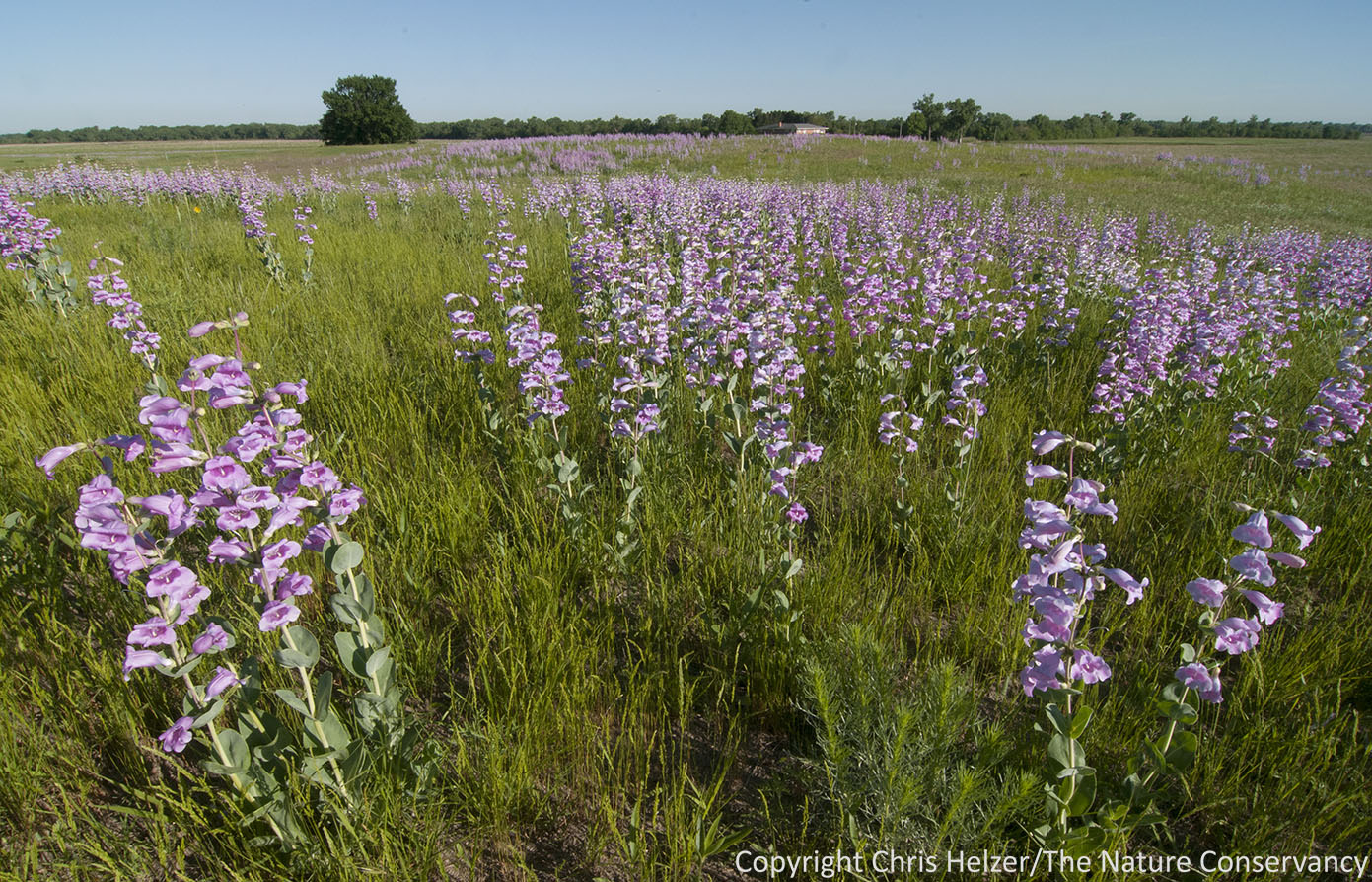
Junegrass (Koeeria macrantha) is also having a great year, and provides a beautiful counterpoint to the penstemon in this photo.

Junegrass (Koeeria macrantha) is also having a great year, and provides a beautiful counterpoint to the penstemon in this photo.

If you’re in the area, now is a great time to come hike our trails.  Both the upland and lowland trails through the Platte River Prairies cut right through huge patches of penstemon.  If you’ve never been to our trails, you can find directions and more information here.

The mowed hiking trail through sandhills provides excellent exposure to the penstemon profusion this season.

The mowed hiking trail through the sandhills takes you right through penstemon profusion this season.

Ragwort – Prettier (and More Valuable) than its Name Might Suggest

One of my favorite spring flowers is prairie ragwort (Senecio plattensis, aka Packera plattensis).  Its bright yellow flowers add welcome color to prairies every May, especially when it appears in high numbers.  We always try to harvest as much seed from the species as we can when we’re doing prairie restoration projects – partly because it fills some important ecological roles, and partly because I just like it.

Prairie ragwort along one of the hiking trails at The Nature Conservancy's Platte River Prairies, Nebraska.

Prairie ragwort was blooming along our hiking trails last week.  The Nature Conservancy’s Platte River Prairies, Nebraska.

Ragwort is typically a biennial, so it germinates and forms a rosette (a few basal leaves) its first season, then blooms and dies the next year.  I’ve read that the rosettes can survive more than one year before blooming, but I’ve never watched closely enough to confirm that at our sites.  Regardless, it’s one of a suite of opportunistic plants that can take advantage of open space created by drought, fire, and/or grazing.  I have a soft spot in my heart for those species because their presence and abundance helps me read what’s happening in our prairies.  When I see lots of ragwort and other opportunistic species in our sites, it tells me that the vigor of dominant grasses has been suppressed (because of weather, management, or both).  Suppressing dominant grasses is a major focus of our management work because that suppression facilitates the establishment and spread of many other plant species, not all of which are “weedy”.  While a number of opportunistic species (ragweeds, annual grasses, and many others) can indicate grass suppression, ragwort is nice because it also happens to be attractive – and because it flowers at a time of year when few other showy plants are blooming.

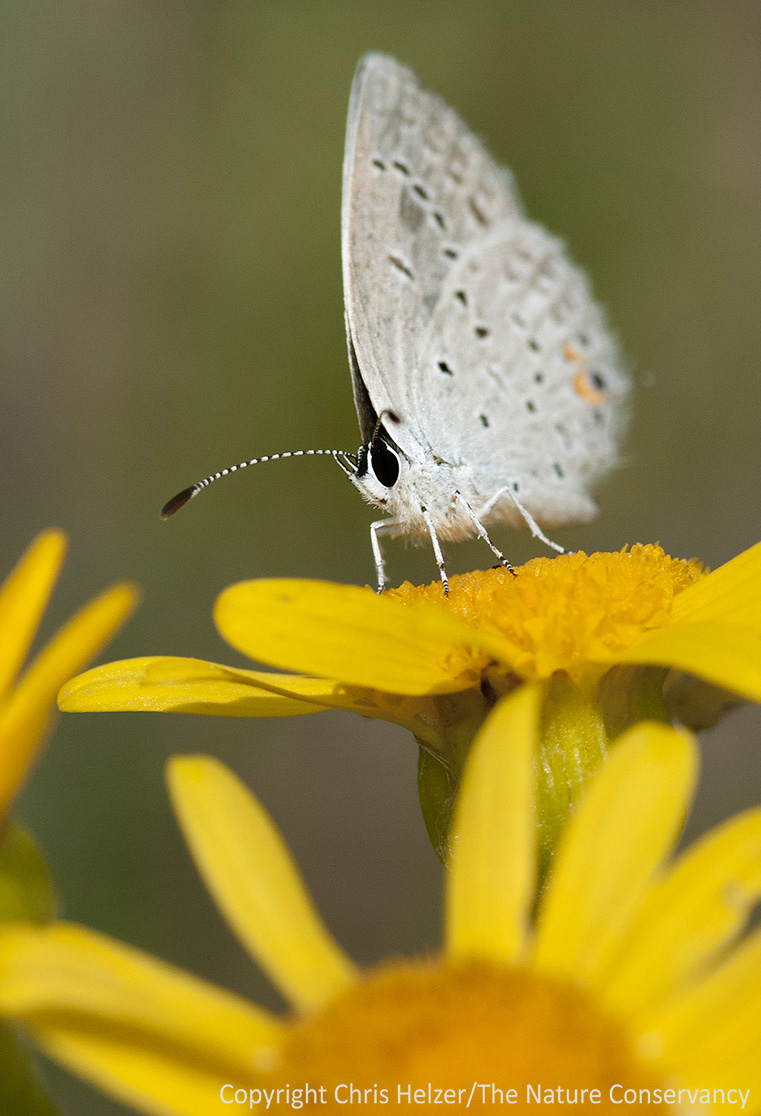
An eastern-tailed blue butterfly on ragwort at the Helzer family prairie by Stockham, Nebraska.

This eastern-tailed blue butterfly was feeding on ragwort at the Helzer family prairie a couple weeks ago.  Near Stockham, Nebraska.

A sweat bee on ragwort at the Helzer family prairie.

A sweat bee on ragwort at the Helzer family prairie.

Prairie ragwort attracts a large number of pollinators, including bees, flies, moths, and butterflies.  It is an equal opportunity resource for pollinators because it doesn’t hide or restrict access to its pollen or nectar with funny shaped flowers that require long tongues or other specialized body parts.  Everything is right there – available to any insect that lands on it.  In years like this one, when ragwort appears in big numbers, it might be the most important species available to pollinators during its blooming period.

I enjoy watching the ebb and flow of ragwort populations in response to our management, but I also like to monitor its establishment and spread in our restored (reconstructed) prairies.  Although its seedhead is fluffy like a dandelion, and the individual seeds can travel long distances, most end up falling near the parent plant.  As a result, new populations tend to radiate outward from the initial colonizing individual, and the size of ragwort patches can be an indication of the age of a restored prairie.  However, that pattern falls apart when a prairie isn’t managed with frequent disturbances because the populations can quickly shrink during years when thatch and vigorous grasses prevent seed germination and establishment.

A common checkered skipper butterfly feeds on ragwort in one of our restored Platte River Prairies.

A common checkered skipper butterfly feeds on ragwort in one of our restored Platte River Prairies last week.  The short heights of the grasses surrounding the ragwort plants in this photo are a result of both drought and grazing last year.

Ragwort is certainly not a rare plant in Nebraska, or one that is of conservation concern.  The droughty nature of our state helps keep populations strong, as does the prevalance of grazing in many prairies.  However, I think it’s important not to judge the value of plants by whether or not they are rare.  Ragwort, along with hoary vervain (Verbena stricta), common and show milkweeds (Aclepias syriaca and A. speciosa), and many other “weedy” wildflower species serve as great indicators of ecological events, step up to fill holes in weakened plant communities, and are among the more important wildflowers for pollinators in our prairies.

What’s not to like?