Our family owns a prairie about 15 minutes south of our house, and that ownership gives me some wonderful opportunities to share my enthusiasm about prairie ecology with my kids. I don’t expect any of my three offspring to become prairie ecologists when they grow up, but I do hope they’ll always enjoy and appreciate prairies. In addition, I want them to understand the importance of land stewardship and the conservation responsibility we all have – especially those of us with direct management control over land.

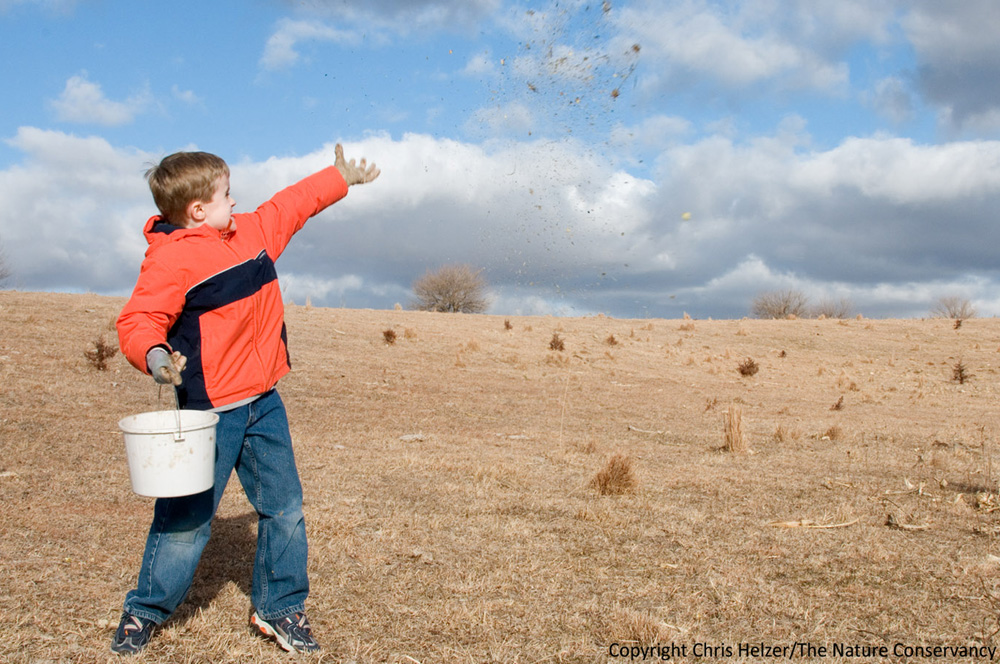
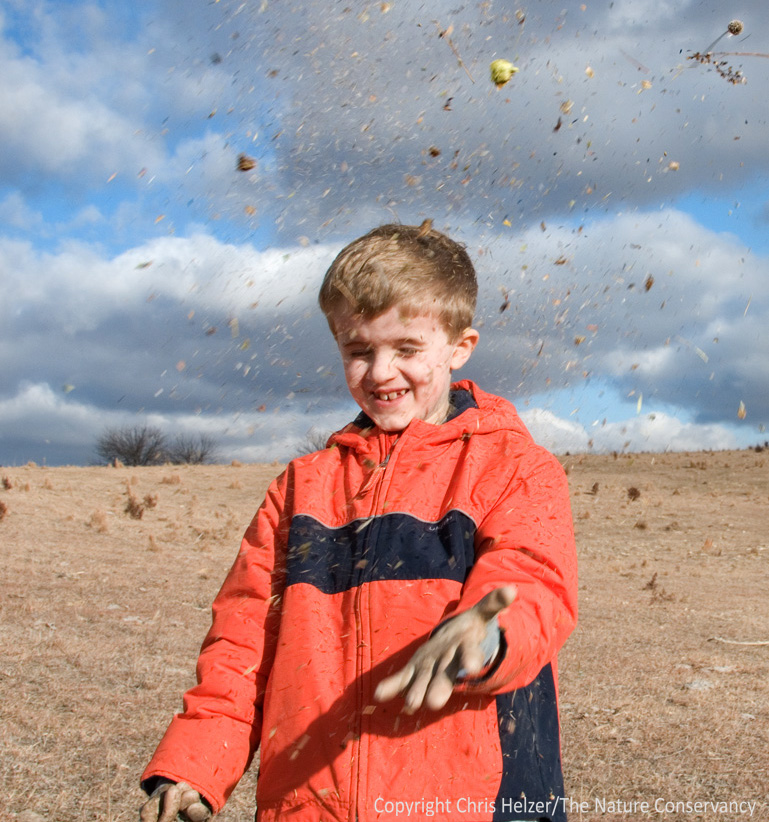
Daniel Helzer throwing prairie seeds at the Helzer prairie farm near Stockham, Nebraska.
Last weekend, I got to spend a couple hours with my youngest son (Daniel, age 7) overseeding of a portion of our prairie. During the summer and fall, all three kids helped me harvest seeds from local wildflower species that are rare or missing in our prairie. Since the end of the growing season, I’d been waiting for the right day to put together a nice family outing to throw the seeds out. It’ll be a good bonding experience, I thought. A great way to share in the process of restoring a piece of family land. Something my kids can tell their grandchildren about.
So yesterday, I asked for volunteers to help me spend a beautiful afternoon at the prairie. Not one kid wanted to go.
Fortunately, my wise (and beautiful) wife pointed out to me that asking for volunteers wasn’t always the best way to handle children. Adjusting my tactics, I cornered Daniel and simply asked him what time he wanted to go to the prairie with me. I then explained that we’d be working in very short grass (really tall grass can be hard on a 7-year old) and that we could quit if he got tired of it. I also described the satisfaction he’d get next year from finding new wildflowers in the prairie and knowing that they were only there because of his work. I’m pretty sure that’s what swayed him. Or maybe he realized that his brother and sister were going with their friends for the afternoon and his other option was staying home with his mom – who was cleaning house. Probably it was the satisfaction thing.
Regardless, off we went.

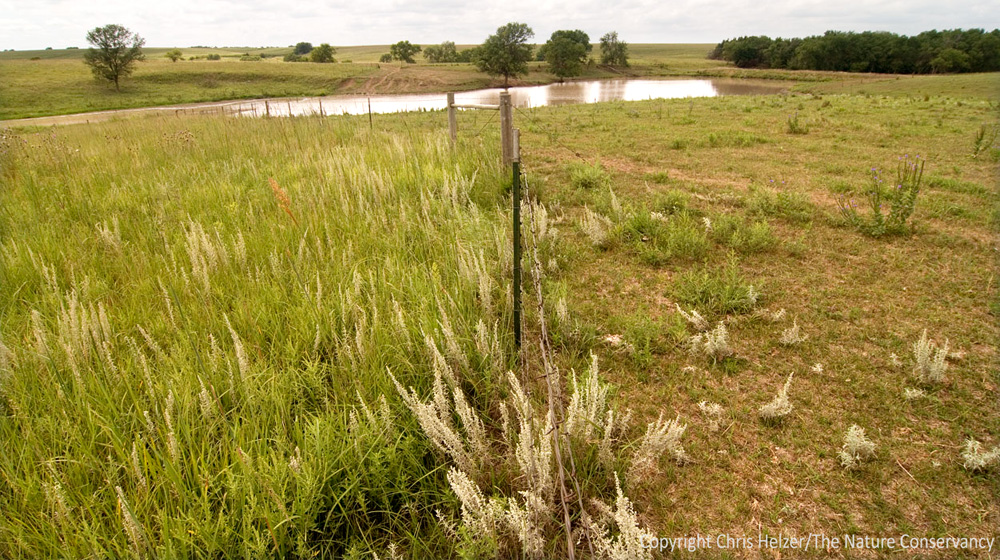
The right half of this August photo is the area Dan and I seeded yesterday. A season of intensive grazing (which continued well into October) knocked back the vigor of the grasses and other plants in that part of the pasture, opening up root space below and soil and light space on the surface. The portion of prairie on the left had the same treatment the previous year, but was ungrazed and recovering this year. The majority of this prairie was converted from cropland to grasses in the 1960's by my grandpa. Some wildflower species have colonized over time, but its overall wildflower diversity is still a little low - but growing.
(I wasn’t kidding when I told Dan we were going to be working in short grass. I’d set up the grazing on our prairie this past year such that about a fourth of the site was grazed very intensively for most of the season. Past experience has shown me that season-long intensive grazing can lead to decent establishment of seeded plants – particularly at this prairie. The grazing opens up bare ground for seed-soil contact, but also greatly reduces the root mass of grasses to allow new seedlings a chance to compete with those normally dominant plants. Next year the overseeded area won’t be grazed at all, which will give the seedlings a chance to start and the existing plants a chance to recover their vigor. I’ve never seen any long-term damage to existing plants, but this kind of grazing opens up temporary space for new recruitment.)
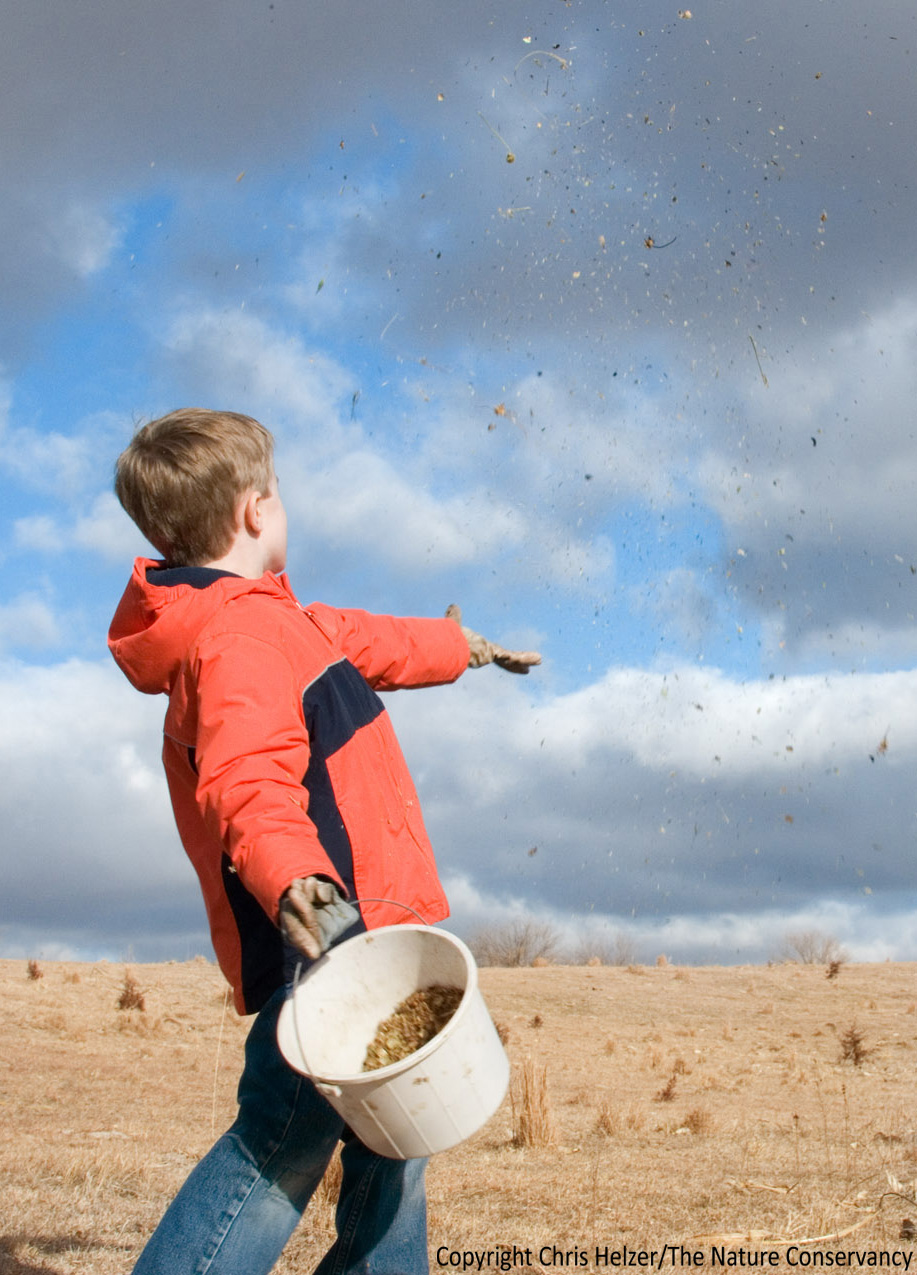
When we got to the prairie, I handed Daniel a bucket of seed and explained my special technique for overseeding. “Take this seed and throw it on the ground,” I said. Being a very bright young man, he picked it up quickly. Did I mention how smart he is?
We did have a brief minor issue with the wind, but that was really my fault for not including that in my explanation. What I should have said was, “take this seed and throw it WITH THE WIND.” After we dug a few seeds out of his eyes and he spit out the rest, things went very smoothly.
The first test throw helped us refine our methods.
.
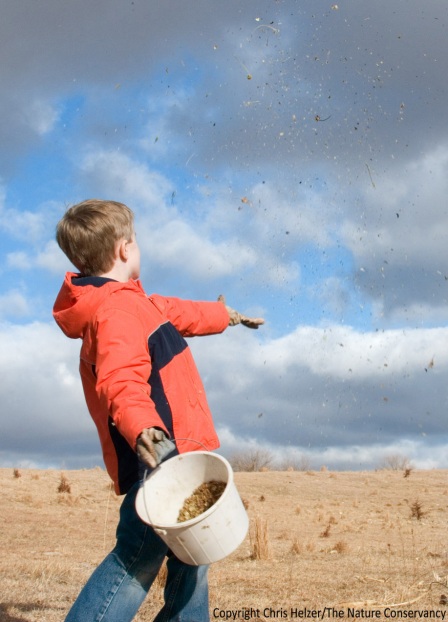
Throwing seeds with the wind is much more productive.
We spent more than an hour walking around and throwing seed on the ground (more or less strategically) – pausing now and then to look at tracks he found in the dirt. “Those are deer tracks,” I explained. “Yep, those too… and those and those and those.” Apparently, we have a lot of deer this year…
As we worked, we also spent some time discussing the best ways Dan might try to break the ice on the pond without getting muddy. Eventually, it dawned on me that his questions about breaking the ice were less theoretical and more like hints about what he’d actually like to be doing with the remainder of his prairie outing. So we put the remaining seed back in the truck and headed down to the pond, where we had a great time chucking sticks and rocks onto (and occasionally through) the ice. And, yes, he got muddy.
When we got home, I was proud to listen to Daniel explain to his mother – in great detail – the specifics of our afternoon’s conservation work. In fact, he very precisely described both the kinds of sticks and rocks we threw at the pond and exactly how high we had to throw them so they would punch holes in the ice when they landed. He even used the word “plummeted” appropriately. (Did I mention he’s very bright?) I’m sure he would have gotten around to describing the deep satisfaction he’d gained from personally participating in the restoration of prairie function and diversity, but he got challenged to a ping pong game and forgot.
All in all, it was a pretty great day.