Milkweed is in its full blooming glory right now. Not just the big pink ones, but also orange, white, and green-flowered varieties. I spent a couple hours at Lincoln Creek Prairie this week, photographing lots of different subject matter, but milkweed definitely constituted a dominant theme in the resulting photos. And yes, Bill, I hit the south lobe on the east side of the creek, and it was beautiful, as you promised. Thanks for the tip.
Here are some of the many milkweed photos I took this week.
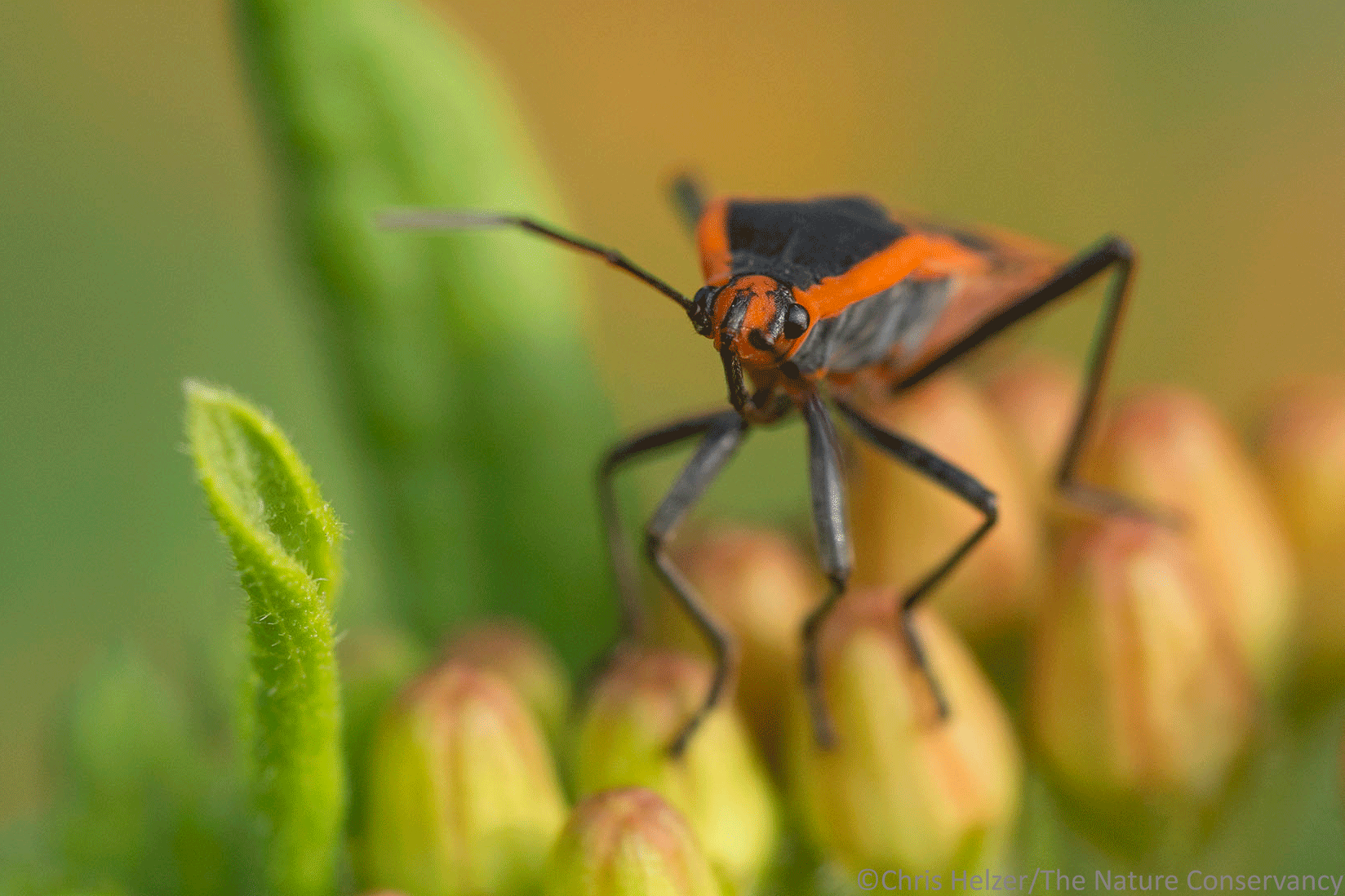
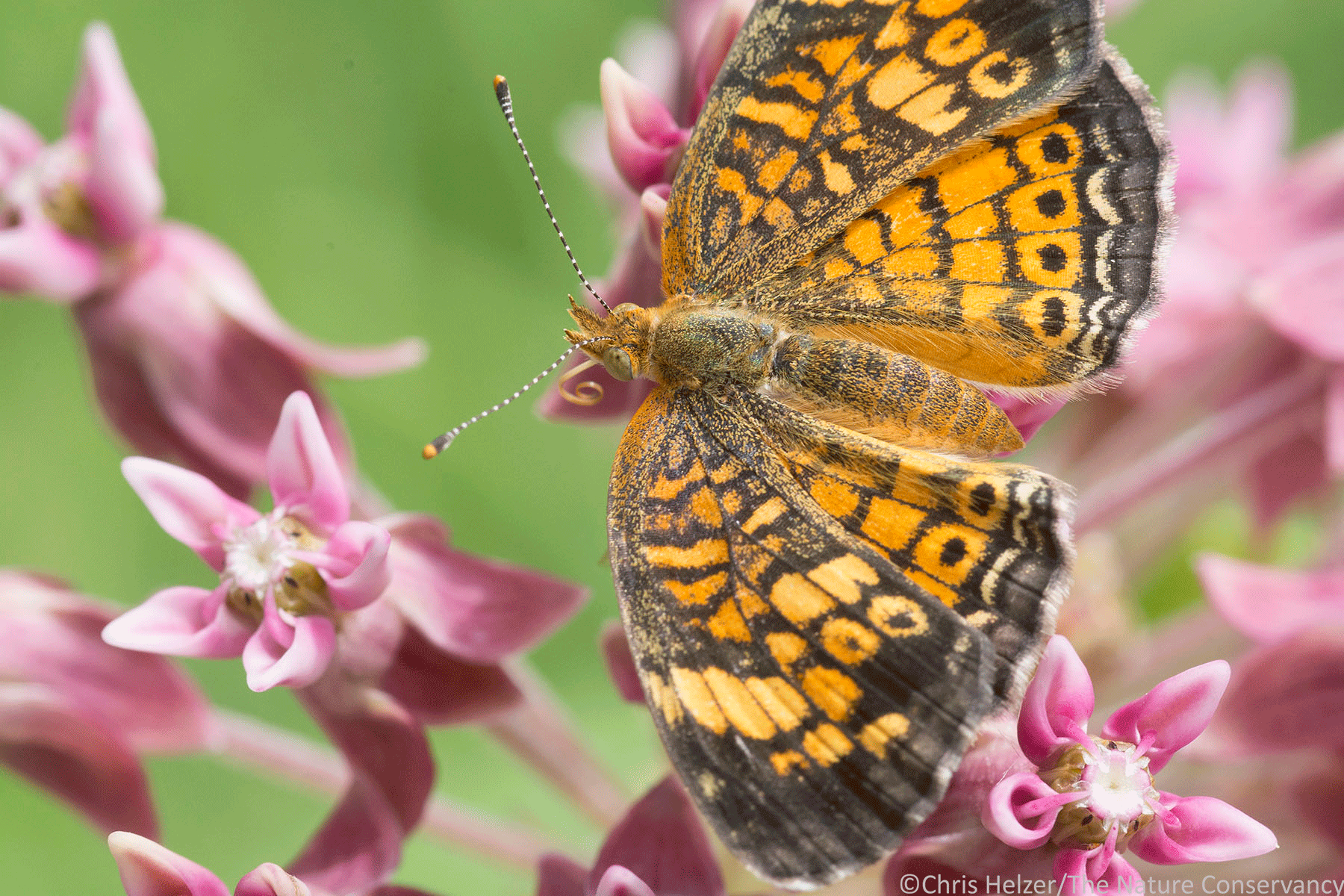
A large milkweed bug ( Oncopeltus fasciatus ) on the buds of butterfly milkweed (Asclepias tuberosa).Common milkweed (Asclepias syriaca)Common milkweed flower budsSullivant’s milkweed (Asclepias sullivantii)The same large milkweed bug, but on a different nearby flower.More common milkweed flower buds; because I like them.A skipper butterfly (Sachem?) on common milkweed.Common milkweed blossoms with thrips (the tiny insects).Pearl crescent butterfly (Phyciodes tharos) on common milkweed.The American bumblebee (Bombus pennsylvanicus), appropriately photographed on the 4th of July, on Sullivant’s milkweed.
Important: This post is only for those who are already in love with prairies and will traipse happily through them despite any hazards that may or may not exist. If you’re on the fence about hiking in prairies, trust me – it’s a great idea and you should do it. Just don’t read this postbefore your hike.
Here’s a piece of trivia most people don’t know: I’m allergic to grass pollen. Why are you laughing? I’ve had allergic reactions to grass pollen since I was in high school and blundered through a patch of pollen-laden reed canarygrass while fishing. It’s not so bad now – it only bothers me when I’m around grasses. Seriously, that giggling doesn’t become you. Fortunately, medications and allergy shots have helped a lot and my symptoms these days are pretty minor.
In fact, at this time of year, my grass allergies are way
down the list of things that bother me when I’m out in prairies. Mosquitoes, for example, are pretty nasty
this year, especially with all the flooding.
Fortunately, long-sleeved clothing and DEET work well enough to get me
through days when there is no breeze to help push them away. Ticks are abundant right now too, but for
some reason I’ve never understood, I rarely find ticks on me – even when colleagues
are picking them off themselves regularly.
Mosquitoes and ticks are annoying, but nothing compared to the bane of my existence during summer fieldwork season – chiggers. If not for my regular twice-a-day routine of DEET application to my ankles and waist, I would be completely incapacitated by red swollen and itchy bumps all over my body. I know this to be true because it has happened. One summer when I was a kid at Boy Scout camp, some researchers were studying chiggers and did pre-camp and post-camp counts of red bumps on Scouts. Due to an unfortunate “wilderness survival” outing, during which I “slept” all night in tall grass, I was deemed the champion of chigger week by those researchers when my chigger bite count exceeded 900. That is not an exaggeration. I spent much of the latter half of that week hiding behind trees where I could scratch the more private areas of my body, where itching was most severe.
Don’t worry, I’m not going to subject you to photos of chigger welts, or even the chiggers themselves (they’re too small for my paltry camera equipment anyway). Instead, I’ll just provide photos of the context within which chiggers attack – like this prairie.
Chiggers have continued to plague me ever since that
long-ago summer. On occasions when I
remember to apply DEET, I might get a few chigger bites per day. When I forget, all bets are off. I’ve never reached Scout Camp Champion status
again, but that is still a reasonable possibility, especially on days when I’m
lying in the grass photographing small flowers or insects.
There is a lot of mythology and misinformation surrounding
chiggers, so I’d like to set the record straight. It’s bad enough having to battle chiggers
without also having people trying to get me to try home remedies that don’t
work or spouting false natural history facts about what chiggers are and how
they attack us. Here are some actual
facts about chiggers – I hope they are helpful to you. If you don’t live in a place where chiggers
live, or haven’t had trouble with chiggers like I have, congratulations to you. You are welcome to skip the rest of this post,
unless you’re just morbidly curious about something that afflicts others.
The term “chiggers” actually refers to numerous species of Trombiculid mite, variously known around the world as berry bugs, harvest mites, red bugs, scrub-itch mites, etc. Approximately 30 species are known to attack animals and feed on their skin cells (more on that in a moment), and they are found around much of the globe except where it is too hot, dry, or high (elevation) for their comfort. If there is one chigger-related thing for me to be grateful for, it is that North American chiggers don’t seem to be major disease carriers. In east Asia and the South Pacific, chiggers can cause a disease called scrub typhus (aka Japanese river disease), which can trigger headaches, fever, muscle pain, coughing, and gastrointestinal problems. Pleasant little creatures, aren’t they?
The larvae of these mites are what actually cause us problems. Chigger larvae are red, hairy, and tiny – less than ¼ mm in diameter – and have six legs, despite being mites, which are supposed to have eight legs. (Chigger larvae don’t give a hoot about our so-called rules.) They can also move much faster than you’d expect, based on their mite-shaped bodies and relatively short legs. Around here, they hide in tall grass, where they can quickly swarm up our legs as we pass by – especially if we have the audacity to stop and, for example, smell a rose or something foolish like that. When they do end up on our bodies, they tend to head for areas where clothing is tight (under socks and underwear and behind the knees). You know, the places hardest to scratch, especially in polite company.
You can’t see them, but they’re there – hiding among the flowers, ready to ambush us as we walk past…
Chiggers don’t actually bite us, but instead poke a tiny
hole in our skin and inject us with digestive enzymes. Those enzymes break down skin cells and form
a hole in our skin called a stylostome, through which larvae can suck up our
digested skin tissue. I still refer to
welts on my skin as chigger bites because it’s easier to say than “inflamed
stylosomes”, but I also recognize how that kind of lazy nomenclature has led to
a lot of misunderstanding about chiggers and how they attack us.
That skinny hole in our skin, filled with digestive enyzmes,
causes swelling and itching. While that
might sound unsurprising, we’ve actually got countless other tiny creatures
feeding on us all the time, both internally and externally, but most of them
have the grace to do so without leaving behind big itchy welts. In a particularly evil twist, the itching and
swelling from chigger “bites” doesn’t usually start until 24-48 hours after the
initial puncture, by which time the chiggers have likely dropped off. Once they leave us behind, they mature into nymphs,
and then – eventually – adults. (The
nymphs and adults are 8-legged like they’re supposed to be, so apparently it’s
just the young hoodlum larvae stage that are particularly rebellious.)
Adult chiggers are predatory, feeding on even smaller
arthropods in the soil, and maybe some plant material as well. During this phase of their lives, they are harmless
to prairie ecologists and other people in tall grass, other than the fact that
adults create eggs, which then grow into those awful little larvae. From the information I’ve found online, females
are purported to lay only 3 to 8 eggs each, but I’m not sure that low number adequately
explains the hordes of chiggers in our prairies. In temperate zones, chiggers can go through
the egg-to-adult cycle three times in a year, but in warmer places, they can be
active year-round.
What can we do about chiggers? Not very darn much, unfortunately. If you listen to friends or (heaven forbid) look online for remedies, you’ll likely hear all kinds of foolishness. Trust me, it doesn’t do any good to put rubbing alcohol, nail polish, or bleach (?!) on your skin to try to kill or suffocate the chiggers. Again, by the time you feel the itchiness, they’re likely long gone. Even if the chiggers are still there, putting bleach on your skin is just dumb. Don’t do that. Plus, once they’ve made the initial hole, itchiness will ensue, regardless of what crazy strategies you employ.
I shudder to think how many chiggers are climbing the legs of these poor people…
I’ve seen a lot of advice about taking a hot shower or bath,
or just rubbing yourself down with a towel or abrasive cloth as soon as you get
in from the field. The idea is to knock
chiggers off before they attach, I guess.
Hot showers or baths are also suggested.
I guess those are worth trying, though I’m thinking chiggers are
probably attached by the time I get home from the field. In that case, even if I do rub a chigger off,
it’s not going to prevent the itchy welt.
Maybe dislodging the chigger in my house will prevent it
from finding appropriate outdoor habitat for its continued survival and it will
die, alone and confused. Revenge,
however, is never the answer (say people who aren’t covered in itchy welts). More importantly, it wouldn’t surprise me if
those dislodged chiggers just attacked me (or my family members) again inside
my house. (To be clear, I have no
specific information that dislodged chiggers in your house can or will reattach
themselves to you. I’m just drawing
unsubstantiated conclusions based on their apparent overall sinister qualities.)
Here’s my point in all of this. Chiggers are the worst. They are miniscule little creeps that sneak onto our bodies to suck out our skin cells and cause severe itchiness in embarrassing places. They lurk about in tall grass, just waiting to crawl rapidly onto and up our legs as we walk by. We can’t avoid them (other than by avoiding areas with tall grass, which is, of course, ridiculous), so the best we can do is to wear insect repellant and maybe futilely rub ourselves with a towel when we get back home. I’m an ecologist with a special affinity for insects and other small creatures, but chiggers are a step too far, even for me. I hate them.
In unrelated news, prairies are really starting to pop with color right now – it’s a great time to go out and hike!