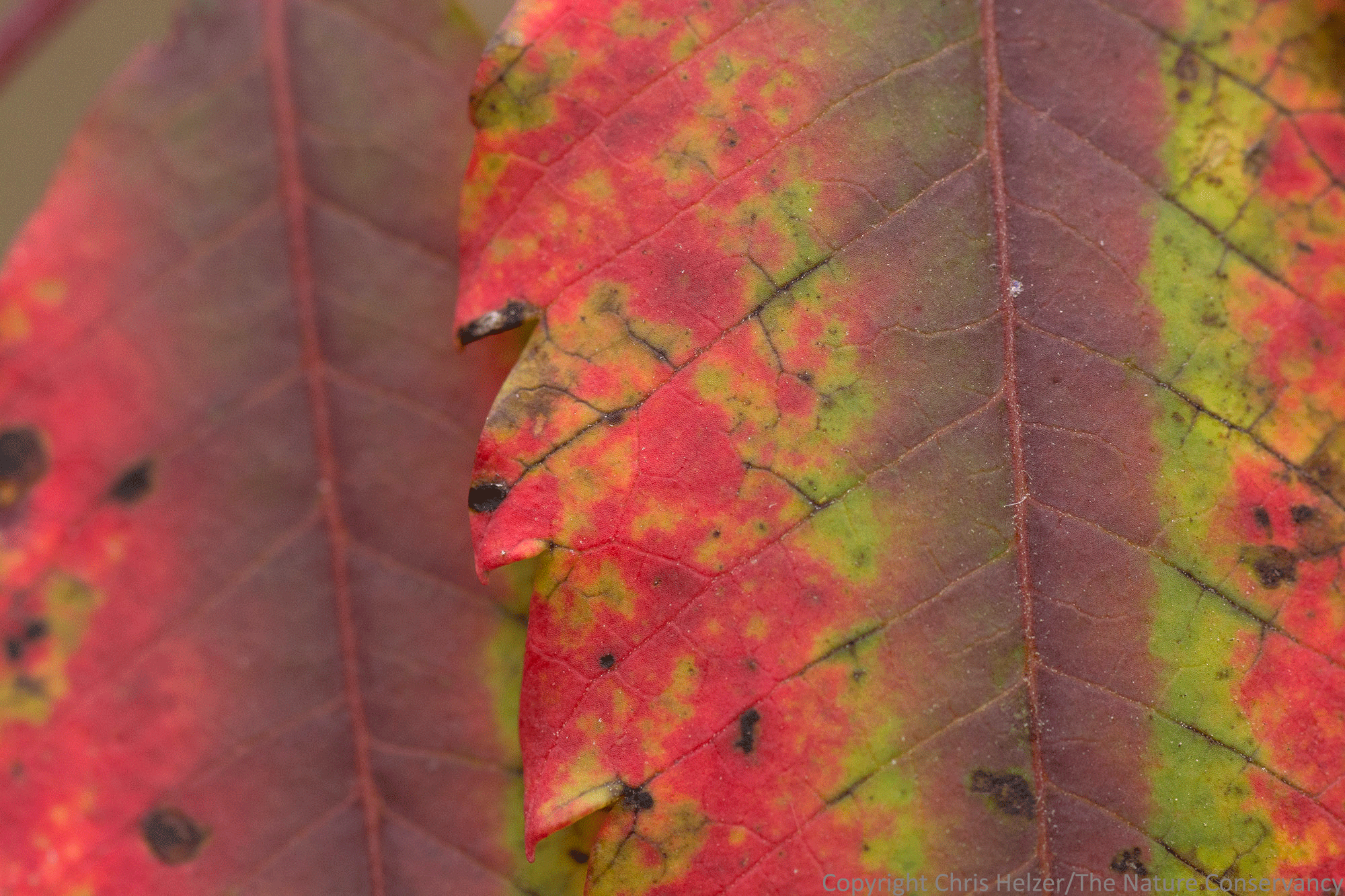
I’m curious to see if anyone can identify the subject of this photo. If you think you know, put your guess in the comments section below and I’ll try to keep an eye out and chime in when someone gets the right answer.
I’ll give you six clues.
It is neither animal nor mineral.
It is smaller than a bread box.
It poses no known danger to humans.
It will never call you to solicit money or votes.
It did not appear in any Star Wars movies.
It was photographed within my square meter photography plot.
Speaking of my square meter photography plot, I’ve just updated my web page for that project. You can click here (or on the Square Meter Photography Project tab in the menu at the top of this blog’s home page) to find out how many species I’ve photographed within that plot as of today. The number has gone up, both because I continue to find more species and because I’ve had more help identifying and separating species from each other.
Smooth sumac (Rhus glabra). Lincoln Creek Prairie, Aurora, Nebraska.
I have a complicated relationship with smooth sumac. It’s a native prairie shrub and a long-term and important member of the grassland plant community. On the other hand, it is often more abundant than I’d like, especially in smaller prairie fragments – altering habitat structure, shading out other plants, and offering protective and nurturing conditions for encroaching trees. I don’t want to eradicate smooth sumac, but it can spread over large areas, and seems to be getting better at doing so as the climate changes.
In the fall, however, my relationship with smooth sumac gets a lot rosier. I can’t think of any prairie plants that have a more striking autumn plumage, especially against a backdrop of golden grasses. Photographing sumac leaves in the fall has become an annual tradition for me – one I very much enjoy. The only problem is that I’m constantly trying to find new ways to photograph this plant, for which I already have a big library of images. This year, I focused on a couple plants that leaves that weren’t just uniformly red. One of those plants had leaves that seemed to be in various stages of their green to red transformation, and the other had patterns I can’t explain, but am very much entranced by.
These variegated leaves stood out among others in a small sumac patch, caught in the middle of their color transformation from green to red.This is a closeup of the above leaf/leaflets.I have no idea why these leaflets had these magnificent patterns, but I sure like ’em.Again, a closer view of the same leaflets.
As soon as sumac drops its leaves our relationship will deteriorate again. I’ll look upon the same plants I photographed this week with a sharp and wary eye, watching closely to see if they are trying to take over one of my favorite prairies. For now, though, they sure are pretty, aren’t they?