Hi everyone. You’ve probably noticed a little different look to the blog this week. I’m fiddling around with the format, hoping to create a better reading experience, especially for those of you reading this on your phones. I’m not done messing around yet, but am at the point where some feedback would be helpful.
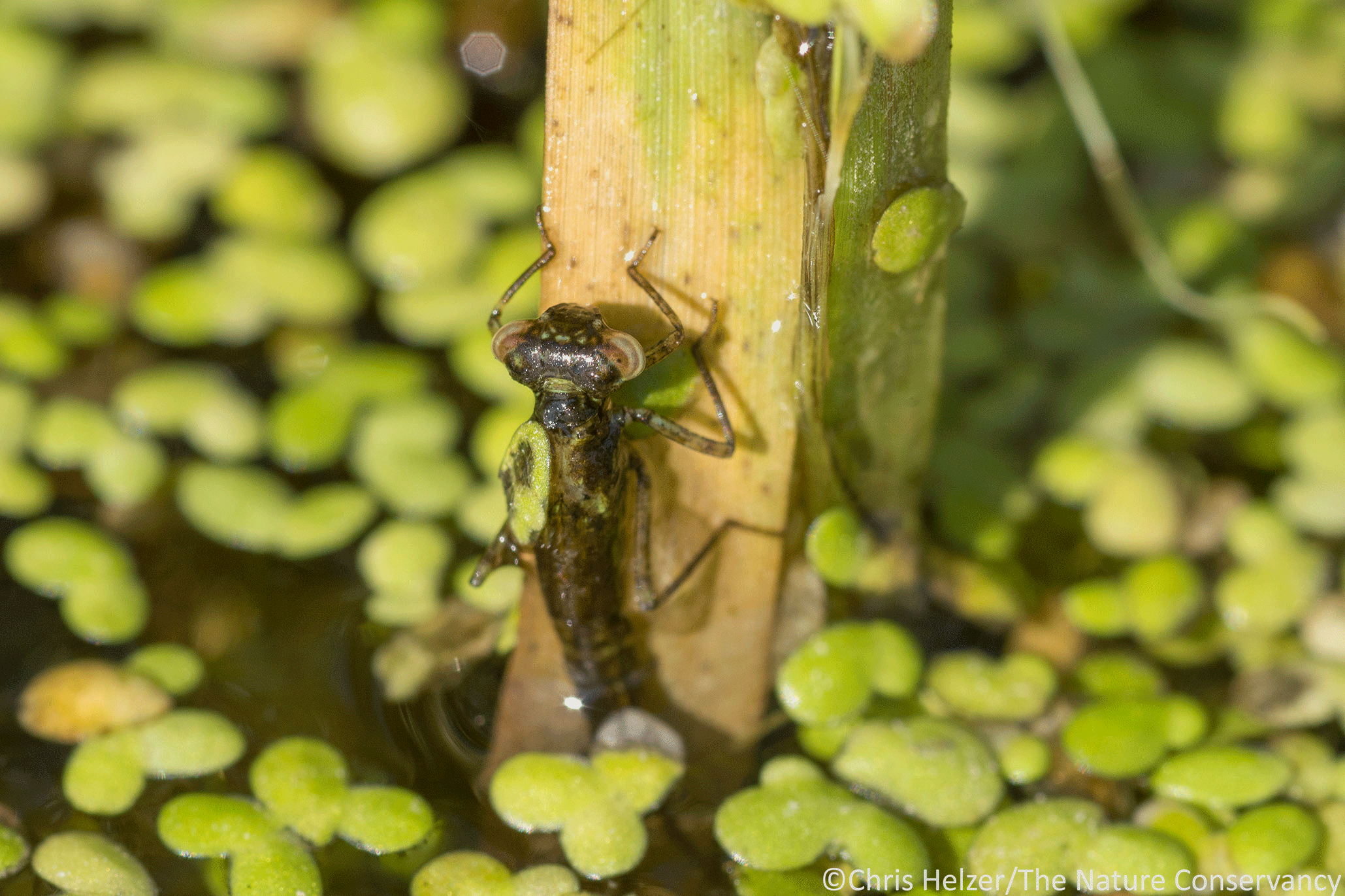
This is just a random damselfly nymph photo from this past summer to give you something interesting to look at. (I think it was likely coming out of the water to transform to its adult body – which is pretty cool!)
If you have a few minutes, I’d sure appreciate it if you could look back over the last several posts and then answer some quick questions about how those look and feel to you. I’ll do my best to create a format that works for as many people as possible. Even if you just answer the first question (about which device you use) that would be tremendously helpful.
Please answer the questions that apply to you and the device(s) you use. If you want to provide more specific feedback, please leave a comment on this post (if you can figure out how to do that in this new format!) If you read this via email, you might have to click the post title to open it in a browser before you can comment.
Thank you very much for the help on this. I appreciate your feedback and your patience as I muddle through this process.
Please join me for a moment to appreciate a fly that eats rotting vegetation and looks like it is wearing a gas mask while doing it. Oh, it also has gorgeous decorative wings and likes to blow bubbles. Yep, you read that correctly.
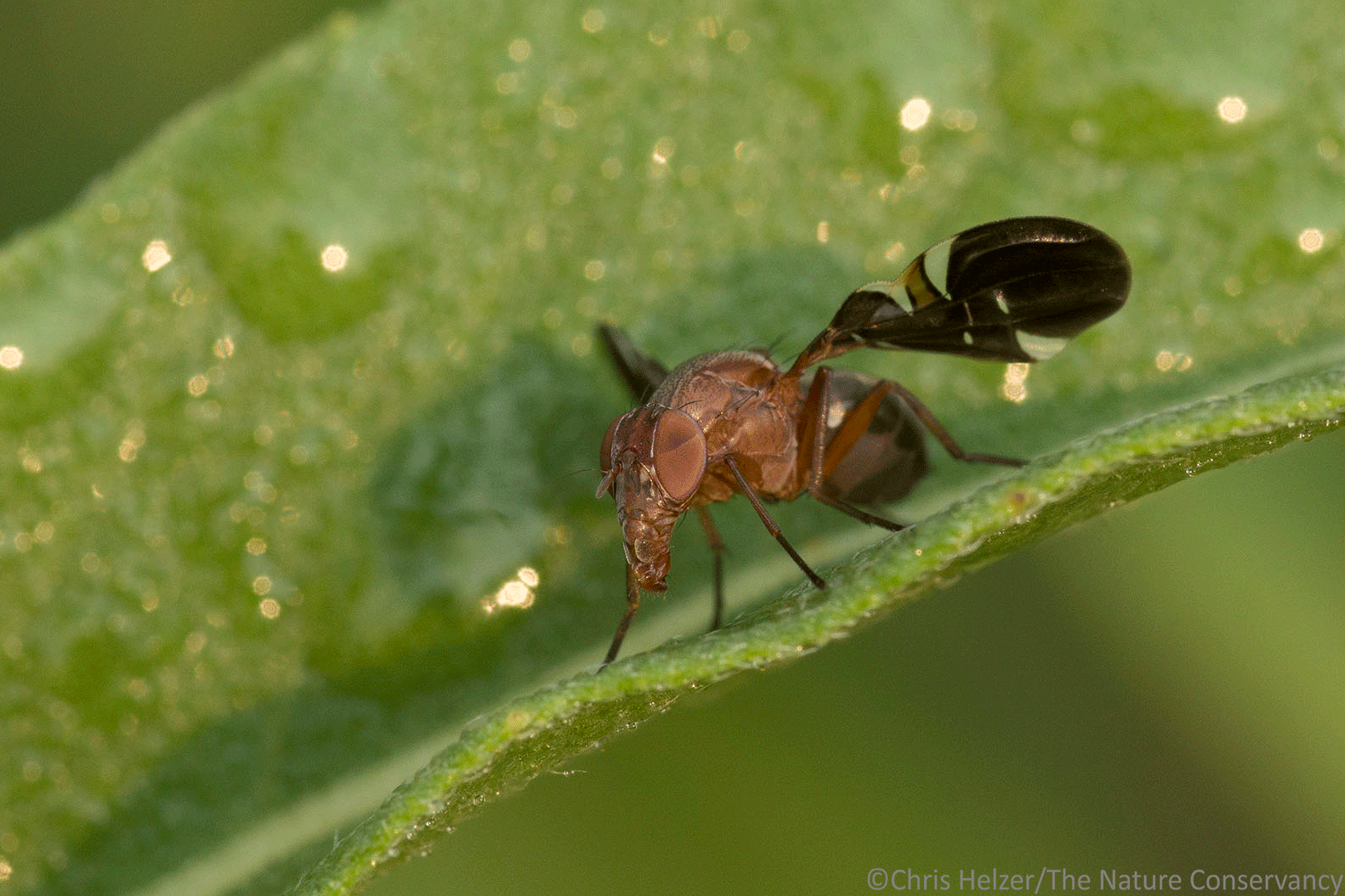
Delphinia pictaon a sunflower at Lincoln Creek Prairie – Aurora, Nebraska.
Delphinia picta, a picture-winged fly, comes across as eccentric, to say the least. Its appearance, alone, is remarkable. The wings are distinctively shaped and patterned, and its long face really does look like it’s wearing a gas mask. Though small (about 7mm in length), it’s a species that will catch your eye if you glance its way.
Both the adults and larvae of D. picta feed on rotting vegetation. Mama flies lay their eggs in rotting vegetation, the larvae hatch out and feed on the same rotting vegetation, and after they pupate and become adults, they keep feeding on that same rotting vegetation – or a suitable subsitute. It must taste good. Oh, adults have also been documented eating the fermenting poop left behind by tree-boring long-horned beetles. You know, for a change of pace.
Delphinia picta can be distinguished from other similar species by the pattern on its wings, the dark-colored top of its abdomen, and its long gas-mask-looking face.
The aforementioned bubble blowing behavior appears to be a result of the fly regurgitating a little of its most recent meal (likely rotting vegetation) and holding it as a bubble protruding from its mouth. This might be used as part of a mating ritual (hubba hubba) or as a way to evaporate some of the liquid from its food for easier digestion. Or maybe both.
I looked all over online for a common name for this terrific species, but I couldn’t find anything besides Latin. That seems unconscionable to me. If there ever was a fly that deserved a nickname, this is it. Let’s see if we can come up with one, shall we?
Since picta means painted, that seems like an obvious component of any name we choose. Since it prefers (did I mention this already?) to eat rotting vegetation, we could potentially call it the “Painted Compost Fly”, but I don’t love that.
Any fly with a face like this deserves a good nickname.
I guess we could just go with “painted fly”, but that’s too plain for such an interesting species. I think we’ve got to include something about its diet. I have a suggestion, but I don’t know if it’ll catch on. I looked up synonyms for rotting and decaying and one of the more fun options is putrefying. That’s a word we can work with. See what you think of this option: