Hello from Wisconsin! I’m spending this week in Madison, Wisconsin with about 250 colleagues at a conference for scientists, land managers, and other conservation staff of The Nature Conservancy. It’s been a fantastic conference, but also an awful lot of time spent with crowds of people – something that drains me after a while. As I write this, I’m holed up in my hotel room, grabbing a little peace and quiet before heading to supper.

On Tuesday, I went on a great tour of prairies in the Military Ridge Prairie Heritage Area. It’s a great site with a lot of
Because I’ve been busy with the conference all week, I haven’t done much photography (and I really miss my square meter plot!) but I did manage a few photos during our Tuesday field trip west of Madison. We had a few minutes to wander after arriving at our first stop, and I stopped to admire numerous Argiope spiders on their webs. Even after our tour leader started talking, I wandered around the edge of the group – staying within earshot – and looked at some more spiders. I hope I didn’t come off as rude, but the spiders were really pretty, and a few let me get within photo range.

This big female banded argiope (Argiope trifasciata) spider was feeding on an undetermined insect.
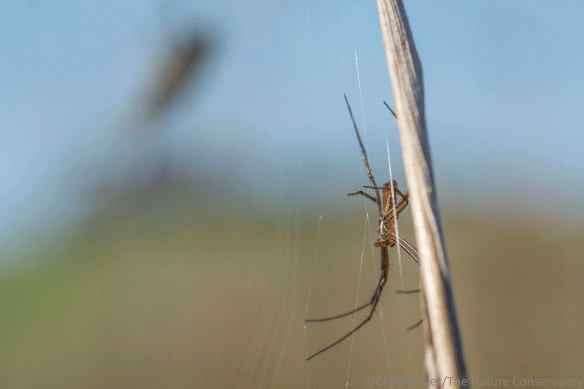
This little male Argiope spider was lurking at the edge of a female’s web, hoping to entice her to mate with him, rather than to kill and eat him. I wish him luck.
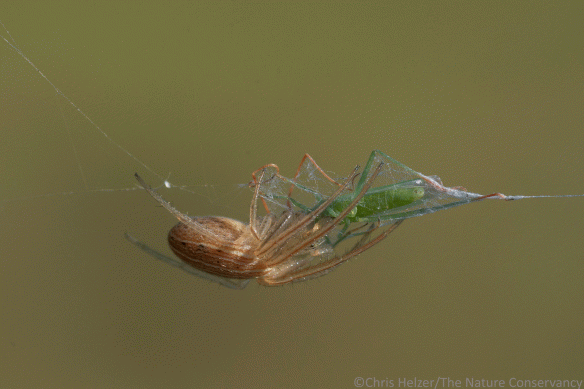
I don’t know what species this is, but this small orb weaver spider was working to wrap and eat a leaf hopper.

After I took the previous photo, the spider suddenly noticed me and scurried up to the top corner of its web and hid itself beneath a little canopy.
Not long after I took these photos, the sunlight became too intense for good close up photos so I rejoined the tour group and behaved myself. There is great conservation work going on in the Military Ridge area, with a great set of partners working together. It is one of the best remaining landscapes in Wisconsin for grassland birds, and still has fairly stable populations of regal fritillary butterflies and other species. Eric Mark with The Nature Conservancy is doing some grazing work to manage bird and butterfly habitat, and is working hard to build ties with the local community. The local chapter of The Prairie Enthusiasts is doing some tremendous prairie restoration work, converting brome fields to diverse prairies. Those and other partners, including state, federal, and non-profit organizations, seem to have a strong and positive working relationship.
Oh, and there are some pretty cool spiders too.