Well, I’m still at it.
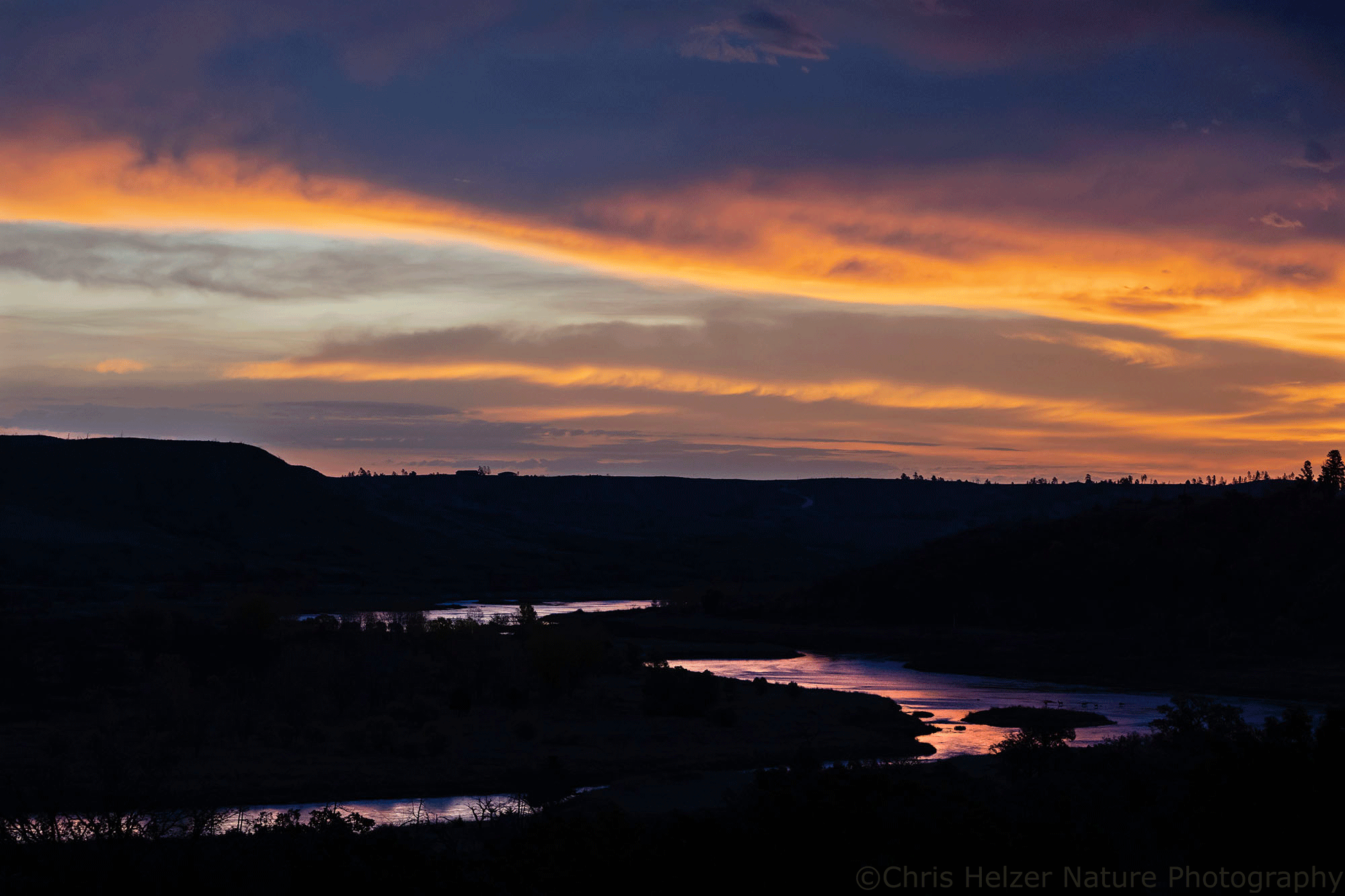
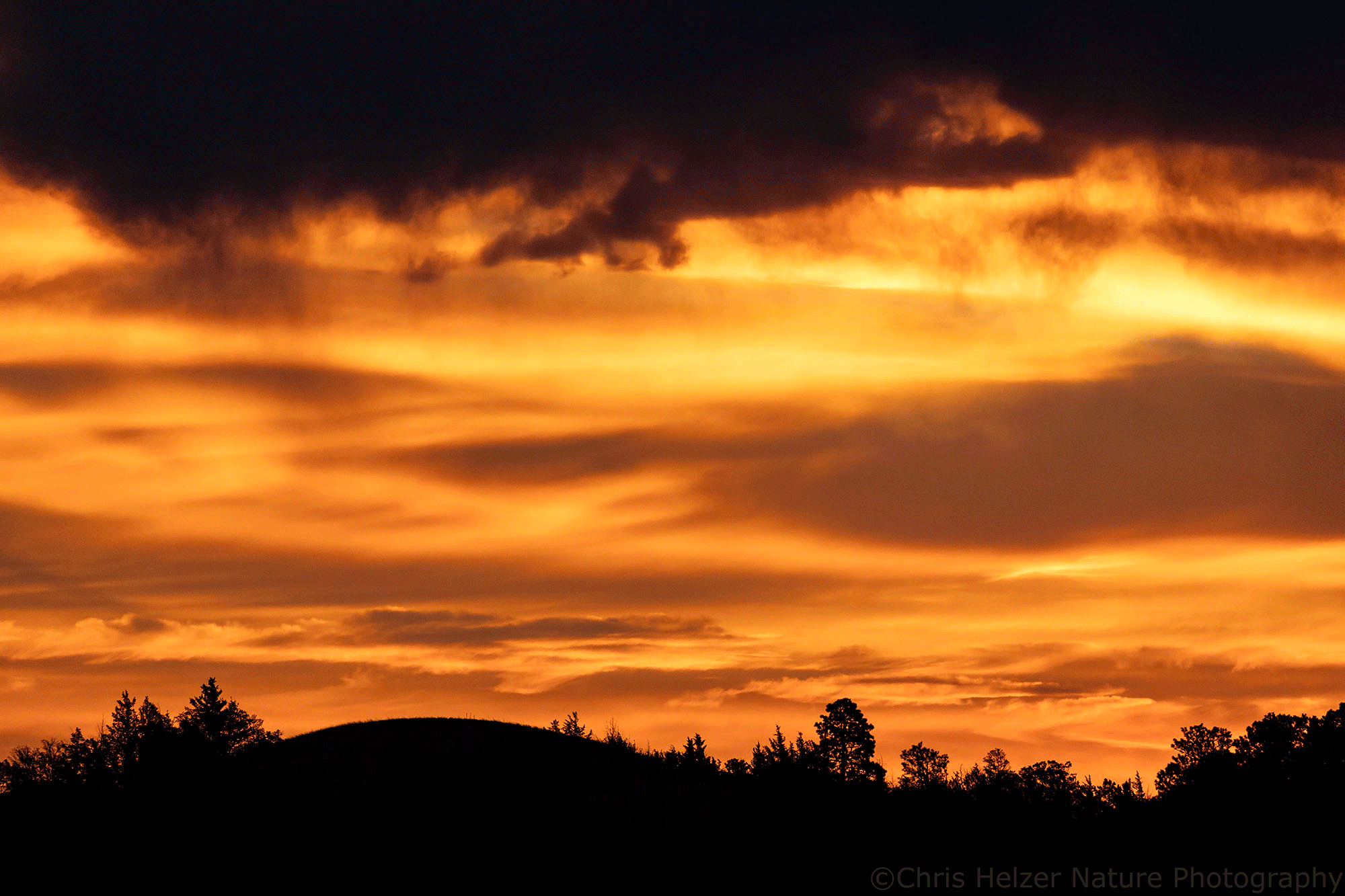
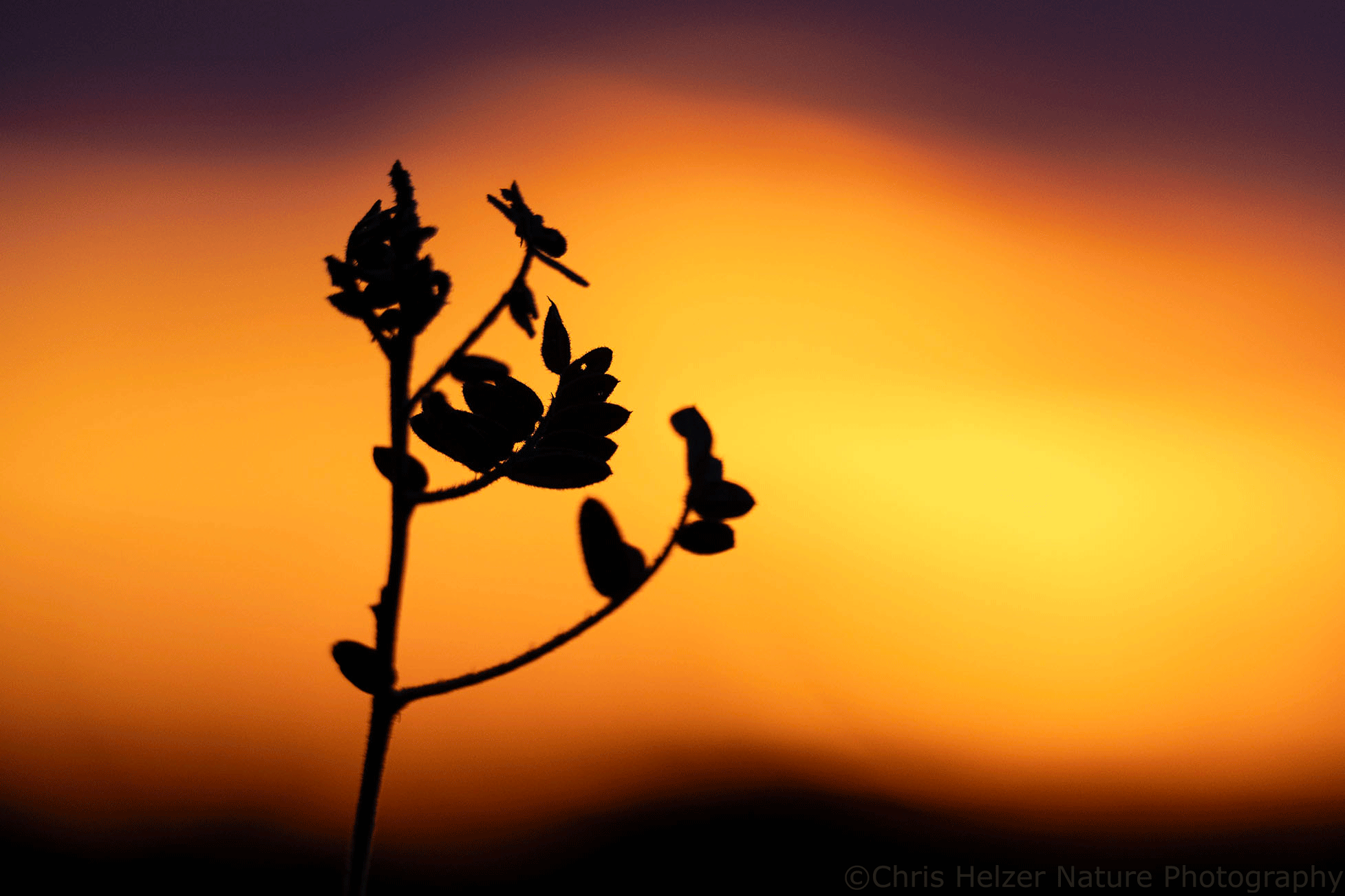
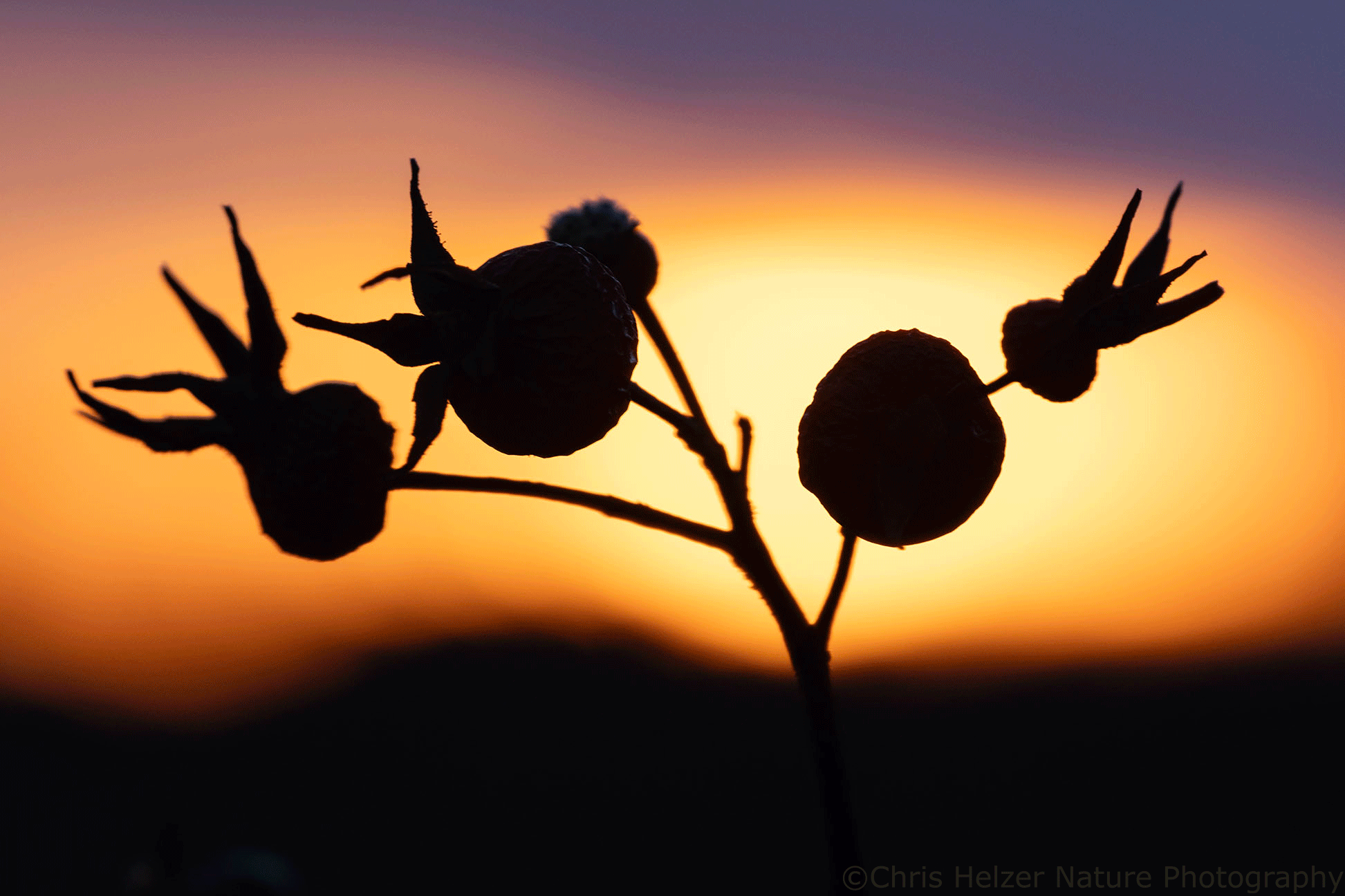
Hoo boy, things have really picked up in the ol’ square meter plot over the last several weeks. Maximilian sunflower and pitcher sage are both in bloom and there’s a lot of action going on around those flowers. Actually, there’s a lot of action away from the flowers, too. Here are a few photos from mid-August through the first week of September.

I missed much of one week in late August because I served as a juror on a criminal trial. It was really hard to be away that long at the peak of wildflower season. I did sneak away one evening, but I still missed a lot of the week. I don’t like to think about everything that happened when I wasn’t there. I’ve been trying to make up for that lost time ever since.
(To be clear, when I say I snuck away, I don’t mean that I snuck out of the courtroom. I’m not quite up to that level of obsession. I went home after we were dismissed for the day and then drove over to Lincoln Creek Prairie. I even told Kim I was going. Maybe ‘sneak’ wasn’t the right word to use at all, now that I’m thinking about it.)

I’m still seeing a lot of new species showing up in the plot. I’m up to about 270 species of plants and animals (and fungi) so far this year. That’s way above the 113 species I photographed in 2018. As I’ve said before, I think there are lots of reasons for the higher number this year. The prescribed fire this spring almost certainly played a big role, but I really think I’m just a better observer this time around.

I’m also seeing a lot of familiar species. There are a few plant species from 2018 that aren’t around this time, but the net count is higher this year than 6 years ago. I miss stiff sunflower (Helianthis pauciflorus) and sideoats grama, but the addition of pitcher sage (and several others) takes the sting away.
Speaking of stings, the other day, I met a high school class at Lincoln Creek Prairie (where my plot is) to teach them some plant identification. While I was doing that, I talked about why you shouldn’t be afraid of bees and wasps that are nectaring on flowers. To demonstrate, I picked up one of each (just let them crawl onto my finger). The kids were pretty impressed with that. Then we walked past my square meter plot, and as I tried to explain what I was doing, and why, I lost them completely. I should have just stopped after the bee/wasp demonstration.

Late last week, I came across a white patch near the top of a sunflower plant. My first thought was that it might be a fungus. Looking closer, it was obviously some spittle bugs feeding and creating a protective refuge of bubbles. In fact, I was able to watch the bubbles coming right out of the wiggling rear ends of the larvae. How about that for fun? Prairies have everything…

I’ve been a little surprised not to have seen more predatory invertebrates in the plot, given the high numbers of potential prey. Lynx spiders are still hanging about and catching a wide variety of food items. An ambush bug has also shown up and is hunting on the sunflower blossoms.
I keep expecting to see some spider webs, but I haven’t seen any since early summer. I also haven’t seen any praying mantises. Or robber flies. There’s still time, I guess.


In 2018, I was surprised not to see many grasshoppers. I wondered at the time if the amount of thatch in the prairie (it wasn’t burned that year) was the reason. This year, whether because of the fire or not, I’m seeing a lot more grasshoppers. I’ve found at least three species, but I’m wondering if a few more will end up on my list after an expert looks through my images.


Unsurprisingly, the abundance of blossoms has attracted an abundance of bees (and flies and wasps, and beetles, and bugs…). There have been lots of bee species, including three bumble bee species and a bunch of little solitary bees. What I haven’t seen since butterfly milkweed stopped blooming, though, is a honey bee. There were lots of those around back in June, but I wonder where they went? Maybe there’s something nearby more attractive than sunflowers, but, if so, I’d like to know what it is!
Not that I mind the absence of honey bees, of course. I’m perfectly happy to see a bunch of native species that don’t have to worry about competing for resources with those hyper-organized little buggers. There’s enough air traffic without them.


Goldenrod soldier beetles are definitely the most abundant and consistent of the square meter plot insects right now. I see them in the morning, I see them in the evening, and they’re around all day long. They make great photo subjects because they tend to tolerate my presence and hang out in plain sight (as opposed to a lot of insects that either fly off or scurry to the other side of a flower or stem when my lens approaches). As a result, I’ve got a huge number of soldier beetle photos and I’m sure more will be coming.


I feel like I have to constantly remind people that the square meter photography project is not all about the species count. Sure, it’s fun to highlight the diversity of prairie species that can be found if you look closely, but that’s really only one component of the effort. I also want to show off the beauty, dynamism, and complexity of grasslands.
That’s why the project is so much fun. I’m discovering new photographic opportunities every time I visit. I look for the way the sun peeks between petals of a flower. I appreciate the upside down world as seen through a dew drop.
Also, this summer is the first time I’ve ever paid much attention to the flowers of little bluestem. I’ve photographed other grass flowers, but for some reason, hadn’t really looked closely at little bluestem. It’s in my plot, so I looked.


Even species and aspects of prairies I’ve seen and photographed many times can be new and interesting when I force myself to look at them. Instead of thinking, “Oh, I’ve already got plenty of photos of Indian grass flowers,” I have to think, “Hm. How do I capture this particular set of anthers in an interesting way.” It’s a terrific catalyst for creativity.


Despite what I just said about the project not being just about a species count, it is really fun to find something new almost every time I visit. It’s also astounding to me how many different species I’ve found within some groups of organisms. In 2018, for example, I was excited to have photographed 21 different fly species. This year, I’m well over 50, and probably closer to 60 (I need more help distinguishing between them). I’ve found more than 40 beetle species and at least 25 bees, as well, but it’s the diversity of flies that most fascinates me.
In particular, hover flies have really caught my attention. It’s not like I’d ignored them before, but I’m seeing a lot of new species I’d never seen (or had never recognized) before and I’m loving it. I’m including just a small subsample of those below to give you a taste.


I’d known that Syrphid fly larvae were predators, so I didn’t even think about them when I wondered what the tiny pale larvae were that crawl around on big bluestem flowers. I’ve seen those little larvae for years, and even have a few photographs of them. But it wasn’t until I photographed them in the plot and submitted the photos to bugguide.net that I learned what they were.


Another group of hover flies is also known as drone flies. I’ve noticed them before because they look a lot like less-fuzzy bees, but hadn’t really paid close attention to the different species. I still struggle to tell some of them apart, so I rely on bugguide experts to help. I’m getting better, but I still guess wrong – sometimes confidently so.


One of my all-time favorite statistics is that there are around 61,000 fly species in North America. That seems extraordinary, but feels a little more reasonable when I think about the diversity I’ve seen in my tiny focal area. A lot of North American fly species have yet to be named and recorded. That also feels understandable, given how incredibly small lots of them are.
I’ve seen two little flies within the last couple weeks that even my 2x macro lens struggles to capture details of. Even when I crop the image enough to see details, the graininess of the image makes it nearly impossible. The one in the photo below is only the second smallest I’ve seen.

I can already feel the end of the sunflower bloom coming, which has increased my sense of urgency to be at the plot as much as I can. I think all the buds have opened now, and a number of the flowers have started to senesce. There’s a lot of beauty in that senescence, too, so it’s not all bad news, but I’ll sure miss the hordes of pollinators buzzing around when their favorite food source dries up.

Of course, some of the flowers wilt reasons other than old age. Just as I did in 2018, I’m seeing multiple flowers that have been hit by head-clipping weevils. These insects girdle the stem below a flower head, which causes it to tip downward and start to dry up. They then lay eggs on the disc of the flower head. Later, those eggs hatch and the larvae feed on the decomposing tissue (often after the flower has fallen to the ground). Scientists think the weevils girdle the stem to make the flower less attractive to other egg-laying insect species, reducing competition for their own larvae. Pretty smart!

I’ve photographed what I think are head-clipping weevils several times this year, but last week, I was finally able to photograph one in the tipped-down flower head itself. The logistics of that weren’t easy because the flower was about two-and-a-half feet off the ground, so I had to lie on the ground with my upward-pointing camera on a tripod. Then, I had to somehow lift myself up with one hand while trying to both focus and activate the shutter with the other. All this happened while I was staring into a bright sky and trying to see what was inside the deep shadows of the upside-down flower.


Fortunately, this happened in the presence of Ethan and Dakota from Platte Basin Timelapse, who have been helping me document both the plot and my photographic efforts this summer. They happened to be on site when I was contorting my body below the sunflower, so there will probably be footage emerging at some point. Stay tuned.
By the way, if you haven’t visited Platte Basin’s website, you’re really missing out. In addition to a huge series of extraordinary timelapse videos, they also do a tremendous job of creating videos on a wide range of nature and conservation topics. Check them out!

Ok, I’d love to write more, but I just got back from another visit to the plot and I’ve got a couple thousand images to sort through! I’ll show you some of them in a few weeks. I’m also trying to figure out logistically feasible ways of letting you explore the full library of images, or at least a big portion of them at some point. I think you’d find it really inspiring, but I don’t know yet how to do it in a way that’s not completely overwhelming.
In the meantime, I’ll keep working. I get to go to the Grassland Restoration Network workshop in Illinois this week, which is going to be fantastic. On the other hand, I’m going to miss a big chunk of time with the Maximilian sunflowers and pitcher sage flowers. I sure hope some of them are still blooming when I get back. (Since I’m putting in wishes for consideration, I’d also like to have a monarch or two roost overnight in the plot, too. But only, of course, when I’ll be around to see it.)