
Well, no. But recent research shows that at least some may be able to convert sunlight into energy in a process very similar to the way plants do it.
A study published in Nature magazine back in August looked at a species of aphid called Acyrthosiphon pisum, which changes color based on the air temperature around it. At optimal temperatures, the aphid tends to be orange, but in cooler temperatures, the aphid is more often green. Through a series of experiments, the scientists determined that – as in plants – the pigmentation of those aphids helped them generate energy, and that the green aphids made more of it than the orange ones.
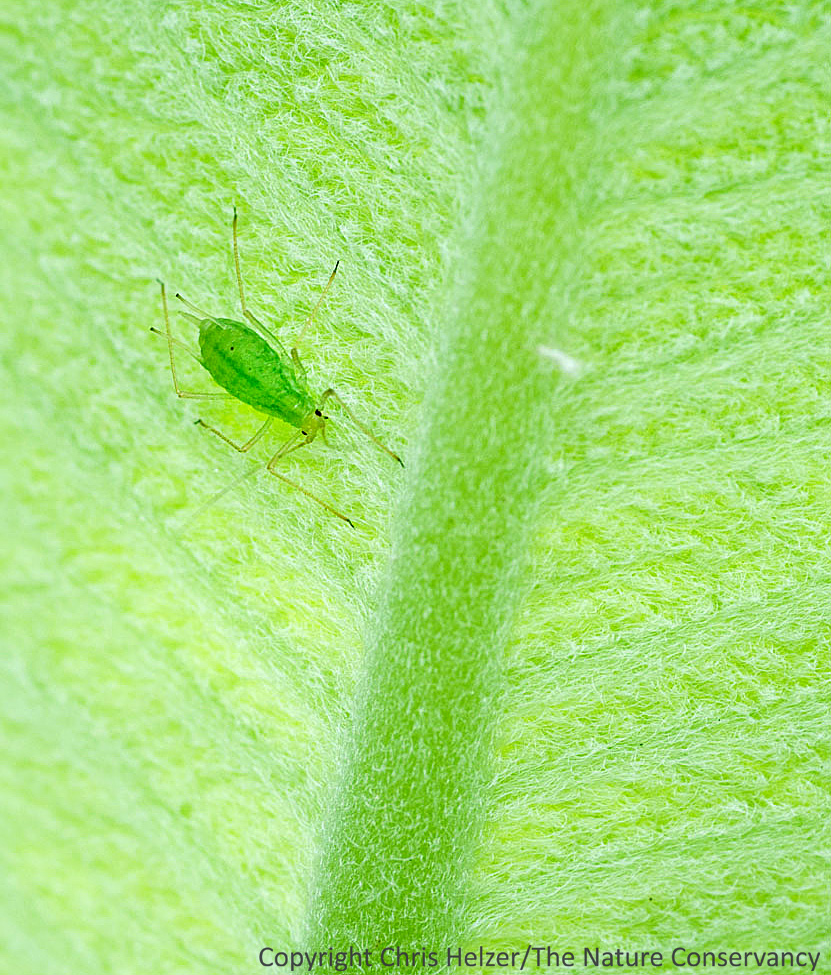
Can aphids make their own energy?
As is usually the case, more research is needed to confirm exactly what’s going on, and to see if other aphid species have the same ability. But these are pretty extraordinary results. The process of converting sunlight to energy is common in plants, of course, but insects and other animals don’t do that – or so we thought.
What the aphids appear to be doing isn’t technically photosynthesis (no carbon dioxide is fixed and converted to organic compounds – I’m just telling you what I read…) but many of the essentials are there. The scientists wonder if the ability helps the aphids survive when they don’t have quick access to food – such as when they’re traveling from one plant to another.
You can read a more complete description of the study here.
 The Prairie Ecologist