
Photo of the Week – September 18, 2014

I’m writing this from The Nature Conservancy’s Niobrara Valley Preserve in north-central Nebraska, where I’m attending a prescribed fire planning workshop.  The weather up here is beautiful, and the prairies are already wearing their autumn colors.  The most conspicuous color on the landscape is the bright red of smooth sumac, which contrasts wonderfully with the more subtle browns and golds of the grasses.
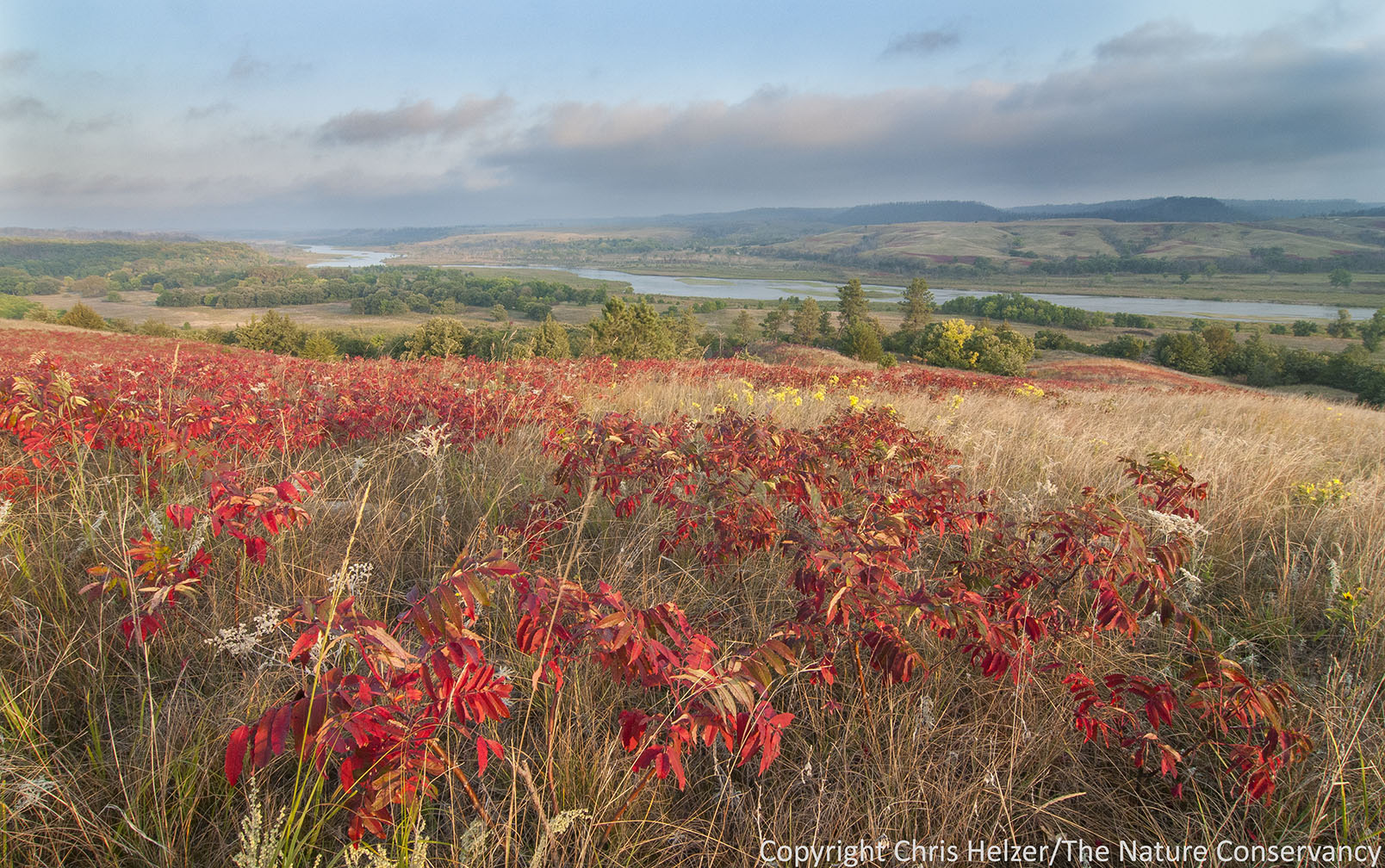
Smooth sumac and prairie along the Niobrara River at The Nature Conservancy's Niobrara Valley Preserve.

Smooth sumac and prairie along the Niobrara River at The Nature Conservancy’s Niobrara Valley Preserve.

This photo was taken in one of the few parts of the Preserve that wasn’t impacted by the big wildfire of 2012.  I walked and photographed areas that were affected by the fire as well, and I’ll post some of those photos and descriptions soon.  In short, everything I saw is looking great; no significant invasive plant issues, complete recovery of grasslands, and positive developments under the burned pine woodland areas.

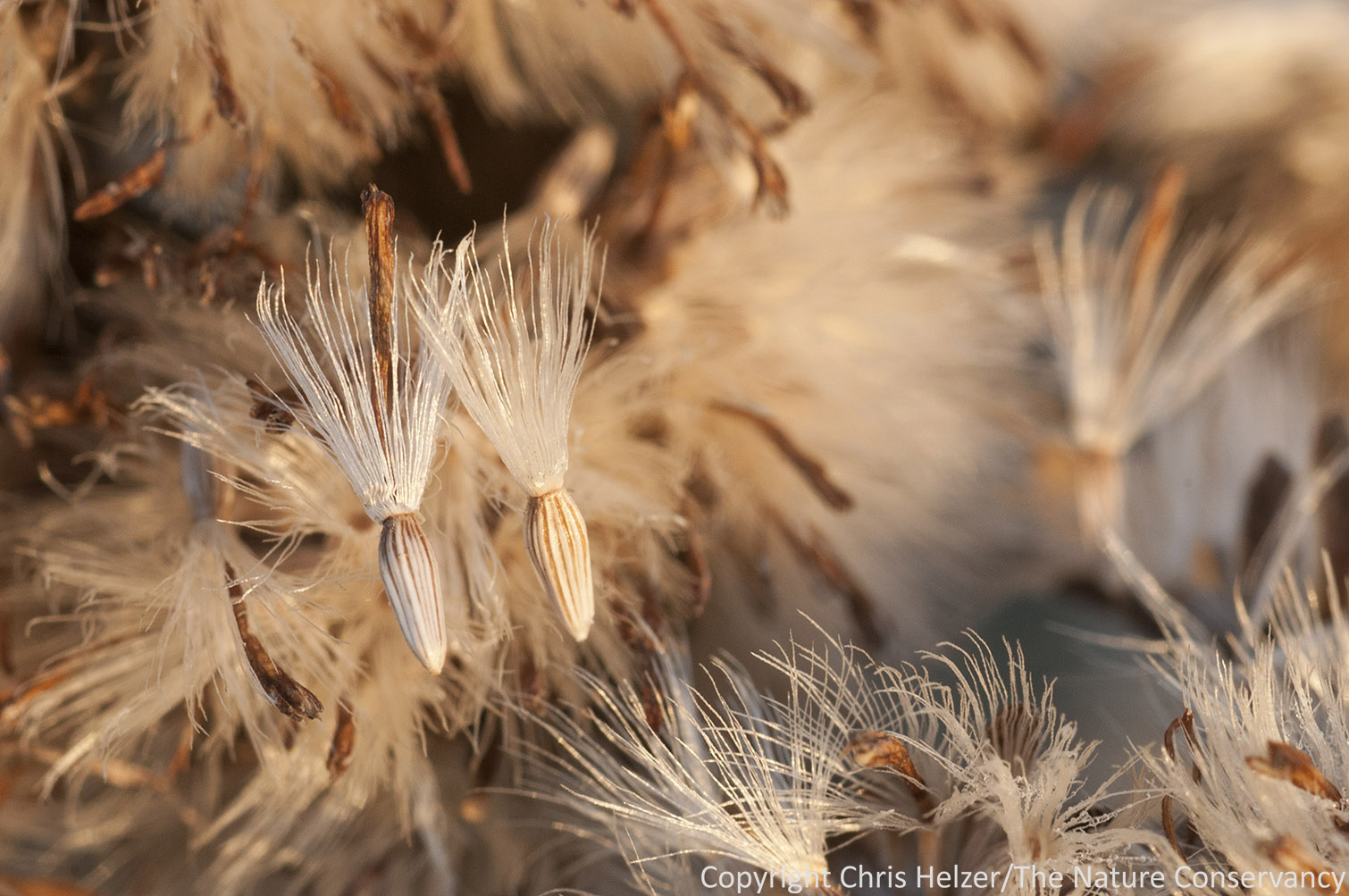
 

Photo of the Week – November 14, 2013

Last week, I took a short early morning trip out to my family prairie.  As the sun came up, its light was caught beautifully by the fuzzy seeds of various prairie plants, particularly stiff goldenrod (Solidago rigida) and dotted gayfeather (Liatris punctata).

A stiff goldenrod seed is ready to fall from a seedhead.

A stiff goldenrod seed is ready to fall from a seedhead.  Helzer prairie, near Stockham, Nebraska.

Species with fuzzy parachute-style seeds trade distance for time.  Their seeds can be carried far from the plant, giving them a chance to colonize new areas.  However, because the seeds have to be light weight, they tend to have short shelf-lives, and can’t survive for very long – they will either germinate quickly or die.  Bulkier seeds often have the ability to survive for years in the ground and then germinate when favorable conditions appear – but they don’t typically travel very far from their parent plant.  Life is a series of tradeoffs!

More goldenrod seeds.

More goldenrod seeds.

.

And more.

And more.  In this photo, the contrast between the brightness of the seeds and the shadows behind the plant were such that the camera couldn’t capture it all, resulting in a black background behind the correctly-exposed seeds.

.

Even after the petals (and even the seeds) fall, goldenrod flowers are still very attractive.

Even after the petals (and even the seeds) fall, goldenrod flowers are still very attractive.

.

Dotted gayfeather also has short-lived, high-flying seeds.  However, once a new plant is established, it puts down deep roots (literally - as deep as 10-15 feet).

Dotted gayfeather also has short-lived, high-flying seeds. However, once a new plant is established, it puts down deep roots (literally – as deep as 10-15 feet).

.

More dotted gayfeather seeds.

More dotted gayfeather seeds.