Photos of the Week – March 22, 2026

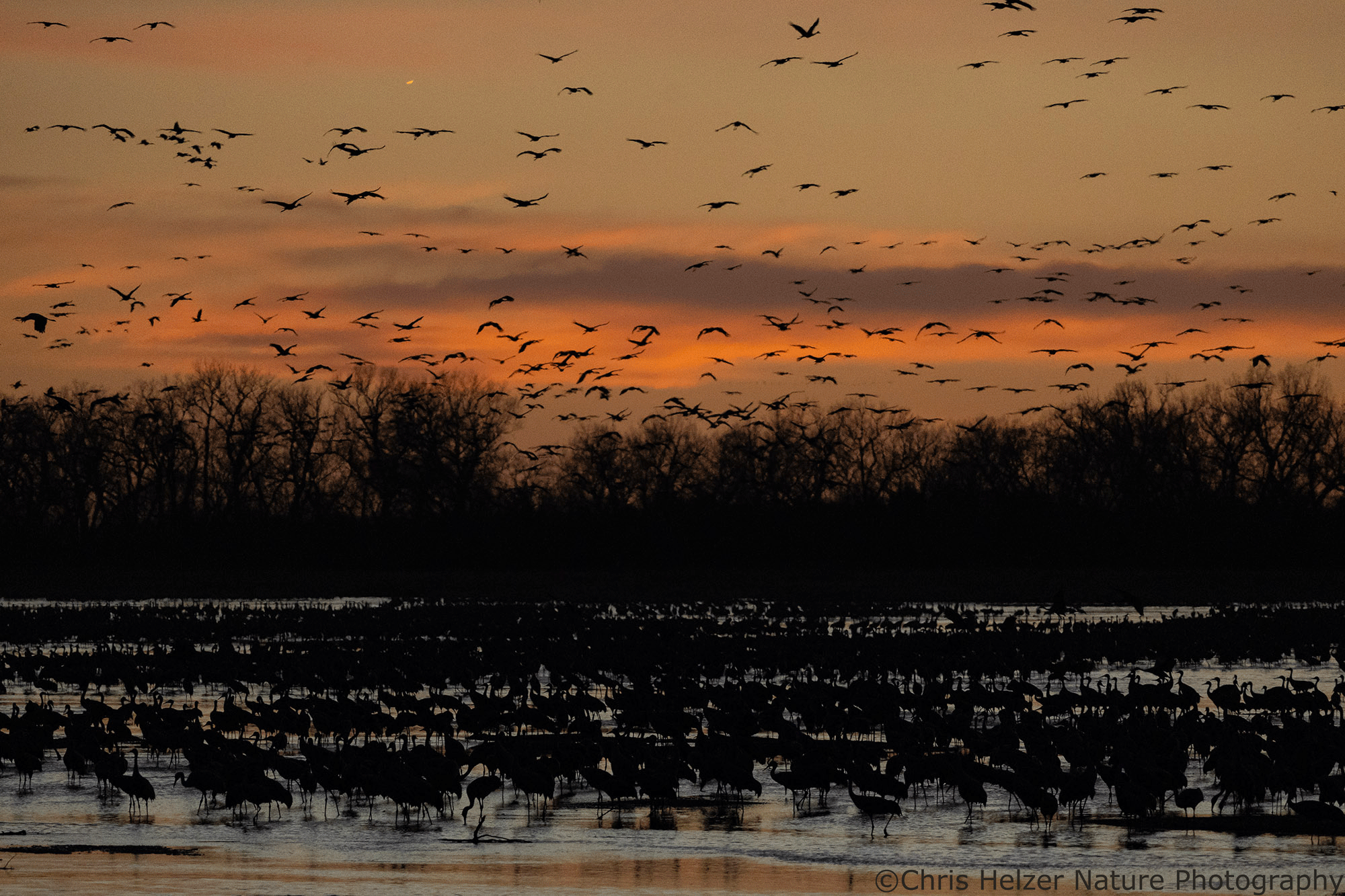
I’m sorry not to have posted much lately. It’s not you, it’s me. Well, to be fair, it’s also the roughly 1 million sandhill cranes that come through the Platte River each spring and all the people who come to watch them.

If you’ve never visited the Central Platte River in March, it’s hard to describe what you’re missing. Eighty five percent of the world’s sandhill cranes pour into a fairly narrow reach of the Platte and each bird spends a few weeks or more eating as much as they can. They’re building fat and energy before continuing north to their breeding grounds where they’ll likely be setting up nests in a frozen environment without a lot of available food. While on the Platte, they spend their nights on the river and their days split between corn fields and grasslands, mostly eating corn and various invertebrates.

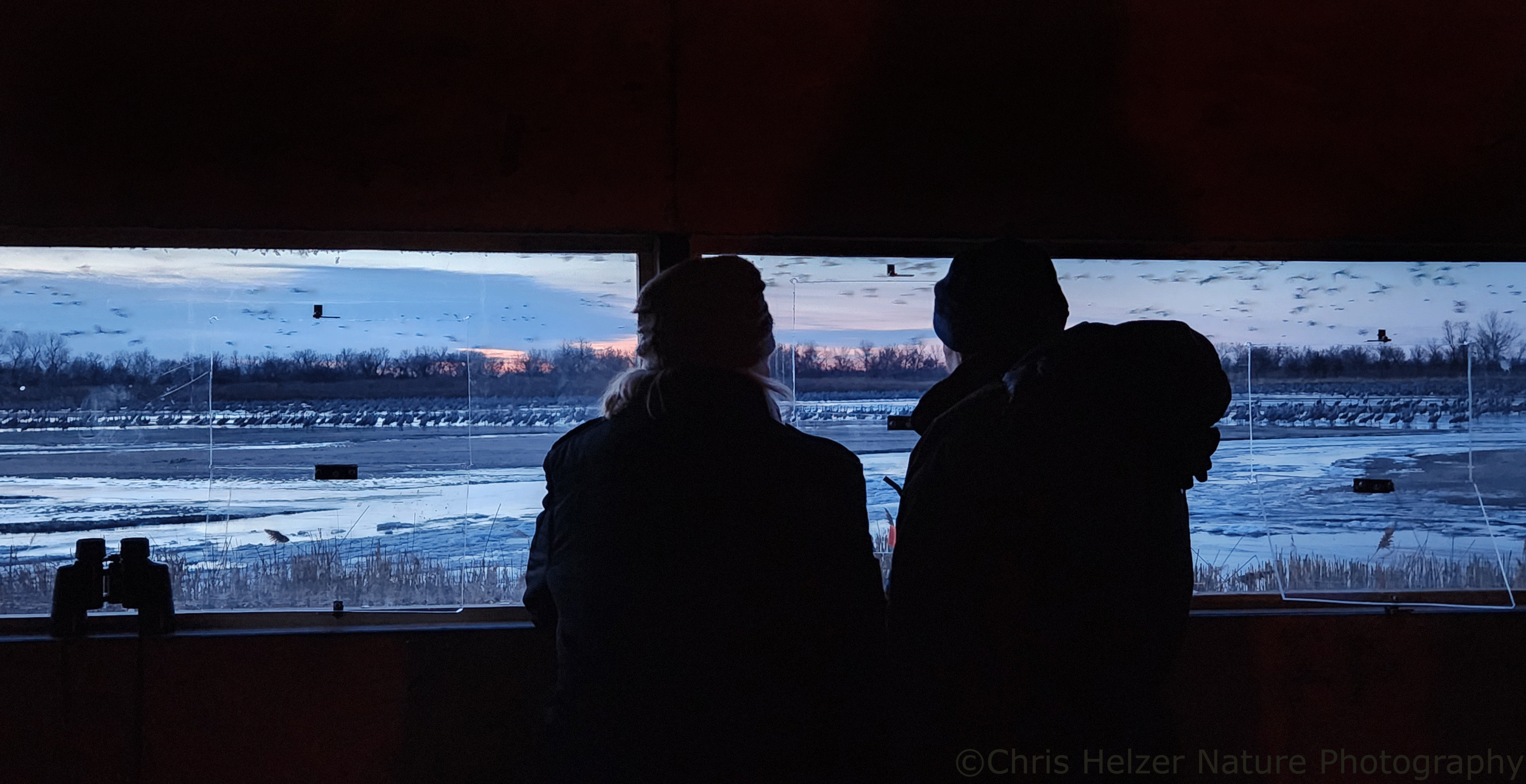
You can see the cranes by just driving back roads in the area, but the best experience comes from watching them come to the river at night or leave the river in the morning. Check out the websites of our good conservation partners – National Audubon Society’s Rowe Sanctuary and the Crane Trust – to learn more about how to get into a viewing blind along the river bank. If you’re a member of The Nature Conservancy, we also offer a limited number of crane blind tours each spring as a thank you for your support. You can call our Omaha office in January or early February to learn more.
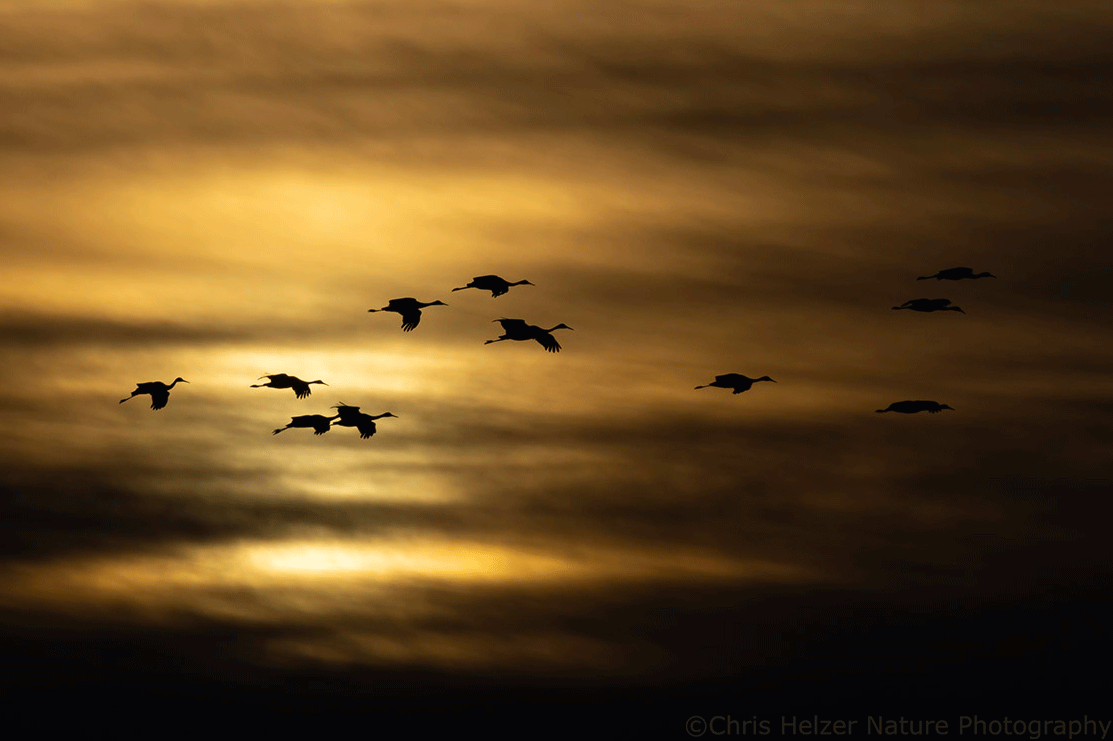
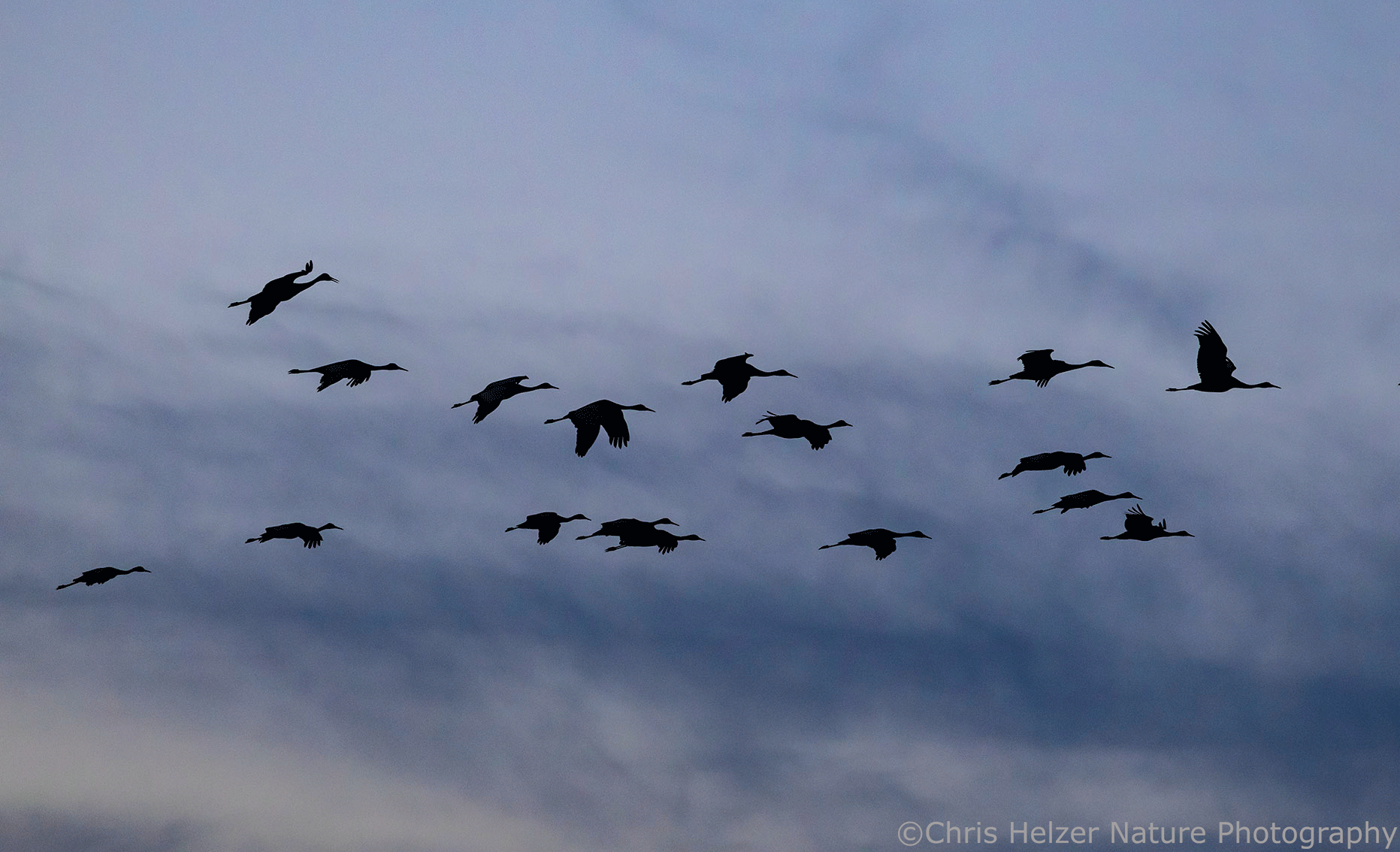
Sandhill cranes coming to the river on a cloudy night near sunset.

I’ve gone out to the blinds with several groups of guests this year and have given presentations to even more groups about this amazing ecological phenomenon. I’ve managed to get a few photos of cranes during a couple of those river bank visits and am sharing some here, hoping to encourage you to come the birds for yourself.
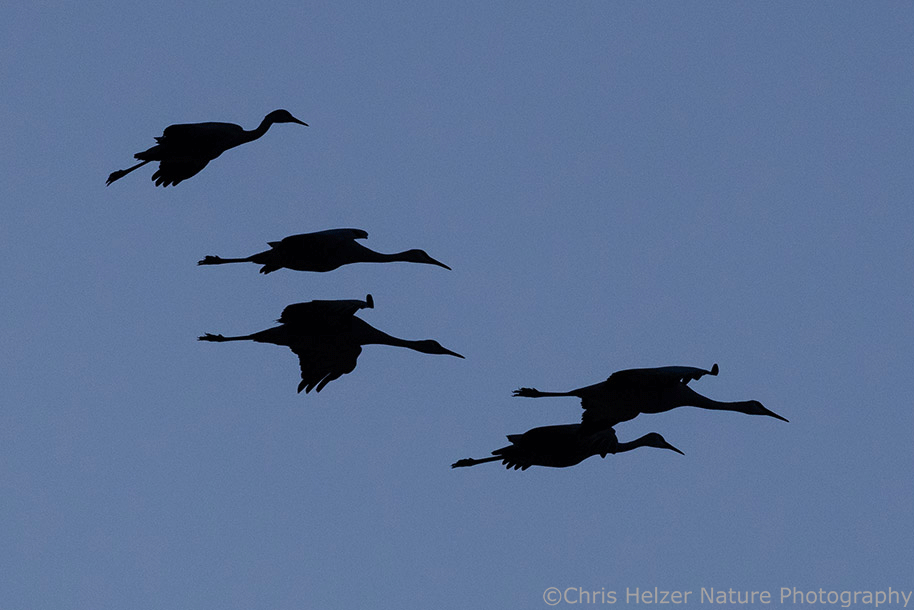
Cranes silhouetted against the cloudy sky after sunset.
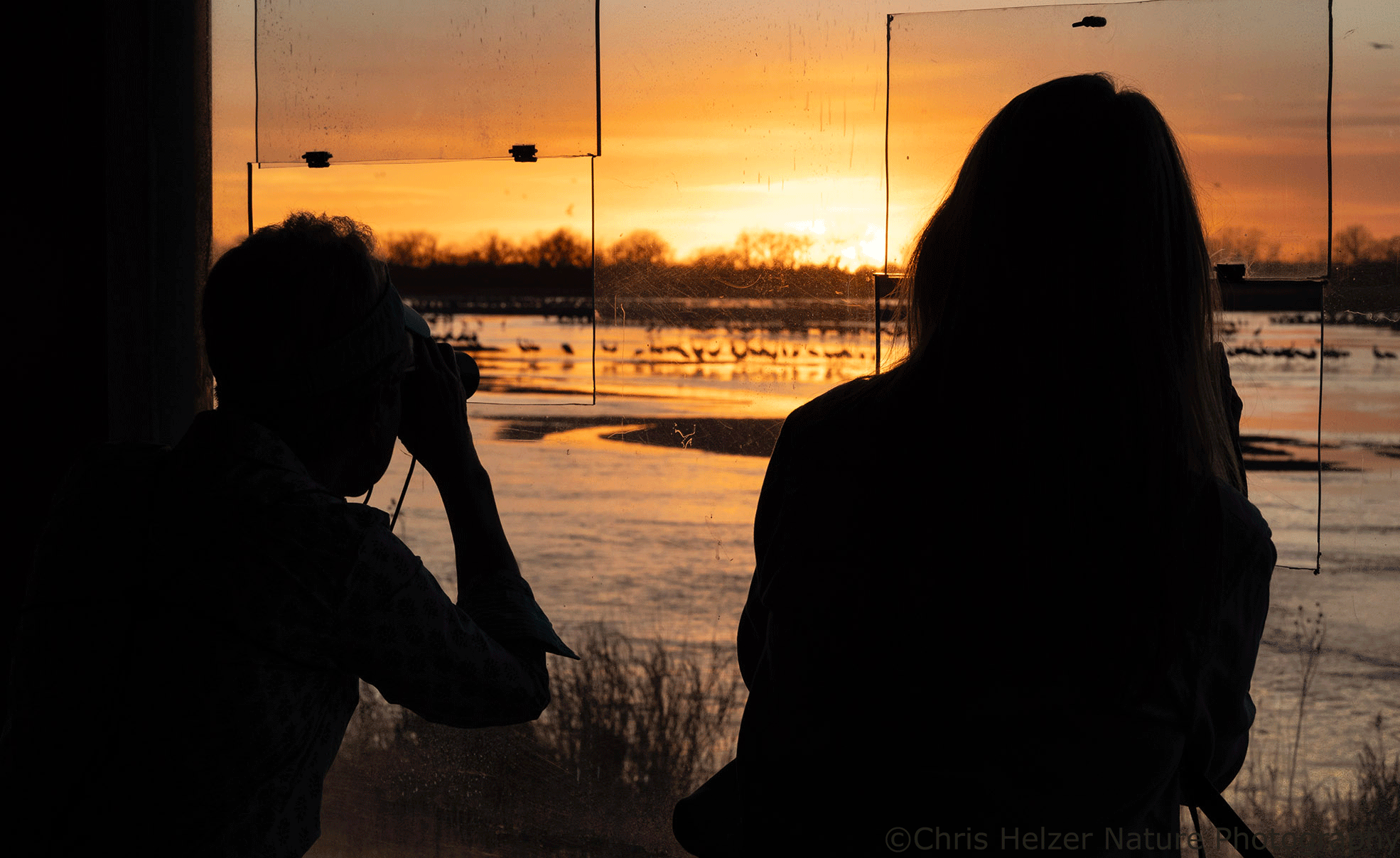
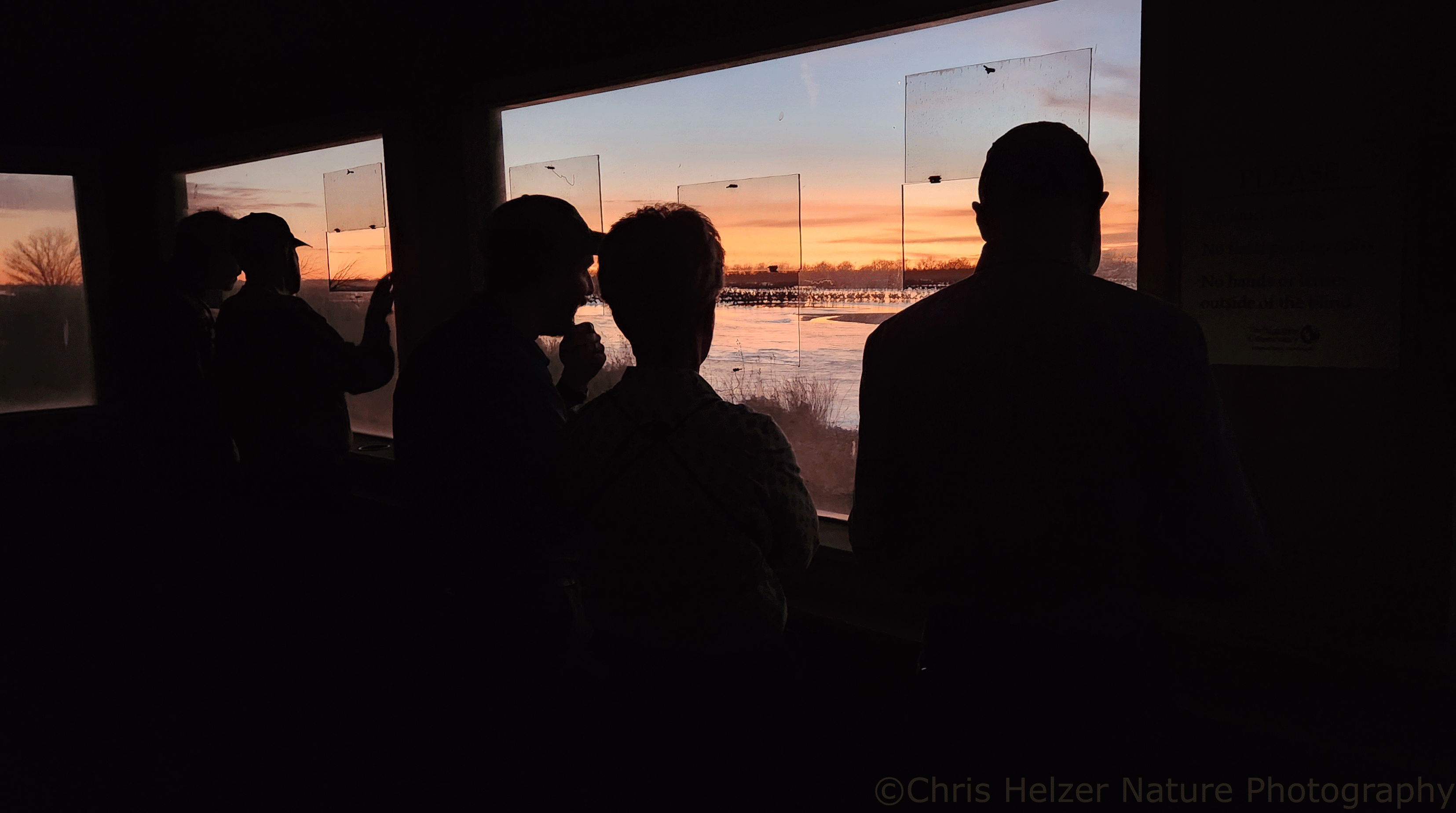
Post-sunset viewing from one of our blinds as the cranes settle in for the night.
More silhouettes against the dark cloudy sky.
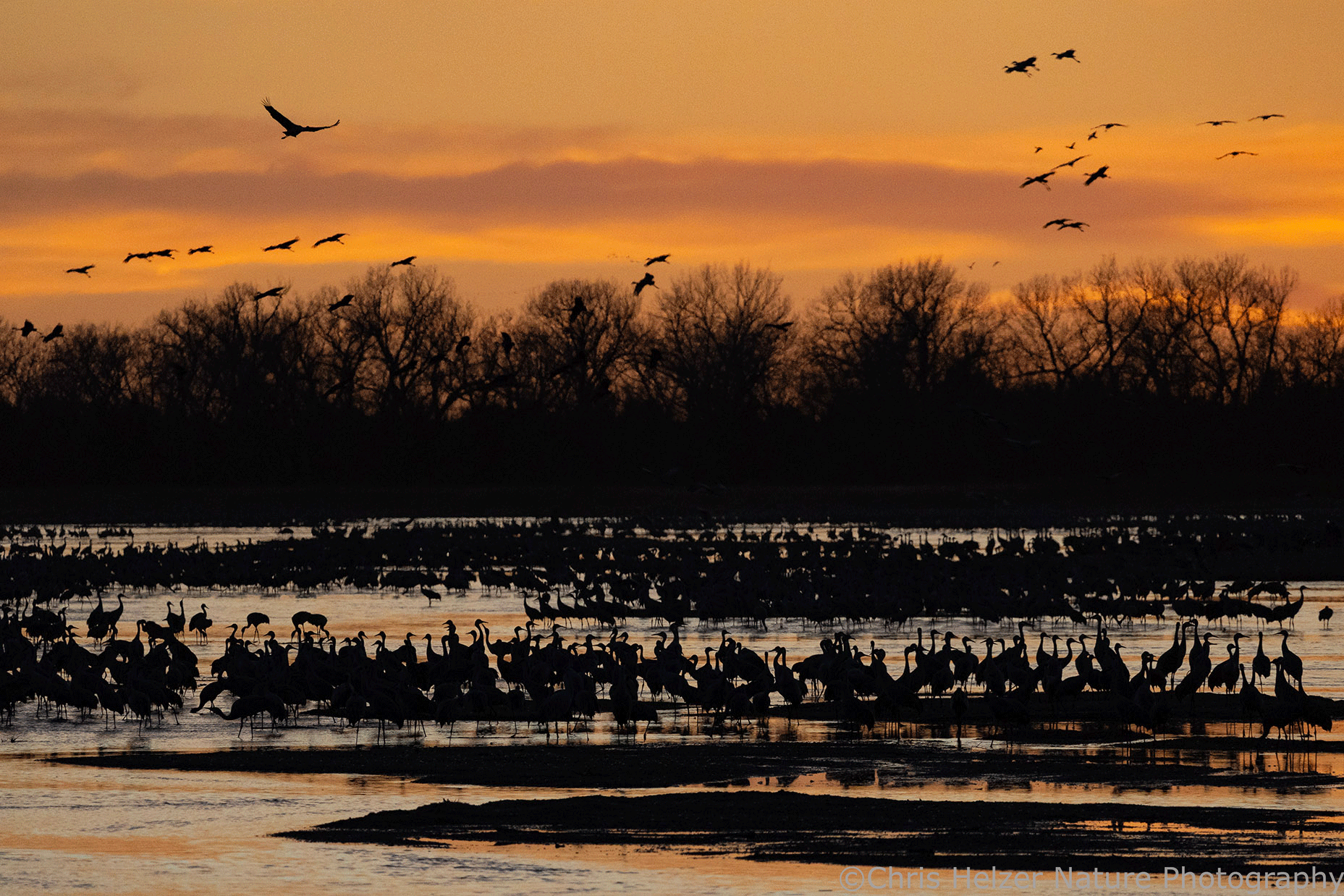
It’s always fun when the cranes come in on a night with a terrific sunset.
The same sunset and cranes as above.

Because the birds decide when and where to roost for the night based on a lot of different factors, we never know for sure what kind of show we’ll get to see from the viewing blind. About a week ago, we watched them crowd against the north bank to escape blisteringly-cold blasts of wind. One a particularly cold morning, some cranes were lying on their bellies to reduce how much of their body was exposed to the cold.
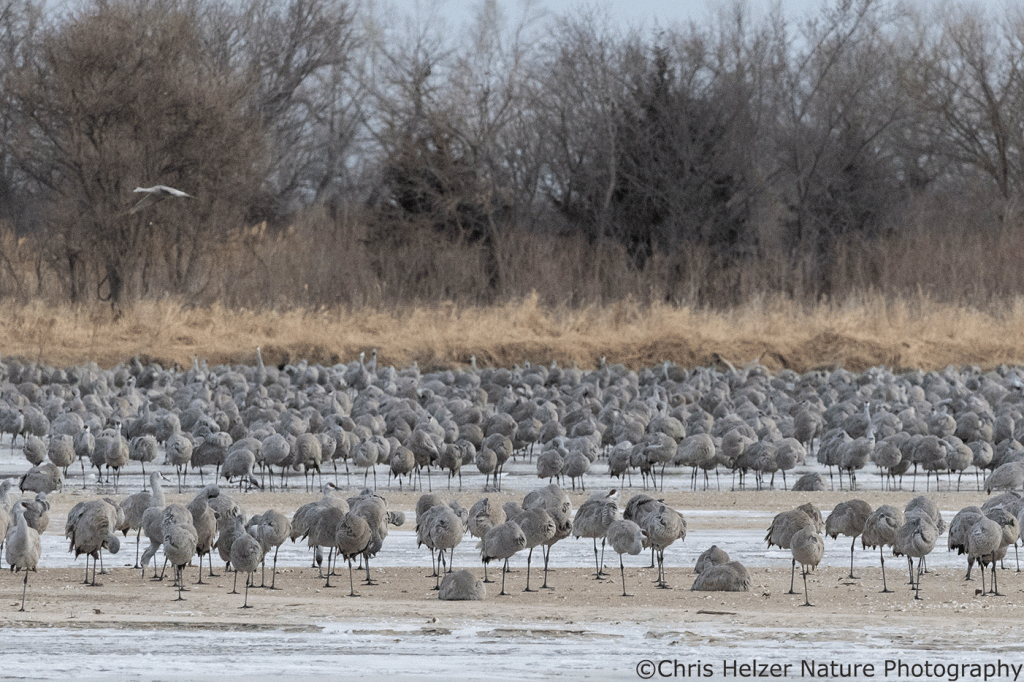
A cold morning, with several cranes on their bellies to (we assume) help keep warm.

Just a few days later, the cranes were already at the river when we arrived in the evening because they’d been hanging around the water most of the day as a way to mitigate the nearly 100 degree (F) heat.

Sometimes, we see cranes arrive at the roost well before sunset, but often they start arriving as the sun goes down and the majority pour in just before it’s too dark to see them. And, sometimes, they decide to roost in a part of the river that doesn’t include our viewing blinds.

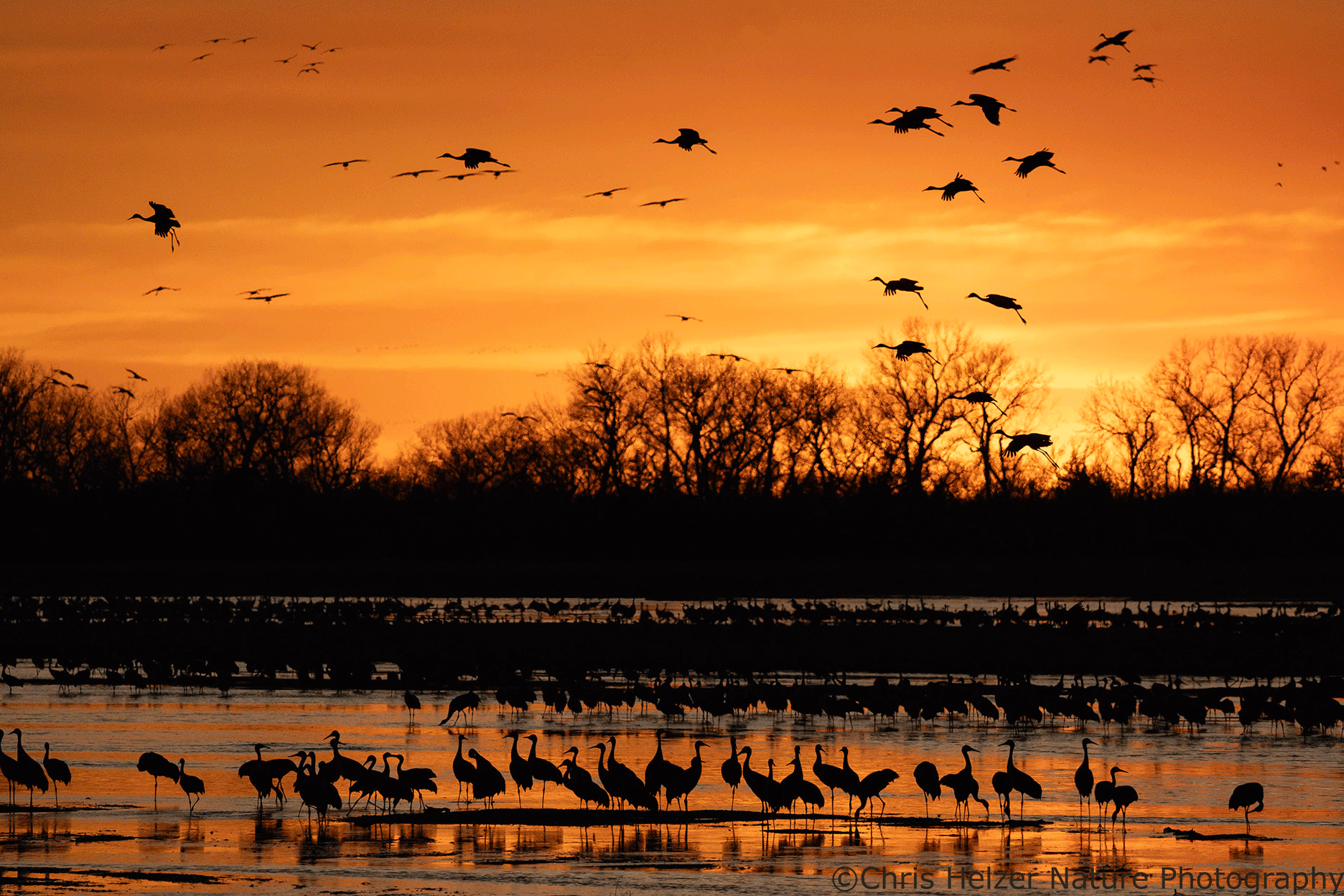
The following four photos from late last week show a time progression over about 20 minutes as the sun dipped below the horizon and cranes poured into the river. This was one of the very warm nights when there were quite a few cranes in place when we showed up, but lots more came in as the night progressed.
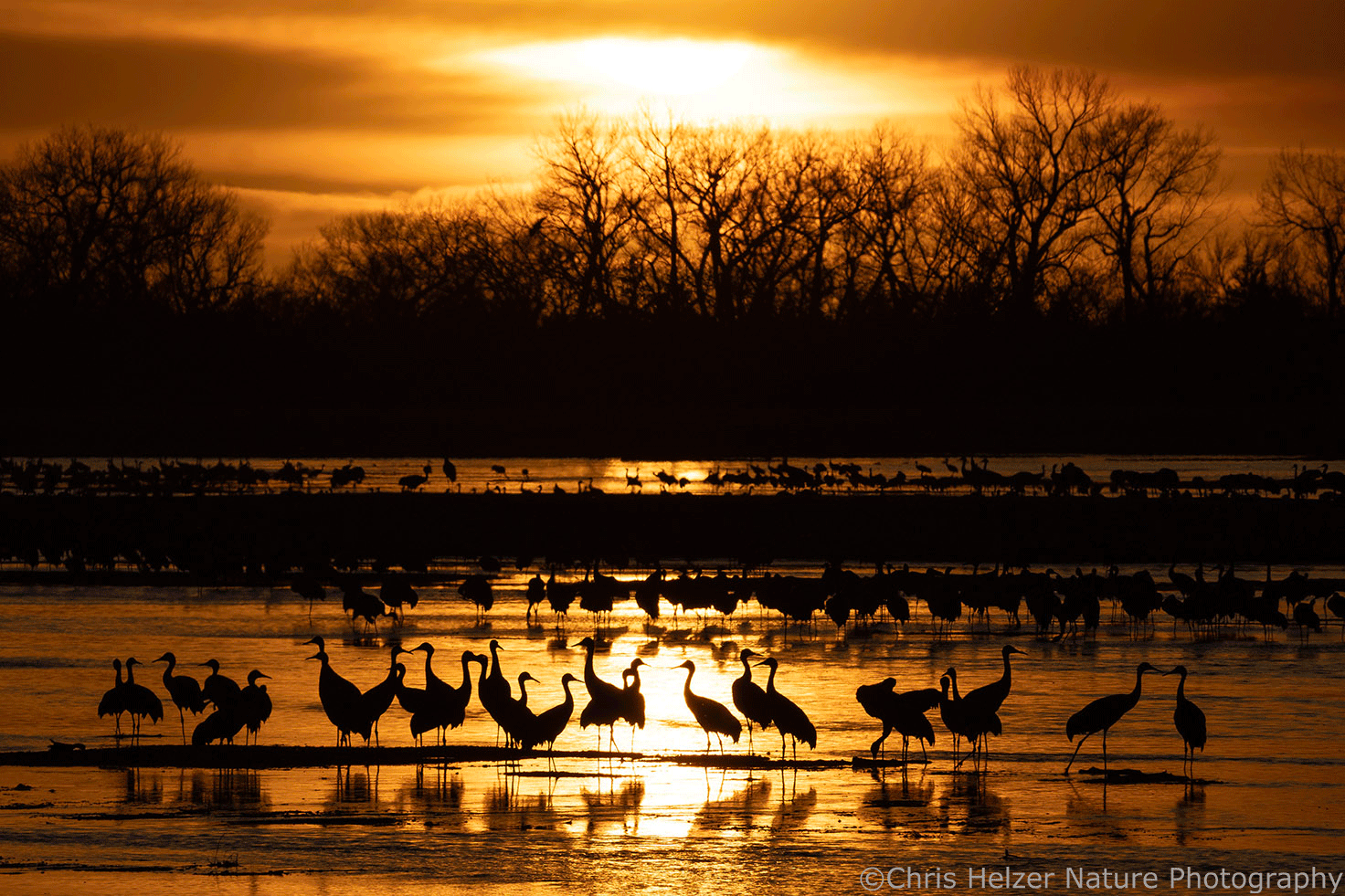
Just before the sun hit the horizon.
Just after the sun dropped below the horizon.
All the good standing spots are starting to fill up.
And yet, cranes just keep dropping in.

So, that’s what’s happening around here – along with lots more. I will try to get some more blog posts out soon.

In the meantime, I hope you’re enjoying the spring wherever you are, except for those of you in the southern hemisphere who are in the midst of autumn. I hope you’re enjoying the autumn.

Wherever you are, if you get the chance to come see the cranes on the Platte River, I think you’ll find the experience worthwhile.

Hubbard Alumni Post – Chicken Wire?!

This post was written (and illustrated) by Evan Barrientos, one of our Hubbard Fellows back in 2015-2016.  Evan now works for The Nature Conservancy in Oregon as a monitoring and outreach assistant.

When I worked for The Nature Conservancy near Wood River, NE, I lived close to a restored wetland. In late winter I would gaze longingly out my window at the clouds of migrating waterfowl whirling above the calm water. I wanted to photograph this spectacle but approaching the skittish birds through the open prairie seemed an impossible task. Then I met Michael Forsberg, famed Nebraskan wildlife photographer. I learned how he builds blinds out of garden fence and grass and sleeps in them, sometimes for days, in order to capture the most intimate moments of nature and share them with the rest of us. I wanted to learn this art too, so I decided to try building my own blind on the restored wetland. The result was a successful comic adventure that for some reason I never shared on the Prairie Ecologist, until now.

You could say I messed up from the start. The store was out of garden fence so I bought chicken wire instead, thinking it couldn’t be to different. It could. I spent most of the next afternoon pounding stakes; cutting wire, camo cloth, and grass; and zip tying it all together in the rough shape of a burrito with a hole at one end and a window at the other. The blind was placed right on the water’s edge and would have a spectacular view of ducks waking up in the golden light of sunrise. Or so I thought.

After leaving the blind out for two weeks to let the birds acclimate to it, I set out one March night with my camera gear and sleeping bag, crawled into the blind, and fell asleep to the quite murmurs of roosting mallards. I was so eager for sunrise that I had no less than five dreams of waking up in the blind. In one dream I woke up underwater. In another I woke up to find the wetland dry. When I finally did wake up, I discovered a snafu that I hadn’t even dreamt of: the blind had collapsed on me. The chicken wire couldn’t support the added weight of the morning dew, and in order for me to see out the blind’s window I had to prop the damn thing up with my head. In addition to being extremely uncomfortable, I worried that the floppy and occasionally cursing blob would scare away the birds. Fortunately, it did not. Maybe the birds thought it was too pathetic to be man-made, or maybe it looked like a decomposing tree trunk, but they didn’t seem to notice me at all. I knew I was okay when a Red-winged Blackbird strolled across the top of my head.

Viewed head-on, you can see how a Great Blue Heron’s head is adapted for a lifestyle of hunting prey directly below it. It amazes me how this bird’s appearance changes from Jurrasic to cartoonish with a slight adjustment.

Pathetic as it was, I’m grateful to the blind for giving me intimate glimpses into the lives of birds that I never would have had otherwise. It’s not often you get to see wild animals behave truly naturally, not at all concerned about a human watching them. Watching a goose bathe in the golden light of sunrise, hearing Blue-winged Teal drakes whisper soft calls to an attractive female, watching beads of water drip from a Gadwall’s impermeable feathers; these were new and beautiful experiences for me. Thanks to the blind, I saw familiar birds in an entirely new way.

Gadwall drakes reveal their surprisingly vivid legs while foraging in the classic dabbler form.

Gadwall drakes reveal their surprisingly vivid legs while foraging in the classic dabbler form.

A Killdeer ruffles her feathers after preening in front of me.

A Killdeer ruffles her feathers after preening in front of me.

20160407_nebraska_1760

A Greater Yellowlegs scans the water for invertebrates. This was the closest I’ve ever been to one.

Pathetic as it was, I’m grateful to that blind for giving me glimpses into the lives of birds that I never would have had otherwise. It taught me a new way to appreciate wildlife, one that requires you to become a part of the landscape. Hunters and photographers know the value of extreme patience, but in today’s fast-paced society, rarely does the average person sit in a spot for hours and watch nature’s secrets reveal themselves. A blind, I learned, teaches you that patience and provides a window to a new view of nature. I hope to build many more blinds in the future, but never, ever again out of chicken wire.