
One of the most unique, beautiful, noisy, and enigmatic insect groups in the prairie is the cicadas.
Hang on, is that good grammar? “Groups is” doesn’t sound right. But the subject isn’t “groups”, it’s “one”, and “one is” works. So that’s ok. But should it be “cicada” or “cicadas”? Is “the cicadas” a group? If so, I’ve got it right.
I guess it’s a great example of what grammar experts often say – “Sometimes, you just have to guess and hope you get it.” It’s nice that grammar experts are so flexible on these things.
Cicadas got a lot of attention last year because there were multiple
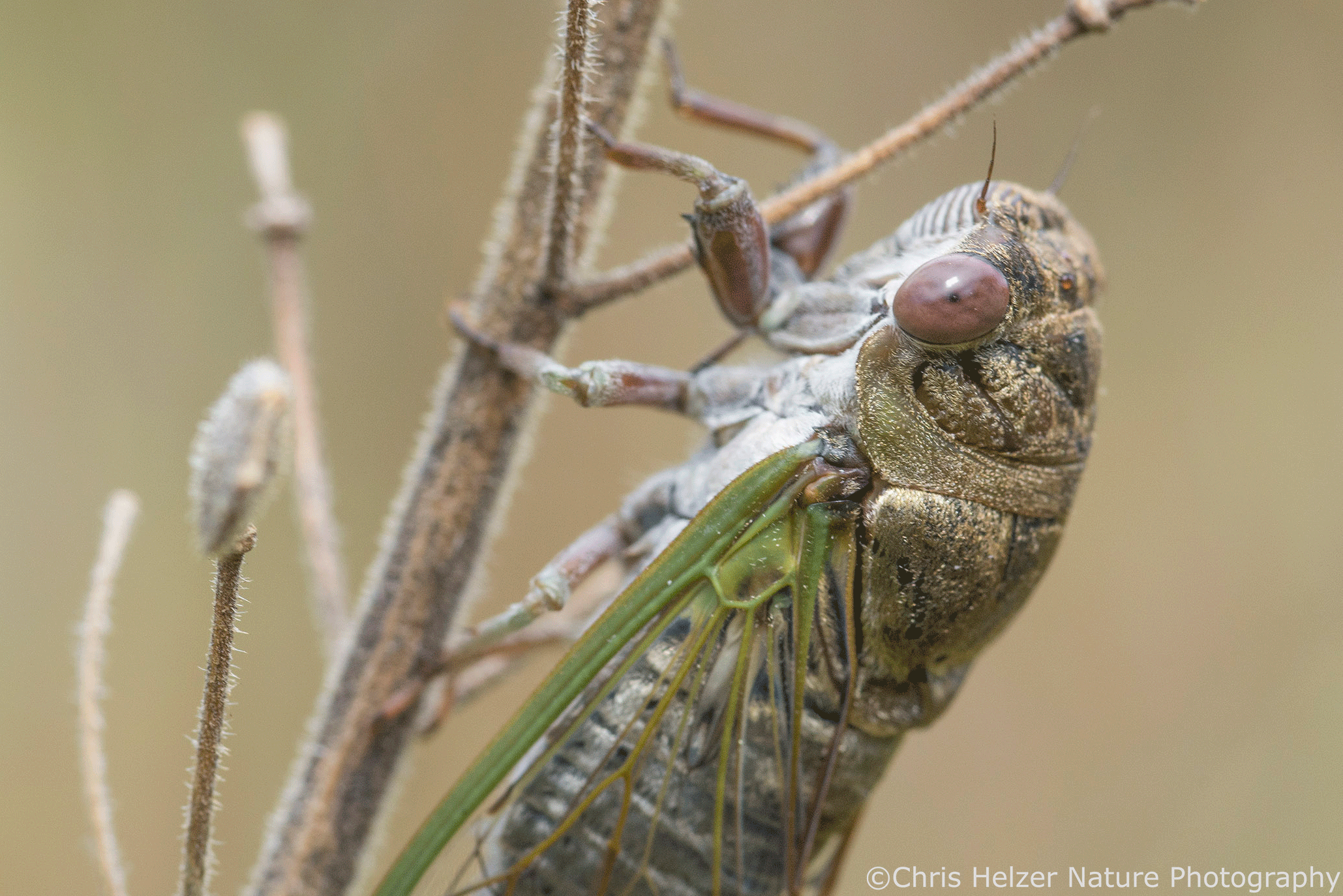
Anyway. I really like cicadas. They’re distinctive and interesting to look at. Their calls are one of the sounds of summer in the prairie and the absence of that backing track would be very noticeable. I also love photographing them – when they’ll let me.
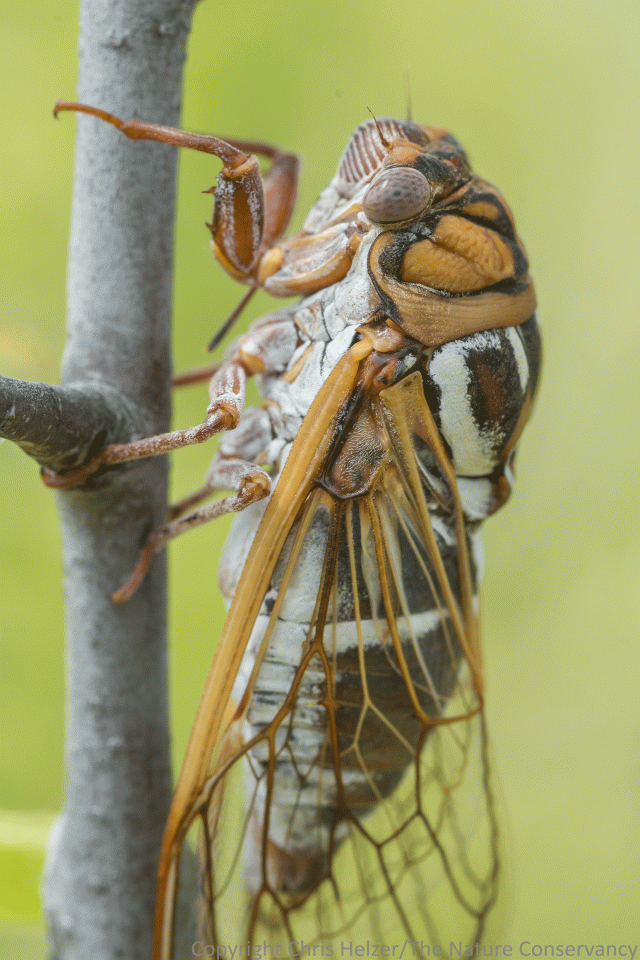
However, with all that said, I’m also frustrated at how little I know about prairie cicadas. Let’s start with identification. I’m pretty sure the cicada above and cicada below are the same species. They look pretty different from each other, but I have it on good authority that they’re both the plains dog day cicada.

You can find plains dog day cicadas every year (unlike the periodical cicadas that emerge only every 13 or 17 years). However, each of them probably lives 4-7 years belowground before coming aboveground and molting into an adult for the quick, noisy remainder of their life.
The tiny little cicada below is a small grass cicada, which narrows it down to a couple different species. It’s less than an inch in length and really easy to miss. My understanding is that there are two similar species that can be very difficult to distinguish based just on photos. If anyone can give a more specific identification on it, please let me know!


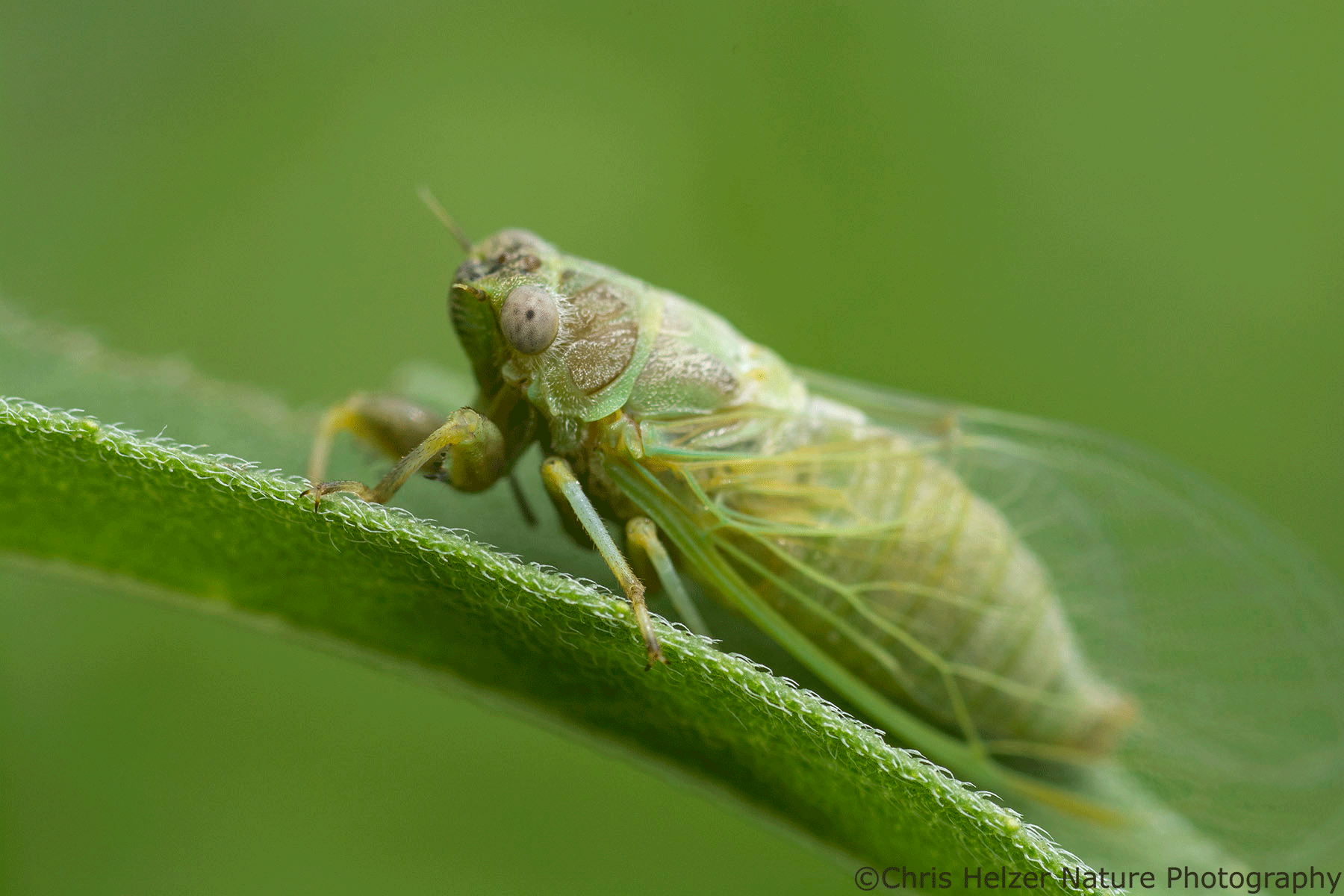
The greenish cicada below might be the same species as the tan ones above, or might be different. I think the most likely choices are Cicadettana calliope and Cicadettana kansa. I’m certainly not going to make any guesses, given what I’ve read about the difficulty in distinguishing between them! I’ll just admire both!
The charming little cicada shown below isn’t much bigger than the small grass cicadas, coming in at about 1 1/4 inches in length. It is apparently allopatric, which of course means that it is a species that doesn’t have any range overlap with close relatives.
I say “of course” like I didn’t just look that up. Most of you would have, too, so don’t be smug. I recognized the word as one I used to know, but it’s been a long time since my last evolutionary biology course. Also, it’s called the prairie cicada (Okanagana balli). The Latin is important here since there are several cicadas that are unsurprisingly called “the prairie cicada”.
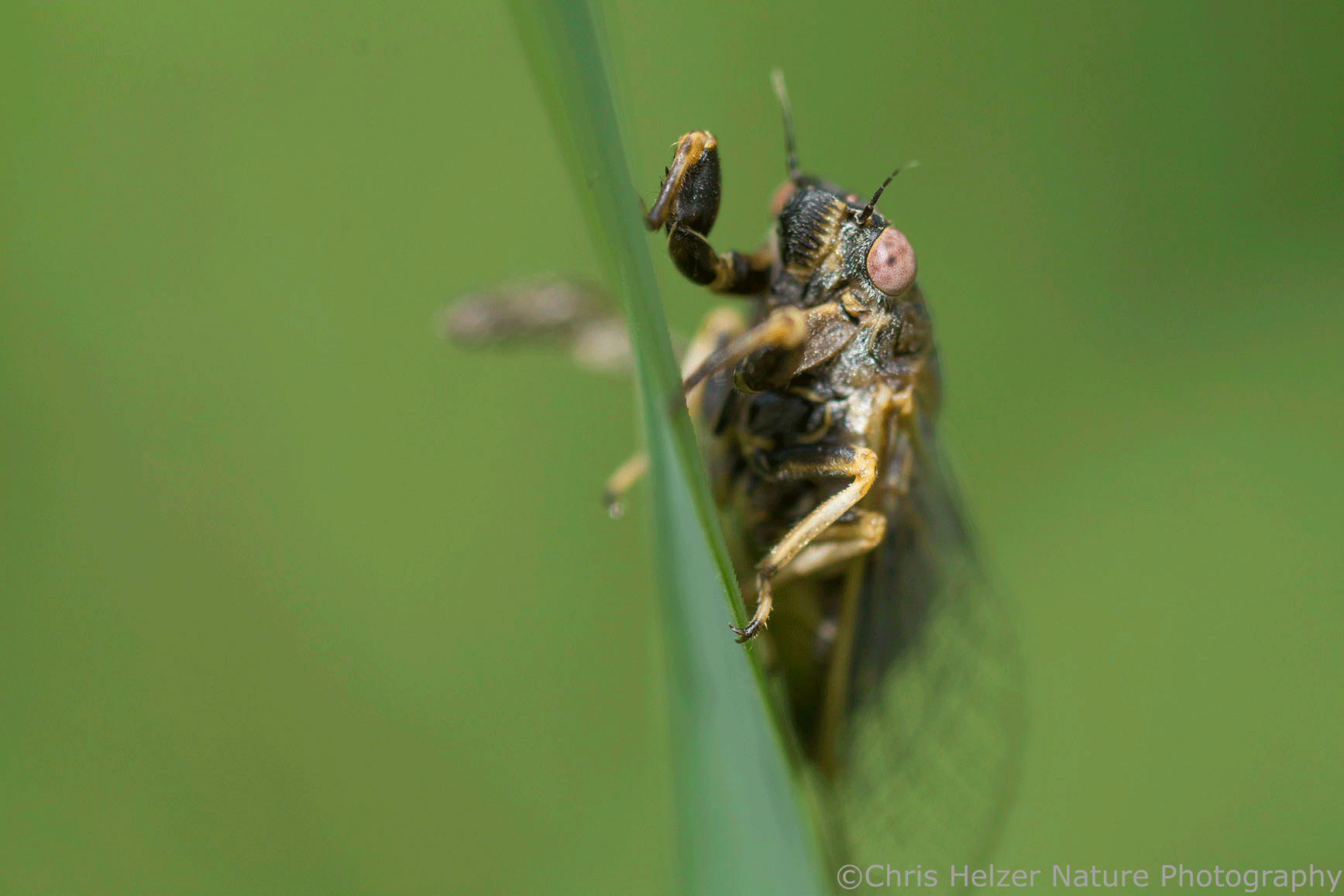
I learned a little about Okanagana balli just the other day from a presentation by Katie Dana at the Illinois Association of Conservation Districts conference. She said that while it’s not one of the periodical cicadas (like the 17-year cicada, for example) it does tend to have big emergences (belowground nymphs maturing into aboveground adults) every 8-9 years.
As I understand it, though, you might see a few every year, so they’re not all on the same schedule. I could also have that wrong, but a quick Google search seems to back that up. I photographed several back in 2019 which likely means I won’t see many (or any) more until 2026 or 2027.
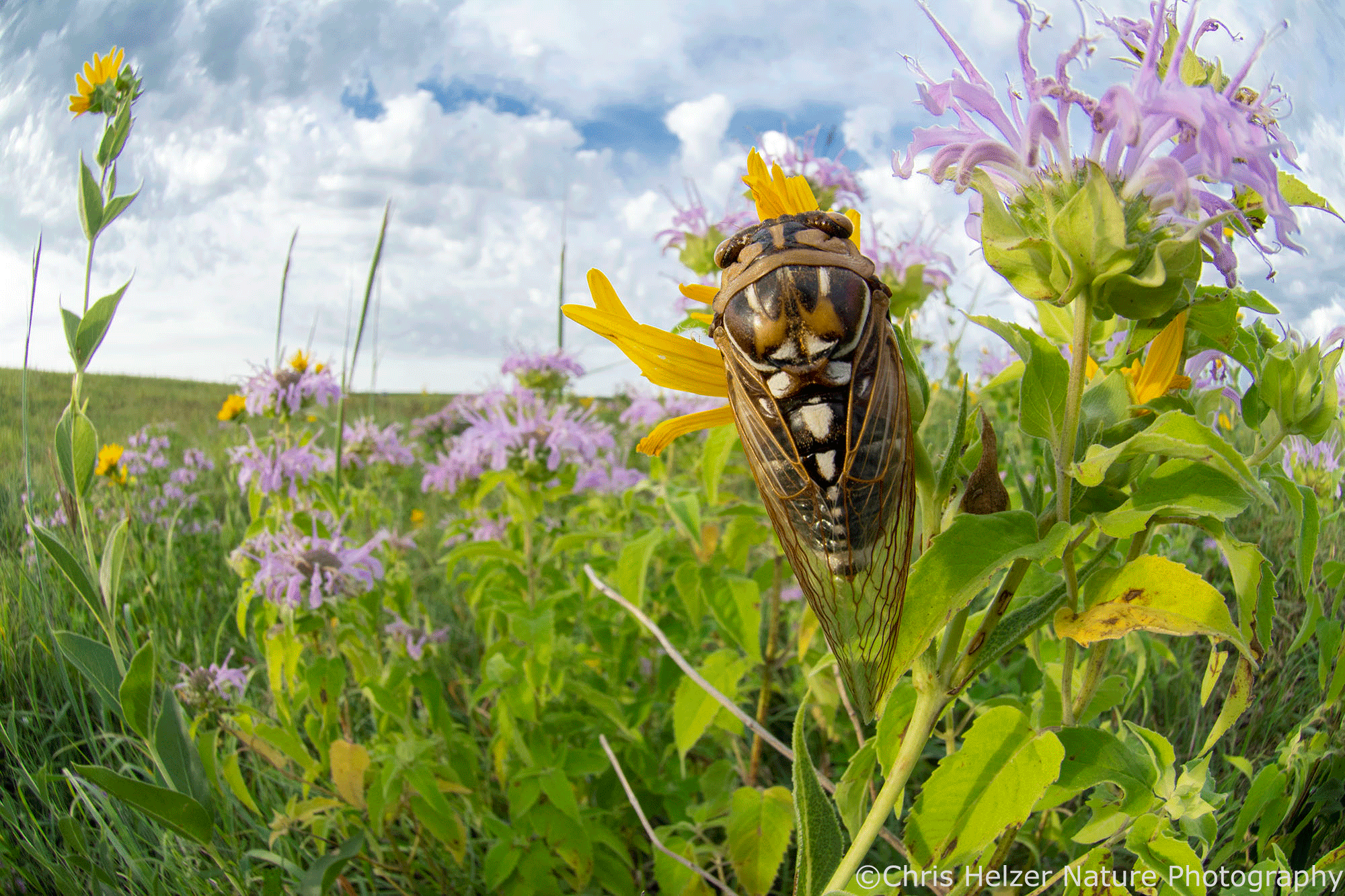
The most spectacular – in my opinion – of the grassland cicadas I’ve seen are the Megatibicen, which come in two species here in Nebraska. In the eastern part of the state, we get Megatibicen dorsatus and further west, we get the nearly identical Megatibicen tremulus. They’re both called “Bush Cicadas”, which is ok, I guess, though I don’t think they’re really tied to bushes or other woody plants. (Please don’t tie insects to bushes.)
As I understand it, experts can tell them apart by looking at the color of some of the wing veins and by their calls. Good for them. What I’m told is that when I see one at the Niobrara Valley Preserve, it’s probably M. tremulus, and when I see one at the Platte River Prairies – or further east – it’s probably M. dorsatus. I’ll stick with that for now.


Below are two photos of the eastern species of the bush cicadas – Megatibicen dorsatus. Probably. Both photos were taken at our family prairie south of Aurora, Nebraska. The first shows a mating pair with the male on the left and the female on the right. If you look closely, you can see the big plate below the legs of the male, which is absent on the female. Below that plate is the opening to its mostly-hollow abdomen that helps amplify the sound of its calls.

Here is a video I took of a male bush cicada calling several years ago. It was at the Niobrara Valley Preserve, so I’m assuming it is M. tremulus, but maybe an expert will recognize the song and confirm/refute that for me.
One of the questions I’ve had for a long time is whether cicadas have favorite food plants. Both adults and nymphs drink the liquids from plants and I’d assume there are differences in taste and nutrition between plant species. However, they don’t seem to care much about any differences that might exist.
As nymphs, cicadas attach themselves to plant roots and drink the xylem (liquid) that flows through them. Interestingly, the liquids in plants are split into xylem and phloem, and phloem is the one with a much higher sugar/protein content. For some reason, both adult and nymph cicadas feed on the less nutritious xylem. I don’t understand it, but they’ve made it work for a very long time, I guess.
Katie confirmed what I’d heard from others, which is that there’s no evidence that most/all cicadas have any preferences between plants. They are found on lots of different roots belowground and feed on a wide range of plants aboveground. I suppose there’s a lot of value in being a generalist. As an ecologist, though, I’m always looking for relationships between species and it’s a little disappointing to learn that cicadas will apparently just eat whatever they come across.
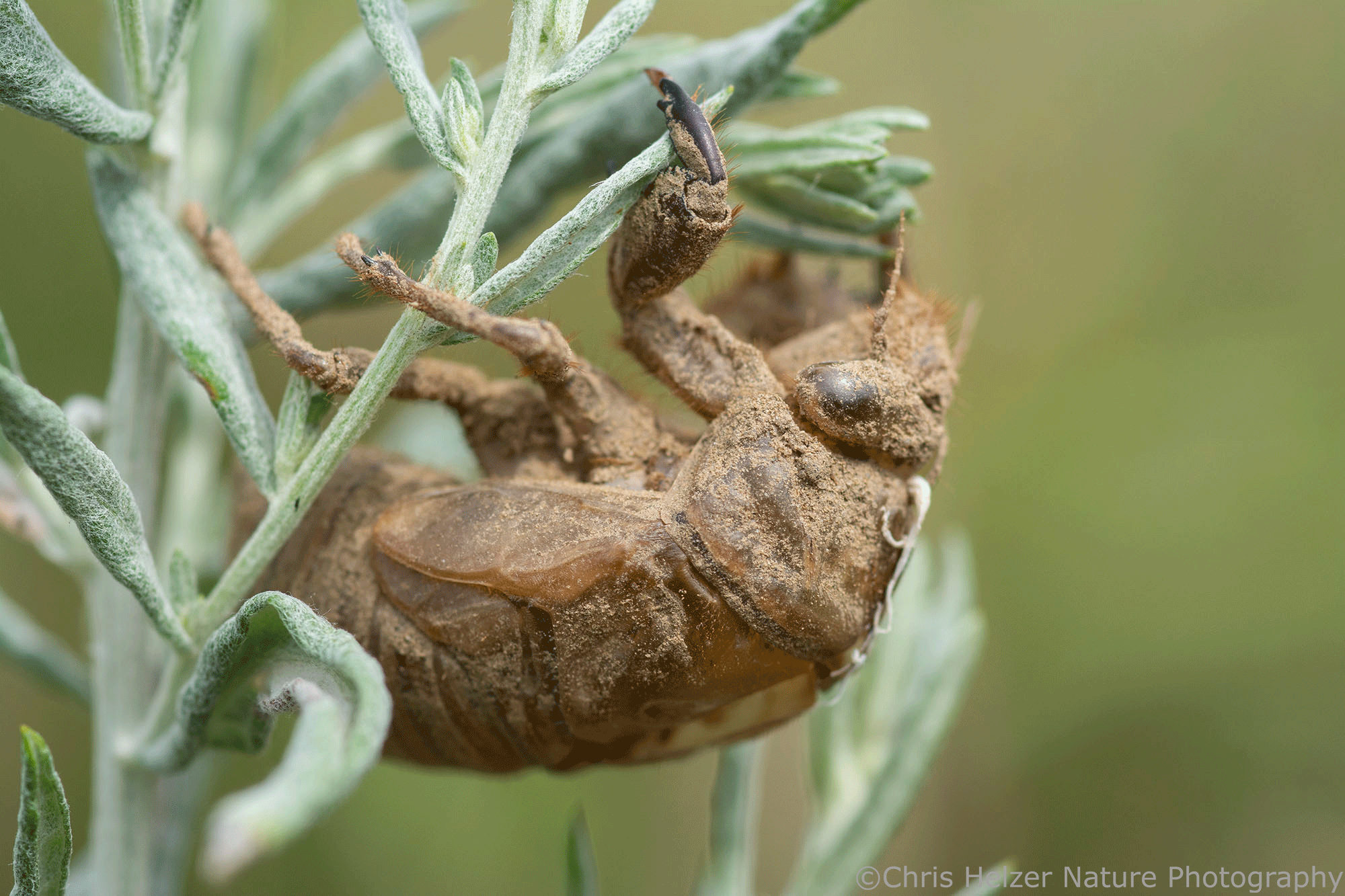

Cicadas, even the small ones, are relatively thick, armored creatures. They look like they’d be pretty well protected against predators. On the flip side, the noisy calls made by adult males draw attention from more than just female cicadas. I wonder how many females get eaten by predators compared to males?
Birds don’t seem to have any problem crunching through the hard shells of cicadas, and invertebrate predators have found work-arounds as well. I’ve been lucky to come across several examples of cicada predation, some of which I’ve been able to photograph.

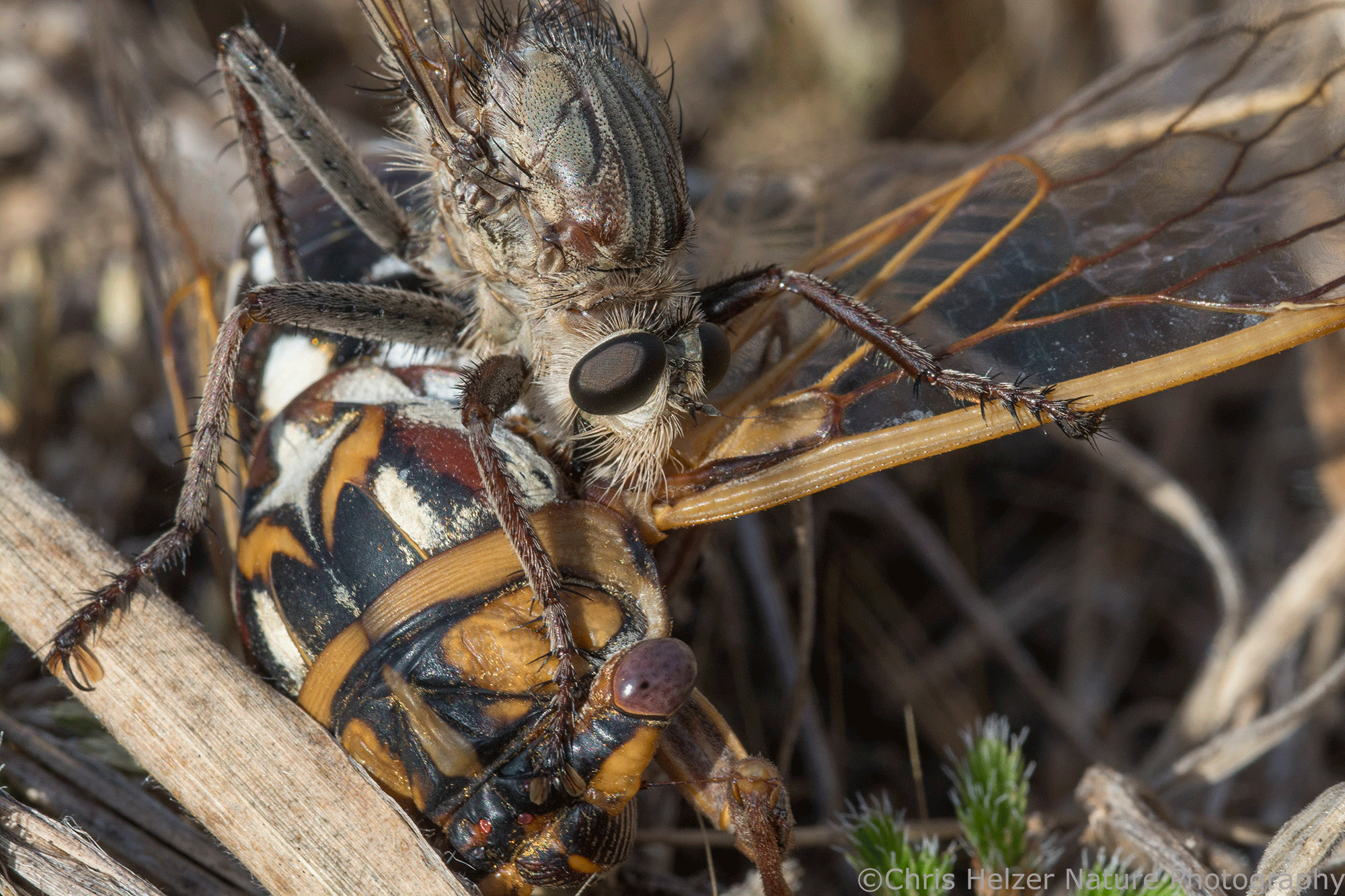
In both photos above, the predator had to find a chink the cicada’s armor in order to dispatch it. Both the spider and robber fly have similar methods for killing and feeding on prey – they inject chemicals that paralyze and “predigest” the insides of creatures and then suck out the liquefied remains. I don’t know how long it took the crab spider to subdue its cicada because it was over by the time I got there, but I got to watch the robber fly do it and it wasn’t quick. There was a lot of noise and struggling before the fly finally found a spot to work with.
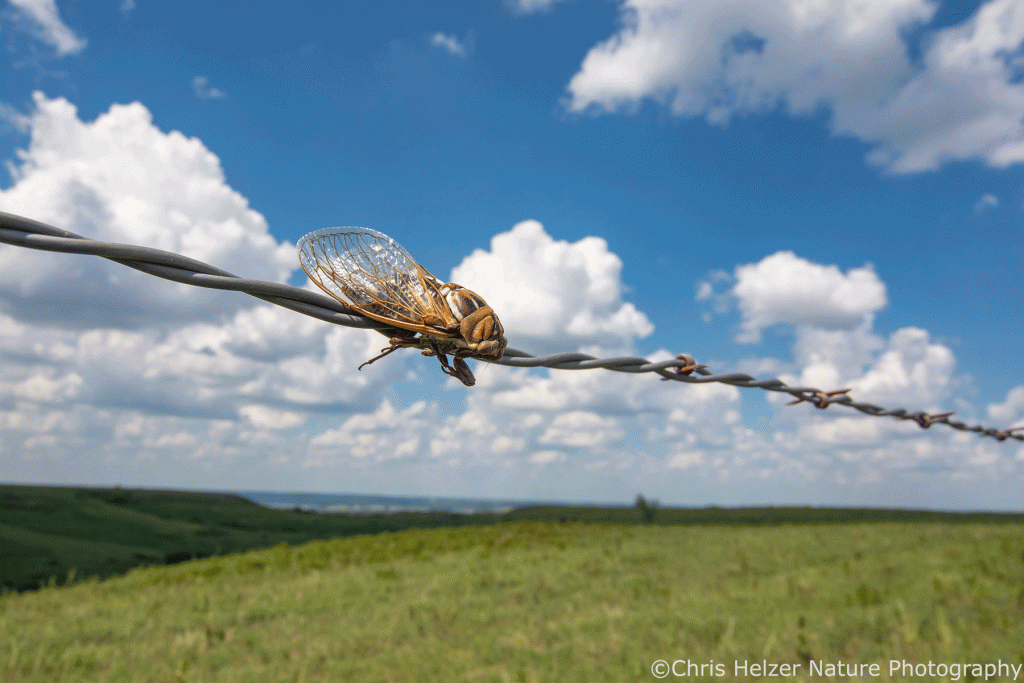
While I’m no expert on cicada identification or behavior, I can at least appreciate cicadas aesthetically. There’s a lot to enjoy. Their calls and buzzing flight entertain my ears in the late summer and their stocky, shiny, bodies, large clear wings and big eyes make them a joy to see and photograph. When you’re out in the prairie next summer (especially the second half of the summer), be on the alert and you’ll likely find some of the species that hang around your area.



 The Prairie Ecologist