Grasslands face a long list of challenges. In many regions, habitat loss and fragmentation top that list, leaving prairies to struggle for survival as tiny isolated patches of habitat. In addition, invasive plants and animals keep finding new footholds within both fragmented and unfragmented prairies. Many of those invaders are aided by nutrient pollution – increasing levels of nitrogen, for example, which help species like reed canarygrass and smooth brome monopolize formerly diverse plant communities. Most of all, the climate continues to flail crazily about, ratcheting up the temperature and tossing out more and more extreme weather events.
How can grasslands possibly survive all of that?
I’m actually pretty optimistic about the future of prairies. Prairies are inherently resilient, and if we do our jobs as land managers and supporters of conservation, we can help ensure their continued resilience and survival. Resilience in prairies and other ecosystems is the capacity to absorb and adapt to whatever challenges are thrown at them, while sustaining their essential functions and processes. That resilience is built largely upon two pillars: biological diversity and the size/connectivity of the habitats that biological diversity depends upon.
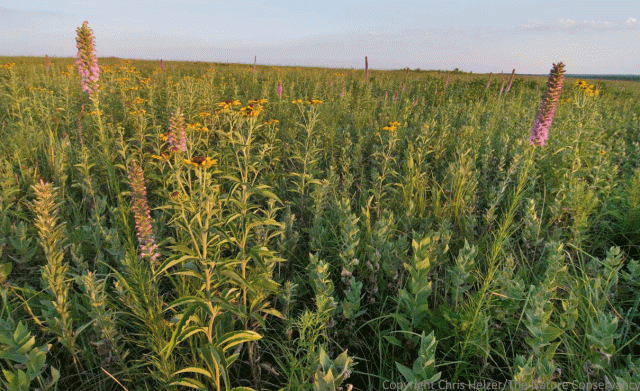
Plant diversity is a key component of ecological resilience, along with the other biological diversity associated with it. Taberville Prairie, Missouri.
We’ve severely compromised the “habitat size/connectivity” pillar in many regions of North America, but even in little prairie fragments, there is an incredible diversity of organisms, providing the countless services needed to sustain life and productivity. In a healthy and diverse prairie, not only are all the bases covered, there is considerable redundancy built in to the system because of the number of different species present. If one plant, animal, or microbe is unable to do its job because of drought, fire, predation or disease, another can step up and fill the role. Diversity provides redundancy, and redundancy helps ensure that prairie systems stay healthy and productive, regardless of circumstances.
It’s not hard to find examples of this kind of built-in redundancy in prairies. In fact, you can find it within some very recognizable groups of species. Let’s start with sunflowers.
While most people know what a sunflower looks like, you might not realize how many different kinds there are. Here in Nebraska, we have at least nine different sunflower species, plus a lot of other flower species that look and act much like sunflowers. Two of our official sunflowers are annuals, often classified as weeds because of their ability to quickly colonize areas of bare or disturbed soil. The other seven species are long-lived perennials, each with its own set of preferred habitat conditions.

Plains sunflower, an annual, is a rapid colonizer of exposed in sandy prairies around Nebraska. The Nature Conservancy’s Niobrara Valley Preserve.
All sunflowers are tremendously important providers of food and shelter to wildlife and invertebrates. There’s a reason sunflower seeds are so prevalent in bird feeders – they pack an enormous amount of nutrition into a little package. Because of that, a wide array of both vertebrate and invertebrate animals feed eagerly on sunflower seeds when they can find them. Sunflowers also produce an abundance of pollen and nectar, and make it very accessible to pollinators and many other creatures by laying it out on a big open platter. It’s rare to find a sunflower in full bloom that doesn’t have at least one little creature feeding on its nectar, pollen, or both. Grazing animals can get a lot from sunflowers as well; the forage quality of sunflowers is very high, especially before they bloom.
During or after droughts, intensive grazing bouts, fires or other events that leave bare soil exposed, annual sunflowers thrive, and they can provide abundant resources at a time when many other plant species can’t. We see this often in the Nebraska Sandhills, where plains sunflower (Helianthus petiolaris) turns the hills yellow during the summer after a spring fire or the year after a big drought. Plains sunflower isn’t the only plant that flourishes under those conditions, but its presence in plant communities is a great example of the kind of built in redundancy that helps ensure there are plants for animals to eat, even when many normally-abundant prairie plants are scarce or weakened.
Nebraska’s perennial sunflowers span a wide range of habitats, from wet to dry and sunny to shady. You can find a sunflower in just about any habitat type in Nebraska. That’s another great example of built-in redundancy, and a reason for optimism about the future. As climate change alters the growing conditions across much of Nebraska, it seems unlikely that any habitat will change so dramatically that it will become devoid of sunflowers. Instead we’ll probably see changes in the relative abundance of each species from place to place. In addition, remember that what we call a sunflower is a fairly arbitrary categorization; there are lots of other wildflowers that provide very similar resources/services, including plants like rosinweed (Silphium integrifolium), false sunflower (Heliopsis helianthoides), sneezeweed (Helenium autumnale), and many more. Those sunflowerish plants also span a wide range of habitat preferences and growth strategies, making it likely that some of them will be blooming abundantly every year, no matter what drought, fire, or grazing conditions are thrown at them.
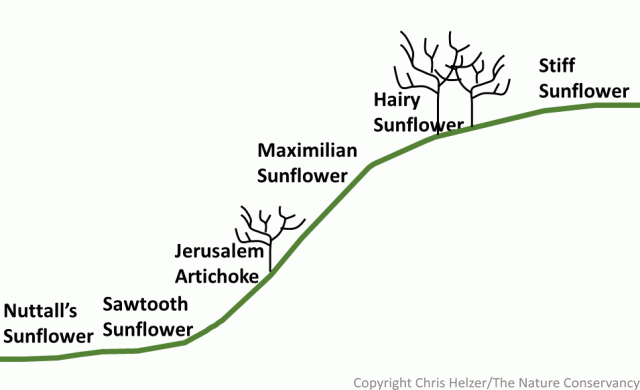
An illustration of the general habitat preferences of several perennial sunflowers found in Nebraska. The variety among habitats used by these species makes it likely that some kind of perennial sunflower will persist in most locations, regardless of how climate and disturbance patterns change over time.
Milkweeds are another group of organisms that demonstrate the diversity and redundancy in prairie ecosystems. There are 17 milkweed species here in Nebraska, along with several other related species (like dogbane) that produce the same kind of sticky white latex. While that latex is toxic to most creatures, a number of invertebrates have figured out how to feed on milkweed plants without suffering harmful effects. Many have actually turned the toxin into an advantage by ingesting the substance and making themselves toxic to potential predators. The most famous of these critters, of course, is the monarch butterfly, which uses milkweeds as larval hosts.
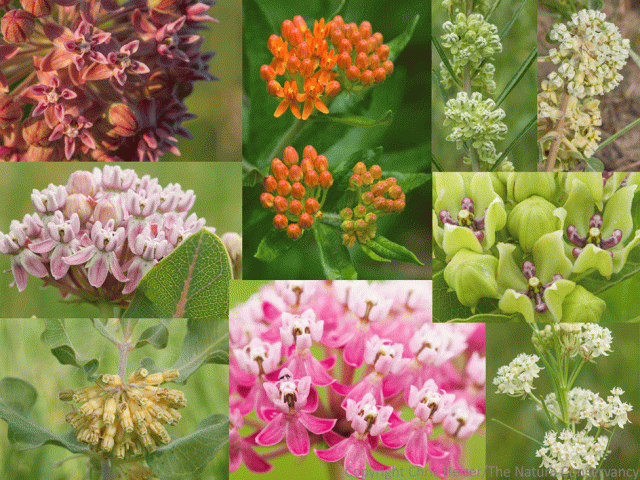
A selection of milkweed species found in Nebraska, demonstrating the variety in flower colors and shapes among the group.
When you picture a monarch caterpillar on a milkweed plant, you probably envision a tall plant with a big pink flower. In reality, monarchs can use many (maybe all?) milkweed species as larval hosts. Because each species of milkweed has its own unique set of preferred habitat and growing conditions, the diversity of milkweed species in Nebraska should help monarchs find a place to lay eggs regardless of weather, disease outbreaks, or other events.
The spring of 2017 provided a compelling example of this. In most years, monarchs overwintering in Mexico fly into the southern United States and lay eggs on milkweed plants there. The subsequent generation than flies northward into Nebraska and other nearby states. For some reason, many monarchs broke from that pattern in 2017, and arrived in Nebraska much earlier than normal. This caused a great deal of concern because the milkweed most commonly used for egg laying – common milkweed (Asclepias syriaca) wasn’t up yet, and just as it started emerging, a freeze knocked it back down. Fortunately, common milkweed wasn’t the only option available to monarchs. Whorled milkweed (Asclepias verticillata) is also fairly common, starts growing earlier in the year than common milkweed, and is more resistant to cold weather. Monarchs seemed happy to lay their eggs on the skinny leaves of whorled milkweed, and those of us worried about monarchs breathed a sigh of relief. Once again, diversity created redundancy, and monarchs found habitat for their babies, even though they arrived well ahead of schedule.
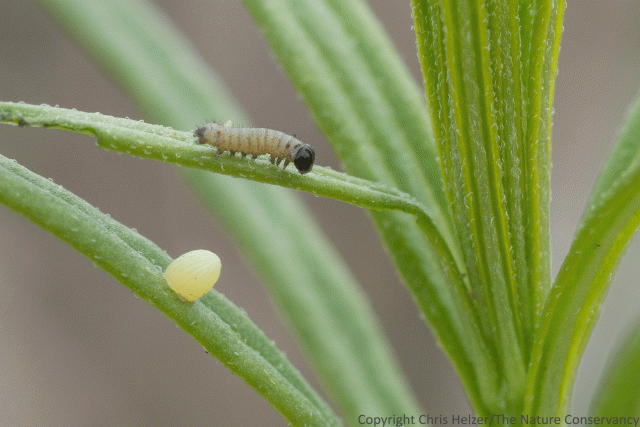
A monarch egg and caterpillar on whorled milkweed earlier this spring (April 27, 2017) in Nebraska.
A broader example of redundancy and resilience in prairies includes the interdependence between bees and plants. If you’ve followed this blog for long, you’re surely aware that there are thousands of bee species in North America, and potentially 80-100 or more species in a single prairie. Most of those bees can feed on the pollen and nectar from many kinds of wildflowers, though some are restricted by their size or tongue length from accessing certain species. Because most plants only bloom for a few weeks, and most bees need considerably longer than that to successfully raise a family, bees require more than one kind of wildflower near their nest. In fact, in order to support a broad diversity of bee species, a prairie needs an equally diverse set of wildflower species. That way, a bee can find sufficient food throughout the growing season, even if drought, grazing, or other events keep some plant species from blooming in a particular year.
On the flip side, most wildflowers rely on the diversity of bees and other pollinators to ensure successful pollination. While some insect-pollinated plants are very selective about who they let in, most rely on the availability of many potential pollinators. If some species of bees are suffering from a disease, or have a weather-related population crash, it’s awfully nice to know that there are other bees (along with butterflies, moths, wasps, and other insects) that will still be able to transfer pollen from one flower to another. A diverse pollinator community relies on a diverse wildflower community, and vice versa. Diversity, redundancy, and resilience. No matter what happens, flowers make fruits and seeds – which, by the way, is pretty important all the various creatures that rely on those fruits and seeds for food.
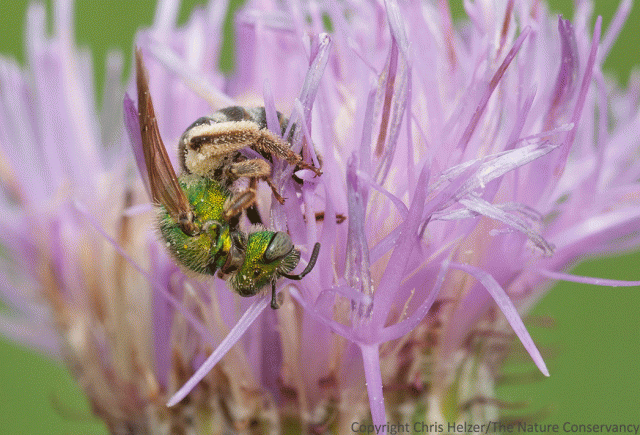
Bees rely on plant diversity to ensure a consistent supply of pollen and nectar across the growing season. In this case, tall thistle, an important native wildflower, is supplying food to a bee in return for pollination services.
All of us have our favorite prairie species, whether we’re fans of flowers, butterflies, birds, or some other group of organisms. It’s easy to focus our attention on those favorite species, and worry about whether they will survive all the challenges that face prairies today. If we really care about prairies, however, we should probably focus more on (and celebrate) the richness of species that keep prairies humming along, no matter what gets thrown at them. The variety of yellow-flowered sunflowerish plants, the broad array of latex-producing milkweed-like plants, the complexity of the plant-pollinator relationship, and countless other examples of diversity and redundancy help ensure the survival of prairies well into the future. That resilience is why I remain optimistic about the future of prairies.








 The Prairie Ecologist