
A guest post by Eliza Perry, one of our Hubbard Fellows. All photos are by Eliza.
Last week, most of the Platte River Prairies cohort hopped in a van together and drove to South Dakota for the annual Patch-Burn Grazing conference, one of many conferences I’ve attended in the last four months.
Before I started with The Nature Conservancy, I had never been to a professional conference and the concept was very mysterious to me. Who goes to conferences? What do all of these people do for days at a time together? Why are conferences necessary? I found answers to these questions quickly, and continue to be blown away by each one that I attend. To be honest, I didn’t have a clear concept of patch-burn grazing systems prior to last week. Conferences like these aptly serve as a classroom for the newbies like myself and also as a forum for the seasoned to offer feedback, discuss strategies, and reflect on successes and disappointments. But perhaps above all they serve as a reminder to experiment!
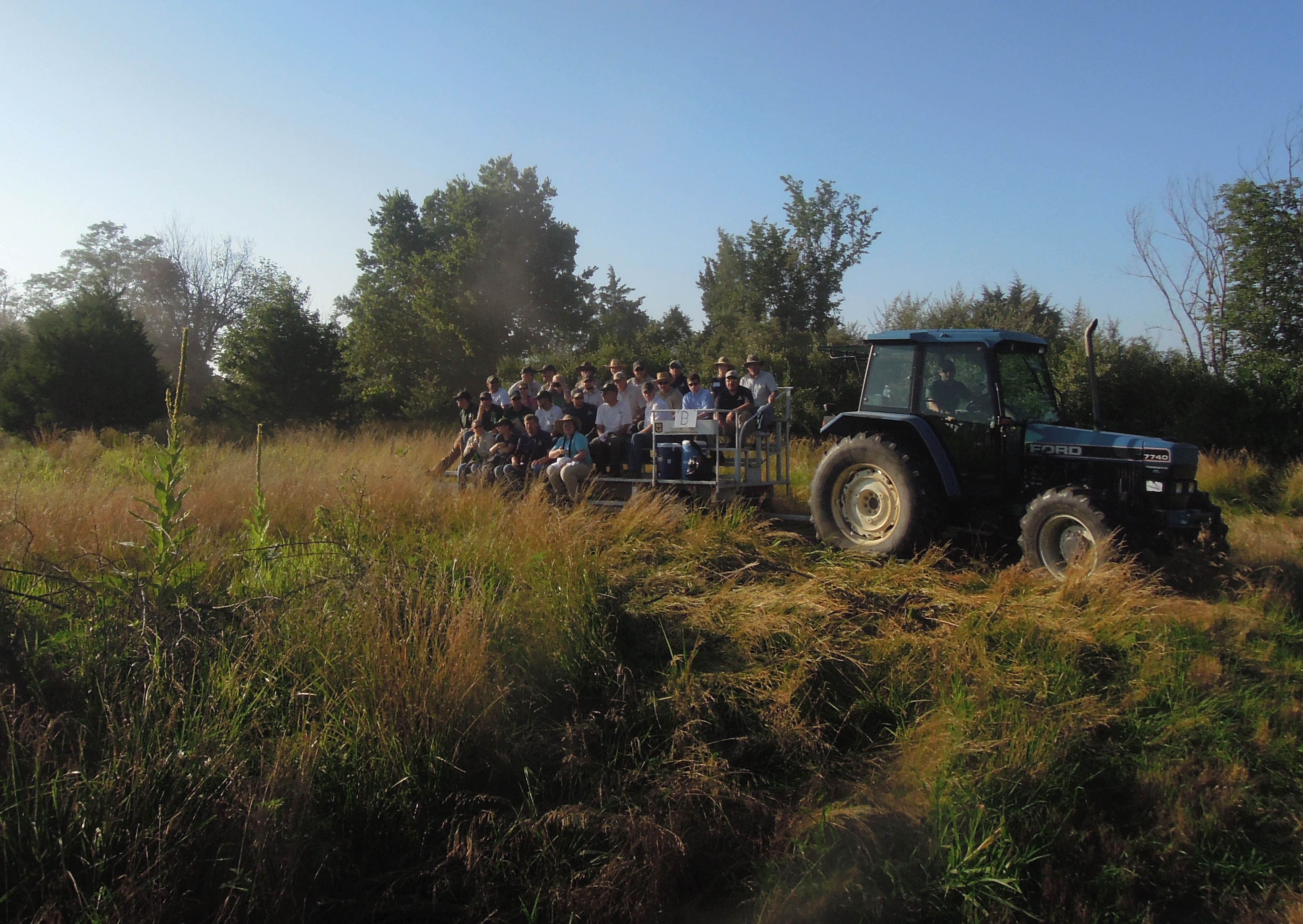
Tractors towing loads of “prairie people” from site to site at the Grassland Restoration Network workshop in July (Missouri). I thought it was a creative way to transport so many people, but it was also a pretty goofy sight.
On one hand, prairies have varied responses to climatic, seasonal and environmental conditions, keeping us on our toes. But on the other hand, there is some discernible rhythm to land management, despite what Chris and Anne discussed in a recent post, and it is our job to constantly review and reevaluate our methods and maintain self-criticism, though it can be difficult to think beyond our own situations. The Patch-Burn Grazing conference was not just an opportunity to see what works elsewhere, but to open ourselves up to possibilities that hadn’t occurred to us or that we had previously discounted.
It’s been fascinating to see that what works at one site or in one particular year is not necessarily the end-all-be-all solution to our ever-present invasive problems, maintenance backlogs or lack of manpower. But hearing about others’ strategies prompts some useful reflection. For example, the fact that haying has been a prairie management tool for more than a hundred years does not mean definitively that we ought to continue doing it, partly because no one yet understands its comprehensive effects on things like soil composition, and also because there may be a more efficient or effective alternative management tool. Likewise, as Chris argued at the patch-burn grazing conference, assumptions that seem to be common sense, such as the idea that promoting plant diversity and habitat heterogeneity allows most prairie species to thrive, still need to be tested by anyone whose management objectives are influenced by them. I was also interested to learn that the often-held “more is better” presumption that a high seeding rate is necessary to achieve high plant diversity was found not to be true at one of the restoration project sites that presented at the Grassland Restoration Network workshop this summer.
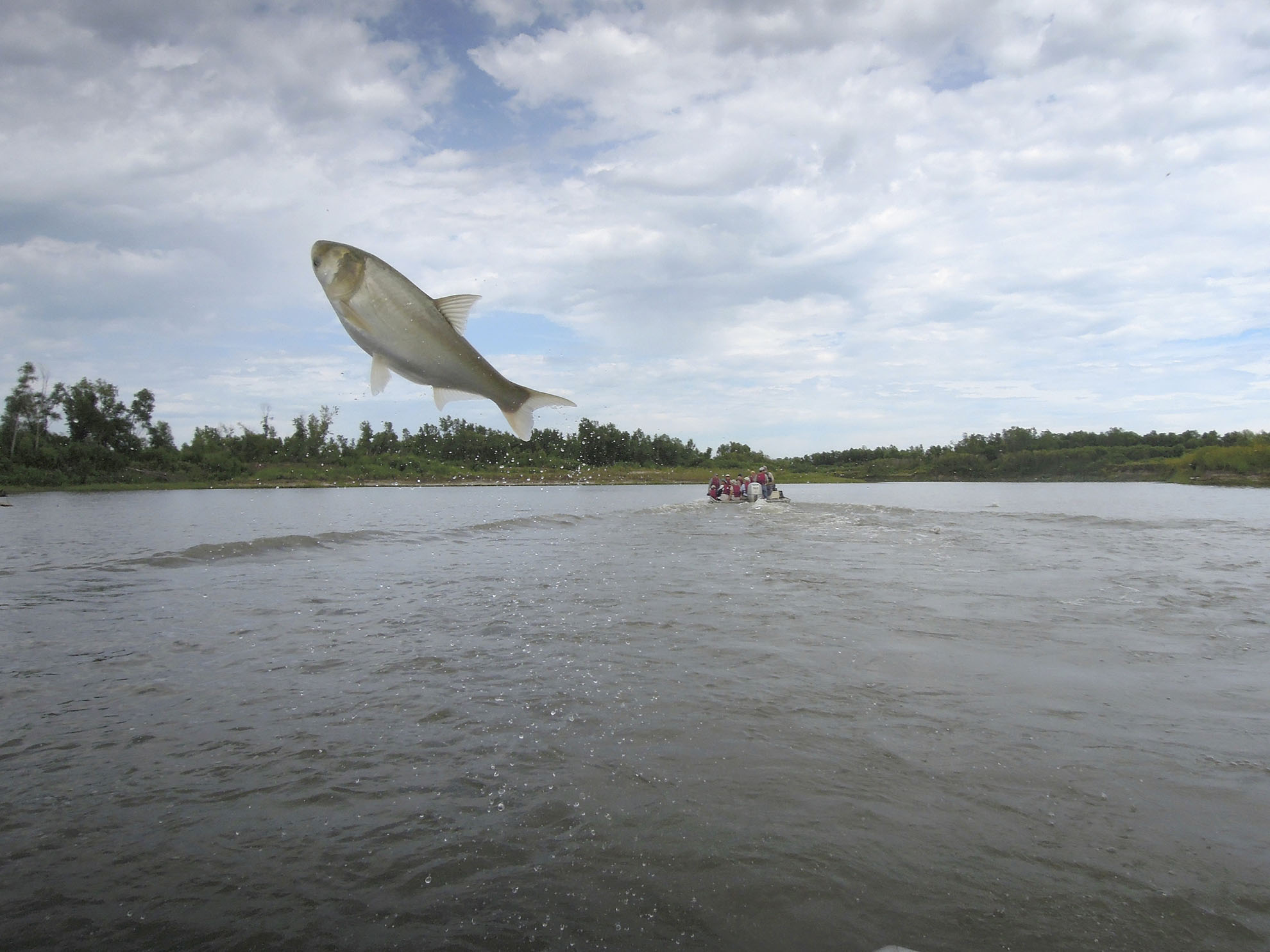
A silver carp dances in front of my camera for a moment during a Missouri River field trip at the Nebraska Natural Legacy Conference. Up ahead is a boat full of Nebraska’s conservationists.
The cherry on top of all this perspective-gaining for me is that I meet loads of interesting, energetic people from all corners of the Great Plains who are willing to answer my questions, reassure me it’s taken them a long time to understand all that they understand, and let me listen in on their conversations with others. All in all, I think conferences are an awesome way to share knowledge, build relationships, and provoke thought.
Editor’s note: Eliza and Anne have been able to attend some really good workshops and conferences during the first four months of their Fellowship with us. Most of those conferences have been relatively small and narrowly focused – and most of included great field trips and lots of time for discussion. Unfortunately, for those of us who attend a fair number of them, not all conferences, conservation or otherwise, are like that. More on that topic in the near future…


 The Prairie Ecologist