Photo of the Week – June 1, 2012

Two years ago, I photographed this little grasshopper nymph on a prairie wild rose at The Nature Conservancy’s Niobrara Valley Preserve in north-central Nebraska.  It was a mid-June morning with heavy dew – a great time to photograph insects.
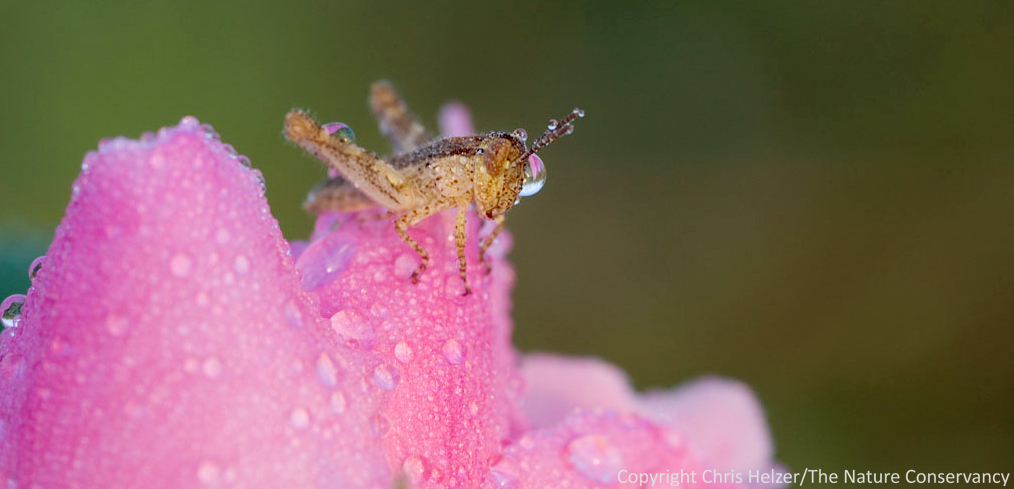
This little grasshopper nymph still had half a dozen molts to go through before reaching maturity.  With each consecutive molt, a nymph sheds its exoskeleton and emerges as a slightly bigger version of itself – until its final molt, when it becomes a full adult.  In this photo, the nymph was about 1/2 inch long.

Photo of the Week – May 25, 2012

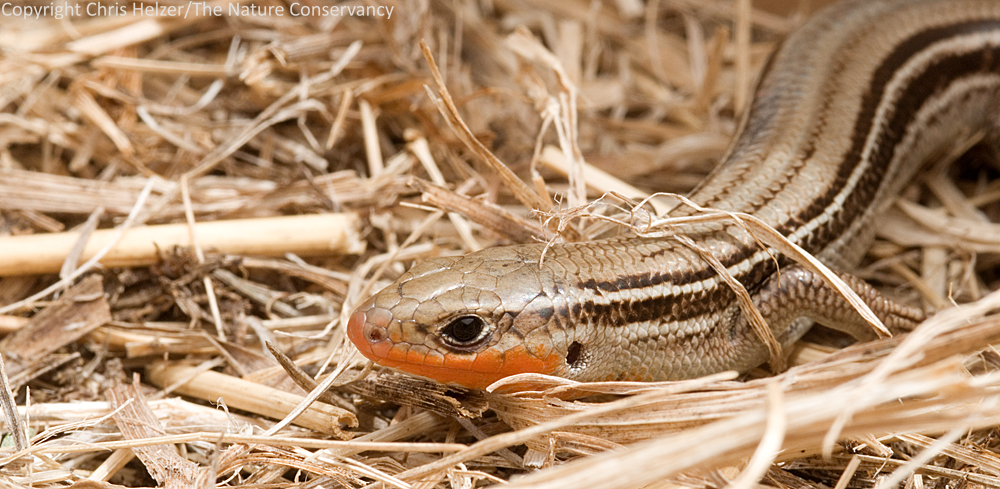
This little prairie skink was a little too slow getting under cover as I walked past him in the prairie yesterday.  As a result, he suffered the indignity of being transported back to our field headquarters where he was placed in a cardboard box for a short period while I photographed him.  (I let him go again as soon as I got a couple good shots.) 

From the looks of things, it wasn’t the first time he’d been a little slow.  He was missing his tail – a sign that he’d run into trouble recently.  (Skinks can abandon their tail to avoid predation, and then grow another one.  A nifty little trick!)

A prairie skink. The Nature Conservancy’s Platte River Prairies, Nebraska.

.

From this angle you can really see the orange coloring of the jaw. Male skinks get this coloration during the breeding season. You can also see the external ear – one of the characteristics that helps distinguish lizards from snakes (legs, of course, are another pretty good clue, though not all lizards have them.)