Photo of the Week – July 14, 2017

We had a great time at the Grassland Restoration Network meeting at Konza Prairie this week.  The long-term research going on there is phenomenal, and we were blissfully overwhelmed with knowledge and data about prairie ecology.  I will try to synthesize some of that information into a blog post or two, but it might take me a while to digest it and figure out how to share it.
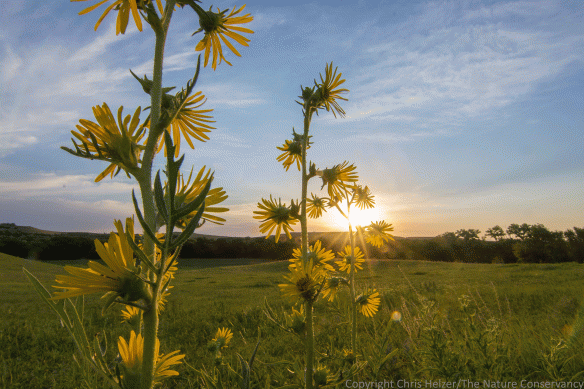
Compass plant at sunrise

In the meantime, one of many highlights of the trip for me was the hour or so of early morning photography I managed to squeeze in right around the headquarters of Konza Prairie.  As the sun came up, I wandered around prairie full of compass plant (Silphium laciniatum), a plant that sorta looks like, but isn’t, a tall sunflower.  There were lots of other plants and animals around too, but compass plant was clearly the star of the show, standing at least three or four feet taller than the surrounding vegetation and blooming audaciously.  It was hard to point my camera toward anything else.  As a result, today’s post is a kind of tribute to compass plant…

A blooming compass plant is surrounded by the huge beautiful leaves of non-blooming companions.
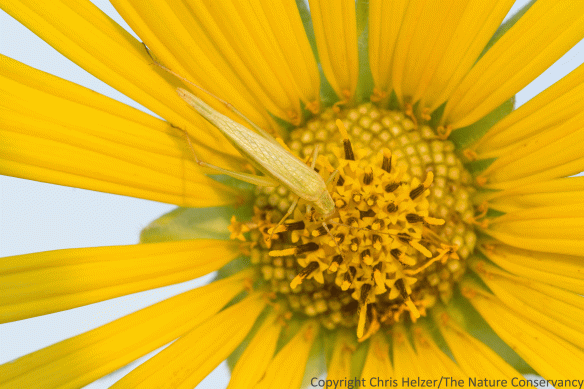
This tree cricket was one of many creatures, including lots of bees, enjoying the pollen of compass plant flowers.
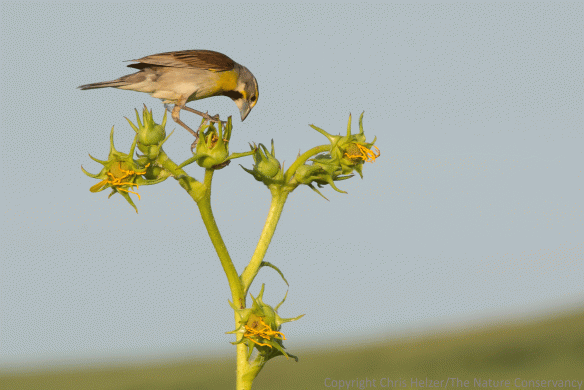
Dickcissels were using compass plant as singing perches, but occasionally seemed to be feeding on them as well (or maybe just trying to get the sticky rosin off their feet – I couldn’t really tell.
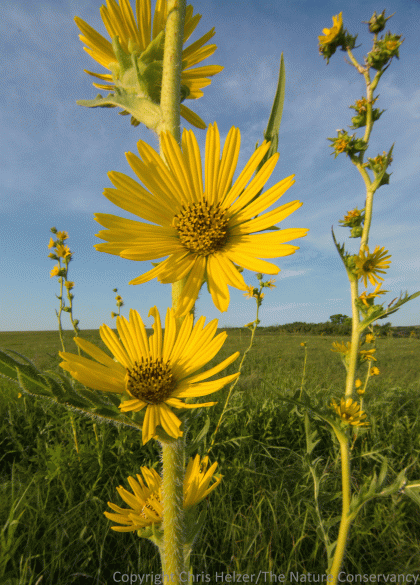
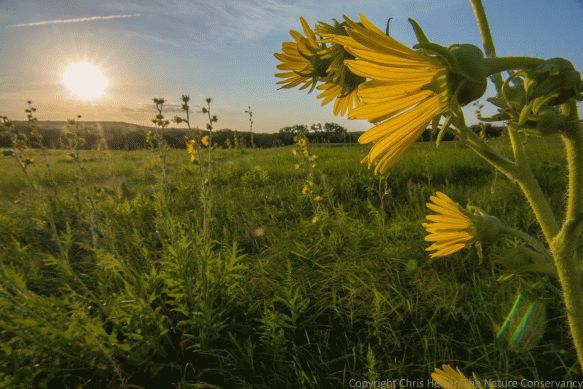
Few of our prairies in central Nebraska have compass plant – we’re on the far western edge of its range. It’s too bad. Compass plants add a great architectural structure to prairies that the sunflowers and other tall plants in our prairies don’t quite achieve.

Photo of the Week – October 3, 2014

I made my first ever visit to The Nature Conservancy’s Smoky Valley Ranch in western Kansas this week.  It won’t be my last.  Situated along the boundary between mixed-grass and shortgrass prairie, the Smoky Valley Ranch contains 16,800 acres of grassland – including a wide variety of prairie types – along with bison, lesser prairie chickens, prairie dogs, and even black-footed ferrets.  It’s quite a place…

A rock outcrop above an oxbow.  The Nature Conservancy's Smoky Valley Ranch - western Kansas.

Exposed rock above an oxbow. The Nature Conservancy’s Smoky Valley Ranch – western Kansas.

I was at the ranch as part of a small group invited to help the Conservancy’s Kansas staff think about their conservation strategies at the ranch, including fire and grazing management, restoration work, neighbor relations, and their research and monitoring approach.  The peer review team included Conservancy staff from Nebraska, Kansas, and Oklahoma, as well as several local landowners and partners from the local area.

Matt Bain of the Conservancy, discusses grazing strategies with other biologists and neighbors.

Matt Bain (left) of the Conservancy, discusses grazing strategies with other biologists and neighbors.

The thoughtful work being done by the staff at the ranch was really impressive.  They have been reconsidering their objectives and making some significant adjustments to their management approach.  Our job was to give them some feedback on the changes they’re already making and help them think about some additional possibilities.  It was two days of thought-provoking and stimulating conversation – mostly while standing in the middle of impressive grassland scenery.

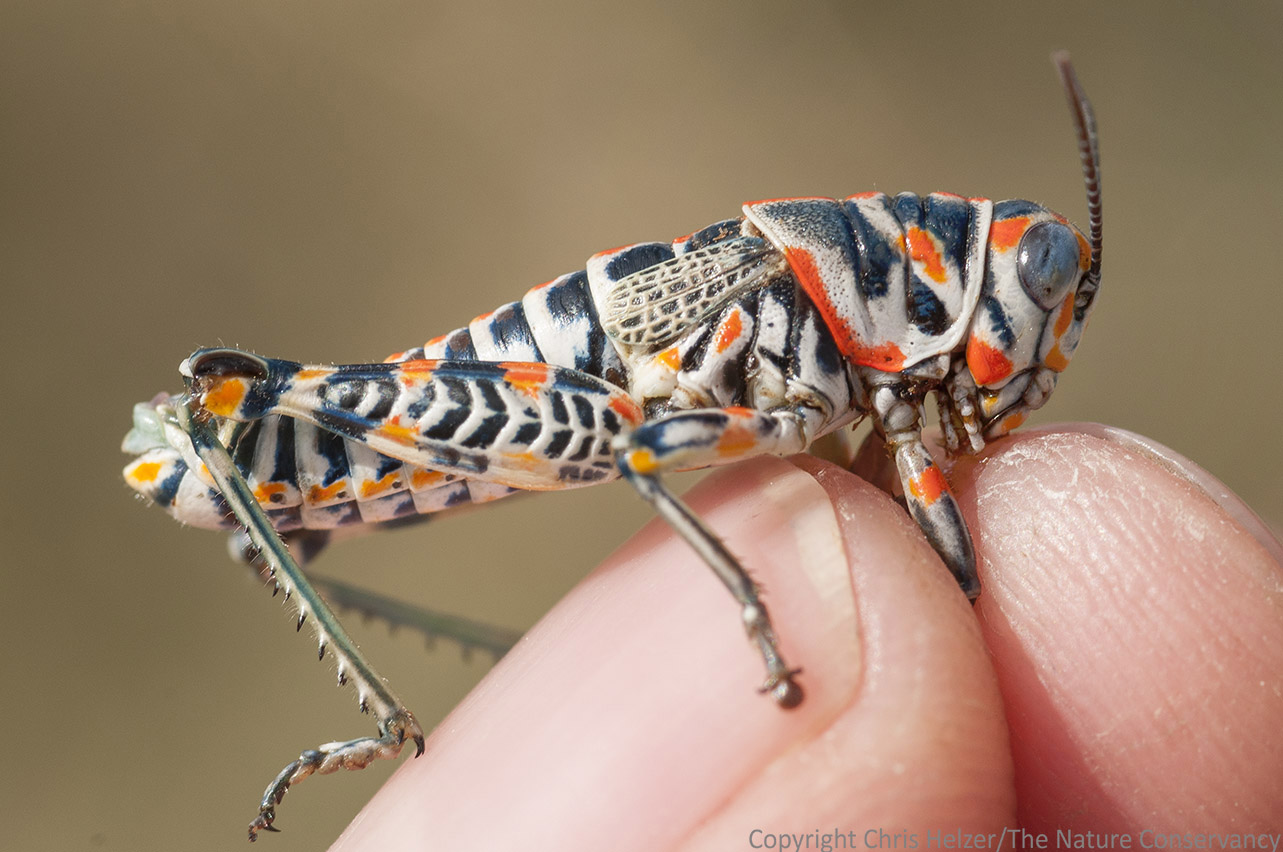
A very colorful grasshopper.

A very colorful grasshopper.  (Pictured Grasshopper – Dactylotum bicolor)

.

Sandsage prairie.

Sandsage prairie – one of several different prairie types found at the Smoky Valley Ranch.

.

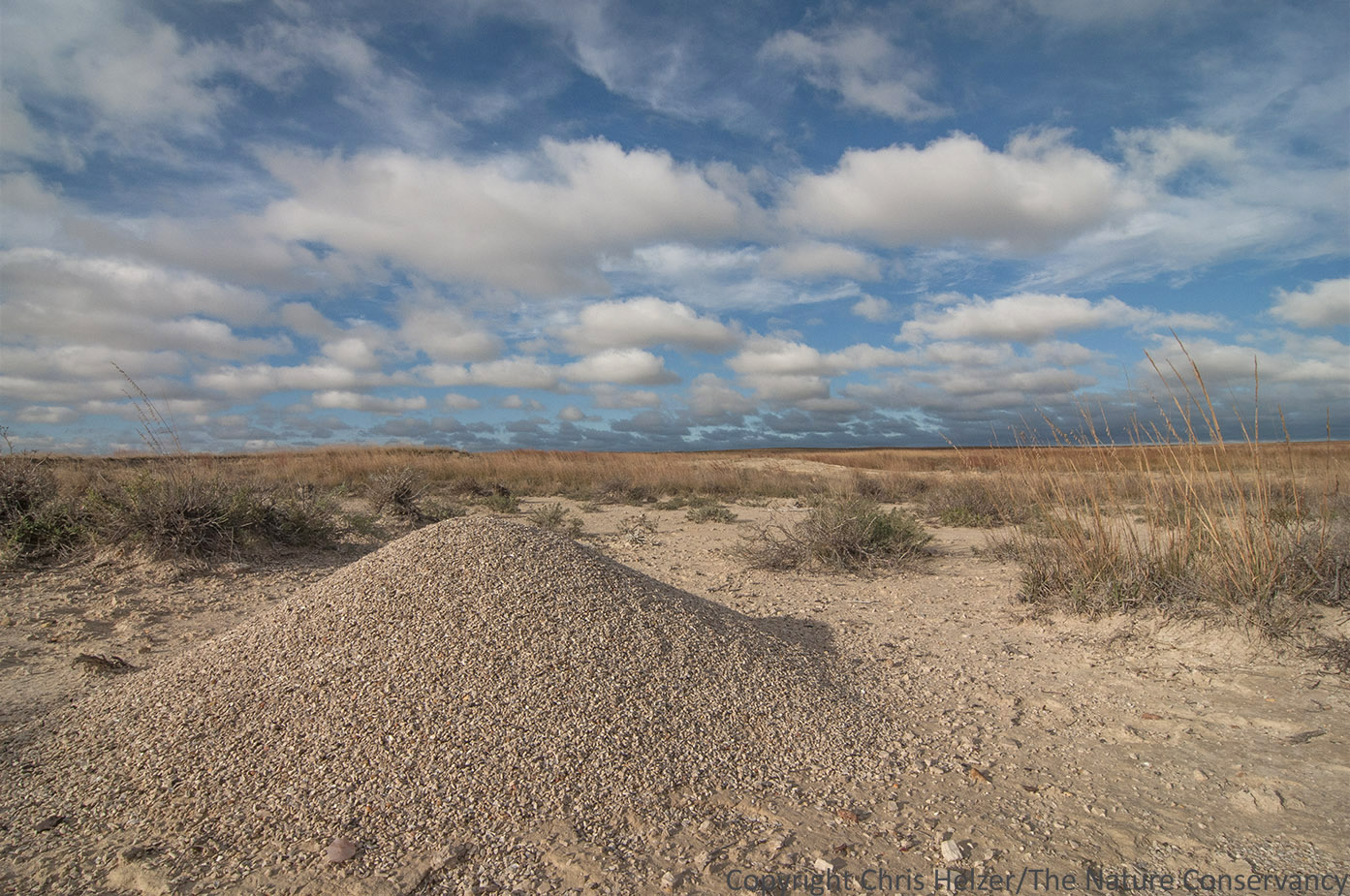
A giant ant hill.

A giant ant hill, made by harvester ants (Pogonomyrmex sp.)

I need to learn more about shortgrass prairie and the drier end of mixed-grass prairie.  Plant and animal communities respond very differently to management and restoration treatments with less annual rainfall and under more frequent/longer droughts.  However, I don’t feel like I have a good grasp of those differences.  Looks like I’ll have to start making some trips to western Kansas….

Oh darn.

Prickly pear cactus.

Prickly pear cactus.