
Photo of the Week – April 5, 2013

A few shorebirds are starting to show up along the Platte River.  The first to come each spring are usually the ubiquitous and noisy killdeer, followed by the taller and more reserved yellowlegs.
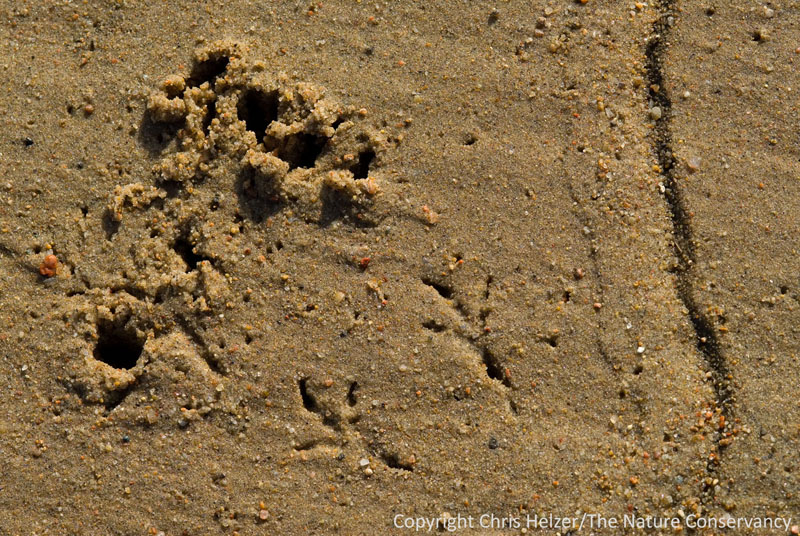
Tracks and holes in the sand where a shorebird was probing for invertebrates along the Central Platte River in Nebraska.

Tracks and holes in the sand where a shorebird was probing for invertebrates along the Central Platte River in Nebraska.

As the season progresses, we’ll see a great diversity of sandpipers, dowitchers, snipe, ibis, and many other long-legged wading birds along the sandy banks and sandbars of the river.  A few even venture into our wetlands and wet meadows, though we’ll see fewer in those areas this spring if we don’t get some significant rains soon.

One of the most fascinating things about shorebirds is that many (most?) species have flexible bills that allow them to open just the tips.  This comes in handy when they stick their long bills deep into the sand or mud to probe for invertebrates.  When they find something tasty (how do they know they’ve found one??) they can open the tip of their bill to grab it and extract it.  Opening their entire bill when it’s stuck down a deep narrow hole is not an option (if you’ve ever hand-dug a fence post hole, you know that experience), so a flexible bill tip is a pretty convenient feature to have.
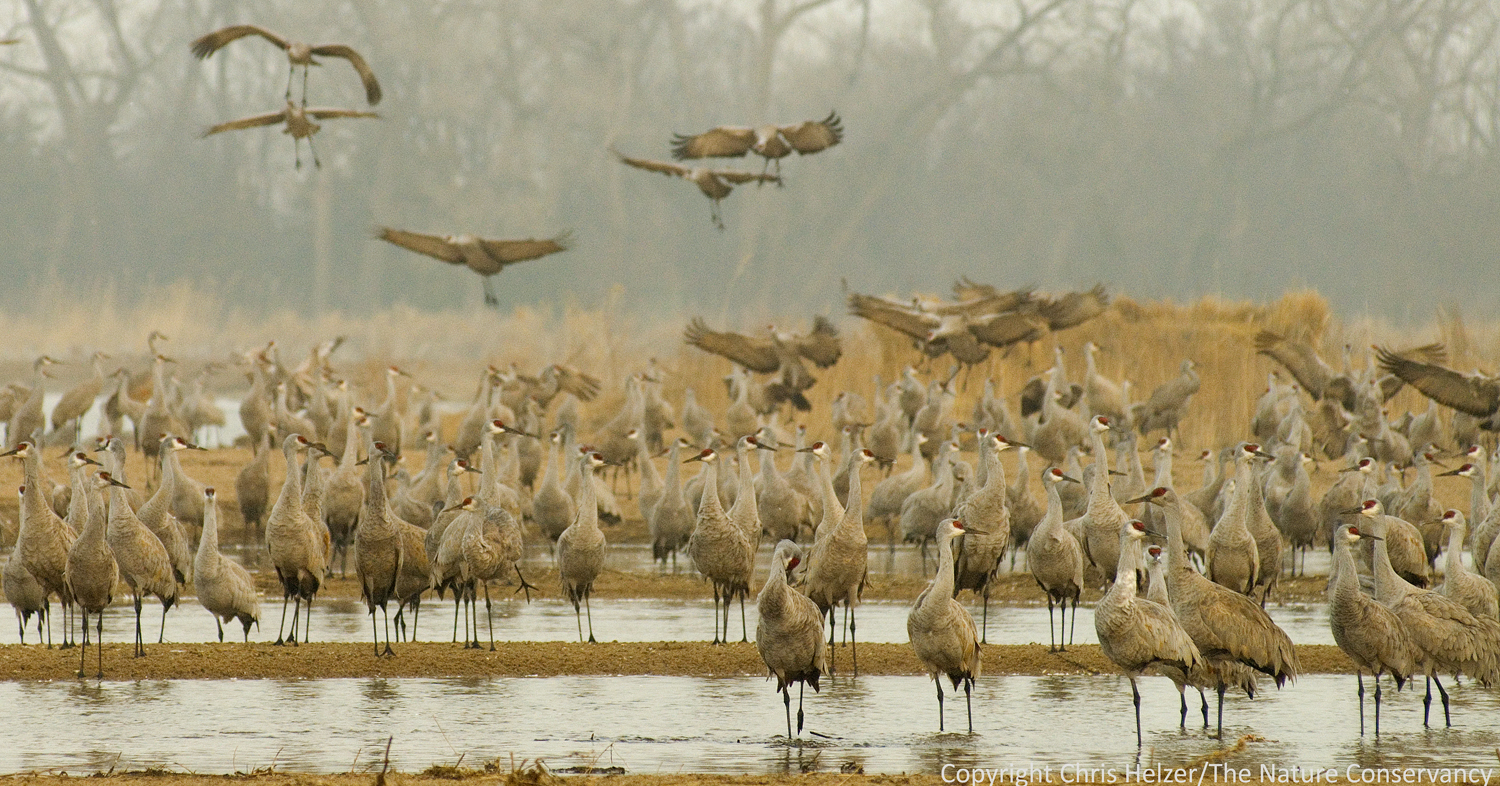
Photo of the Week – March 7, 2013

It’s March, which means the sandhill cranes are back on the Central Platte River.  Every spring, the entire mid-continent population of sandhill cranes (500,000-650,000 birds) comes to the Platte River to spend several weeks fueling up for the rest of their northward migration and breeding season.

Sandhill cranes roosting on the Platte River, just north of The Nature Conservancy's Studnicka tract.  2007 photo.

Sandhill cranes roosting on the Platte River, just north of The Nature Conservancy’s Studnicka tract. 2007 photo.

Interestingly, we seem to have fewer cranes right now (March 7) than we did in mid-February back in 2012.  The vagaries of weather – both here and in the wintering grounds in Texas, New Mexico, and northern Mexico – help drive the timing of migration.  I’m not sure exactly what cues they’re using to make their decisions, but apparently there is less urgency to leave the south this year. 

While the cranes are a little slow to arrive, vast numbers of snow geese, along with other geese and ducks, are making up for them.  The skies are full of birds and their calls, making it pretty nice to work outside (and, conversely, hard to stay inside.)

Spring is coming!