Hubbard Fellowship Blog: Moo-Muration

A guest post by Eliza Perry, one of our Hubbard Fellows.  All photos are by Eliza.

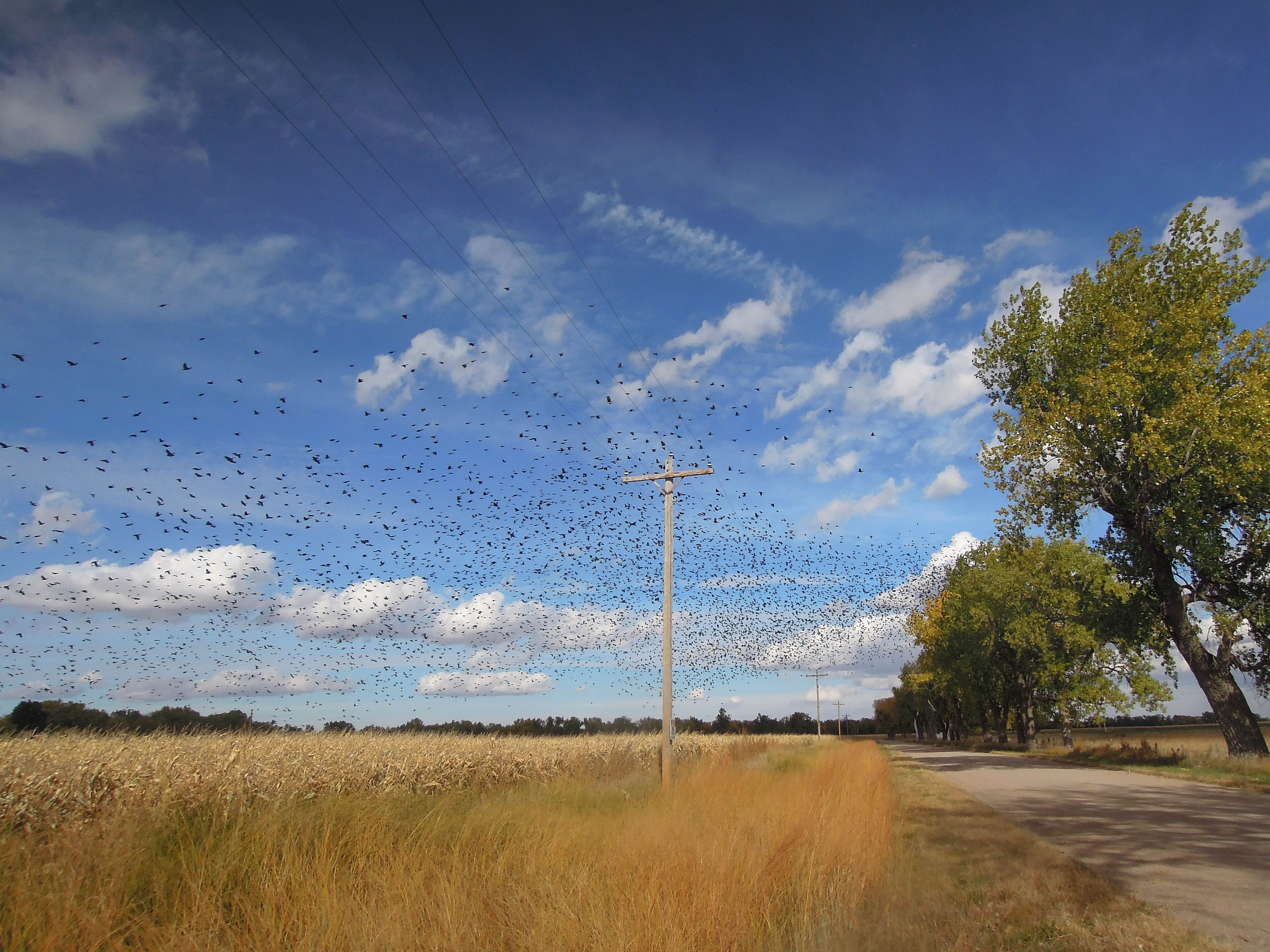
Giant black clouds of birds have been erupting from cottonwoods everywhere I go the past few days.

An overhead murmuration.

A huge overhead flock (called a murmuration when the birds are starlings).

.
Another one.

Another one.

Last one.

Last one.

As Anne recently shared, the cows have been taken away from our prairies for the winter and, somewhat surprisingly, their absence has really been felt around here. They were quiet company, but extremely entertaining at times, creeping toward me while I picked seeds until I lurched suddenly just to watch them bolt in the other direction. Before long, they’d crept back even closer to me, and we went on like this for many hours.

I have a quick story to share that I captured driving around on the last afternoon the cows were here, though the story is as much about birds as our dear
cows. I  saw a large flock of birds along a fenceline and pulled over to the side of the road to get a better look at them. The cow-bird interaction I witnessed was, or seemed to be, quite playful. And funny.
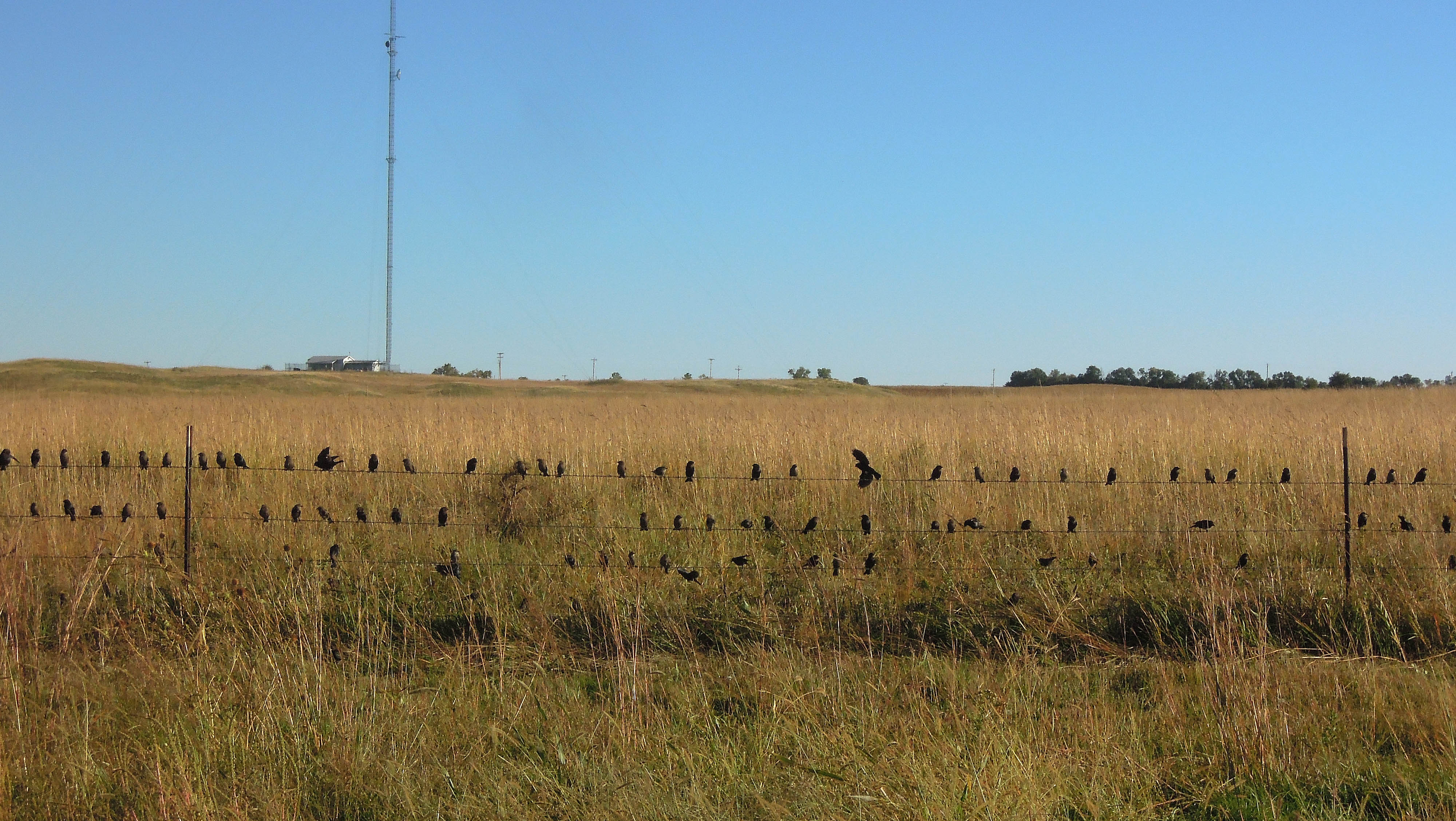
Brown-headed cowbirds resting peacefully on a calm afternoon...

Brown-headed cowbirds resting peacefully on a calm afternoon…

.

As if on a mischievious (or vengeful?) whim, the neighboring cows rushed at them.

As if on a mischievous (or vengeful?) whim, the neighboring cows rushed at them.

.
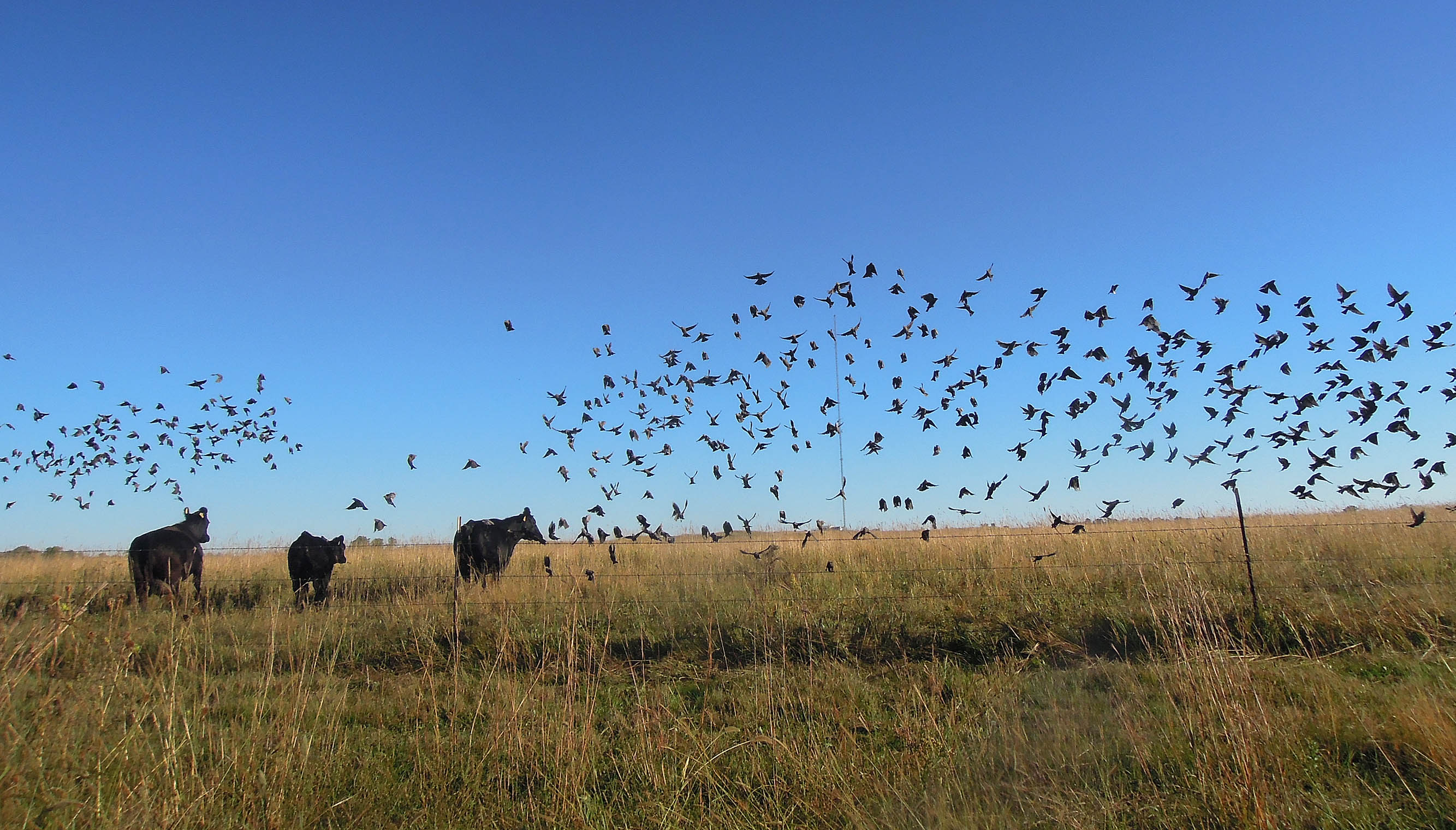
So they lifted into the air in perfect unity, an effortless coordination that is said to resemble magnetism by statistical physicists studying similar behavior by European starlings.

The birds lifted into the air in perfect unity, an effortless coordination that is said to resemble magnetism by statistical physicists studying similar behavior by European starlings.

Reluctant to give up their spot entirely, the flock settled down again close by.

Reluctant to give up their spot entirely, the cowbird flock settled down again close by.

.
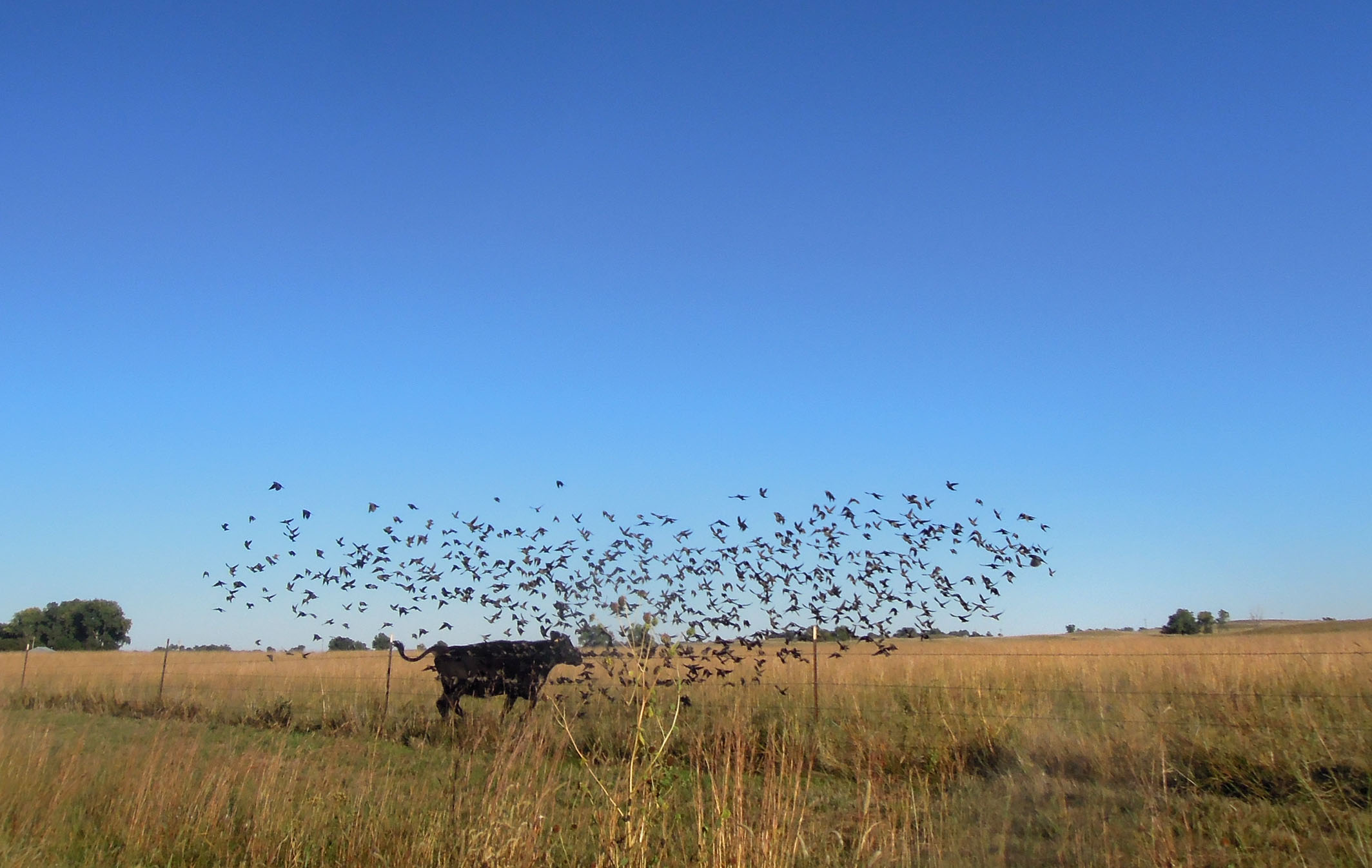
That is, until a lone calf honest-to-goodness peeled away from the group and charged the fence, seemingly aiming right for the birds. Although I’m sure there was some other unseen reason for his behavior, I like to think this calf was putting on a show.

That is, until a lone calf honest-to-goodness peeled away from the group and charged the fence, seemingly aiming right for the birds. Maybe there was another reason for his behavior, but I like to think this calf was putting on a show.

.

But that was apparently the last straw for the birds and they flew away toward the river.

That was apparently the last straw for the birds, and they flew away toward the river.

I know starlings are invasive, outcompeting other species like bluebirds and woodpeckers, and cowbirds have a nesting parasitism habit, but the huge flocks these creatures form are a wondrous sight. I was picking rosinweed one morning when things were going any way but mine (I thought I broke two backpack sprayers in a span of two hours), and a gigantic murmuration passed right over me for about ten minutes, with no end in sight. Just a long, chirping highway. This event, along with my renewed awareness of the quiet, scenic solitude where I work, lifted my spirits and ended my morning funk.

The prairie has a knack for doing that to me – and I imagine it does so for everyone else reading this – so I think I’ll be all right without my cow companions.

Hubbard Fellowship Blog – Hummingbird Moths

A guest post by Anne Stine, one our Hubbard Fellows.  All photos by Anne.

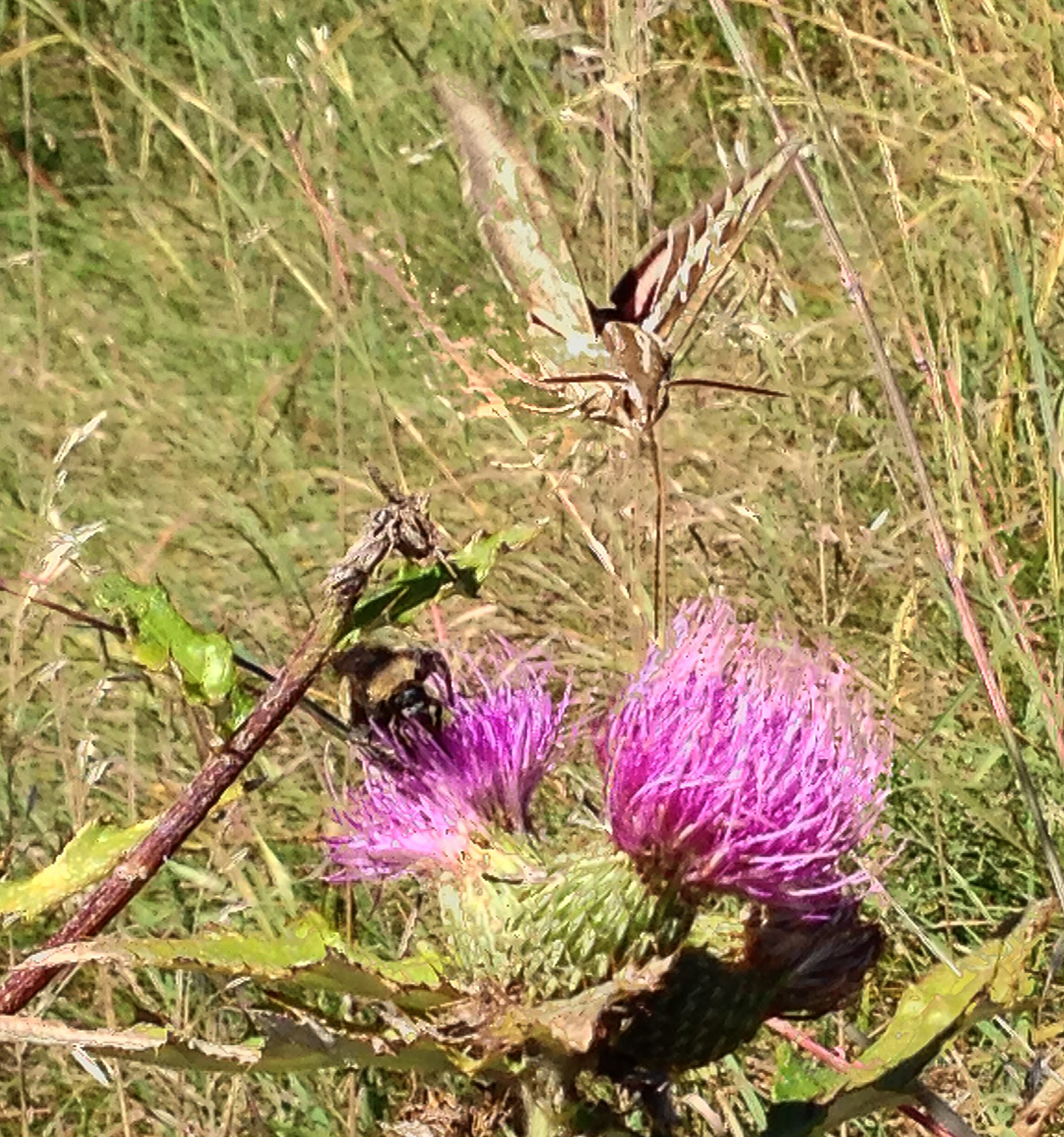
I adore hummingbirds, and I sometimes bemoan their rarity in my new home here on the Platte.  I grew up thinking they were better than fairies- they are cute, ferocious, and they migrate long distances despite their small size.  While hummingbirds themselves are scarce in this part of the country, “hummingbird moths” are abundant.  Hummingbird moths are so-named because they hover and fly like hummingbirds, sip nectar, and are approximately the same size as hummingbirds. I never noticed hummingbird moths growing up, so since moving here it is as if hummingbirds dropped out of the system and were replaced by enormous insect imposters.

Hummingbird moths, or sphinx moths, are large, furry, and active in the day.  Their caterpillars are called “hornworms” because they have what looks to be a long horn extending off their rumps.  Most of these larvae have multiple potential food sources.  Around here, likely food plants include four o’clocks, wild grapes, elms, and evening primroses1. While some species of hornworms eat crops like tobacco and tomatoes, they are infrequently a pest requiring treatment.  In fact, with their propensity to eat undesirables like Siberian elms and weedy species like four o’clocks and evening primrose, one could even characterize them as beneficial.

Hornworm

Hornworm larvae, possibly of white-lined sphinx moth?

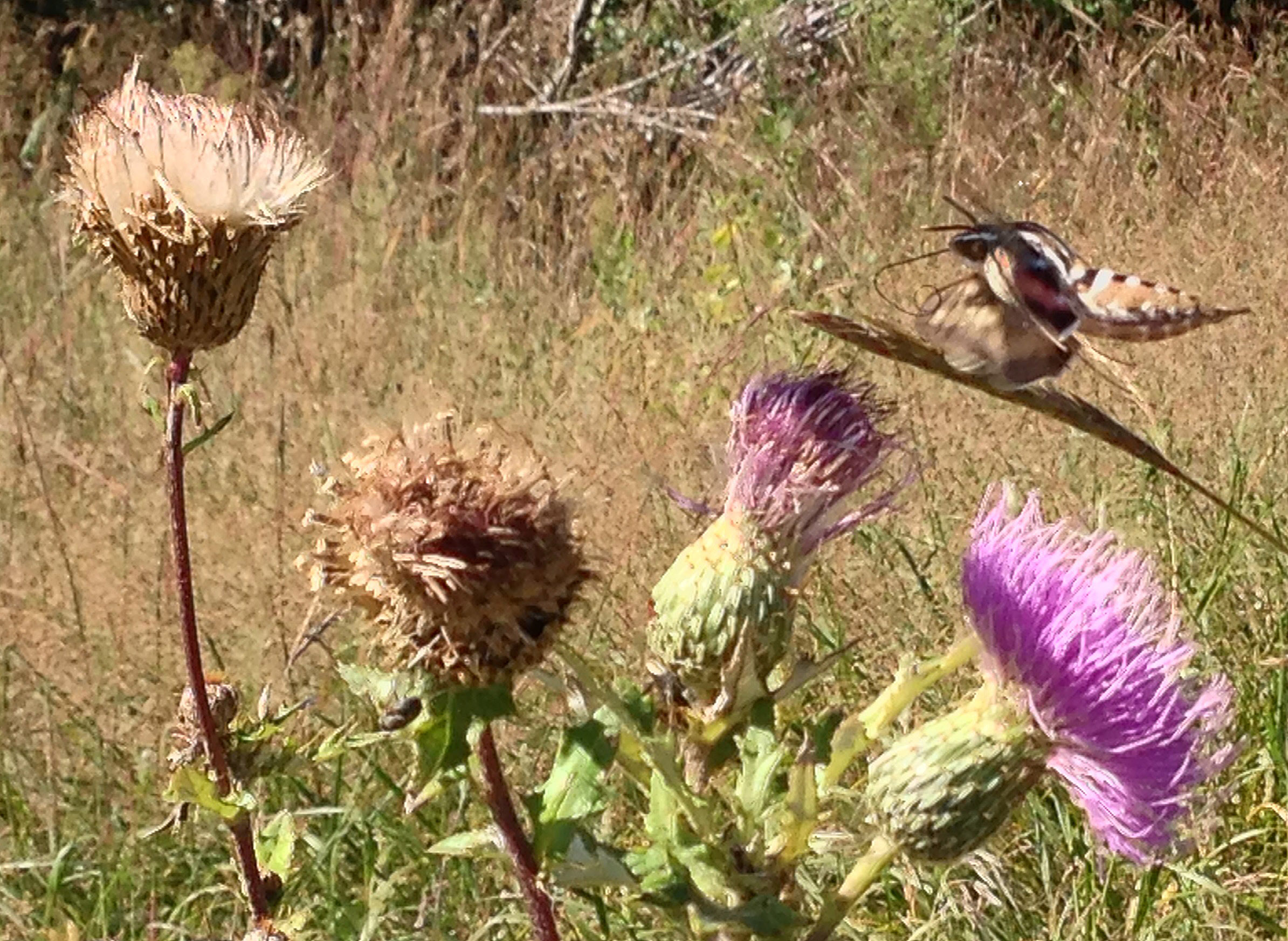
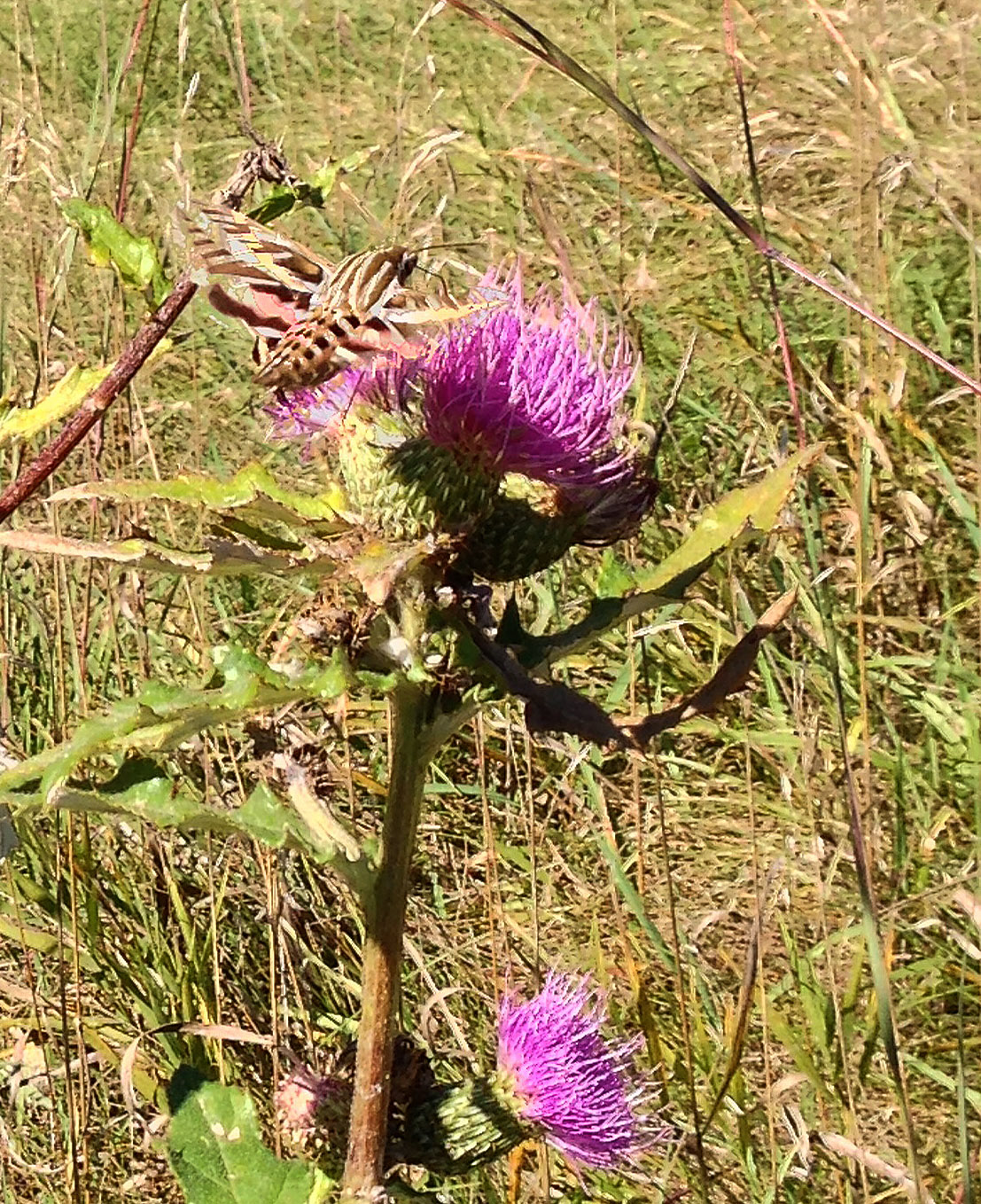
There are two broods of sphinx moth annually, one emerging in spring and another in fall2.  Hornworms pupate in shallow excavations in loose soil1.  In the past few weeks I’ve encountered hornworms attempting to dig their burrows in our driveway at the crew house. Of the adults, I see the white-lined sphinx moth (Hyles lineata) most frequently.  Twice they have been attracted to my brightly colored clothing (pink shirt, orange shirt).  The moths hovered around investigating me for nectar reserves.  I’ve seen them feed on a variety of flowers, so they must not be too picky.

Hummingbird moths are an intriguing substitute for hummingbirds. Hummingbird moths are widely distributed across North America, so it would be interesting to learn if their role as pollinators takes on a greater importance in areas where hummingbirds are absent.

Front

White-lined sphinx moth, front view.

.

side

White-lined sphinx moth, side view, proboscis unrolling.

.

from back

White-lined sphinx moth, back.

1  http://www.butterfliesandmoths.org/species/Hyles-lineata

2 http://puyallup.wsu.edu/plantclinic/resources/pdf/pls48sphinxmoths.pdf