Hubbard Fellowship Post – S’Mammals with Jasmine

This is a post written by Jasmine Cutter, one of our 2014-15 Hubbard Fellows.  All photos are by Jasmine.

Howdy, Prairie Ecologist friends!
I remember how much I looked forward to the Fellows’ posts before coming to the Platte River Prairies, so I apologize for the glacial pace of my updates.  A considerable amount of my time and brainspace over the last two months has been occupied by small mammals (or s’mammals, as I prefer to call them). There are definite challenges to undertaking a project during the growing season (namely balancing project time and stewardship time), and throughout the process of the project and the summer there have been some unexpected surprises (mostly good), and a lot, a lot of learning.
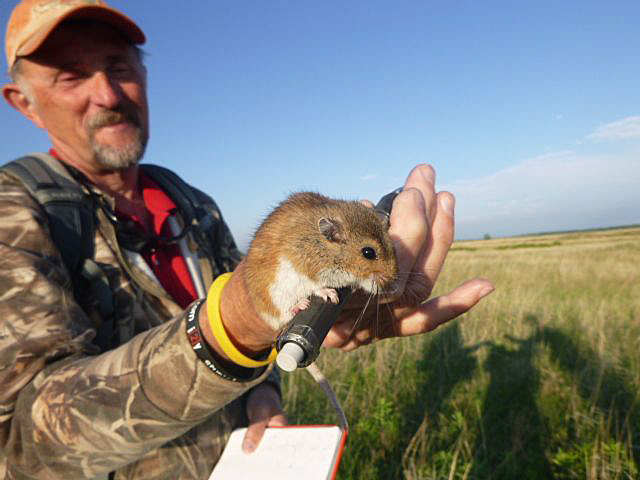
Mike Schrad, Nebraska Master Naturalist and my small mammal project mentor.

Mike Schrad (left), Nebraska Master Naturalist and my small mammal project mentor.

In the briefest of terms, I’ve been tromping through our Derr sandhills (a unit which includes both restored and remnant prairie on the edge of the Platte River Valley), battling cows, thunderstorms, and a lack of sleep in the pursuit of learning more about the small mammal community in this unit. I was initially drawn to this site because the Derr sandhills contain pocket mice (Perognathus flavescens) and Northern grasshopper mice (Onychomys leucogaster). The pocket mice are minute, streamline and silky, whereas the grasshopper mice are beefy and aggressive (and probably also soft, but getting your finger near enough to find out is tricky), yet, despite their differences, they’re both endemic to sandy soils. As these critters are relatively unusual, my study will give us a chance to learn more about their habitat preferences, and hopefully enable us to manage the site in a way that ensures the continuation of healthy populations. Although these two species have remained the most endearing through out my study, my affection has also expanded to include shrews (they have venomous saliva and black-tipped teeth!), voles (ferocious teddy bears) and harvest mice (very agile and keep a neat nest). Deer mice tend to have a heavy parasite load and botfly sores (not to mention the possibility of hantavirus and carrying lyme disease), and therefore are often pretty icky. At this point, I am done with trapping for the most part. Soon, I will be collecting vegetation and site data for each trap site (that’s ~370 sampling points!), and this winter, I will be seeing if there are any relationships between the presence of certain species and site characteristics.
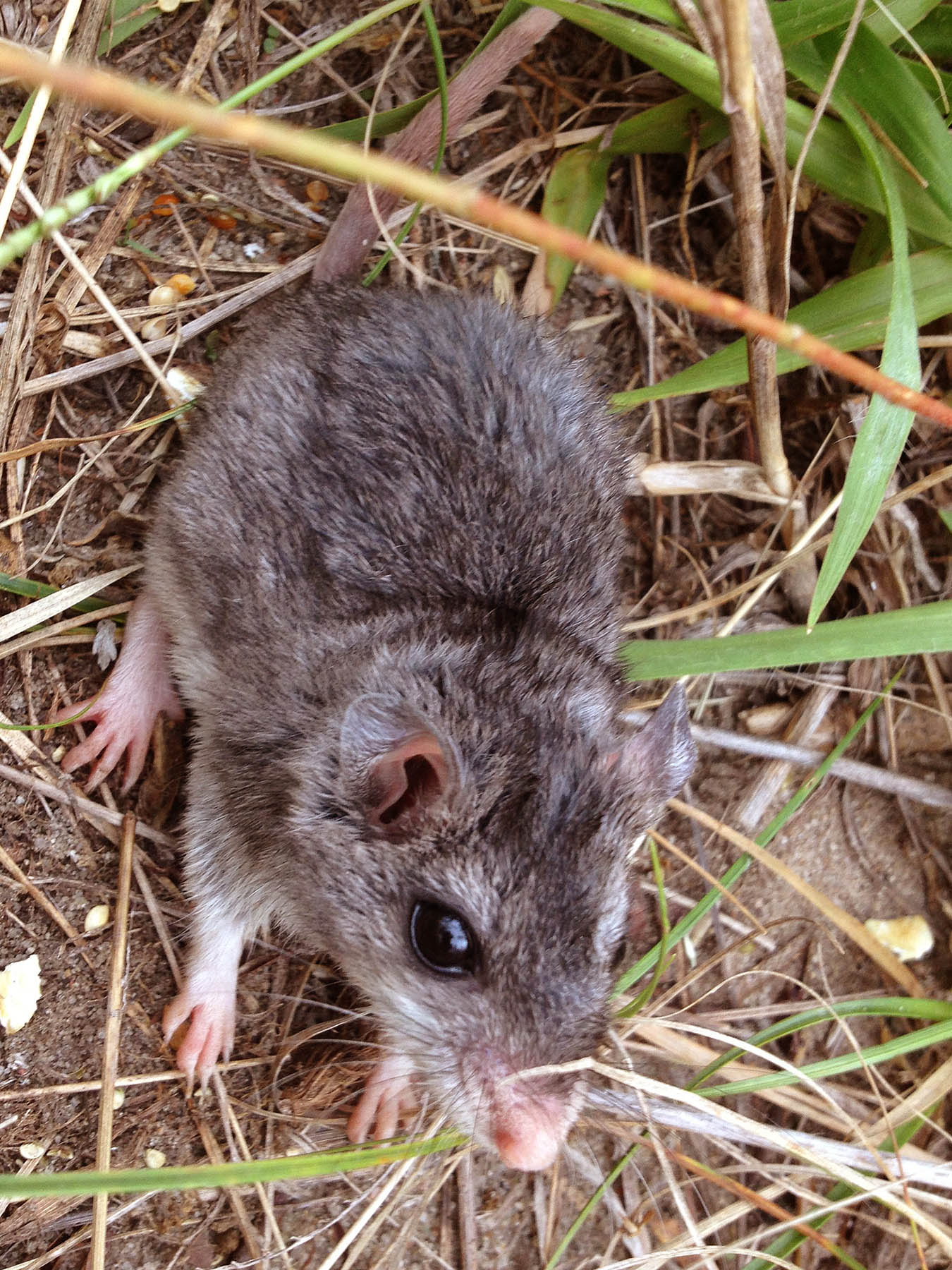
IMG_3171

Beefy lil grasshopper mouse, so-called due to their carnivorous diet. At night, they sing to defend their territories.
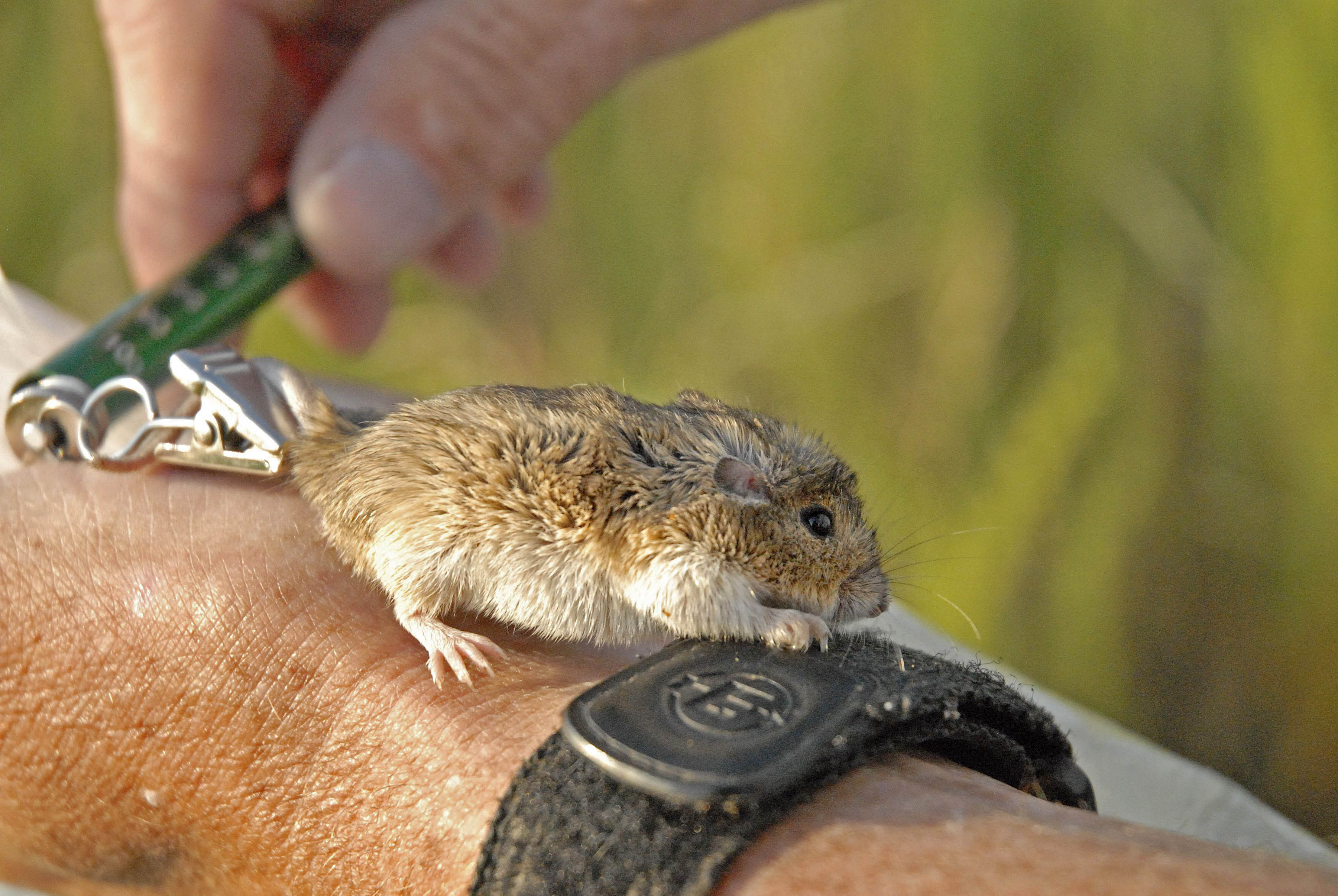
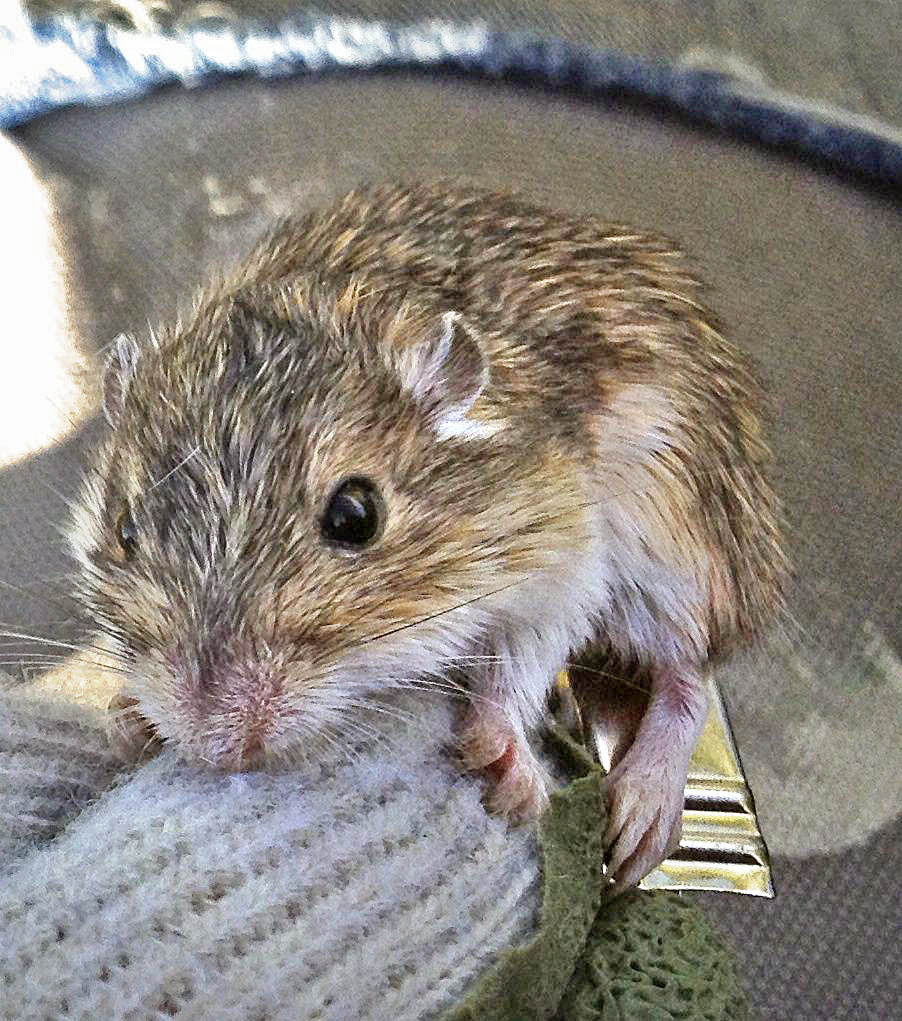
Pocket mouse. The clip on its tail is what is attached to the scale used to weigh them. While it is undoubtedly a little uncomfortable, there is no permanent damage. The clip is a helpful way to hold onto animals so I can take a photo. It’s essential to my study that I am able to document how the pelage (fur) color varies between individuals.
Pocket mouse. The clip on its tail is what is attached to the scale used to weigh them. While it is undoubtedly a little uncomfortable, there is no permanent damage. The clip is also a helpful way to hold onto animals so I can take a photo. It’s essential to my study that I am able to document how the pelage (fur) color varies between individuals.

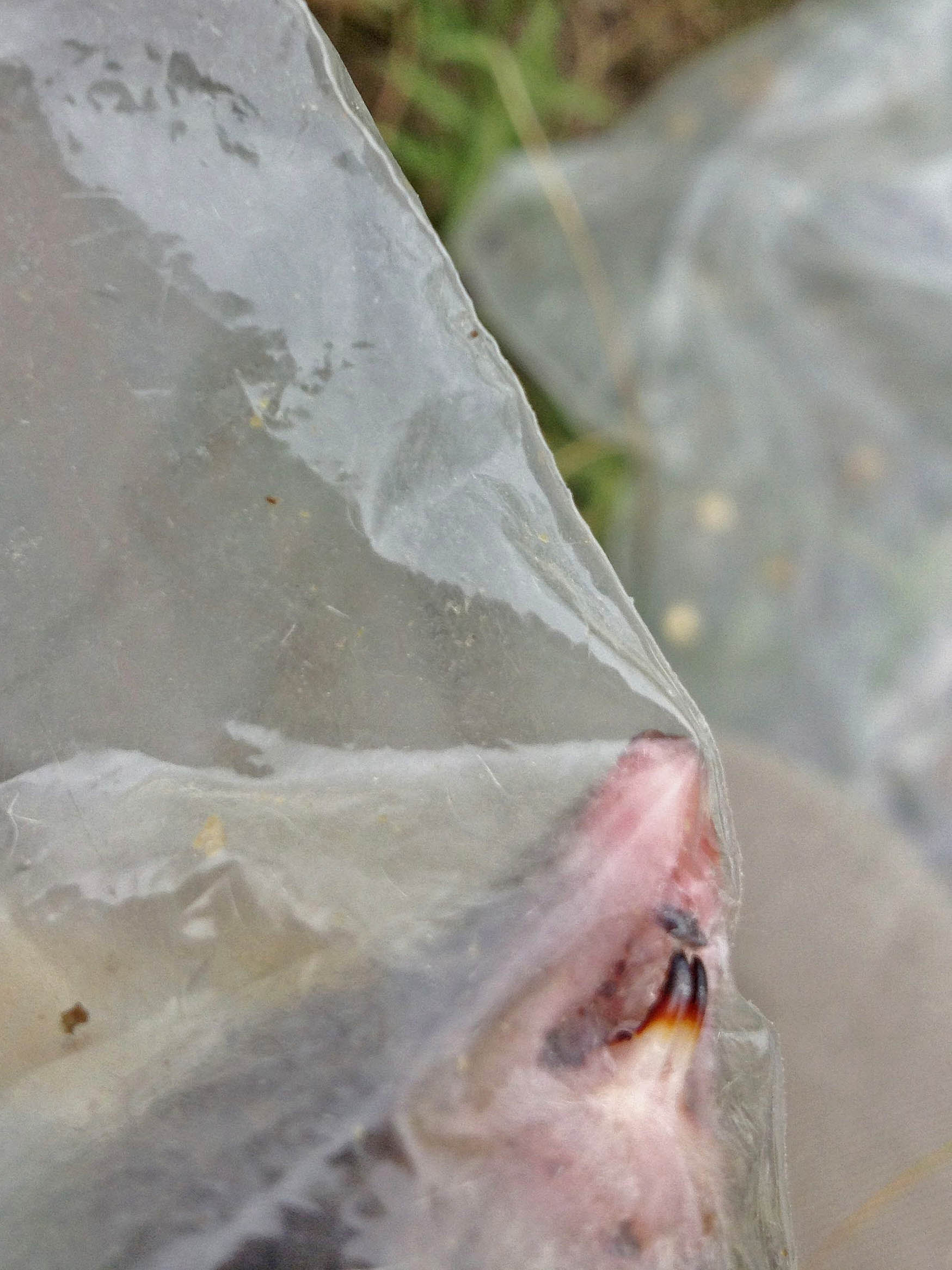
Scary shrew teeth. Unlike the rest of the similarly-sized critters I caught, shrews are not rodents. They are in the order Soricomorpha. They are mostly carnivorous and have saliva that paralyzes their prey.

Scary shrew teeth. Unlike the rest of the similarly-sized critters I caught, shrews are not rodents. They are in the order Soricomorpha. They are mostly carnivorous and have saliva that paralyzes their prey.

There have been a few surprises during this project. For example, I have discovered that cows don’t like science. They have eaten my flags, licked my traps several feet off my transect, and squashed a few for good measure. If only their curiosity could be used more constructively!

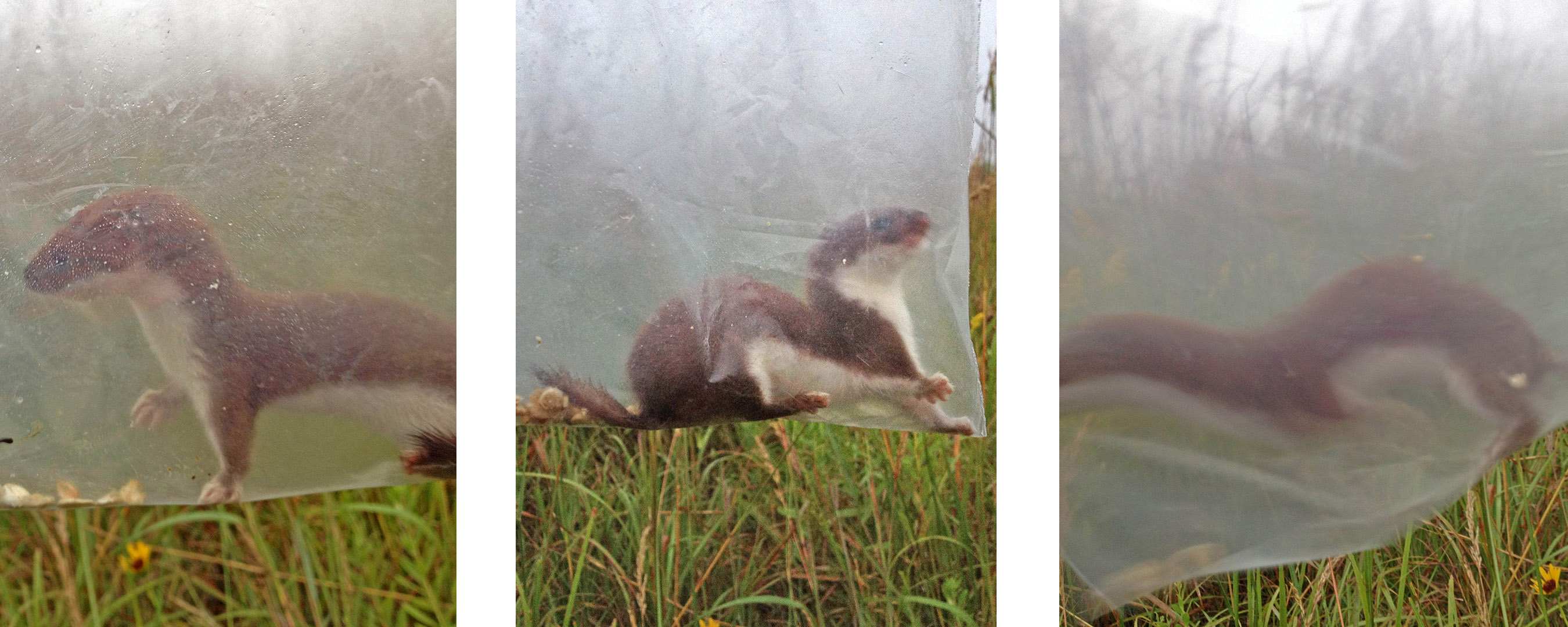
One of the best surprises was opening one of my traps and finding a least weasel inside! I was waaayyy more intimidated by this critter than it was by me. Despite its ferocity, it was impressively lightweight. This littlest weasel was longer than the thirteen-lined ground squirrels that I also caught that day, but considerably lighter. The ground squirrels maxed out my 100 gram scale, whereas the weasel was only 70 grams! The weasel was also impressively smelly, living up to the family name of mustelidae.  I was a little worried that no other small mammals would go into that trap the next night because it smelled of predator, even after I sprayed it with Lysol. However, the harvest mouse I caught the next night was undeterred. No wonder s’mammals have such a short lifespan. Another surprising find on a different transect was an embarrassed-looking leopard frog. My bait seems to attract a lot of crickets, so I imagine that’s what lured the frog. And the cutest capture was these two baby voles that managed to wander into one trap.
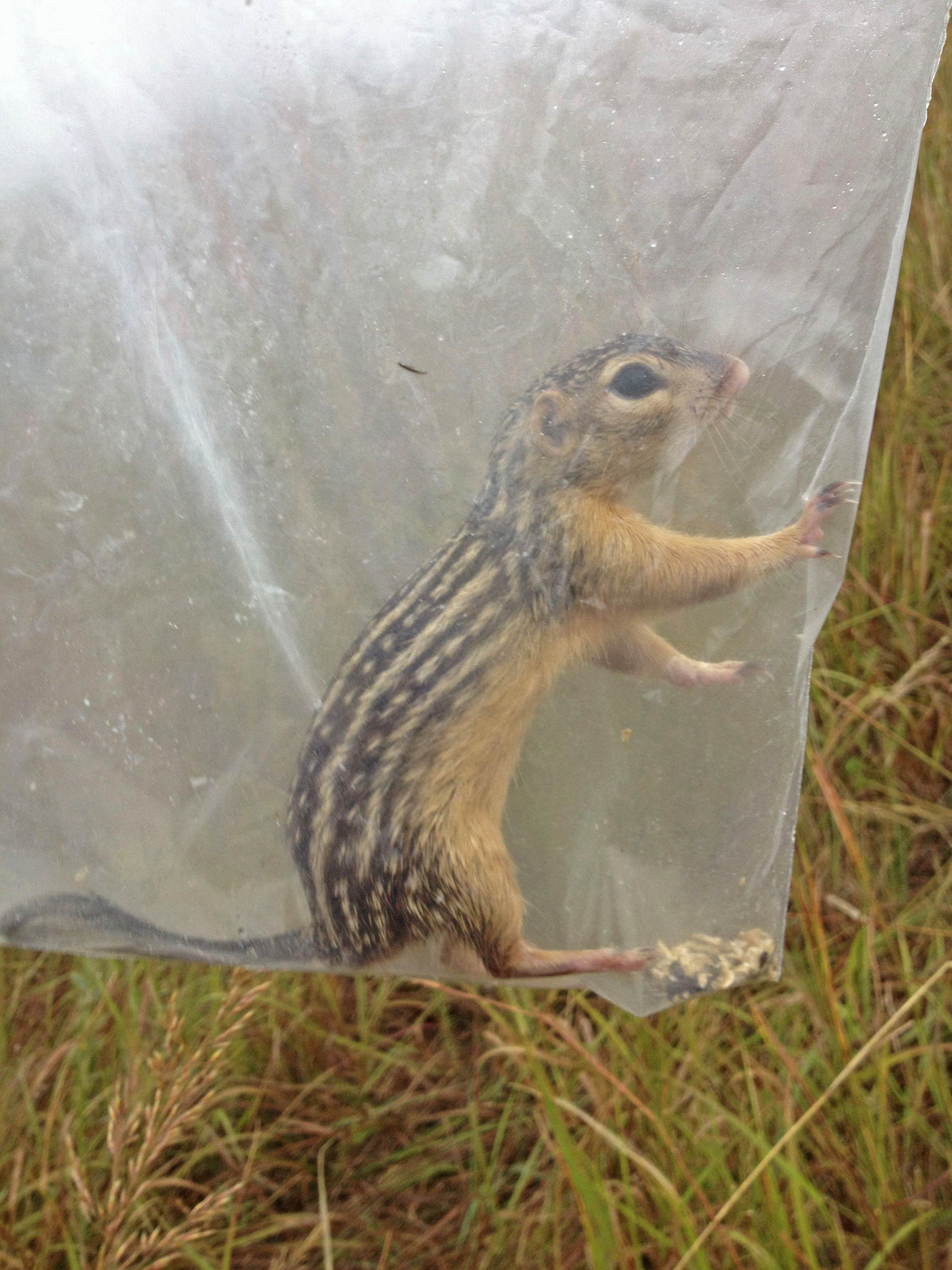
Thirteen-lined ground squirrel (Ictidomys tridecemlineatus). When I open a trap, I gently plop the critter into a bag in order to minimize handling exposure. I can weigh, identify and sex the critter while it’s in the bag. It’s safer for me, and the animal is only in there for a few seconds to a minute.
Thirteen-lined ground squirrel (Ictidomys tridecemlineatus). When I open a trap, I gently plop the critter into a bag in order to minimize handling exposure. I can weigh, identify and sex the critter while it’s in the bag. It’s safer for me, and the animal is only in there for a few seconds to a minute.

Weasel tryptic. Although none of these manage to capture the full length of the weasel (Mustela nivalis), they do manage to capture what you’d be likely to see - a reddish blur.

Weasel tryptic. Although none of these manage to capture the full length of the weasel (Mustela nivalis), they do manage to capture what you’d be likely to see – a reddish blur.
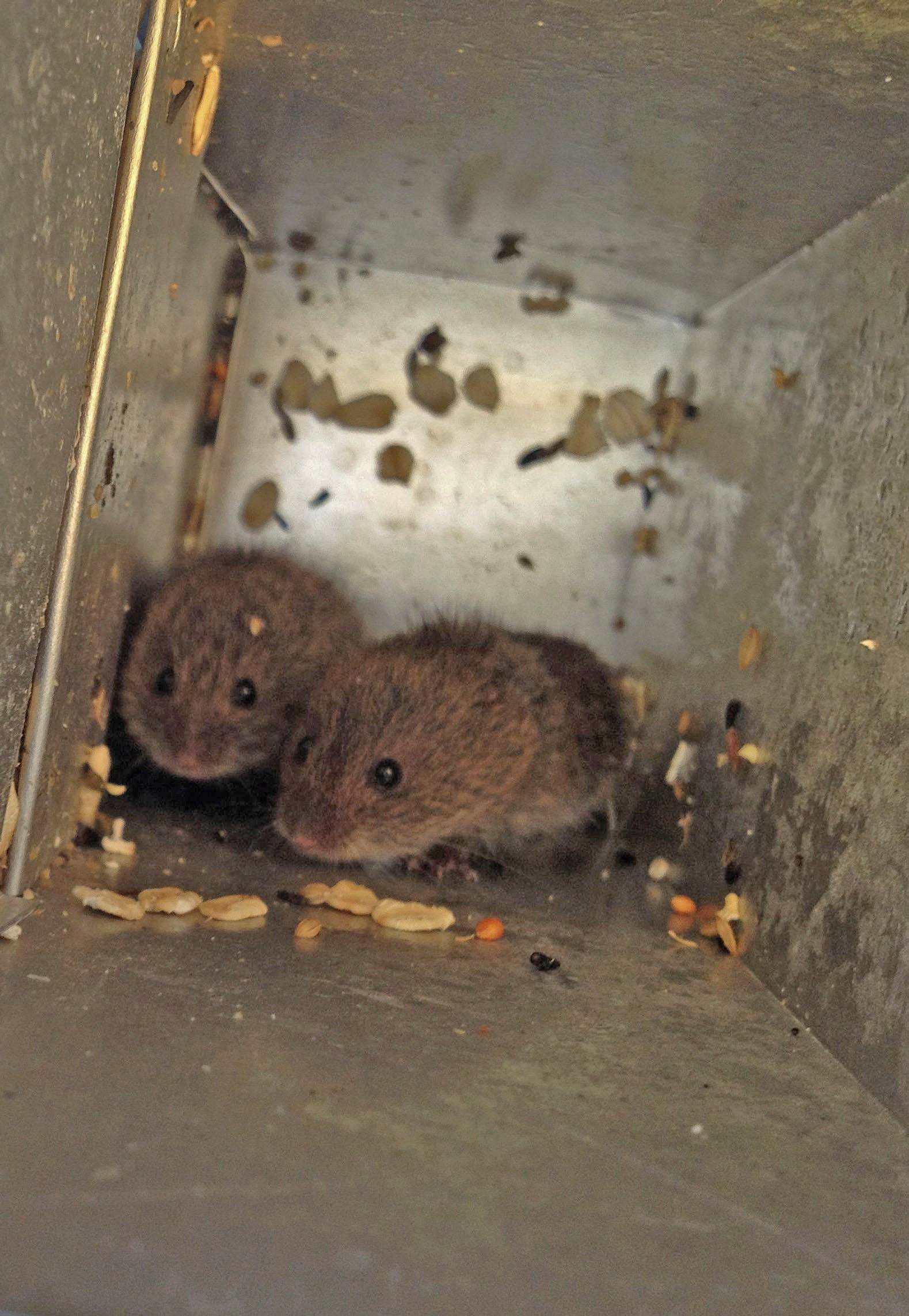
Baby voles!

Baby voles!

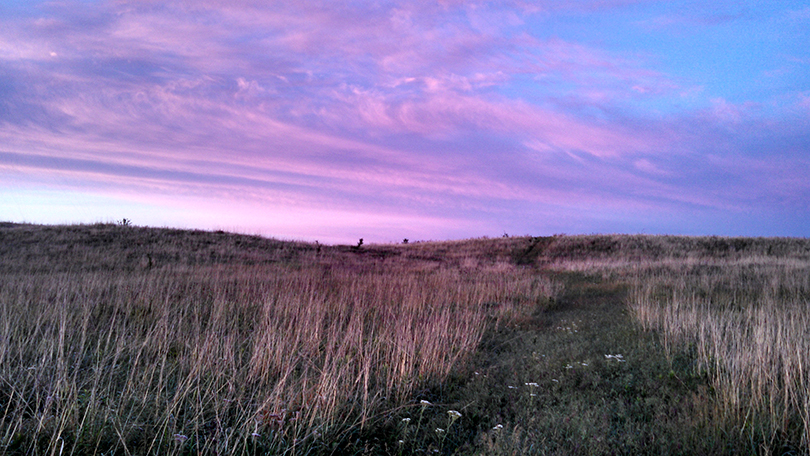
In addition to the excitement of peeking into every closed trap, there have been other perks to the project. I’ve gotten to see way more sunrises and sunsets than I would have otherwise. I love the freshness of the mornings, how the grass glows orange, and the spiderwebs glisten, and how much my mood (and finger mobility) improves once the sun crests the sandhills. I’ve gotten to hear the weird robotic chirpings of the swallows at sunset. The light at these times is able to make pretty much any photo look amazing, so it’s a little less discouraging to compare some of my photos to Chris’. I have also really enjoyed the slower pace of sampling, of covering my transect by foot. I spend a lot of time in the prairies, but infrequently do I have time to slow down and appreciate how the prairie community changes meter by meter. I have gotten to know my transects well, and I look forward to seeing if/how the patterns I’ve noticed play out in the data.

I’ve taken thinking like a s’mammal maybe a little too much to heart. Whenever we visit a new prairie, I think, ‘this looks like good pocket mouse habitat, I wonder if they have any? I wish I had my traps…’. I am also really grateful that so many mammalogists have been willing to donate their time and resources. I’ve learned a lot about species identification from them, and it’s exciting to make new connections with other institutions.
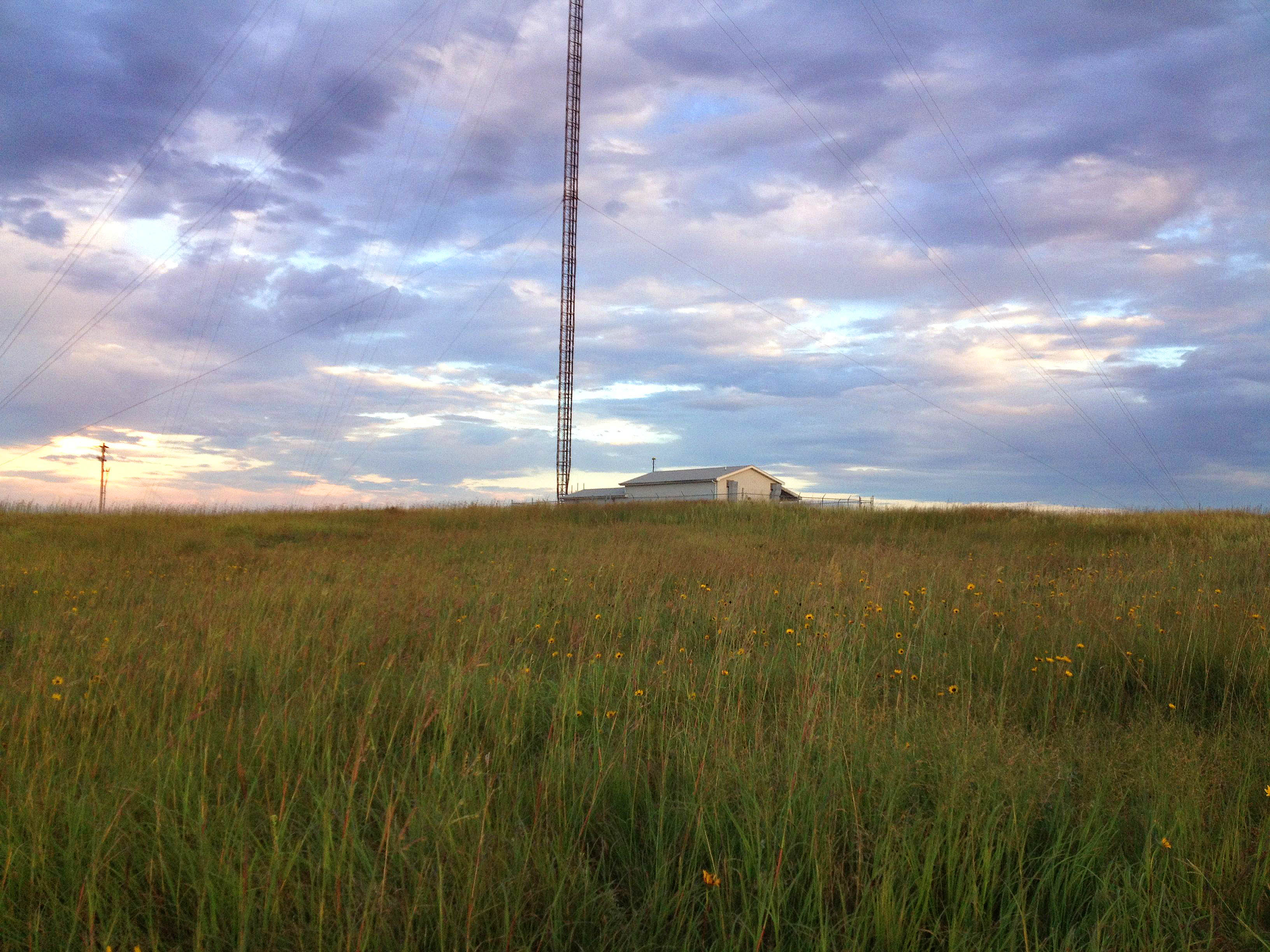
Sunrise!
Sunrise!

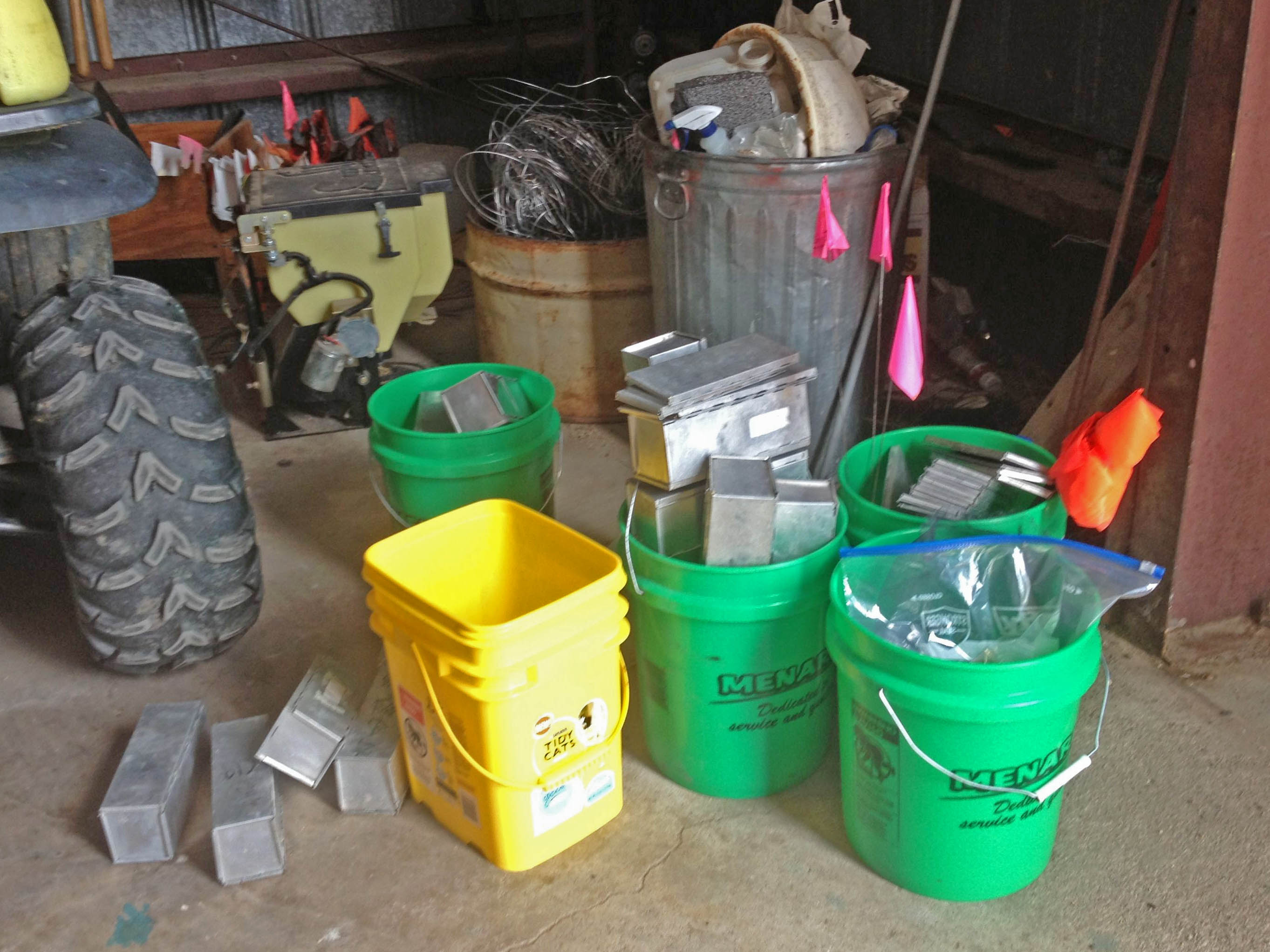
My pile of science. Traps generously lent out by Montana State University and Kansas State.
My pile of science. Traps generously lent out by Montana State University and Kansas State.

Pocket mouse pockets. They store seeds in there to bring back to their nest cache.

Pocket mouse pockets. They use external fur-lined cheek pouches to store seeds until they can bring them back to their nest cache.

This is not to say that this project has not had its challenges. I would say the main struggles have been setting reasonable goals (never a strong suit), keeping track of all the moving pieces (Do I have all my equipment? Am I recording all the right info? When do these traps need to be mailed back to Montana?), not losing things (Luckily the two mice than ran off with my scale clips were recaptured the next day!), and figuring out how to do the majority of the sampling by myself. It has been a long, time-intensive process for just five sampling transects. And, the project has not been without its dangers. The most dangerous part of the study has definitely been cacti. You wouldn’t believe the number of cacti I’ve accidentally kneeled on, or kicked into myself! I don’t recommend it. But, when these aspects of fieldwork start to get me down, I remind myself that I caught a weasel, and that’s pretty freaking cool.
The Hidden Depths of Kim Tri

When Kim Tri (pronounced “tree) contacted us about coming out to volunteer for a month in the late spring/early summer, we weren’t sure what to think.  Why would someone from Sterling College in Vermont – a tiny little liberal arts school we’d never heard of – want to come spend a month learning about prairies and doing land stewardship work?  She said she needed to do a senior project for school which would entail keeping a journal while she was here and then producing a mural (?!) as a final product.  Hmm…

However, as we looked into her a little more, we felt a little more comfortable.  She had grown up in Rochester, Minnesota and had spent a couple years doing Conservation Corps work around the country, so she at least had some familiarity with prairies and hard work.  Plus, we weren’t in a position to be too picky – we really needed the help.  …We got back to her and said we’d be happy to host her for a month.

When Kim arrived, we were in the midst of an herbicide spraying campaign against both musk thistles and poison hemlock.  She jumped right into the fray, joined the crew, and was a huge help.  Besides being a quick study and hard worker, we also learned that Kim was an artist of considerable skill.  She showed us some of her sketches and paintings one afternoon, and it was clear she knew what she was doing.   The mural idea started to make a little more sense, though I was really curious to see what she would come up with.  Before Kim left us, I asked her to send me a photo of the mural when she finished it, and said that maybe between some of her journal writing and the mural, we could make a blog post of some kind about her experience.  (I kept my expectations fairly low.)

Kim at the Niobrara Valley Preserve during a rare moment of leisure.

Kim at the Niobrara Valley Preserve during a rare moment of leisure.

Last week, Kim sent me a photo of the mural (see below) along with a complete – and excellent -blog post, already written and ready to go.  She even had some very nice photos to illustrate the post.  I think you’ll appreciate her talents as you read her essay and enjoy her photographs and mural.  I’m going to get out of the way now and let you do that.

All the writing and artwork below are by Kim.

            The announcement that I had plans in Nebraska was treated with a sort of pitying disbelief, expressed in one word.  “Why?” I brushed this off, steering more than one of these conversations around with an inspiration drawn from the cause for which I was prepared to travel a thousand miles and back.

            Earlier this year, my answer to a similar question was much different.  I recall mentioning the idea of spending time in Nebraska or Kansas.  That time had to be spent somewhere with prairies and the folks who conserve them, according to the proposal I’d written for my senior project.  Why Nebraska or Kansas?  “Because I hate them so much,” I’d laugh.

            Let me first say that I didn’t really mean that.  Every state has its charms.  The real reason, which I was reluctant to articulate, was to challenge myself.  It was crucial, personally, to prove that prairies were as dear to me as I felt they were when I was rambling around the Green Mountains.  Would I feel the same in the midst of a state for which I held no affection?

            Really, I only personally disliked Kansas.  For me, Kansas was long, flat hours in the long, flat dark, a long, long way from anywhere called home.

            Nebraska, in my only experience of the state, was a snowstorm following me from Arizona.  It was blurry stretches of highways that had to be travelled in order to make it back to Minnesota.  Also, I remember red noses stuck on the deer crossing signs, but that’s beside the point.

            My attitude towards Nebraska came from a friend who had logged a lot of hours travelling through the state and was convinced that the country would be better off without it.  This friend visited me at the Platte River Prairies on his way across the interstate.  One spectacular sunset and an evening in the Sandhills later, he turned to me where we sat on the shag carpet of the legendary Derr House.  “So this is school for you?” he said.  “I guess you’ve got it figured out.”

            Yup, I’d say so.

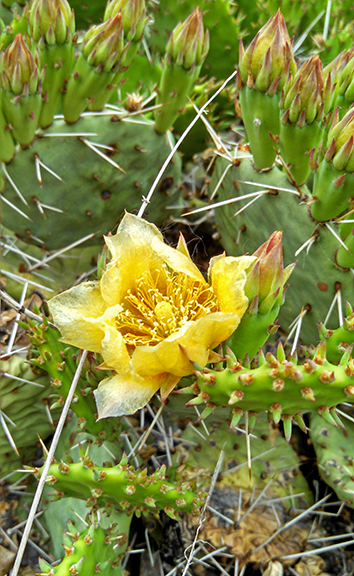
Blooming prickly pear cactus along the Platte River in Nebraska.  Photo by Kim Tri.

Blooming prickly pear cactus along the Platte River in Nebraska. Photo by Kim Tri.

            Before arriving at the Platte River Prairies, the place for me was mostly a blank.  Having briefly looked over this blog while studying, I half-remembered having seen the preserve through the lens of another’s camera, but all I really had was a dot on a map.  Of all of the handy volunteer pages for the various Plains states on The Nature Conservancy website, theirs was the best put together.  It offered housing to scholarly volunteers who were interested in a month or so of work.  Decision made.

            I blew into the preserve on the harsh wind of a Plains thunderstorm, which gave way to a long, rainy day in which to think about what I’d done.  I had no apprehensions about the house, but still I felt the niggling doubt that accompanies me on every move.  Where the heck was I?  Marooned in a vast island of corn, so different from the mountains of the past few years.  Also, it was rainy.

            Still, I had to explore—meet the neighbors, so to speak.  I first became acquainted with the little prickly pear in the yard, a reassuring sign of being back west.  Then I met the yellow spring flowers, the ragwort and puccoon—sunny faces on a gray day, particularly when the sun shone on them through the breaks in the clouds.  The sudden sunlight also illuminated the grazing cows, making them appear touched with grace.  The cattle were also neighbors, which I came to accept despite my lifelong dislike of cattle.  They are essential parts of the natural community in a grassland ecosystem evolved to grazing.

Prairie ragwort (Packera plattensis) - The Nature Conservancy's Platte River Prairies.  Photo by Kim Tri

Prairie ragwort (Packera plattensis) – The Nature Conservancy’s Platte River Prairies. Photo by Kim Tri

Cattle grazing along one of the hiking trails through the Platte River Prairies.  Photo by Kim Tri.

Cattle grazing along one of the hiking trails through the Platte River Prairies. Photo by Kim Tri.

           My doubt didn’t last long.  This vibrant little community of the prairie bustled with inhabitants.  Kingbirds flicked their tails, deer bounded away, hawks soared, owls called, waterfowl preened.  Insects buzzed and greeted the new blossoms.  I, too, greeted the opening flowers, alert for something new every day to write in the journal which I was tasked to keep of my time in Nebraska.  Now, as much as I appreciate Aldo Leopold, phenology had always seemed tedious.  Then, suddenly, I understood.  I was elated at the sight of the first blooming prairie coneflower.  Ever since learning to recognize it, I’d been eyeing its developing buds and waiting.

Yellow coneflower, aka upright prairie coneflower (Ratibida columnifera).  Photo by Kim Tri

Yellow coneflower, aka upright prairie coneflower (Ratibida columnifera). Photo by Kim Tri

            What I remember most is a sense of peace in the tall grass.  Back in Vermont, there was no end of inspiring landscapes, but the trees and hills were becoming stifling, making me restless.  Out on the prairie, it was different.  Studying the grasslands was not like studying the forests, in a way that’s difficult to describe.  Perhaps it’s the clarity of being able to see so far.  Perhaps it’s watching the mood of the sky for warning weather, the wild power of the thunderstorms that make all calm days seem extraordinarily tranquil.

            There was something also in my timing that seemed perfect, as well.  In my brief spell at the preserve, I got to experience the last burn of the season, straggling Sandhill cranes, the Niobrara preserve and their legendary bison tours, an unusually early Field Day, and a succession of wildflowers.

Colorful clouds over the prairie before sunrise.  Platte River Prairies. Photo by Kim Tri.

Colorful clouds over the prairie before sunrise. Platte River Prairies. Photo by Kim Tri.

            Perhaps it’s always the right time to be at the Platte River Prairies.  That would explain the chronic volunteers, who indulge their prairie work like a habit, and the revolving door of visiting researchers.  And everyone had something to teach, more than I could readily absorb.  Back in Vermont, a stack of books and an unreliable internet connection were my portal into the prairies.  Being in Nebraska, I was surrounded by dedicated and knowledgeable folks, and was frankly a little spoiled.  I’d gone from teaching my senior project advisor about drought and fire ecology to living it, being schooled by others and the land.

            In a long line of good life decisions, I can add this one to the list, for sure.

Mural by Kim Tri, inspired by her time in The Nature Conservancy's Platte River Prairies, Nebraska.

Mural by Kim Tri, inspired by her time in The Nature Conservancy’s Platte River Prairies, Nebraska.  Please click on the image to see a larger, sharper version.  It’s worth it.