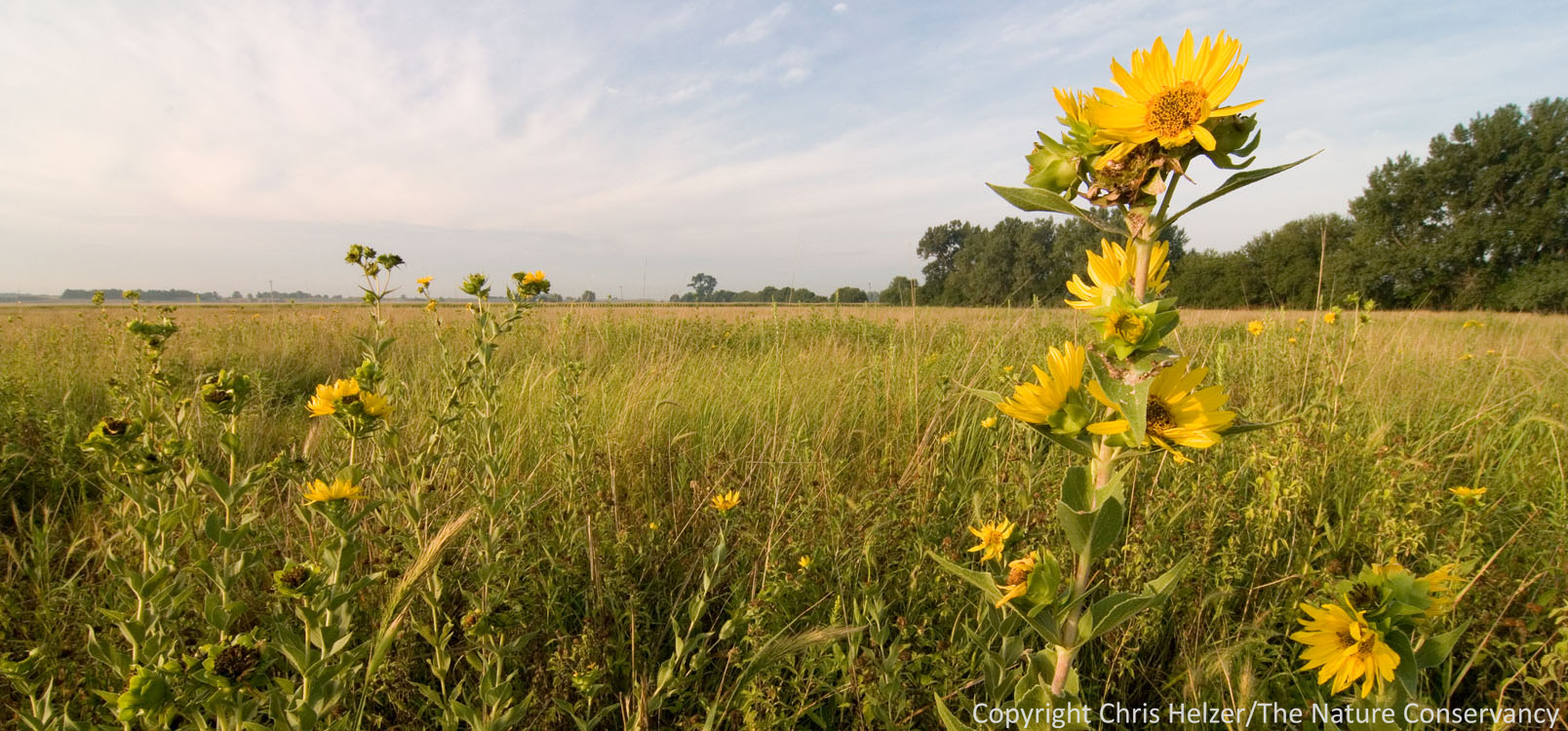
A warm and dry winter, followed by a hot dry spring and summer… Temperatures over 100 degrees Fahrenheit for weeks at a time… Wildflowers blooming two to three weeks earlier than normal, and often for much shorter periods than typical… Other plants withering and/or going dormant before they get a chance to bloom.
Sound familiar? It’s a good description of the conditions across much of the central United States in 2012. However, it’s also a description of eastern Nebraska back in 1934. The famous prairie biologist, J.E. Weaver and two colleagues published a 1935 paper detailing the response of prairie plants to the “great drought of 1934”, in which they describe the weather conditions and plant community responses in prairies near Lincoln. The similarities between the drought of 1934 and 2012 are pretty strong. The main difference is that much of Nebraska actually had fairly wet conditions during the spring and summer of 2011, whereas in 1934 the extreme drought came on the heels of dry seasons in both 1931 and 1933. Apart from that, a warm dry winter, very low rainfall, and extraordinarily long stretches of very hot temperatures characterized both 1934 and 2012.
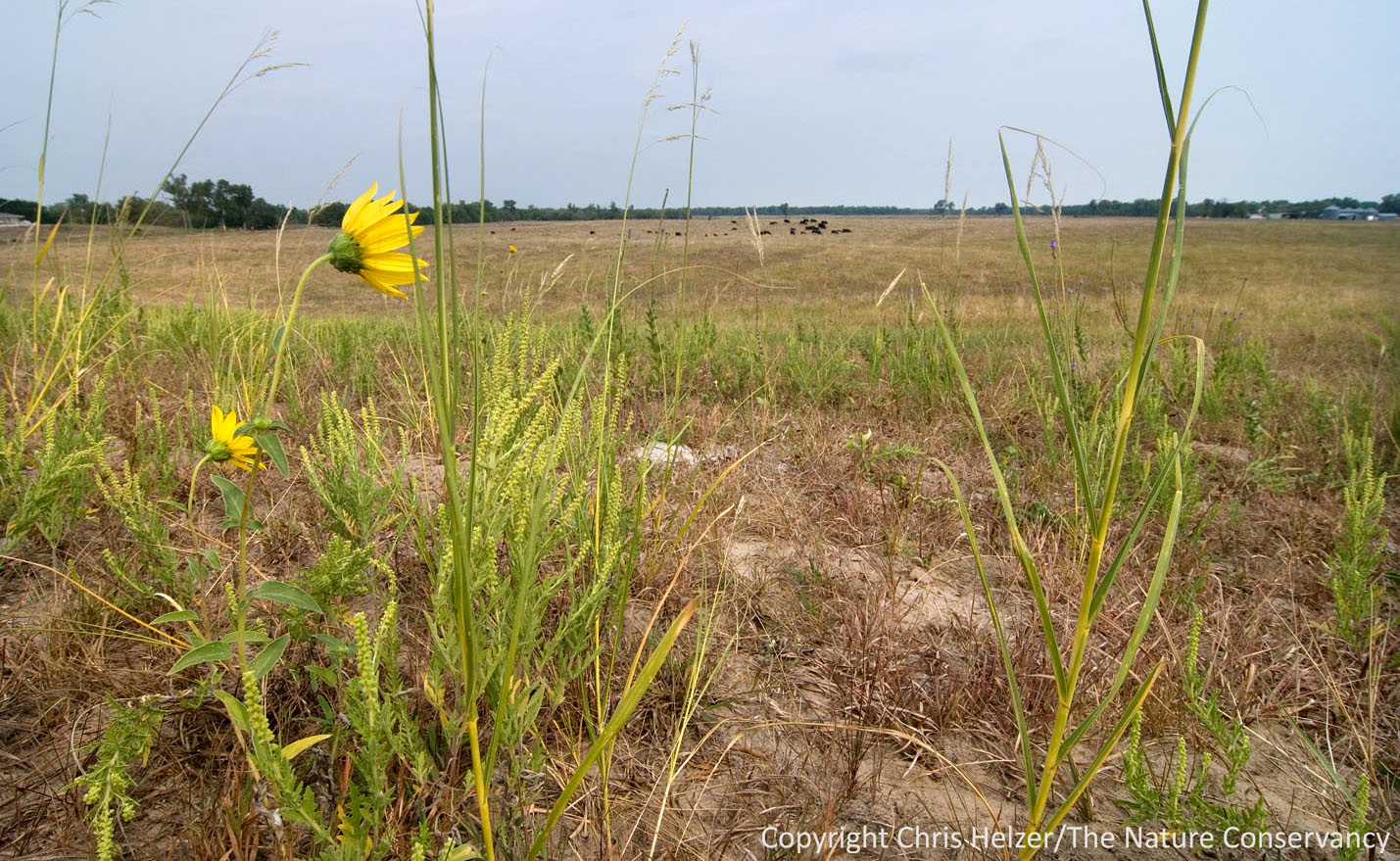
Most prairies look pretty dry this year. In this burned and grazed prairie, only the most drought tolerant plants, including plains sunflower, western ragweed, and prairie sandreed, are still green.
The paper by Weaver, Stoddart, and Noll is interesting for a couple reasons. First, it’s nice to see evidence that prairies have been through the kind of conditions we’re experiencing this year, and to know that those prairies rebounded. We all know prairie communities are resilient, but with a high likelihood of more frequent and intense droughts in our future, it’s comforting to see some historical evidence that prairies have the capability to handle extreme weather (in fact, the drought of 1934 was followed by drought conditions for most of the rest of that decade). Second, the authors describe the way individual plant species responded to the drought conditions of 1934, and it’s both fascinating and reassuring to see the same plant species responding in similar ways now. Weaver and his colleagues describe the overall appearance of the prairie, season by season, and discuss the relationship between the ability of species to withstand drought conditions and their rooting depths and architecture. Also of interest, Weaver published a follow-up paper in 1936, describing the way prairie plant communities looked in 1935 – one year after the big drought.