Why Every Prairie Really is Unique – and Why it Matters.

Confirmation that every prairie has its own unique composition of plant and insect species, and discussion about why that’s important for conservation.

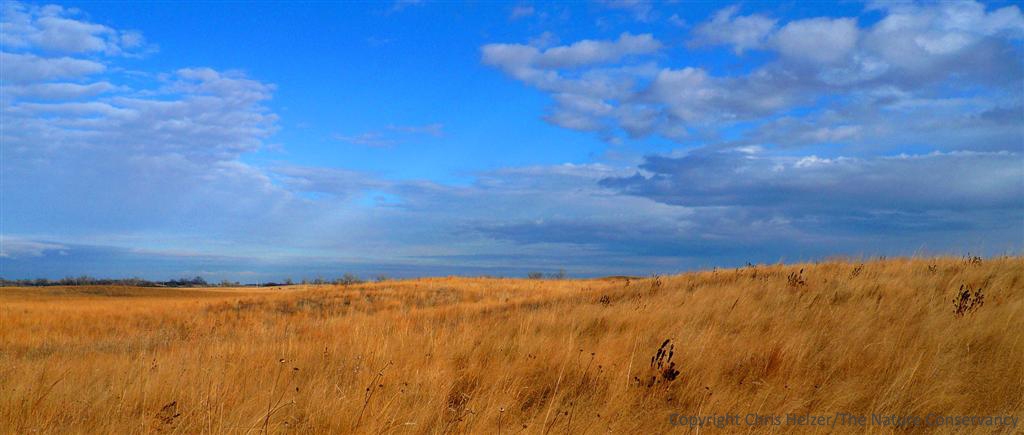
Several years ago, I helped assemble a group of partners to begin some pilot research on what kinds of impacts habitat fragmentation may be having on the tallgrass prairies in southeastern Nebraska.  While those prairies are greatly fragmented compared to the extensive Nebraska Sandhills or Kansas Flint Hills prairies, there are still many blocks of hundreds to thousands of acres of prairie embedded within a matrix of cropland.  Those grassland complexes include a mixture of hayed prairies, grazed prairies, and Conservation Reserve Program (CRP) fields.  As conservation organizations consider the best ways to ensure continued survival of those important grasslands, many of the most pressing questions revolve around whether or not the prairie landscape is intact enough to support a functional ecosystem.

We still have a long way to go before we know much about the “functioning” of the southeast prairies, but we have collected enough data to know one thing:  every one of those prairies is unique.  While that not exactly earth shattering news, especially to biologists who have inventoried numerous prairies, it’s really very important.  To be more specific about what we’ve found, each prairie appears to have its own individual “signature” of plant and insect species compositions.  In other words, each has a mixture of species that is similar to, but also very different from, other prairies – even among prairies that are managed much the same way and that appear very similar from a distance.

For example, over the last couple of years we have done vegetation surveys in 24 hayed prairies as part of a couple of insect research projects.  We selected the 24 sites because we believed they were very similar to each other in plant community but varied in size and degree of isolation.  In other words, we tried to pick sites with identical plant communities.  Boy did we fail.  To be fair, the graduate student that selected the sites did so by driving gravel roads in April and May, and one hayed prairie looks a lot like another from the road at that time of year.  But we did try…

Staff from the Illinois Natural History Survey assisting with vegetation inventories in hayed prairies. Southeast Nebraska - Pawnee County.

There were some strong similarities among the prairies.  Most of them had had abundant cool-season grasses, but also strong representation from warm-season native grasses.  In addition, all of them had a good diversity of plant species – most averaged between 20 and 25 plant species per square meter.  Many of the more common wildflowers were found in all, or nearly all, of the prairies, and in similar amounts – including species like stiff sunflower (Helianthus pauciflorus), heath aster (Aster ericoides), black-eyed Susan (Rudbeckia hirta), pussytoes (Antennaria neglecta), and wild alfalfa (Psoralidium tenuiflorum).  Finally, the majority of the prairies had apparently been inter-seeded at some time in the past with non-native legumes such as red clover, sweet clover, and others, and those species were moderately to very abundant in those prairies – although not to the extent that they seemed to have an impact on overall plant diversity.

However, the differences among the prairies were as obvious as the similarities.  For example, of the 24 prairies, prairie phlox (Phlox pilosa) only appeared within our sampling plots (50 1m2 plots at each site) in three of them – but it was very abundant at those three sites.  Why is it abundant at a few sites and rare or missing from others?  Prairie blazing star (Liatris pycnostachya) showed a similar pattern.  Other important wildflower species – those considered to be among the core species of tallgrass prairie plant communities – only appeared in the data from about half of the sites.  Those species included compass plant (Silphium laciniatum), purple prairie clover (Dalea purpurea), hoary puccoon (Lithospermum canescens), and wild strawberry (Fragaria virginiana), among others.  To be clear, these data don’t indicate whether or not species were absent from an entire site – only that they were absent from the 50 1m2 plots we sampled from at each. Regardless, we saw significant differences in the relative abundance of those species from site to site.  Other important species that varied wildly in abundance among the prairies included prairie dropseed (Sporobolus heterolepis) and eastern gamagrass (Tripsacum dactyloides).  Those two species were in most of the prairies, but appeared in nearly 100% of the plots in some prairies and in only one or two plots in others.

Prior to initiating our research project that used those 24 hayed prairies, we did some broader surveys of prairies that included both hayed and grazed prairies to assess the degree of variety within plant and insect species at those sites.  (The grazed prairies, by the way, reflected many different kinds and intensities of grazing, but are lumped together here for simplicity.)  Because it was pilot data, we did some quick inventories of plants at each site, trying to list all the species we could find.  Not surprisingly, there were some stark differences between grazed and hayed prairies in their plant compositions.  In a few cases that variation could be explained by site conditions (such as rocky or steep terrain) because those conditions clearly made grazing more feasible than haying – in those cases plant species may have been responding to the site rather than the management.  In most cases, however, it was clear that the plants were responding to management.  Plant species like false gromwell (Onosmodium molle), tall boneset (Eupatorium altissimum), partridge pea (Chamaecrista fasciculata), and hoary vervain (Verbena stricta) have life strategies that allow them to thrive under grazing because they are less palatable to grazers than their neighbors and/or can respond more quickly to the space opened up by grazing.  Those and other similar species were found almost exclusively at grazed sites.  On the other hand, there were species like New Jersey tea (Ceanothus herbaceus) and golden alexander (Zizea aurea) that were found much more often at hayed sites than grazed.  While the majority of plant species were found across the entire range of site types, their relative abundances showed that most responded much better to either the hayed or grazed conditions.

Hoary vervain is a wildflower found mostly in grazed prairies in southeastern Nebraska, and one that is extremely important to pollinators, including regal fritillary butterflies.

Within those same grazed and hayed prairies, we also did some sweep netting of insects.  We targeted our sweeping so that we collected insects off of the same plant species across all of the sites (using a couple different plant species).  We wanted to see whether the insect communities using a particular plant species were essentially the same at all of the prairies.  They’re not.  What we found was that the insect data were even more chaotic looking than the plant data.  Very few insect species were found at all, or even the majority of sites.  That’s likely due to the relatively small amount of sampling we did.  But even with our small samples, it was clear that a large number of species were abundant at one site but absent from many others.  The other strong pattern was that the total abundance of insects was often quite a bit higher – among many species – at the sites we’d considered to be “lower quality” based on our plant data.

There are a number of reasonable – even obvious – explanations for these variations among prairies, including soil type, topography, past management, random chance, etc.  But more important are the lessons that come from recognizing those differences.  First, I think the differences demonstrate the importance of management.  Surely some of the differences between the vegetation composition in those 24 hayed prairies stem from variations between sites relative to the timing and frequency of annual haying, the consistency of timing and frequency over many years, and whether or not the prairies are fertilized.  Later season haying, for example, allows more (and different) plant species to complete their life cycle prior to cutting than early season haying (or twice-annual haying).  Completing their life cycle now and then is critical for the long-term survival of plants because it allows them to reproduce and store energy for the coming winter.

The existence of a combination of hayed and grazed prairies within the landscape is also important.  Because there are plant species (and likely insect species) that do better under grazing management than haying management, and vice versa, having both types of management within a neighborhood can maintain more biological diversity than either of the management types alone.  Of course, managing each of those prairies with a combination of fire, grazing, and perhaps haying, might allow even more plant and insect species to persist on each prairie – although the local abundances of some species might go down because they would lose the consistent management that had allowed them to become dominant.

From a conservation standpoint, one big lesson is that it’s not sufficient to simply rank prairies by floristic quality, size, or other measurements, and act to “protect” the best of those.  In order to conserve the complete diversity of life in the southeastern Nebraska prairies, we need to keep as many of the remaining prairies as we possibly can.  While the grazed sites might look less attractive to a botanist driving by compared to hayed prairies full of compass plant and blazing star flowers, the aesthetic preferences of botanists don’t necessarily reflect the biological needs of ecosystems.  While there was surprising variation between the hayed prairies we looked at, a very significant degree of biological diversity would be lost if the grazed prairies were plowed up.

Even if it were the desired strategy, there’s no way conservation organizations would or could buy up a significant number of the grasslands in southeastern Nebraska, so working collaboratively with the landowners of those prairies is of the utmost importance.  Relying on private landowners to conserve prairies has been a tough pill for many conservation organizations to swallow – including the one that employs me – but during the last several decades most have recognized that need.    The next trick is to refine our skill at working with those landowners without coming across as know-it-all biologists.  The most successful private lands liaisons from the conservation community have been those who listen well, recognize the importance and value of individual landowners’ priorities (remembering that it is THEIR land), and build relationships on mutual trust.  Through those relationships, we can alert landowners to aspects of their prairies and management options they might not be aware of, but the decisions about how to manage their sites still have to be left to the landowner.  Clearly, that will result in some prairies being managed in ways that make some of us uncomfortable, but we don’t want all the prairies to look the same anyway, right?

Grazing in Prairies – Part 1

This is the first in a series of upcoming posts about grazing in prairies – something that is common and widely accepted in western tallgrass prairie and mixed-grass prairies but much less so in eastern tallgrass prairies.  Sorry for the length – there’s a lot to say in an introduction to this topic…

Cattle and prairies are like oil and water to some prairie biologists and enthusiasts – especially in the eastern tallgrass prairie region.  There’s no doubt that many prairies have suffered from chronic overgrazing during the last couple of centuries.  But to broadly categorize grazing as bad for prairies because some have been overgrazed is like saying that food is bad because some people are obese.

It's easy to see how people can be sceptical about the value of grazing if this is their mental image of cows in prairies.

To be clear, I’m not arguing that every prairie needs grazing.  Some prairies are too small for grazing to make any sense.  In other cases, the owner and/or manager of a prairie may be completely satisfied with the plant composition and habitat availability within a prairie – in which case the current management is probably perfectly adequate.

On the other hand, I think there is room for much more discussion about some potential benefits of grazing in prairies.  However, in order for that discussion to proceed, everyone involved needs to come into the discussion with an open mind.  Despite arguments about the extent to which bison and other large grazers were abundant in eastern tallgrass prairies – and for how long – there is no question that those prairies have experienced some pretty extensive and intensive grazing at times over the last several thousand years.  And they’ve survived.  That doesn’t mean we can just dump a load of cattle into a prairie and everything will be peachy.  But I think it’s important not to summarily dismiss grazing as irrelevant or automatically dangerous to prairies.

One of the obstacles to open discussion about grazing in prairies is the assumption that if you’ve seen one grazed prairie you’ve seen them all.  In reality, grazing may be the most flexible management tool available – you can control the timing, duration, intensity, and frequency of application.   Stocking rate (grazing intensity) is probably the most important of those.  The number of cattle (or bison or whatever) per unit area makes a tremendous difference in the way the site is grazed.  Light stocking rates allow the grazer to be selective – eating only what it wants.  In my experience, and that of many other managers, cattle strongly prefer grass over forbs when given the choice.  When stocking rates are higher, or when cattle are kept in a prairie long enough that they run short of grass to eat, they eat whatever is available.  Many species of plants that have long been considered “ice cream” plants for cattle – plants that cattle will repeatedly graze to the ground until they eventually disappear – are treated much differently by cattle under a light stocking rate.  Because the variability in the way grazing can be applied is not often recognized by researchers or casual observers, the world is full of reports and articles that document differences between “grazed” and “ungrazed” prairies.  In most cases, the “grazed” prairies are chronically overgrazed – not a fair comparison.

Cattle can be very selective grazers, and under light stocking rates show strong preferences for grass over forbs - even prairie legumes like purple prairie clover that are usually considered to be "ice cream plants".

Another erroneous assumption is that a grazed plant is a dead plant.  Being defoliated (clipped off) now and then doesn’t kill prairie plants.  If it did, mid-season haying and growing season burns would be devastating to prairies – and they’re not. If a perennial plant is allowed time to recover from being nipped or mowed off, it’ll come back just fine – especially if the competing grasses surrounding it are also weakened by the same defoliation event.  Defoliation is only fatal for perennial plants when it occurs continuously, season after season, with no time for recovery.  Because of that, it’s easy – but incorrect – to look at a prairie undergoing short-term intensive grazing and assume that many of the prairie plants are gone because they’ve been grazed off.  A prairie that looks short and ragged while cattle are present can be tall and flowery again after just a season or two of rest.  It’s true that when grazing treatments (or any other prairie management treatment) are applied repetitively, some plant species can gain a repeated advantage over others, limiting plant diversity.  In contrast, however, a dynamic (non-repetitive) management regime allows all plant species to complete their life cycle now and then and ensure their continued position in the plant community.

As part of a broader management plan, there are a number of ways periodic grazing can potentially be a valuable tool.  For example, intensive grazing in the spring followed by summer rest can repeatedly defoliate and stress cool-season exotic grasses like smooth brome while providing opportunities for many native plants to gain an advantage.  Grazing cattle under a light stocking rate can be used to create unique and valuable habitat structure because the cattle clip off some plants but not others.  That selective grazing creates patchy vegetation that can help invertebrates and reptiles more easily thermoregulate and provide many animal species the ability to forage in open areas while remaining close to protective cover.  Under a higher stocking rate, cattle can create and maintain large patches of short vegetation that benefit bird species like upland sandpipers.  After that kind of intensive grazing, many plant species that were previously suppressed by dominant grasses can be temporarily released from that competition.

Selective grazing by cattle can help forbs compete against dominant grasses, but also creates valuble habitat structure that is difficult to obtain with other management tools.

One grazing strategy that has been getting a lot of recent attention is called patch-burn grazing.  In its most basic form, patch-burn grazing uses prescribed fire to concentrate grazing in some portions of a prairie while other portions get little to no grazing.  The system works because recently burned prairie patches are extremely attractive to cattle and those cattle will spend the majority of their time there – to the exclusion of less recently burned patches.  The intensity of grazing in burned patches and the extent to which unburned patches are grazed, both increase with stocking rate.  Whenever a new patch of prairie is burned, the grazing shifts to the new burn patch and the previous patch begins its recovery phase.  At any one time, a portion of the prairie is being intensively grazed, a portion is recovering from recent grazing, and other portions are largely ungrazed – all without any interior fences.

Researchers from Oklahoma State University and The Nature Conservancy have been testing patch-burn grazing as a way to improve wildlife habitat in ranch country by providing more  without  heterogeneous vegetation structure without sacrificing income for ranchers.  They and others have documented benefits to wildlife species such as prairie chickens and Henslow’s sparrows that require habitat structure not often found in more traditionally-grazed grassland.  They’ve also found that prairies under patch-burn grazing support a larger total diversity of wildlife species than more homogenously managed grasslands because of the wider range of available habitat types.

I began experimenting with patch-burn grazing in 2001 because I was looking for a way to maintain plant diversity in restored (reconstructed) prairies along the Platte River in Nebraska.  We had invested a lot of time and energy seeding 150-230 plant species into former crop fields and I needed a way to manage them that would prevent grasses from becoming too dominant and/or plant diversity declining over time.  I reported some preliminary results of our work in an article for the journal Ecological Restoration in 2005, but now have 9 years of data from our sites.  Overall, I’ve been very encouraged by the results I’ve seen.  Our restorations are maintaining their plant diversity and species composition – while exclosures that get prescribed fire but not grazing have lower plant diversity and are largely dominated by grasses. I’m also tracking individual plant species and have seen plant species traditionally thought to decrease in abundance under grazing maintain their abundance over 9 years of annual patch-burn grazing.

Cattle grazing in the burned patch of a patch-burn grazed restored prairie (light stocking rate) - note the ungrazed Canada milkvetch (bottom left) and compass plant (tall).

I continue to experiment with ways to modify the basic patch-burn grazing method to favor plant diversity, including the use of varying stocking rates and the length of the grazing season.  In addition, most of my sites are relatively small (between 100 and 200 acres in size) so plants that are especially tasty to cattle sometimes get grazed even in unburned areas.  It appears that a year of complete rest from grazing now and then is probably important (and sufficient) for maintaining strong populations of those species.

There is still much to learn about the potential usefulness of patch-burn grazing and other methods of cattle grazing for prairie management.  For example, most research projects have not been set up in ways that have provided long-term or intensive data on the impacts of grazing on individual plant species over time.  Konza prairie researchers have a long history research on grazing – largely on its effects on ecological processes, however (but with insights on plant species responses as well), and some people are concerned about how well their data on shallow-soil prairies applies to other prairie types.  While my own data show promising results regarding plant species responses, I’m looking primarily at restored prairies and my sites are on sandy soils with annual rainfall amounts between 25 and 28 inches per year.  I’m seeing cattle graze select very strongly for grasses, with very little grazing of forbs – especially with light stocking rates.  However, it’s difficult to extrapolate those results to prairies with different soil types and average precipitation without considerably more testing.

However, the questions about how or whether a particular grazing system or another impacts prairies miss a larger point.  The bigger question is whether or not grazing itself has potential as a tool for prairie managers to use to address specific challenges on prairies, including encroaching invasive species, over-dominance of native grasses or other plants, homogenous wildlife habitat structure, etc.  The answers to those questions will have to come from experimentation by many people at many sites.  I hope that prairie biologists, managers, and enthusiasts will continue their legacy of innovation and take an open-minded view toward prescribed grazing.  We have too few prairies left, and too many threats to them, not to explore every tool available to us.

(There are a number of other issues related to grazing that I don’t have room to discuss here – but will in later posts.  Those include differences between cattle and bison grazing, more details about my research on individual plant reponses to grazing, issues relating to cattle behaviors like trailing and concentrating around water and shade, the infrastructure needed for cattle grazing, and others.  Stay tuned – or ask specific questions by commenting below or sending me an email at chelzer@tnc.org.)