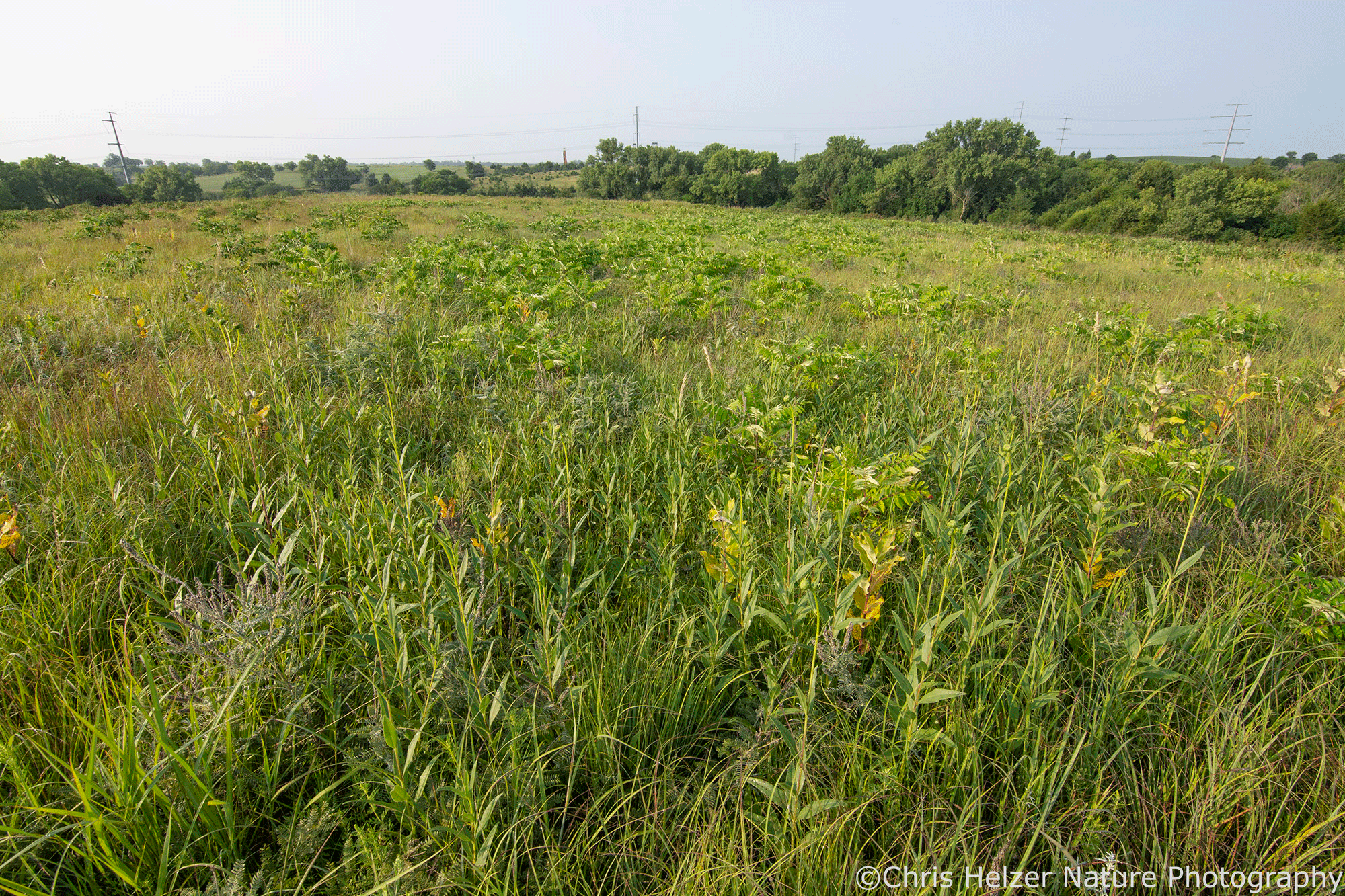
Learning How to Live With Shrubbier Grasslands – Part 2: Experimentation

In Part 1 of this topic, I wrote about the uncomfortable situation many prairie stewards find ourselves in – that our grasslands are getting “shrubbier” and it’s increasingly difficult to prevent that. Because the drivers for that change are mostly beyond our control, it seems obvious that we need to start thinking differently about grassland management.

There are still plenty of grasslands where we should work to prevent woody encroachment. However, there are also a lot of prairies where trees or shrubs have already become part of the community. In many other places, it appears to be just a matter of time. It seems smart for us to try to get ahead of this and figure out how to manage woodier grasslands for biodiversity and productivity.

Most of us haven’t focused much on how to manage the height and density of shrubs in our prairies because we’ve been thinking mostly about how to repel them. That means we need to start experimenting, and quickly. My team has implemented a couple different field trials in the last couple years and I’m going to share some preliminary results with you. I hope those results will spur others to share their experiences and, more importantly, ramp up their own experimentation efforts.

Our first trials focus on clonal deciduous shrubs (smooth sumac and rough-leaved dogwood). We started with the hypothesis that if we could hit them twice (or more) in the same growing season, we might get multiple years of suppressed height and density as a result. This hypothesis was informed by helpful conversations with people like Dean Kettle at the Kansas Biological Survey and several others.

Field Trial #1 – Smooth Sumac at The Nature Conservancy’s Niobrara Valley Preserve

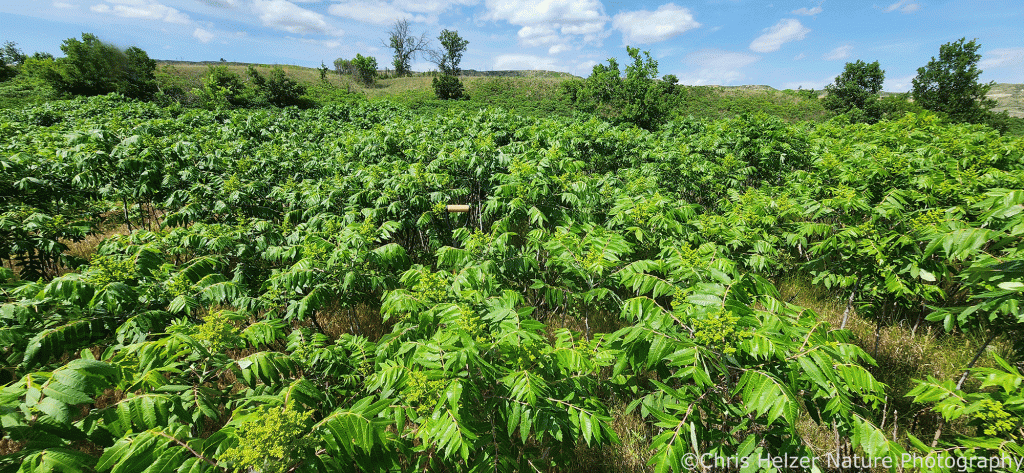
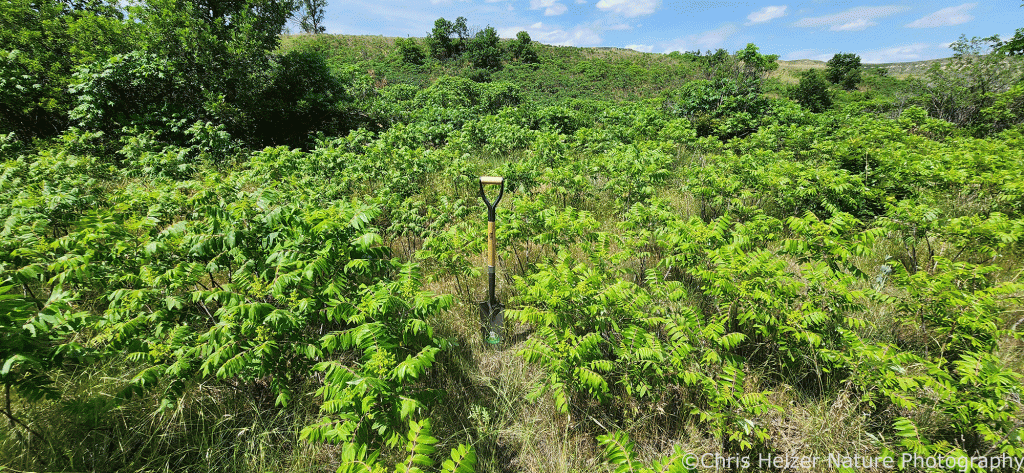
In 2023, we treated a number of smooth sumac patches with treatments (often in combination) that included prescribed fire, mowing, and a non-lethal “burn-down” herbicide. The photos shown here illustrate what those sumac patches looked like on June 16, 2025.

Quick summary of preliminary results:

  • Mowing sumac in June and August really reduced both the height and density of stems, and that impact has persisted for at least 2 years.
  • An August mowing, followed by a dormant season fire (November, in our case), showed pretty similar results.
  • June mowing followed by herbicide in August seemed slightly less effective than the above two treatments, but much better than any single treatment alone.
  • June mowing followed by a November fire was the least effective of all the combinations listed so far, but still better than a single mowing treatment.
  • All single treatment applications (June mowing, August mowing, November fire) showed quick recovery within two years.
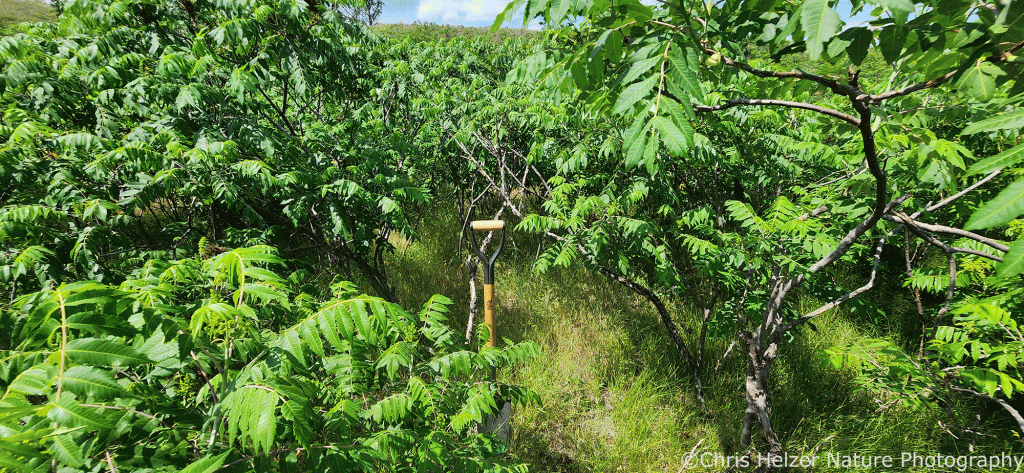
June 16, 2025 Photo of smooth sumac that received no treatment in 2023. You can just barely see my spade in the center of the photo, with sumac looming well above it.
This patch received a single prescribed fire treatment in November of 2023. If you look really closely, you can see just the handle of my spade. The sumac rebounded very well. This is similar to what both single mowing treatments (June and August) looked like by June 2025.

Treatments were applied on June 13, August 9, and November 29, 2023. The photos below show sumac patches with various treatment combinations.
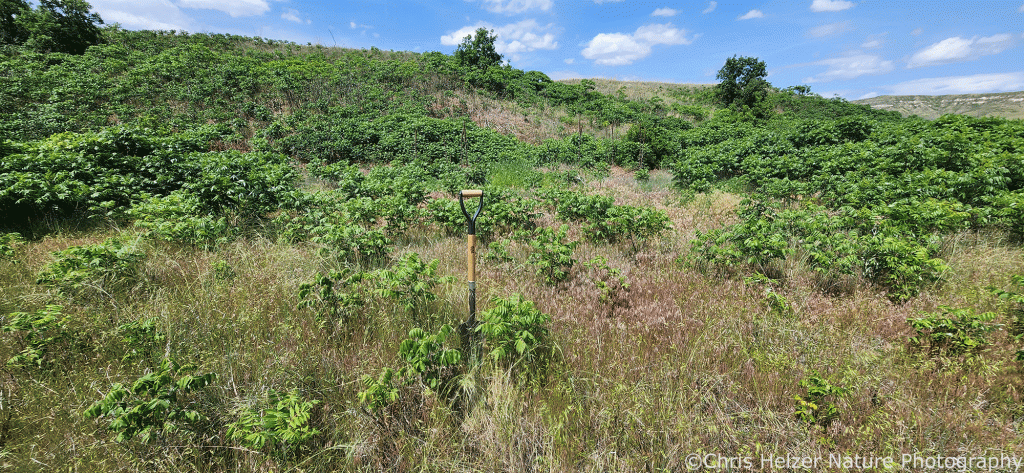
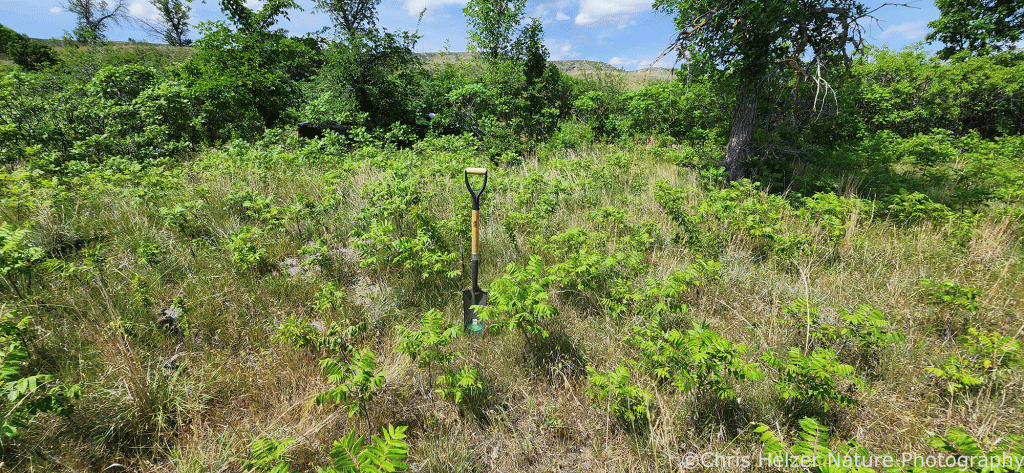
This patch was mowed in June and August of 2023 and experienced a significant decrease in both height and density of stems (the slope in the background was untreated).
August mowing followed by November fire also had a significant impact.
June mowing followed by a November fire was better than any single treatment, but not nearly as effective as the other combinations.

The herbicide we used contained the active ingredient Carfentrazone-ethyl, which disrupts cell membranes in leaves and essentially defoliates plants. The hope was that it would act much like a prescribed fire – injuring the shrubs without killing them or any surrounding plants. We mixed 17.5 ml (0.7 ml/gal) of AIM herbicide and 47.5 oz (1.9 oz/gal) of crop oil in 25 gallons of water and applied a heavy foliar spray.

We tested this on full-sized sumac plants in June, but the spray didn’t penetrate the canopy well, and only burned up the top layer of leaves. It seemed to work much better in August as a follow-up treatment to resprouted sumac plants mowed in June.
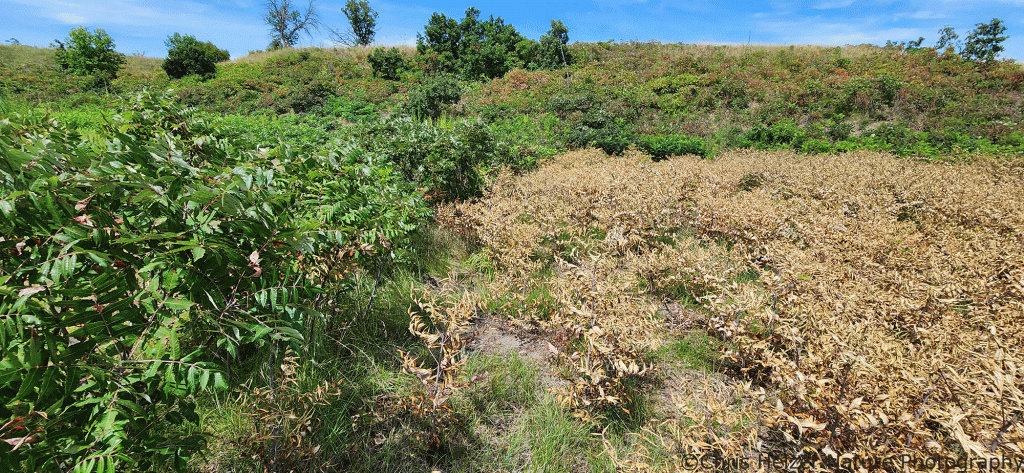
The brown-leaved sumac plants on the right were mowed in June and the regrowth was sprayed with AIM herbicide in August. This photo was taken 1 week after spraying.

As we’d hoped, we saw no mortality of sumac or any other plants from the herbicide treatment. Instead, it seemed to act much like a prescribed fire, in that it just injured the shrubs. We’d expected it to do some temporary damage to surrounding vegetation as well, but saw very little evidence of that.
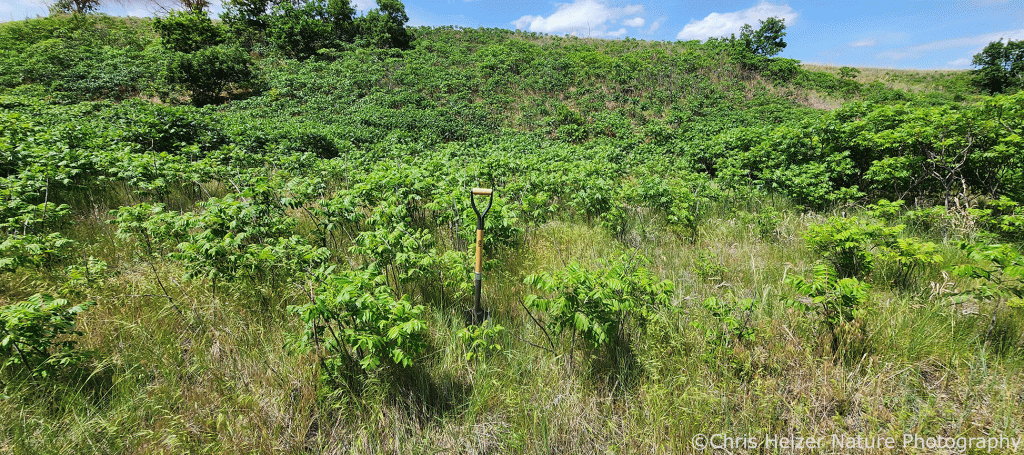
Here is the June 2025 photo of the sumac sprayed with AIM herbicide in June 2023. Height and density are both much reduced compared to untreated patches.

My takeaway from the herbicide application was that it is worth more testing, but seems less effective than mowing or fire. In places/situations where spraying might be feasible, but mowing isn’t, it might be a decent follow-up treatment to extend the impacts of prescribed fire. Maybe. We’ll see. Either way, it didn’t seem to cause any damage to the plant community around the sumac, which reinforces my interest in more experimentation.

.

Field Trial #2 – Rough-Leaved Dogwood at The Nature Conservancy’s Platte River Prairies

For a few years now, I’ve been paying attention to fenceline differences and other evidence that cattle grazing has potential to help manage deciduous shrub height and density. This spring (2024) we set up a quick experiment to test that with rough-leaved dogwood. Cattle were brought into the unit in early June and will be present through October (part of our larger open gate grazing experiment.)
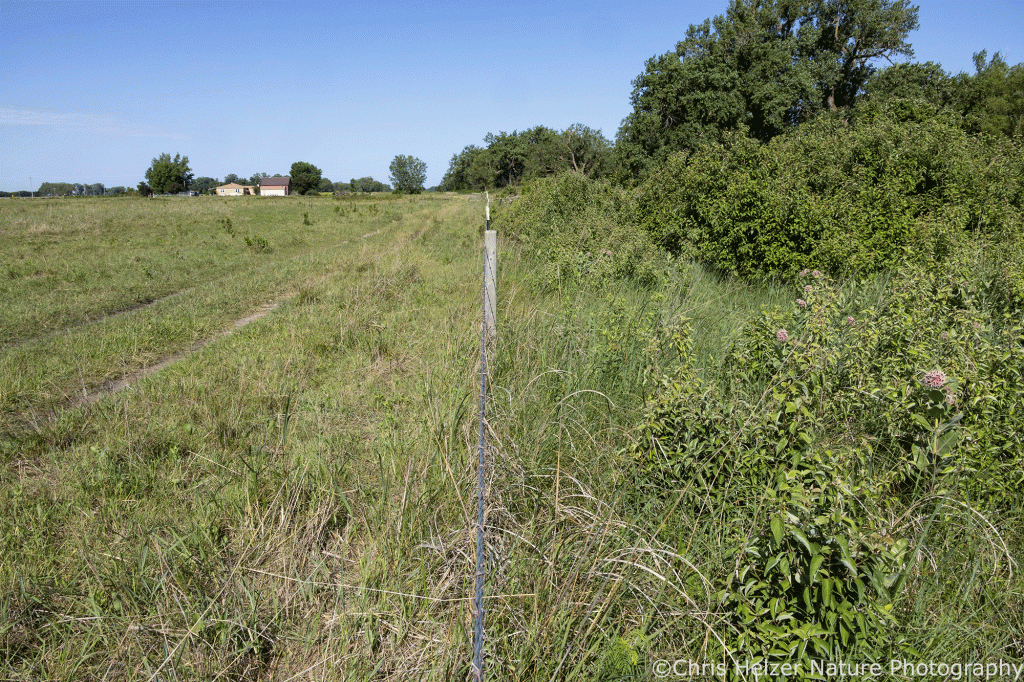
A fenceline photo showing grazed prairie on the left and ungrazed on the right. Note the height and density of the dogwood and plum on the ungrazed side.

Forty cow/calf pairs were introduced to a 49 acre pasture in late May, 2025. In early July, they were given another 25 acres (in addition to the initial 49) and later this summer, they’ll gain access to an additional 69 acres. The photos below, though, were all taken on June 10 – about 2 weeks after cattle were brought into the pasture. In other words, the grazing impacts shown below happened pretty quickly after cattle were brought in. It’s not like they waited to graze dogwood leaves until they’d eaten everything else.

We set up four treatments:

  • Grazed (unmowed)
  • Ungrazed (unmowed)
  • Mowed/Grazed
  • Mowed/Ungrazed

The height of all dogwood stems included in the study was measured on April 22, 2025 and some of those stems were mowed immediately afterward. Small exclosures were set up to exclude grazing from some treatments.

Quick summary of preliminary results (as of June 16, 2025):

  • Cattle are definitely grazing the leaves of dogwood. Stems outside the exclosures looked very ragged compared to ungrazed plants.
  • Dogwood stems mowed in April were being kept cropped off at just a few inches in height.
  • Dogwood stems mowed in April but excluded from grazing had already reached about 10-12 inches in height by June 16.
Grazed dogwood (left) and ungrazed dogwood (right, in the exclosure).
Dogwood stems inside the triangle of red flags were mowed in late April and cattle are keeping them grazed off close to the ground.
Dogwood mowed in April but excluded from grazing had grown 10-12 inches by June 16.

This project is just getting started, but it’s gratifying to see that cattle are grazing dogwood as we’d expected (see photos below for further confirmation). The most promising result so far is that the mowed dogwoods seem particularly attractive to cattle and we hope repeated grazing of those resprouting stems will lead to several years of much-reduced growth compared to stems in the other treatments. Time will tell, but we’re off to a good start.

My real hope is that we can find ways that cattle grazing can play into our larger efforts to manage shrub height and density. For example, burning every 4-5 years isn’t enough on its own to suppress shrub growth. However, burning followed by a season of grazing on the regrowth of those shrubs might lead to significantly reduced growth over the next several years. By the time the next fire comes through, those shrubs might not have grown very tall at all.

We have lots of experience (and data) showing that some kinds of cattle grazing can benefit habitat heterogeneity without reducing plant diversity. If similar grazing approaches can also suppress the height and density of shrubs, that’ll be a huge help.

This (including the sumac work above) is just the start of a long experimental path, but I’m excited by the early results.
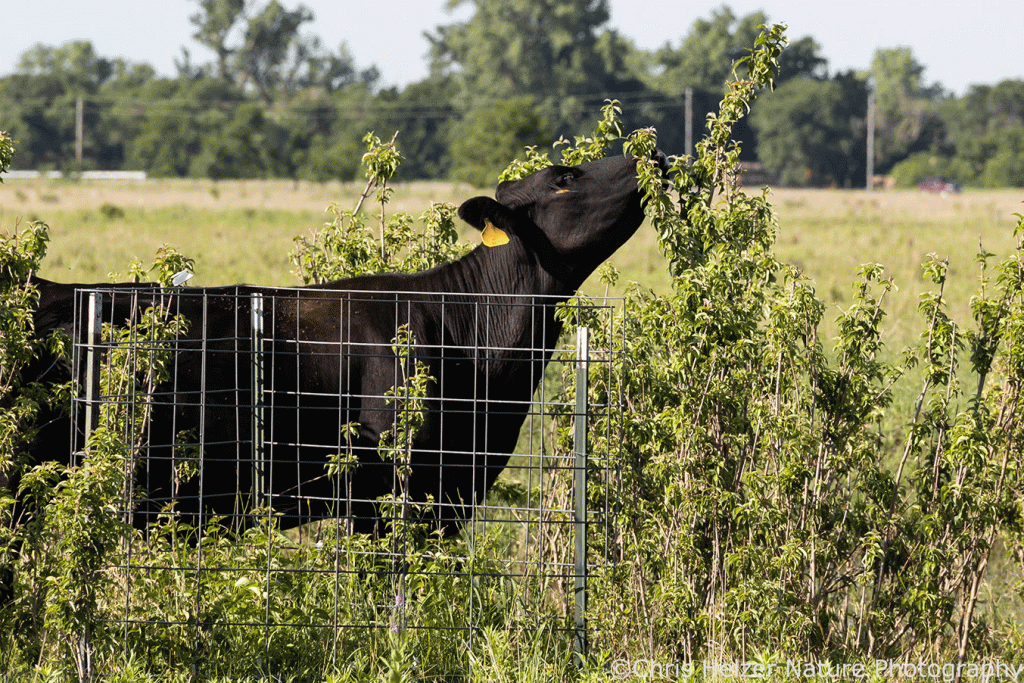
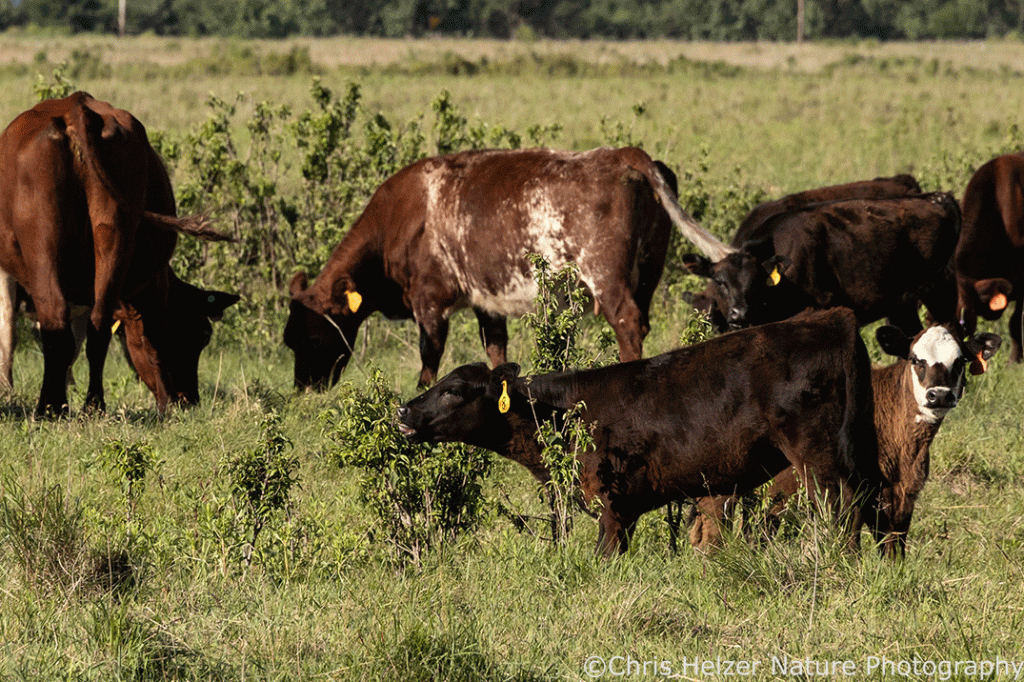
A cow grazing dogwood on July 2, 2025
Even the calves are working on the dogwood.

I’m sharing these very early results in the hope that I can encourage others to do similar experimentation. Please don’t interpret these preliminary findings as anything more than what they are. We’re seeing some hopeful signs, but need to follow these trials for more years to see the longer-term impacts of what we’re trying. We also need to greatly expand the treatments and combinations to really understand what various options can do.

Please help! If you are a land manager in the Central U.S. and have shrubs in your grassland, it would be terrific if you could test these or similar approaches to managing shrub height and density and report back. Just as importantly, we need researchers to help us learn about the impacts of different degrees of shrub height and density on plant communities, pollinators and other invertebrates, birds, mammals, and much more. That information will be crucial to land management and help tell us what to aim for.

As I said in the first post, the increase in woody plants in our grasslands doesn’t have to be a catastrophe. It might just be one more factor we need to include in the way we think about managing prairies for various objectives. If we ignore the issue until the shrubs have filled in and taken over, though, we’ll definitely lose. Let’s not lose, ok?

Learning How to Live with Shrubbier Grasslands – Part 1: The Why

Back in 2022, I wrote a post about the increasing competitiveness of woody plants – especially clonal shrubs like dogwood, sumac, and others – in prairies. There are lots of factors that have led to more shrubs moving into grasslands, but increased levels of carbon dioxide in the atmosphere probably play the biggest role. Regardless of the reasons, more and more prairies are becoming something different than we’ve been used to.

Deciduous shrubs and trees are becoming more and more prevalent in many prairies these days.

Since writing that post several years ago, I’ve engaged in a lot of conversation with land managers and other scientists on this topic. I’ve learned several crucial things about woody plants in Great Plains grasslands:

  1. Annual fire, and maybe biennial fire, may be able to prevent woody plants from moving into prairies here in the central United States. Anything less frequent than that is unlikely to be successful.
  2. At least in the northern Flint Hills of Kansas, once those woody plants have established, even decades of annual fire may not get rid of them. Researchers at the Konza Biological Station, for example, have seen that more than 20 years of annual fire has kept shrubs short, but hasn’t reduced stem density.
  3. The season of fire is probably important, but I’ve not found any evidence that burning in the growing season vs. dormant season changes the need to burn very frequently if that’s the only strategy being used to prevent woody plant encroachment. We’ve done a lot of summer burning here in Nebraska and see immediate resprouting of shrubs. Summer burning in droughts can sometimes look promising, initially, but the shrubs seem to roar back in subsequent years.
  4. Eastern redcedars don’t resprout after being burned (or cut), so at least we know what needs to be done to deal with them. Deciduous trees and shrubs do resprout unless they’re treated with herbicide. Cutting one down and treating the stump with herbicide works a treat. Unfortunately, that’s insufficient to deal with dense stands of trees or shrubs across tens, let alone hundreds or thousands of acres. Broadcast spraying of grasslands for shrub control can kill woody plants but is catastrophic for biodiversity. So what do we do?
  5. “Use goats!”, some of you are screaming. Sure, goats can be helpful, but once-a-year, short-term goat browsing seems to have the same impact as once-a-year burning or mowing, which is that the shrubs just resprout. Multiple treatments of mowing, browsing, burning, or combinations, can more drastically reduce the height and density of shrubs, which is definitely helpful, but – again – that can be difficult to scale up. Continuous, low-density goat grazing might be a decent option if we can figure out how to keep those goats contained (at a reasonable cost).
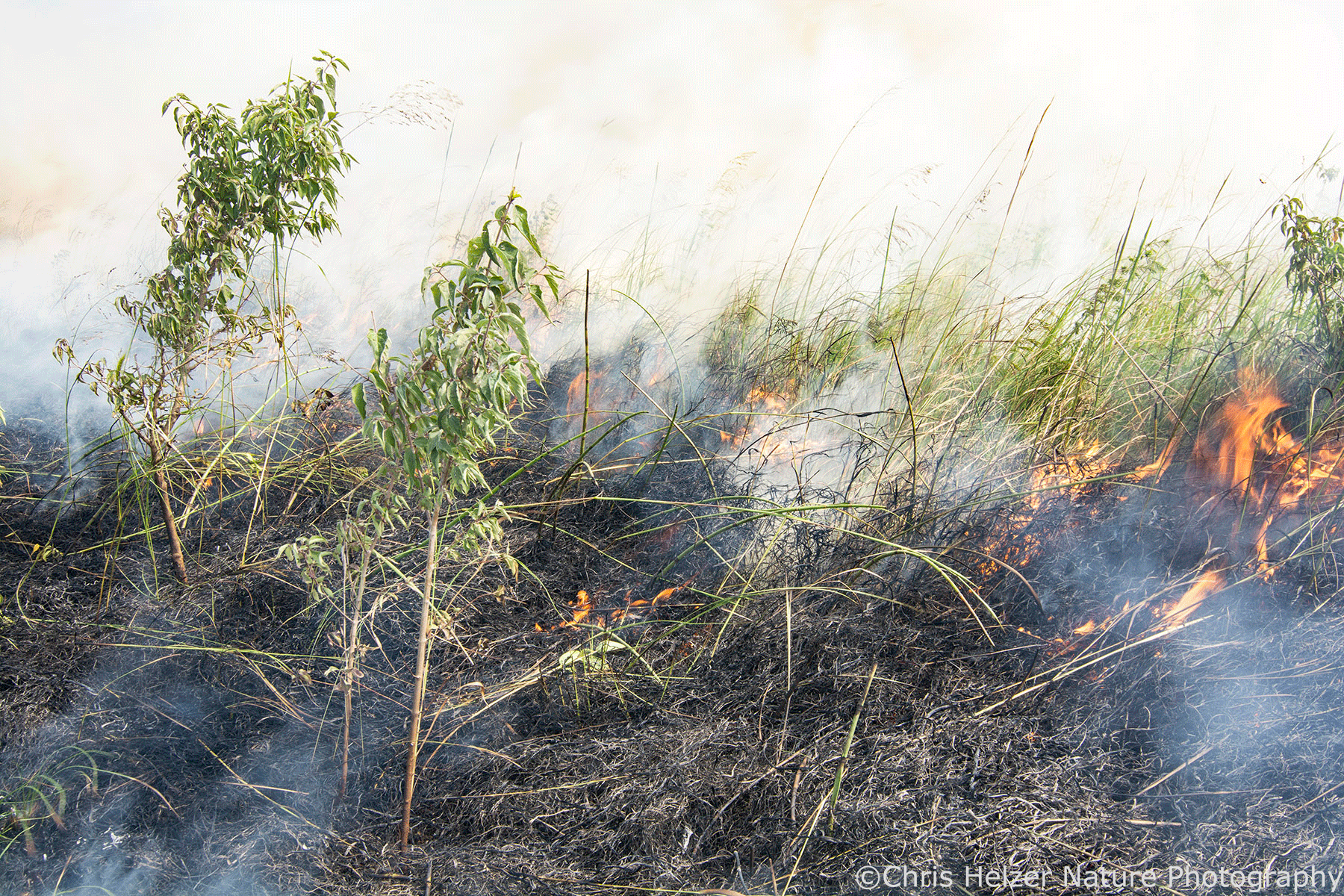
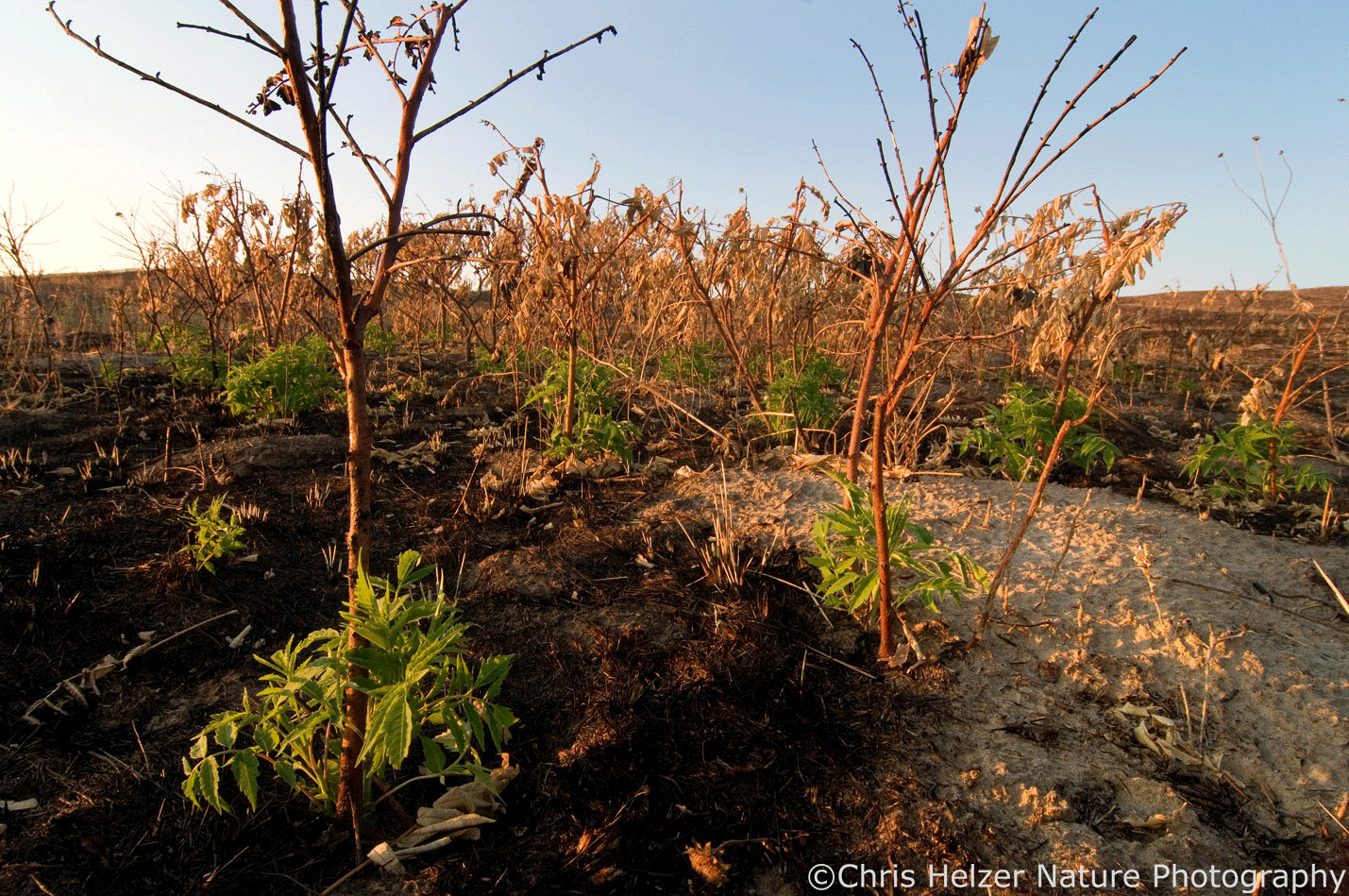
Smooth sumac resprouting three weeks after an intense summer wildfire during a severe drought.

One of the most helpful things I’ve done is to convene a small group of smart people who have met repeatedly over the last couple years to discuss some big picture ideas. Those people, all PhD scientists and experienced grassland ecologists, include Sam Fuhlendorf of Oklahoma State University, Jesse Nippert and Zak Ratajczak of Kansas State University, Nic McMillan of the University of Nebraska-Lincoln, and Marissa Ahlering of The Nature Conservancy.

Conversations with those scientists have reinforced my thinking that prairie managers in this part of the world need to shift the way we think about woody plants in prairies. During most of my career, trees and shrubs have been the enemy – or, to put it better, they were important plants that could become problematic if I didn’t keep them at bay. Woody plants were ok in small patches, especially along the margins of grassland areas, but they could cause big problems if they started popping up out in the middle.

Well, the world has changed, dang it, and we need to change, too.

Just during my career as a prairie ecologist and land manager (30-some years, if I count my time studying prairies as a graduate student), I’ve seen changes in how deciduous shrubs respond to prairie management and spread across the landscape. There are still lots of grassland landscapes in Nebraska where woody plants are uncommon, and where it’s very feasible to keep them that way. However, there are more and more places where it’s not.

Especially in fragmented landscapes, where patches of prairies are relatively small and there are lots of woody plants nearby, trying to prevent shrubs and trees from moving into prairies can feel like poking a stick at a landslide.

Sure, annual burning may work, but there are a couple huge problems with that. In a fragmented landscape, burning an entire prairie each year risks eliminating populations of many animal species from that site. The isolation of that prairie from others means recolonization of those species is unlikely – especially if the closest other prairies are also being annually burned.

The other problem comes back to scale again. Here in Nebraska, we have 20 million acres of grassland. The idea that we could burn even half of those acres each year is ludicrous. Even if we had the will and capacity to do it (we don’t), the smoke from that many acres would be completely unacceptable. Mowing, of course, is also infeasible at that scale (not to mention limitations of topography in many places).

Currently, most of our deciduous tree and shrub encroachment is happening in the eastern third of the state, where many grasslands exist as patches within a crop land matrix. Even there, we’re still talking myriad scattered prairie parcels totalling millions of acres, so annual or biennial burning isn’t feasible at that scale.

Assuming we could somehow convince every eastern Nebraska landowner to burn their prairie every other year (there’s no chance of that), and we could figure out how to deal with all the smoke (we can’t), it still wouldn’t happen. We’d still have to deal with burn bans issued by local and state officials during drought years or whenever they feel sufficient public pressure.

Frequent burning (dormant or growing season) may be enough to stave off woody encroachment, but isn’t really feasible across millions of acres of the Great Plains.

I could go on and on, but the big point is this: excluding trees and shrubs from prairies is no longer possible in many places. It just isn’t. We can prioritize and dedicate resources to prevent encroachment in some select areas, but across much of the Central U.S., we are going to have shrubbier grasslands.

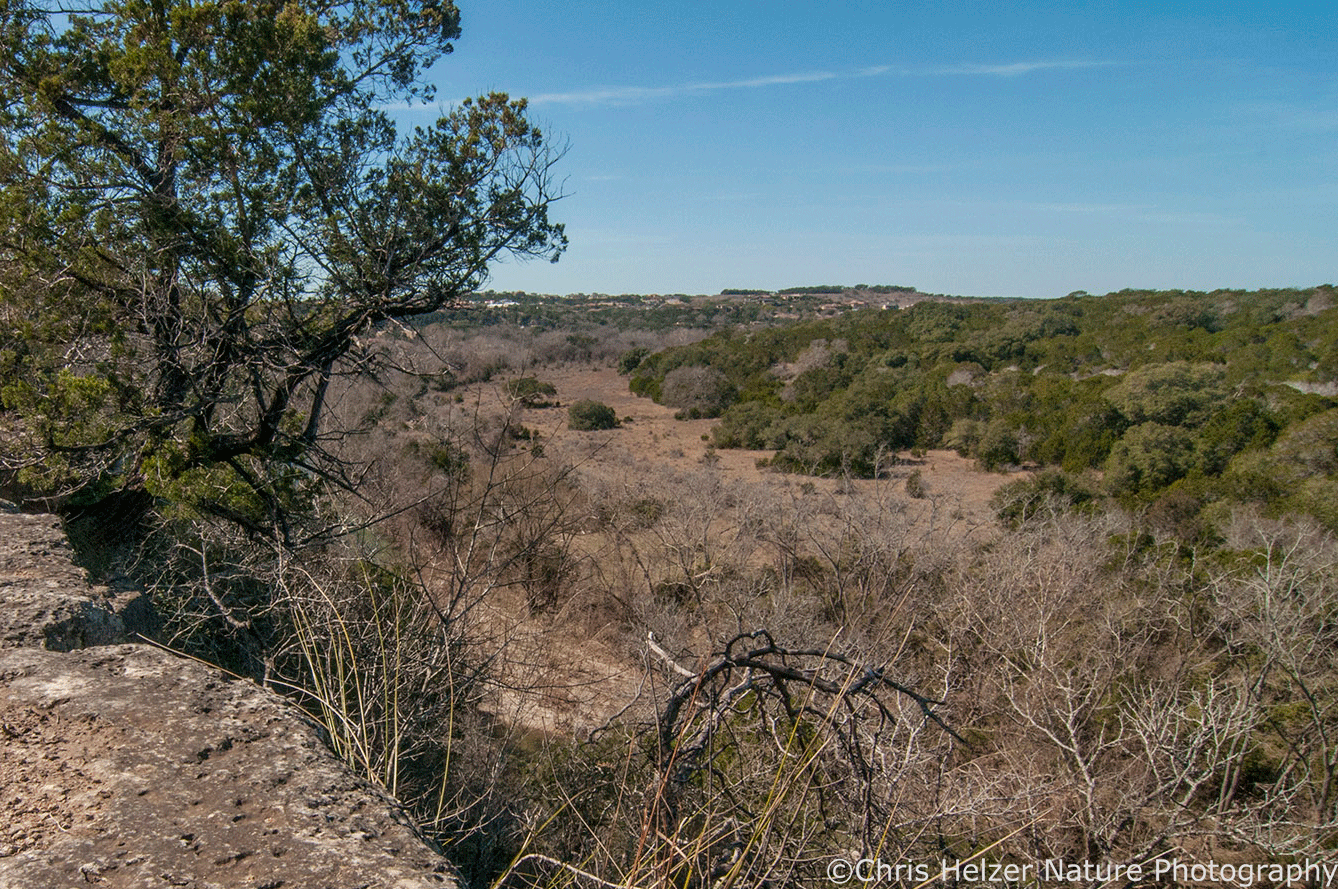
The transition from grasslands to shrubland has already happened in many parts of the Midwest and Great Plains. Ranches in parts of Texas and Oklahoma have had to shift from cattle grazing to deer hunting or other landuses. In parts of the Midwest, where many grasslands have persisted as small openings within a wooded landscape, lots of those openings have closed. Larger, drier grasslands in the western half of the Great Plains are transitioning much more slowly, but there are still examples of trees and shrubs – especially along creeks or wetlands – expanding their footprint beyond what we’ve been used to.

Deciduous shrubs in the Texas Hill Country near Austin.

All of this means we need to think about how to manage woodier prairies for biological diversity and productivity – including agricultural productivity, since grazing and other agricultural uses is what has prevented many of them from being tilled or otherwise converted to something that’s no longer prairie.

This doesn’t have to be a catastrophe. In fact, there are many prairie species that benefit from the presence of more shrubby habitat. Others won’t, but we actually have a lot to learn about what kinds of shrub height and density will affect most prairie species, and how.

How much shade will various prairie wildflower species tolerate? What about the insects that pollinate them? How do grassland wildlife species respond to different heights and densities of woody plants? For animals and plants that can’t handle even a little tree or shrub cover, how big do open areas need to be to provide them with sufficient habitat to survive?

On the land management side, if we’re not trying to eradicate or prevent encroachment of shrubs and trees, what does prairie stewardship look like? In many places, our goal will probably be to manage the height and density of shrubs. That goal will be more defined as we learn how to answer the above questions (and many more), but few of us have focused on height and density management. We’ve been trying to kill shrubs, not compromise with them.

There are a lot of deciduous shrubs in this prairie but they’re all about the same height as the surrounding vegetation. If we can keep them that way, can we maintain high grassland biodiversity and productivity?

I’m planning to dedicate a big chunk of the next decade to this topic. We’ve already started some small experiments at Nebraska sites owned by The Nature Conservancy and are collaborating with a couple researchers to dig more deeply. I hope many others will also work on this. There are lots and lots of important questions to address.

Stay tuned for more. More importantly, if you’re a land manager or scientist, please consider how you might join in the effort to learn more about and experiment with “shrubby grassland stewardship” so we can all build off each other’s work.

If you’re interested, check out part 2 of this post, which shares preliminary results of two small experiments on how to manage height and density of clonal deciduous shrubs.