
Wanna Know What Really Makes A Sunflower Lose its Head?

Nearly-decapitated sunflower heads, scattered across the prairie.  Oh, the devastation!  Who could be carrying out such an evil plan?

(Ok, more accurately, a weevil plan?)
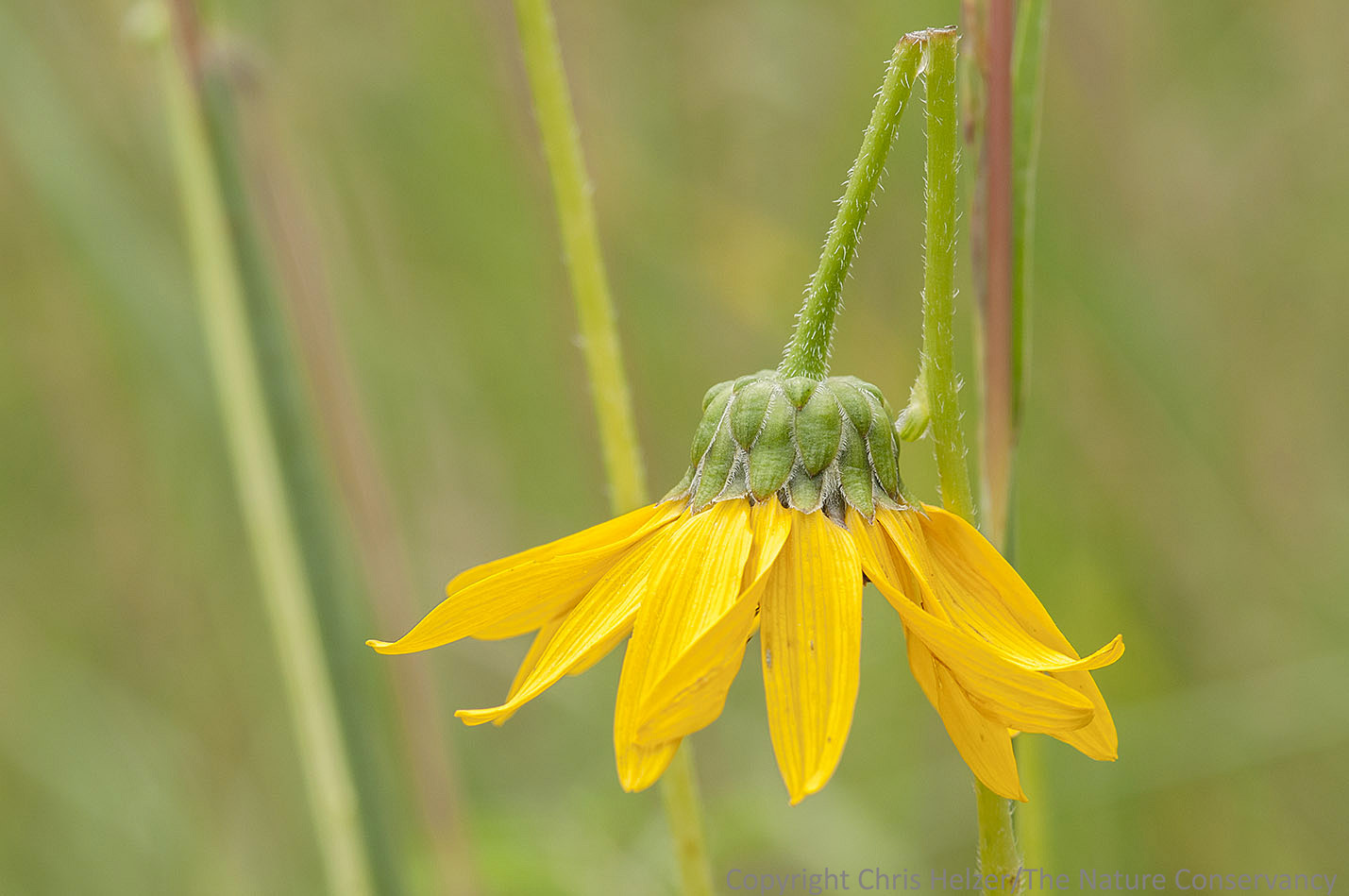
Weevil damage

I found this sad-looking stiff sunflower (Helianthus pauciflorus) during a prairie hike back in August.
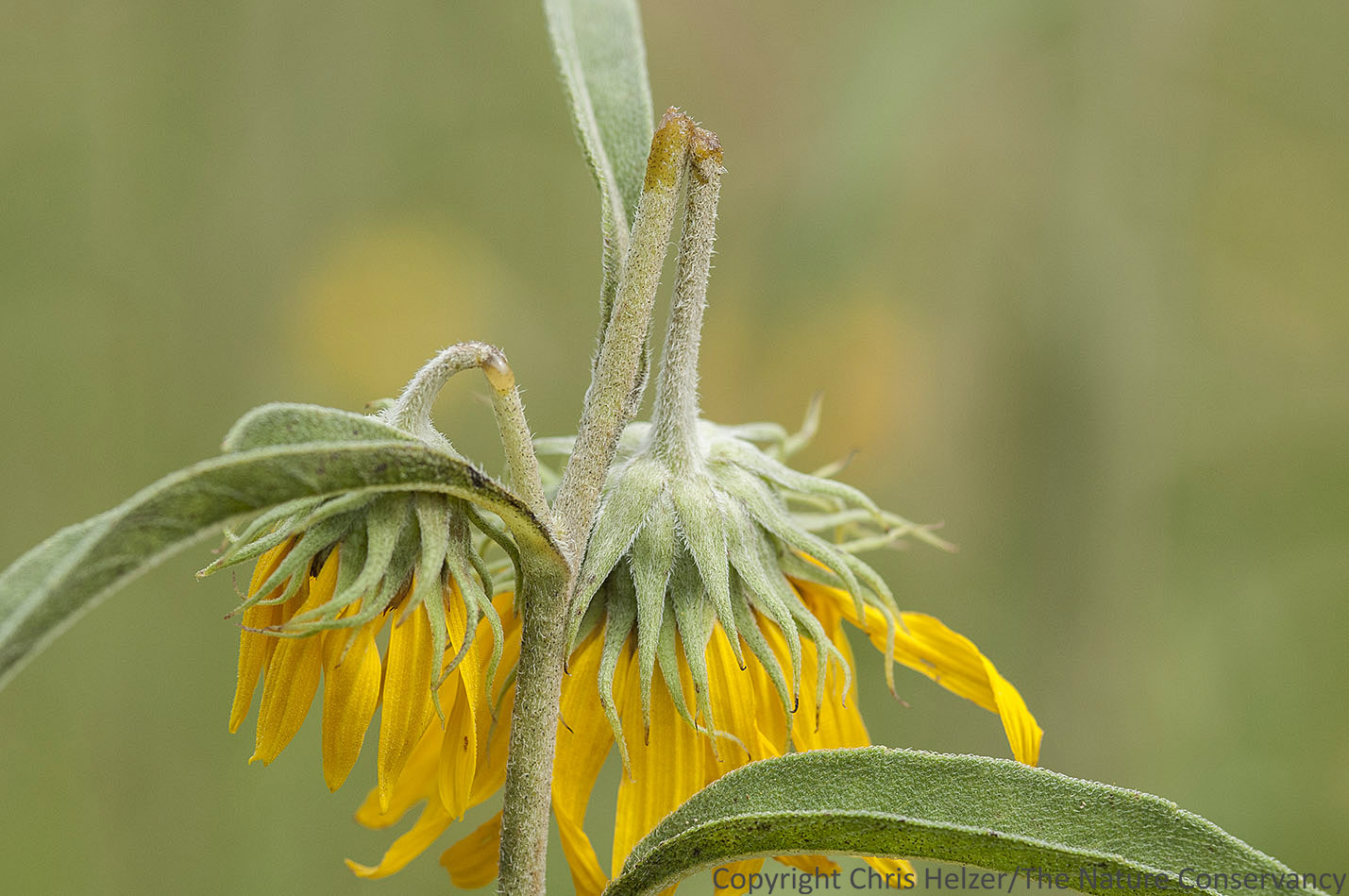
Maximilian

Stiff sunflower was not the only species being targeted.  Maximilian sunflowers (Helianthus maximiliani) were also dangling…   This photo was taken just a few minutes after the first.

The head-clipping weevil, aka the Silphium weevil (Haplorhynchites aeneus) is a small dark-colored weevil, less than a centimeter in length.  Females girdle the stems beneath sunflower heads – as well as other plants such as compass plant and rosinweed – so that the flower head falls over, but usually doesn’t drop completely off, at least not right away.  Once a flower has been knocked over, other weevils usually show up – male and female – to feed on pollen, mate, and lay eggs in the blossom.

Doing some research for this post, it was hard for me to confirm what happens next, but it seems the eggs usually don’t hatch until the flower eventually falls to the ground.  The larvae feed on the decomposing flower head and then burrow into the earth to overwinter.  It is thought that clipping the flower before laying eggs on it might make the flower a less attractive place for other insects to lay eggs, saving more food for the weevil larvae.
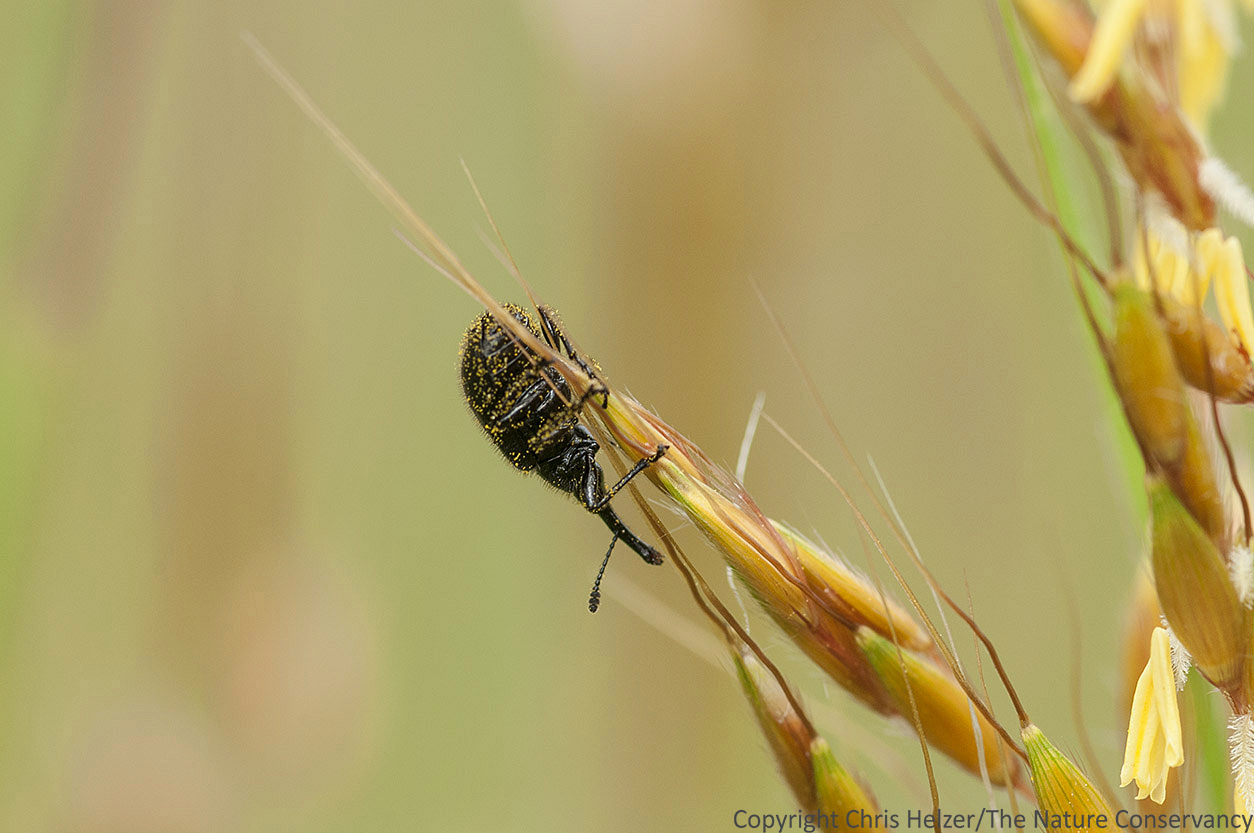
I have rarely seen the head-clipping weevil itself, and had never photographed it.  On the day I photographed the sunflowers shown above, though, I finally saw one fly off a stem and managed to get a documentary photo of it.  Look at all the sunflower pollen stuck to it!

Before that August hike, I hadrarely seen the head-clipping weevil itself, and had never photographed it. Not long after looking at the sunflowers shown above, I finally saw a weevil fly off and managed to get a documentary photo of it when it landed. Look at all the sunflower pollen stuck to it!

The clipping behavior by weevils can cause problems for those raising sunflowers commercially, but I’ve never seen it impact enough flowers to cause any serious issues in prairies.  I’m guessing that some of you readers will know much more about the head-clipping weevil than I do, and I hope you’ll contribute additional information in the comments section below.  Thanks in advance!

So, to summarize the weevil plan:  The weevil female nearly decapitates a flower and then mates with weevil males and lays weevil eggs right on the mortally wounded blossom.  The weevil babies eat the dying flower and then burrow into the ground until the next spring.  Then they make a triumphant return and hatch their weevil plans once again.  And who do we have to thank for finding out about all of this?

Weevil scientists, of course!

Photo of the Week – September 25, 2014

Dufourea

A small male bee (Dufourea marginata) waits hopefully for a female to come by his sunflower.  The Nature Conservancy’s Platte River Prairies, Nebraska.

Some people have the mistaken impression that I know a lot about bees.  Those who know me better understand that while I have a decent understanding of the ecology of bees and other pollinators, my identification skills are very rudimentary.  Fortunately, I have become friends with Mike Arduser, formerly with the Missouri Department of Conservation, who has a comprehensive knowledge of bees in the Central United States.  I sent Mike these photos a couple weeks ago and he generously identified the bee species for me, and provided a little background information as well.

The elongated mouthparts help identify this as a member of the genus Dufourea.  (But you probably already knew that.)

Mike says the elongated mouthparts help identify this as a member of the genus Dufourea. (You probably already knew that.)

According to Mike, the bee species I photographed on stiff sunflower (Helianthus pauciflorus) is a specialist feeder on sunflowers.  It’s a common late summer bee in the Great Plains, but rare further east in the tallgrass prairies of Missouri, Illinois, etc.  The bee nests in the ground and seeks out sunflowers for pollen and nectar.

Another male.

Another male.

During the morning when I photographed this species, I saw quite a few different bees.  Most of them were males, and didn’t seem to be feeding on sunflowers as much as just hanging around the edges of the flowers – apparently waiting for a female to stop by.

I almost always embarrass myself when I go out on a limb with bee identification, but this bee looks like a female to me.  Look at how much fuzzier the rear legs are - a common sign of females because those hairs help store and transport pollen back to the nest.  The bees in the other three photos above don't appear to have the same kind of fuzzy legs.  (Ok, now Mike or someone else can tell me how wrong I am.)

I almost always embarrass myself when I go out on a limb with bee identification, but this bee looks like a female to me. Look at how much fuzzier the rear legs are – a common sign of females because those hairs help store and transport pollen back to the nest. The bees in the other three photos above don’t appear to have the same kind of fuzzy legs. (Ok, now Mike or someone else can tell me how wrong I am.)

I’ve only been learning about bees for a few years now.  It’s amazing how many different species – and behaviors – I see, now that I’m looking for them.  Before sending the photos to Mike, I was able to recognize these bees as being in (likely) the same species, and figured most of the ones I was seeing were males, based on their behavior.  I still have much to learn, but paying attention to bees has certainly changed the way I see our prairies.  As I wrote last fall, I’m definitely looking at our prairies through “bee goggles.”  We’re not managing our prairie exclusively for bees, but they definitely factor in to our management decisions – not just because they are important themselves, but because promoting quality bee habitat is a great way to help ensure quality habitat for many other species as well.