
Wetland Timelapse – Herons, Eagles, and Vultures

I downloaded timelapse images the other day from the restored stream/wetland at our Platte River Prairies.  Among the long series of photos, there were a couple interesting short stories I thought I’d share.

The first is something I’ve not seen before – a gang of great blue herons hanging out together.  I’ve seen nesting colonies of herons before, but when I see them out on wetlands, it’s almost always a single bird – rarely two, but they’re usually spaced well apart and studiously ignoring each other.  However, on May 25, a group of at least eight great blue herons spent a few hours feeding and lounging around together on our wetland.  They were there for the 3pm, 4pm, and 5pm photos but not before or after.  It’s certainly a relaxed-looking party – one of the birds was even laying down on its belly on the small island.  Have any of you seen anything like this before?
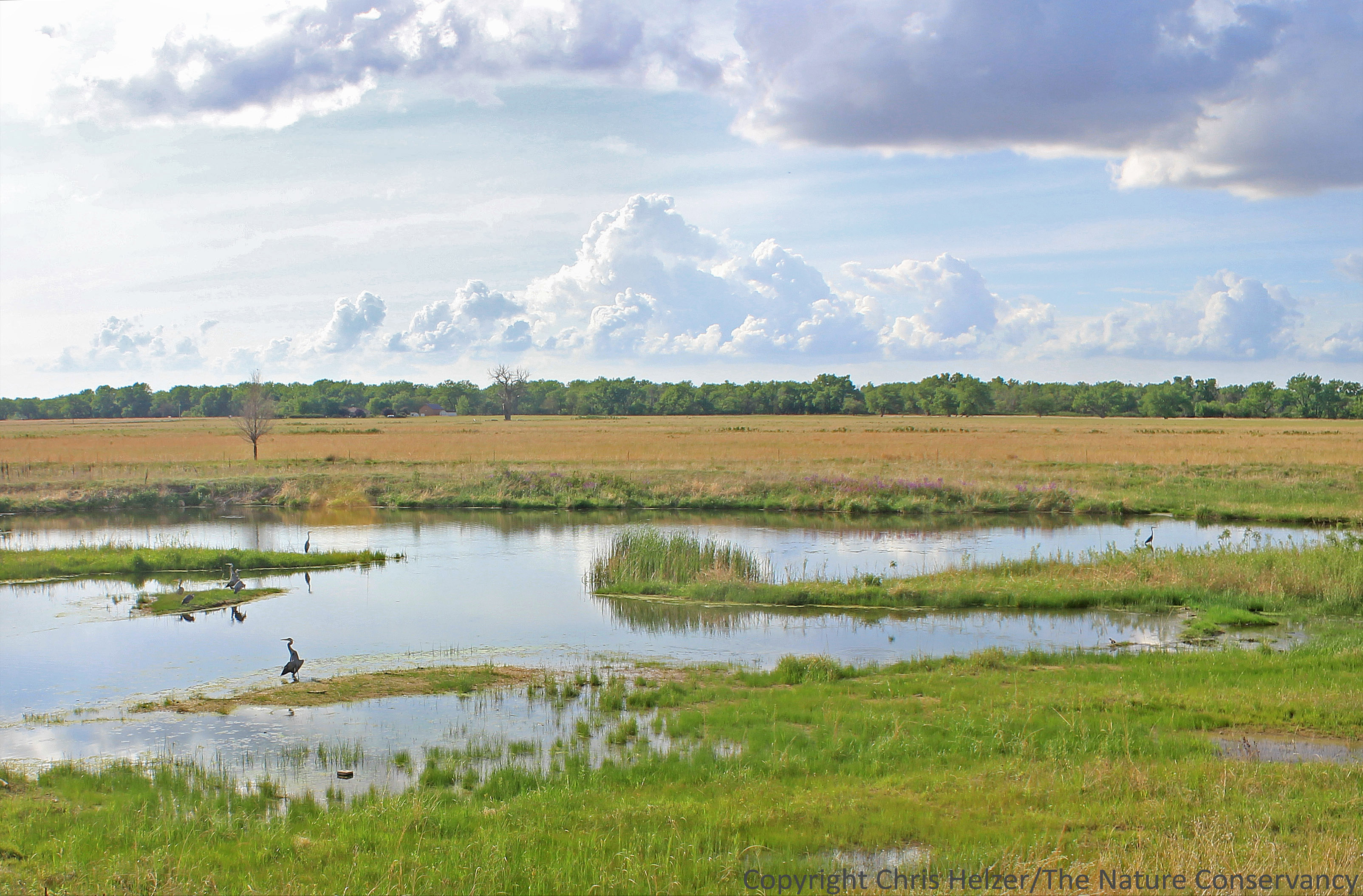
There are at least eight herons in this photo.  Maybe nine - I can't tell if the closest one is a single bird or two of them.

There are at least eight herons in this photo. Maybe nine – I can’t tell if the closest one is a single bird or two of them.
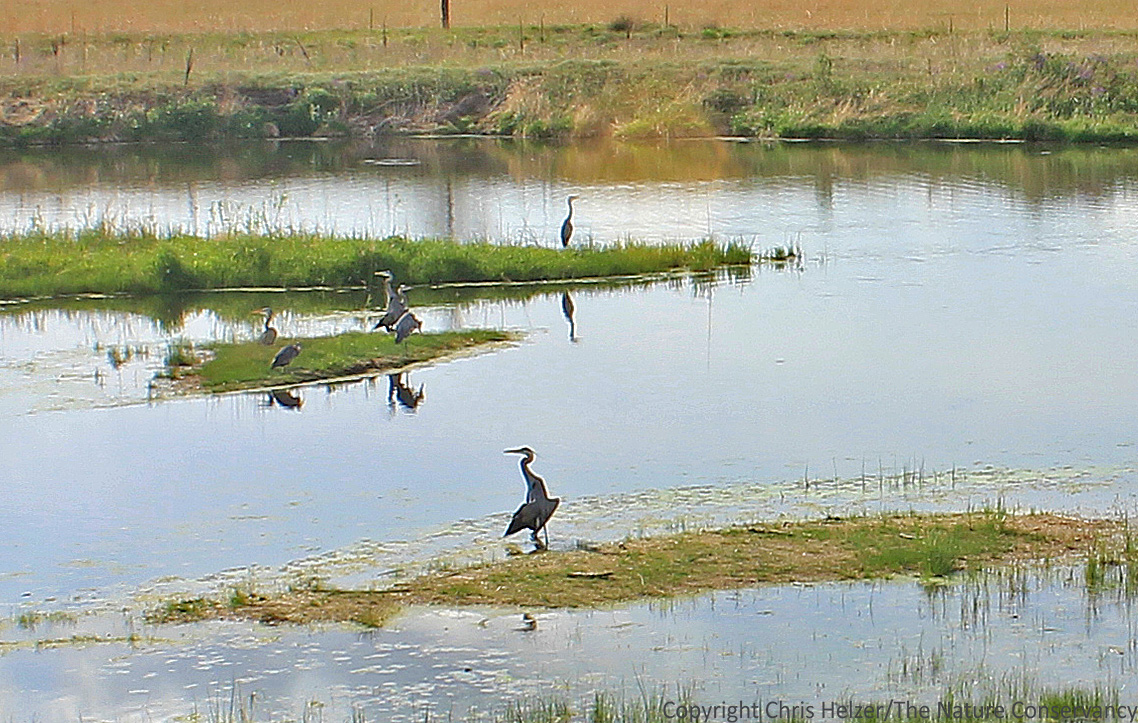
Here's a more-cropped version of the same photo.  What do you think?  One bird or two in the foreground?  And here you can see the bird laying down on the island too.

Here’s a more-cropped version of the same photo showing the main group of herons. What do you think? One bird or two in the foreground? …And here you can see the bird laying down on the island too.

The second occurrence of note included an immature bald eagle feeding on something dead, surrounded by a group of turkey vultures.  I can’t tell what’s being eaten, and of course we don’t know what happened prior to or after the photo.  It’s possible the turkey vultures spotted the eagle feeding and figured they’d hang around for leftovers.  However, I would guess the vultures were there first and the eagle bullied its way into the meal.  Regardless, it was a fun surprise to find this image!
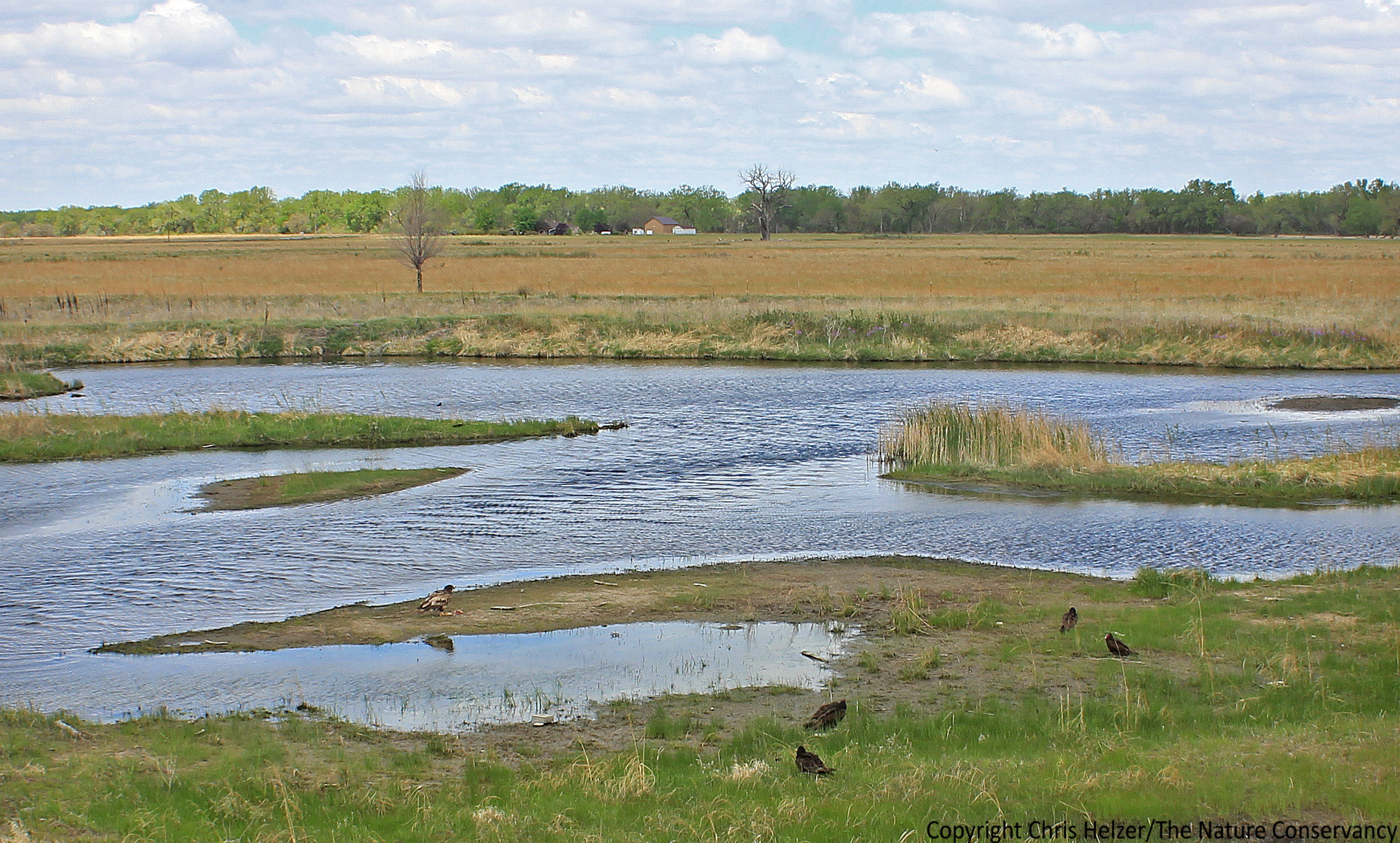
I've titled this image, "Hey buddy, you gonna eat ALL of that?"

I’ve titled this image, “Hey buddy, you gonna eat ALL of that?”

As always, thanks to Moonshell Media for working with us on this timelapse project.

Timelapse Bison Photos

Regular readers of The Prairie Ecologist are familiar with our timelapse photography project at The Nature Conservancy’s Niobrara Valley Preserve.  With the help of Moonshell Media, we set up nine timelapse cameras to capture the recovery of the Preserve from a big wildfire that swept through in 2012.

The cameras are supposed to be taking a photograph every hour during daylight hours to document what happens in front of them.  However, during 2013, we had a few issues with the cameras that led them to take photos much more frequently (and then run out of space on the memory card).  That led to some gaps in our coverage, but the silver lining is that it also gave us some very nice series of photographs over some two to three hour-long periods.

Twice during those frequently-photographed periods, bison were in the frame.  Below are two very short videos made from those photo series.

In the first video, the camera was set to record a blowout area – a site where the sand is destabilized and blown by the wind.  Blowouts are generally disliked by sandhills ranchers because they lack forage and tend to spread unless they are excluded from grazing and allowed to “heal”.  On the other hand, blowouts are ecologically valuable because of the habitat they provide to a wide range of species including plants (including the federally-listed blowout penstemon), tiger beetles, lizards, and many more.   This video shows that blowouts are also attractive to bison.  The video runs from approximately 7:30am to 10am on June 28, 2013.

We put one camera high atop a tall windmill tower to capture a landscape view of burned sandhills prairie.  During this video, the same herd of bison shown above wanders through the frame during a two and a half hour period on the afternoon of October 8, 2013.  As you can see by the color of the vegetation, most plants are in or near dormancy by this time of year, so the bison are picking and choosing what they can find to eat.  The bison at the Preserve get themselves through the winter without supplemental feed from staff, so October food is probably pretty attractive compared to what’s available in February…

These short bursts of timelapse video were not the expected product of this project, but have turned out to be some nice bonus coverage.  Fortunately, the gaps caused by full memory cards are not long enough to seriously disrupt the bigger story of long-term recovery.  I’ll continue to bring you that story as it emerges.