I’m already missing my square meter plot and that whole project, but I’m soldiering on and finding other fun photographic opportunities. It’s been fun to watch the growing season jump into full speed, despite really dry conditions. We’ve gotten some good rain across much of the state this last week or so, but most of the state is still in drought conditions. It’s a good thing prairies are so resilient!
Here are a few of my favorite photos from the last few weeks.
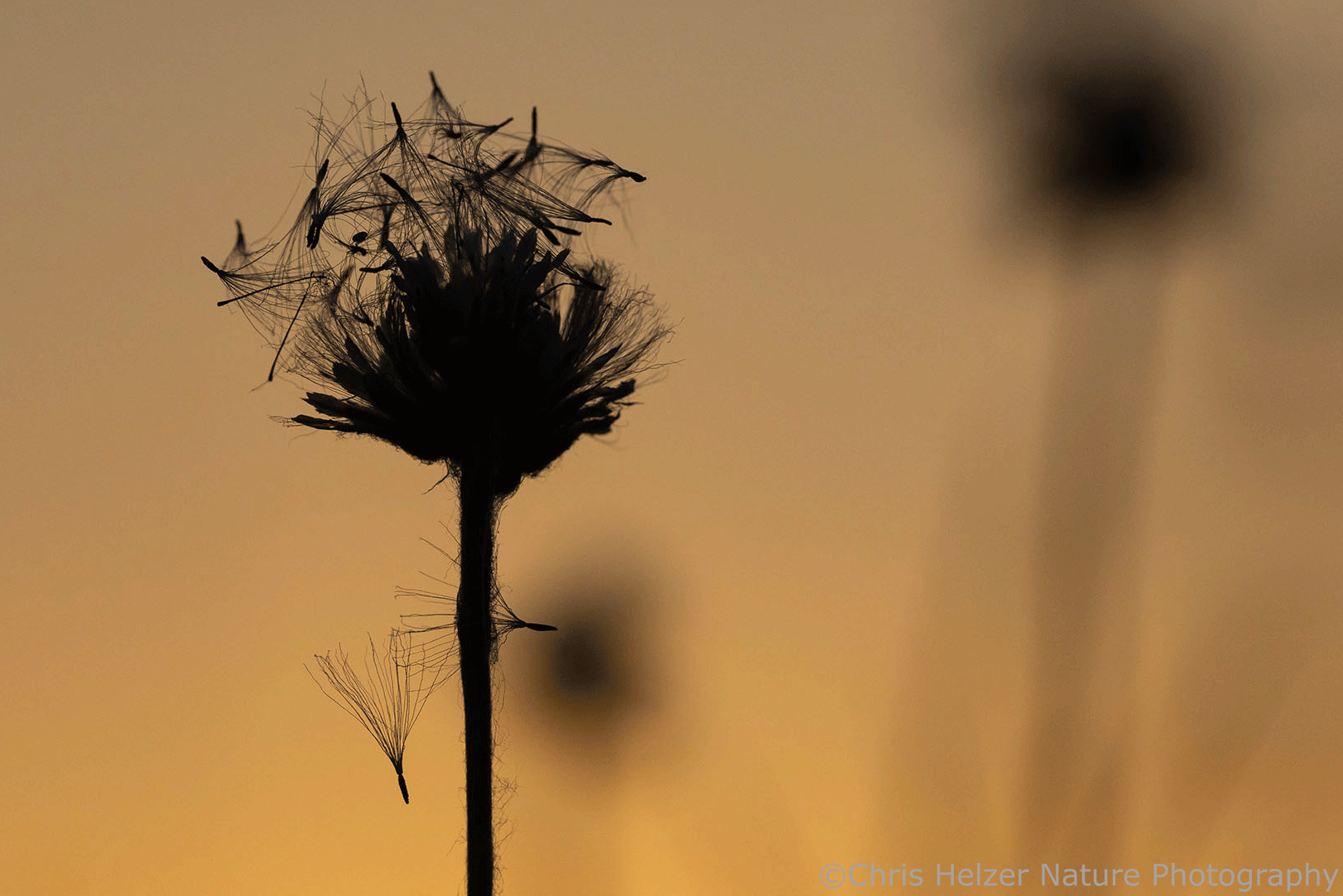
The first several photos below were taken within my 2025 photo project area at my family prairie. Pussytoes (Antennaria neglecta) was going to seed earlier this month and I spent part of a pleasant morning admiring the interplay between the light and those fuzzy seedheads.
Tiny crab spiderling on pussytoes.Close-up of pussytoes seed head.Morning light and pussytoes seeds.More of the same.Early morning at the Helzer Family Prairie, with coralberry, aka buckbrush (Symphoricarpos orbiculatus) in the foreground. This was not in my photo project area.
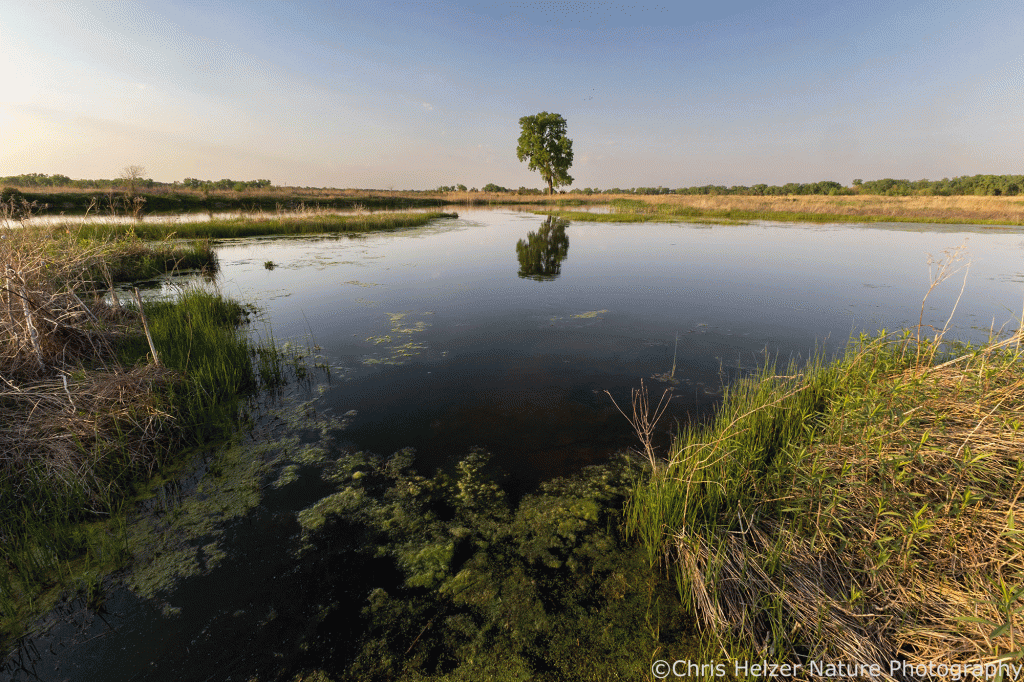
The rest of these photos were taken at The Nature Conservancy’s Platte River Prairies. The first two come from a wetland restoration effort I led many years ago. We converted a sandpit lake (from sand and gravel dredging) to a shallow wetland with backwater wetlands and a meandering stream. It’s still one of the most gratifying projects I’ve worked on, despite a constant flow of invasive plants coming in from upstream.
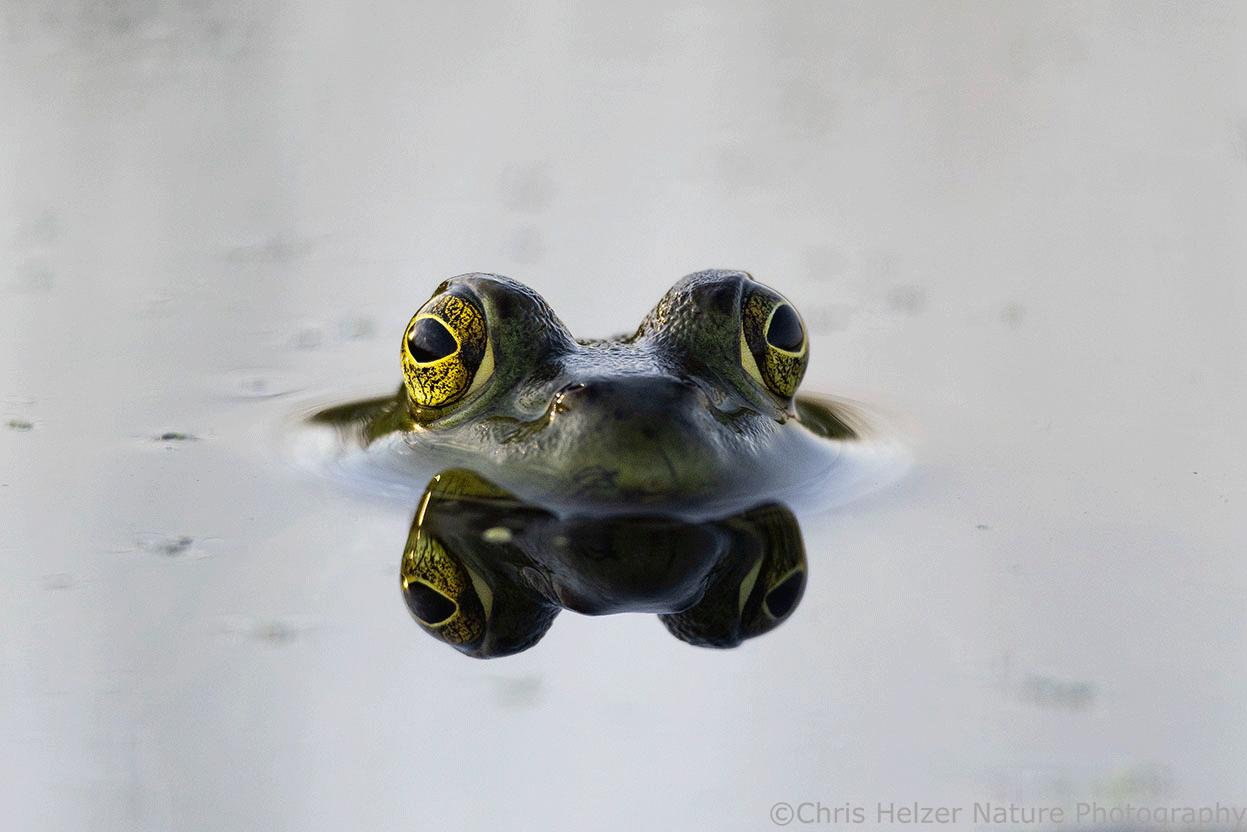
Evening light at a restored wetland.A four-eyed bullfrog staring at me from the wetland I designed. They’re technically invasive here, but since they’re here and there’s not much I can do about it, I can at least appreciate their funny faces.Ladybug pupa. There were a bunch of these around last week. I don’t know what species they are.
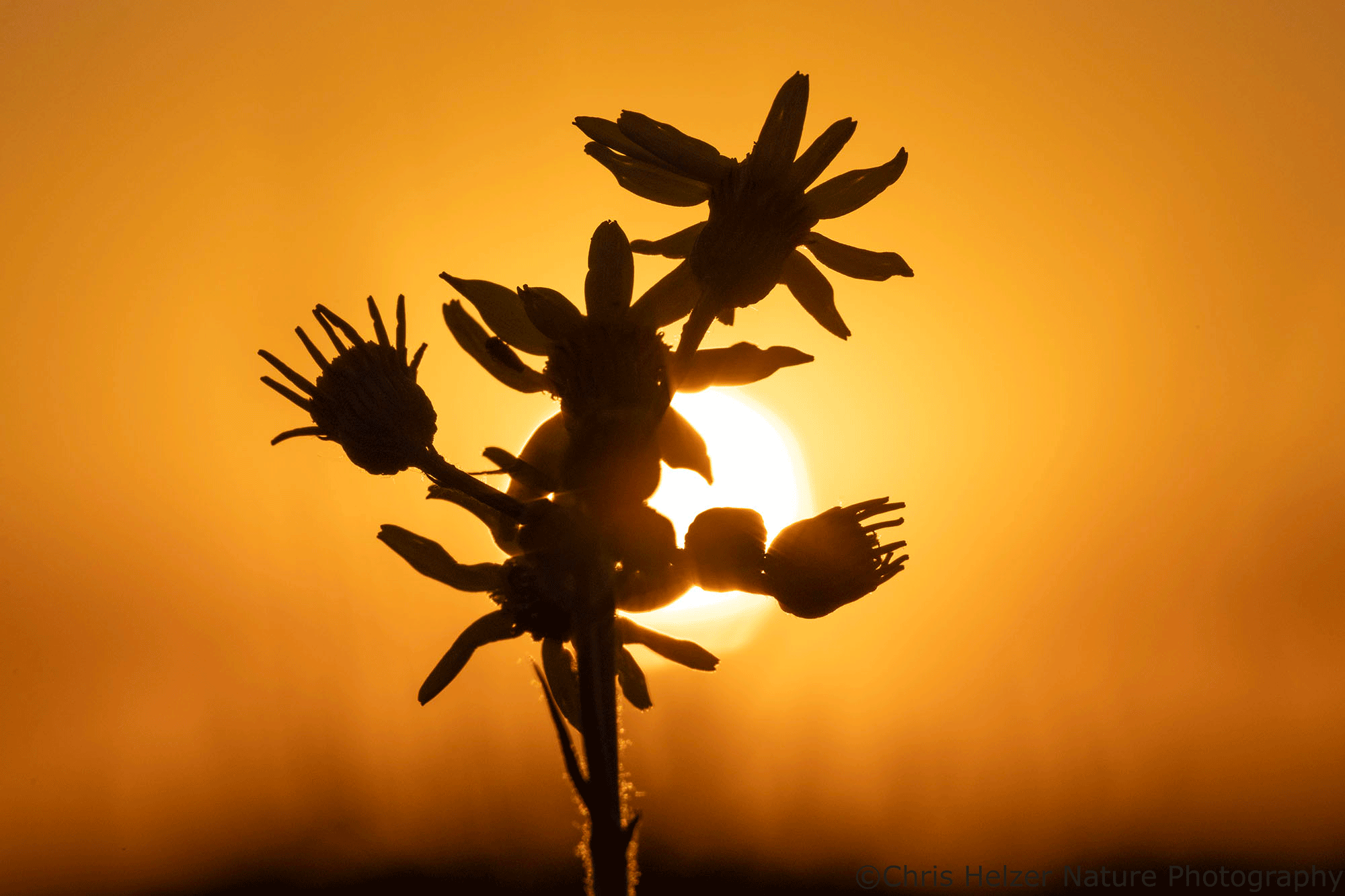
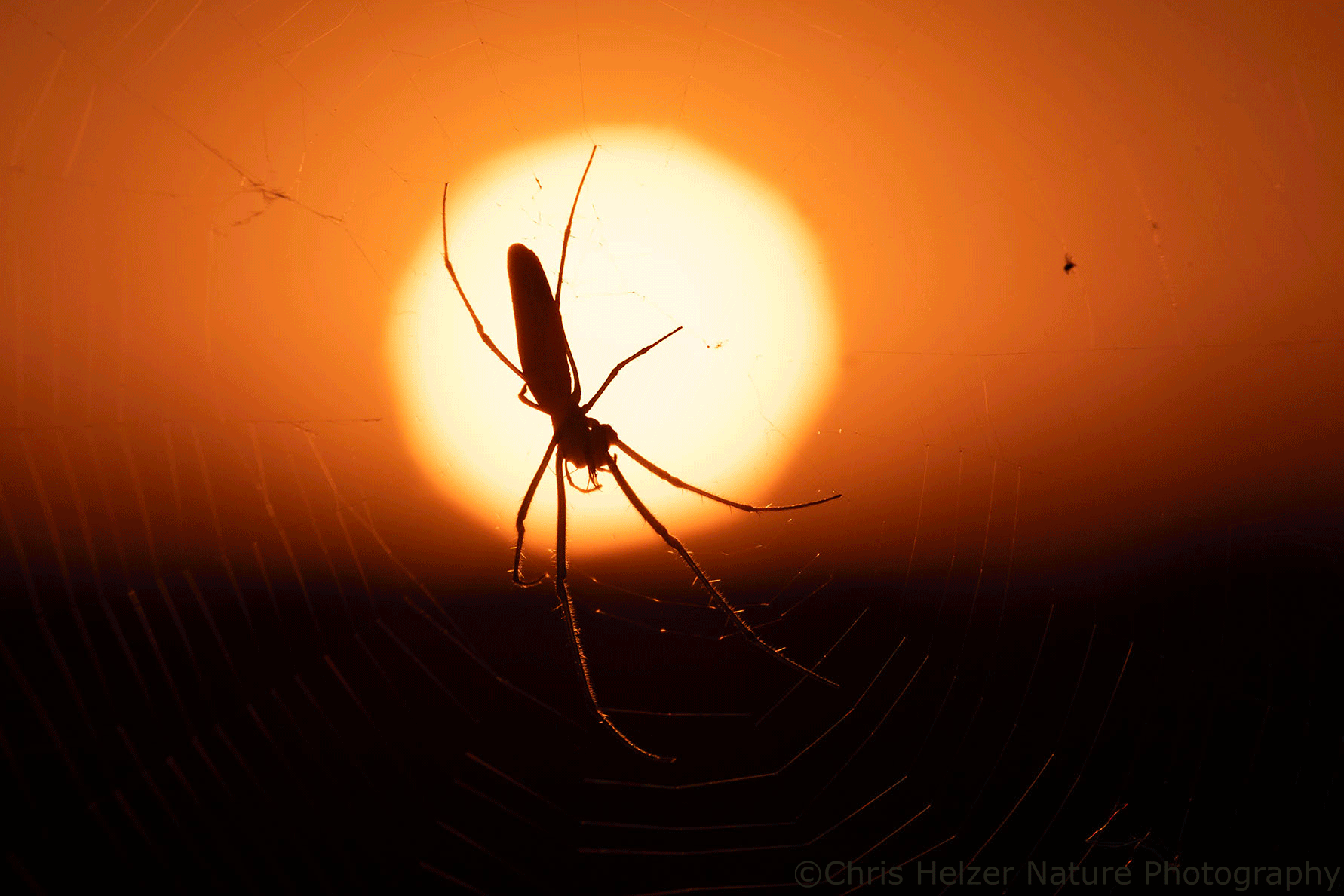
As the sun dropped into haze-filled horizon one evening, I played around with various subjects to put in front of that sun. Here are two of my favorites.
Prairie ragwort (Packera plattensis) and the setting sun.Long-jawed orbweaver on its web.
I think all of our migratory grassland birds have arrived back in our Platte River Prairies. At least some dragonflies seem to be here, and I’ve heard people are starting to see monarchs in eastern Nebraska, though I’ve not seen my first yet. Temperatures are rising and summer is on the way!
Shell-leaf penstemon in a restored grassland at the Platte River Prairies back in 2021.
One of my favorite wildflowers is the spectacular shell-leaf penstemon (Penstemon grandiflorus). It’s one of the showiest of the opportunistic wildflowers in our prairies. Shell-leaf penstemon thrives under heavy grazing, in sandy and/or low-productivity soils, or other places where most other plants struggle. Every year, as the month of May progresses, I watch closely for the first blooms so I can get out and photograph them.
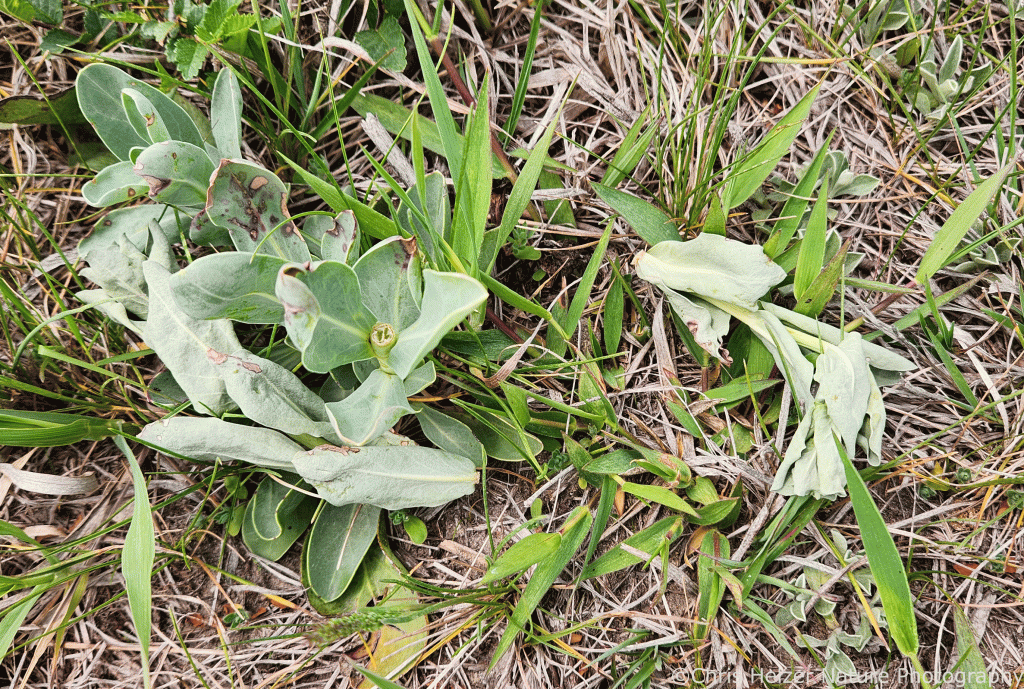
Which is why it really ticks me off that an unknown entity chops a bunch of them down every year. I don’t know who’s doing it, I don’t know why they’re doing it, and it’s incredibly frustrating. I’m sorry to lose the flowers, but my biggest resentment is that I can’t explain what’s happening.
What’s particularly confusing is that whomever cuts the top of these plants off with their teeth doesn’t appear to then eat anything it removes. The tops of the plants are just left lying around.
It’s almost as if someone is annoyed by the excessive height of the plants and has a compulsion to hack them down and keep them short. Or maybe they just hate beautiful flowers. But if that’s the case, there are plenty of other gorgeous wildflowers in the prairie they could attack and I’ve never seen this “cut and leave it lie” behavior with any other plant species in our prairies.
Having said that, I guess prairie dogs do chop plants down around their towns, but we don’t have prairie dogs at the Platte River Prairies. Unless they’re really, really sneaky prairie dogs. I’m not dismissing any possibilities right now, but that one feels pretty far-fetched.
What is happening? Why would some animal nip the top off a penstemon plant and then just leave it there??
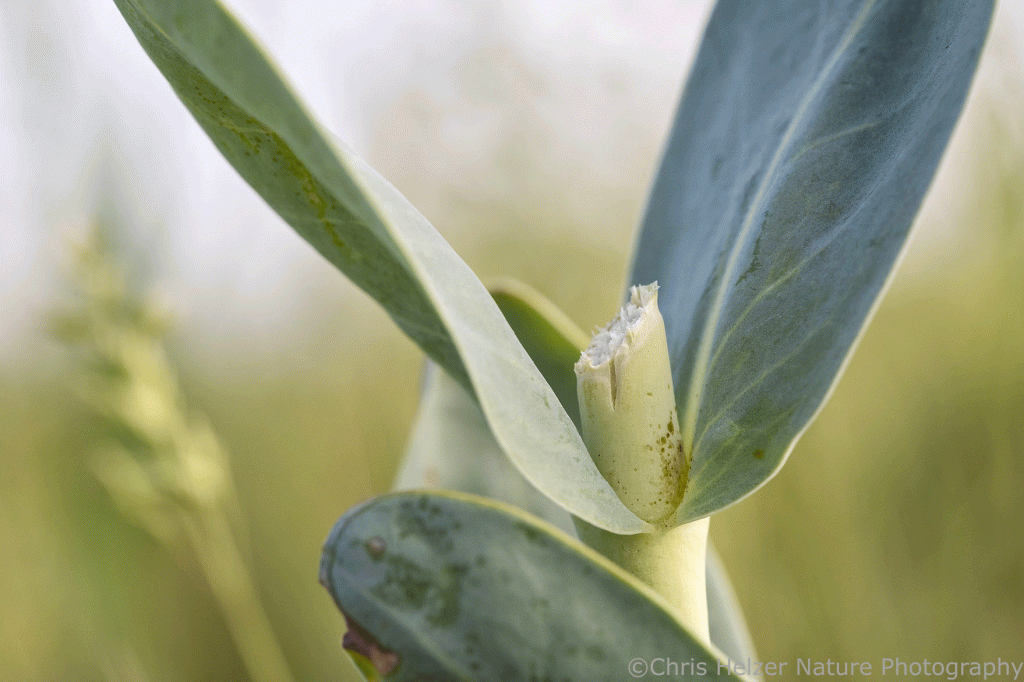
My top candidates are black-tailed jackrabbits, but thirteen-lined ground squirrels are high on that list, too. It also feels like the kind of thing a cranky, vindictive white-tailed deer might do, but the sharp angled cut feels more like rabbit or rodent. Google says pocket gophers can reduce the size of penstemon populations, but they’re underground foragers, so they don’t seem likely.
To be clear, I don’t begrudge any animal its search for food. By all means, eat all the plants you want to eat! In fact, it makes me feel good to know that our prairies and stewardship work are providing sustenance for wildlife.
But this looks like wanton destruction, not foraging. Apart from disliking the height or beauty of the plant, the only other explanation I can come up with is that something wants access to the liquid inside the stem. Are rabbits cutting the tops off the plants and then sipping xylem and/or phloem out of the stems like a kid with a soda straw?
Now that I’ve got that visual in my head, if that’s what’s going on, what I’m most mad about is that I’ve not gotten to watch it happen. It sounds adorable.
You can see the tops of the plants lying next to the bases they were nipped off of.The sharp angled cuts look like what I’d expect from a rabbit or ground squirrel.
I’m hoping those of you who read this will have some helpful information for me. Have you seen this near you? Have you seen it with other plants besides shell-leaf penstemon? Any idea who would do it, or why? Do you have friends who might know? Acquaintances?
I don’t want to pressure you, but honestly, if we can’t use this blog’s reach and influence to solve a simple mystery like this, why am I wasting my time with it? I could do other things with my life. For example, I could…
Hm. Ok, I retract that threat.
But still, someone out there has to have an explanation, right? I’ve been seeing this phenomenon for years, so it’s not an isolated incident. I’m also pretty sure it’s not just one ill-tempered individual jackrabbit with a bad attitude about penstemon. As far as I know, jackrabbits don’t usually live longer than five years and I’ve been watching this for more than a decade.
Thanks in advance for your help. Any reporting will be appreciated. If you’ve seen something similar, tell me both where you saw it and any relevant details – plant species, topography, soil type, local rodent/lagomorph species, most popular local sports team, etc. We don’t know what will constitute key information, so the more the better. If you yourself don’t have anything to report, please pass this post on to others who might know something. Let’s figure this out!







 The Prairie Ecologist