The End of the Square Meter Photography Project

Well, it’s all over. Yesterday (May 4, 2025) marked the conclusion of my square meter photography project. I spent an hour or so at Lincoln Creek Prairie last evening trying to capture some final images before the sun literally set on this amazing journey.

Between May 5, 2024 and May 4, 2025, I visited my little plot 131 times. If you do the math, that averages out to a little more often than once every three days across the year. That seems like a lot, doesn’t it? Of course, the average doesn’t tell the whole story. There were 14 days when I was there twice and two days when I visited three times. What can I tell you? There was a lot happening and I didn’t want to miss it.

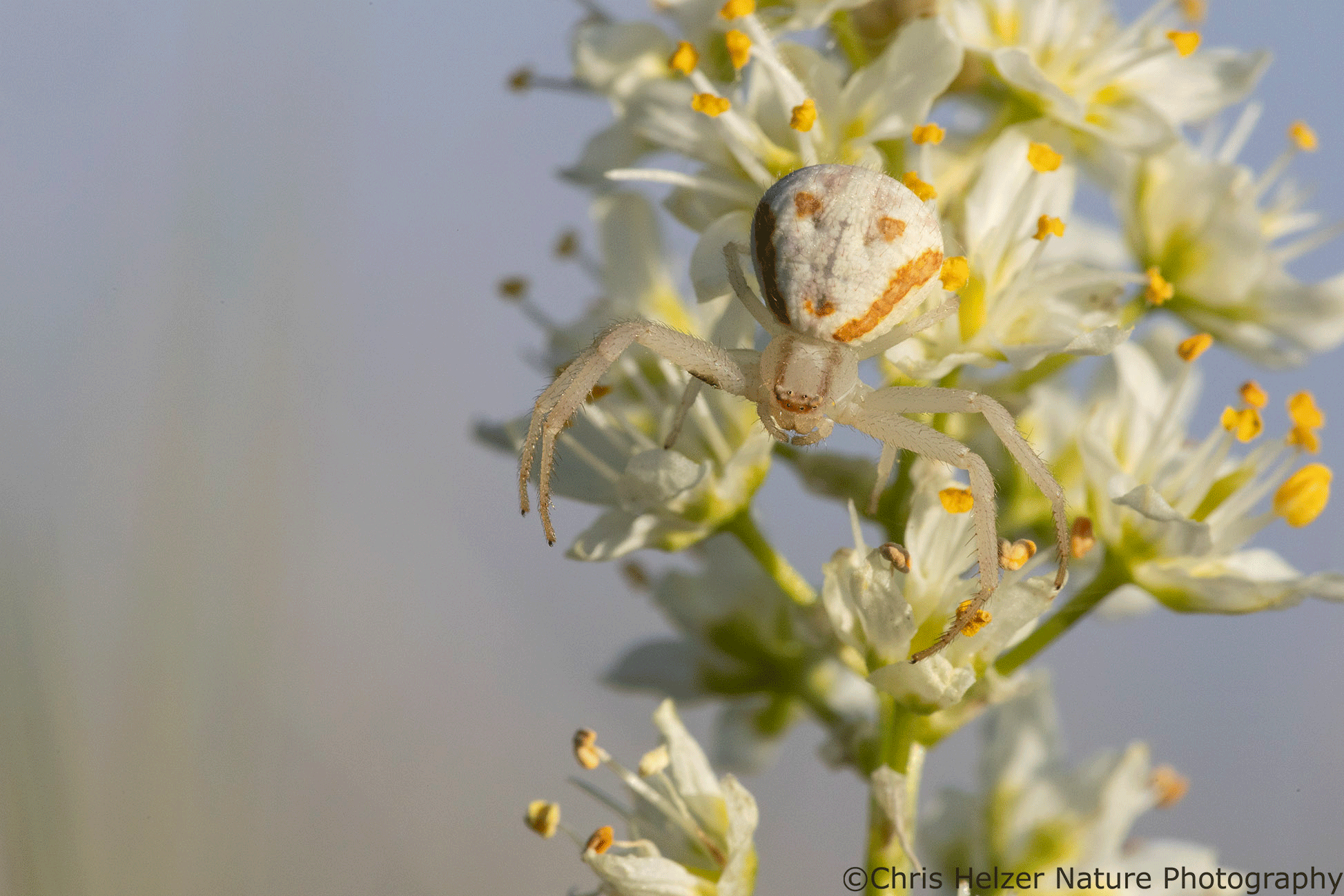
A tiny lynx spider posing for me on my final night of the project.

On my final night, some of my last photos were of a tiny lynx spiderling. That felt very appropriate, since lynx spiders felt like near constant companions through most of this last year. I saw them hunting, guarding eggs, and ballooning through the air. I’d like to think the little spiderling I saw last night was one that hatched out from within my plot, but there’s obviously no way to know for sure.

The same spiderling from a different angle.
Here’s the last photo of the plot itself as the sun was nearing the horizon.

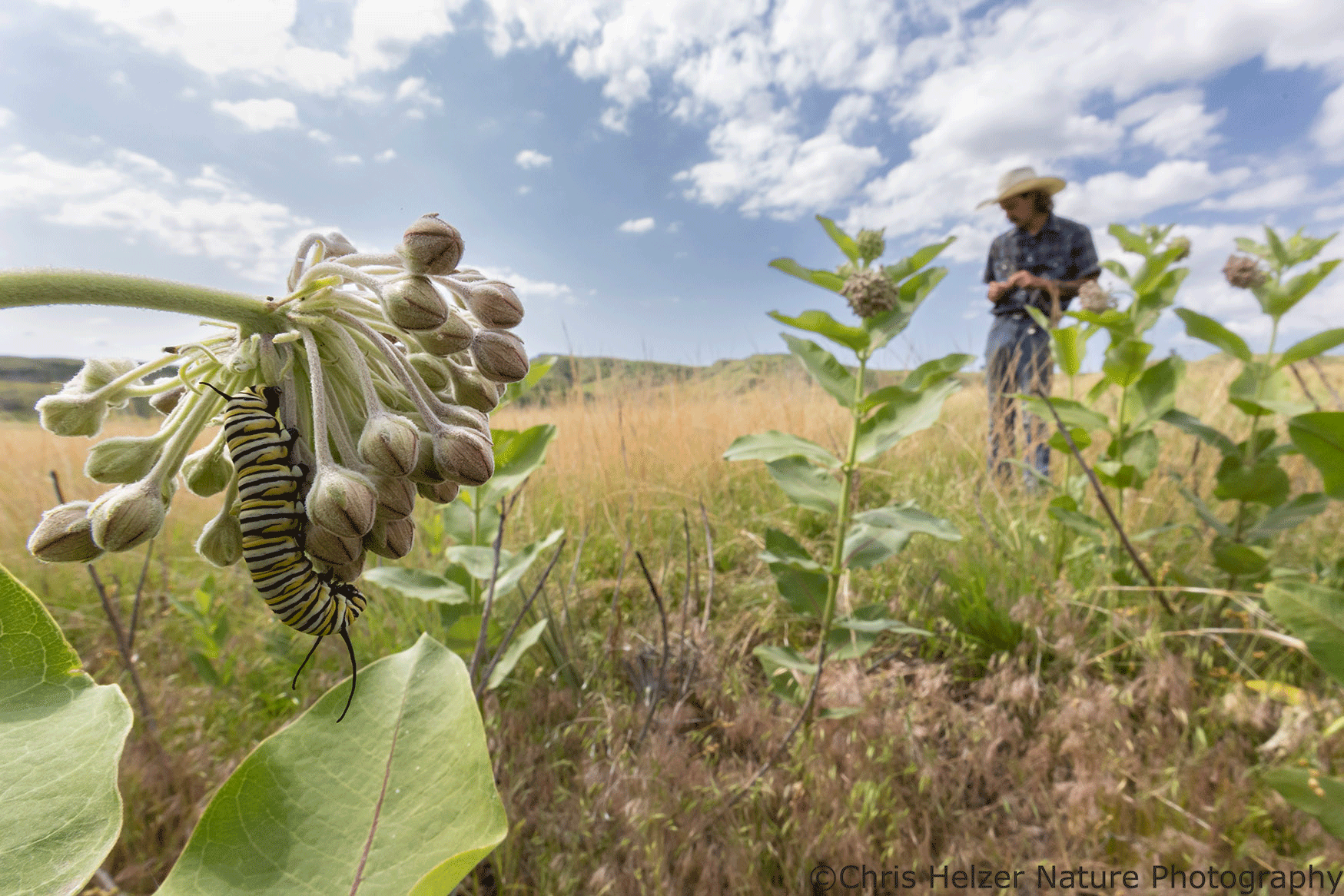
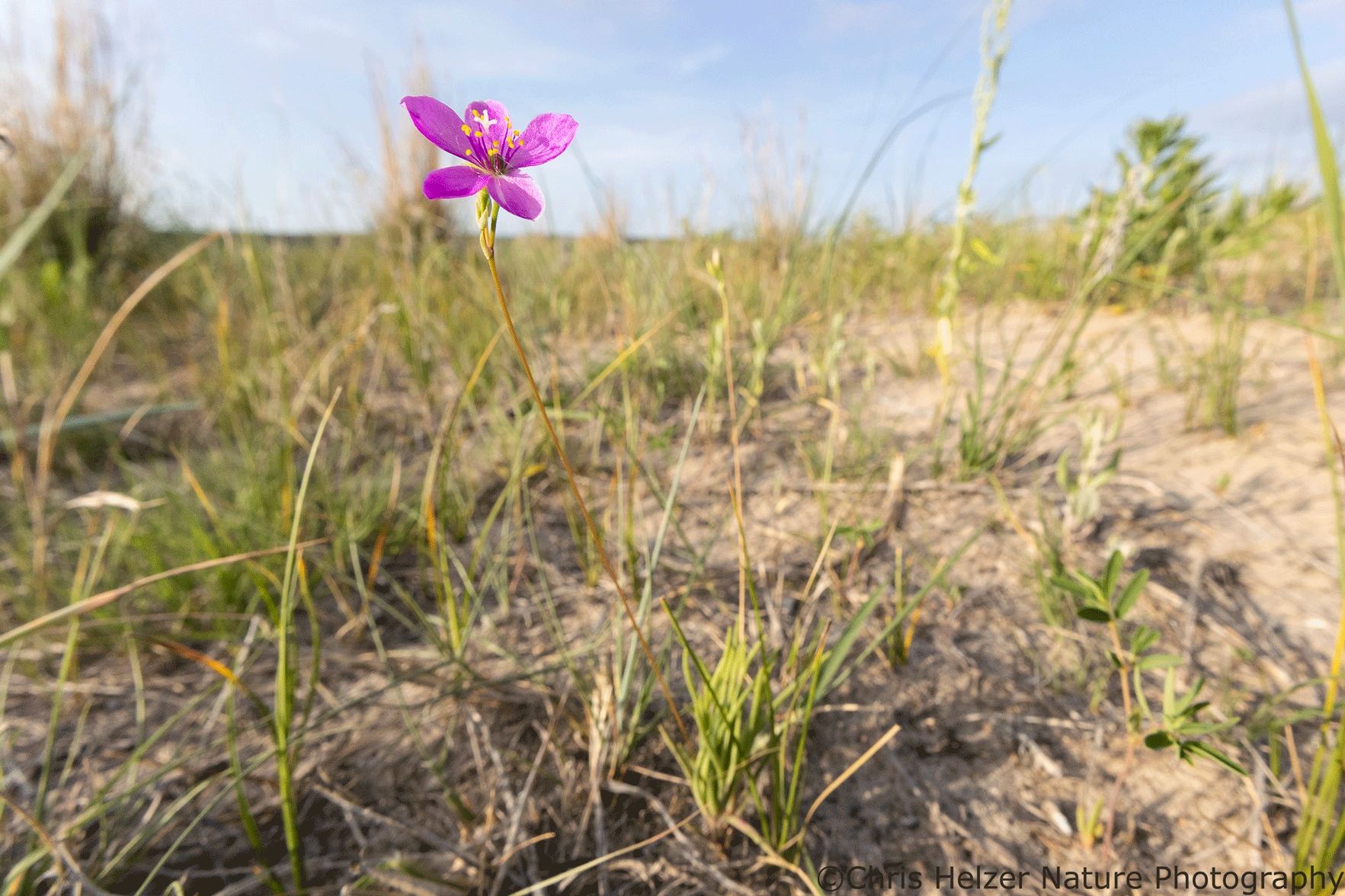
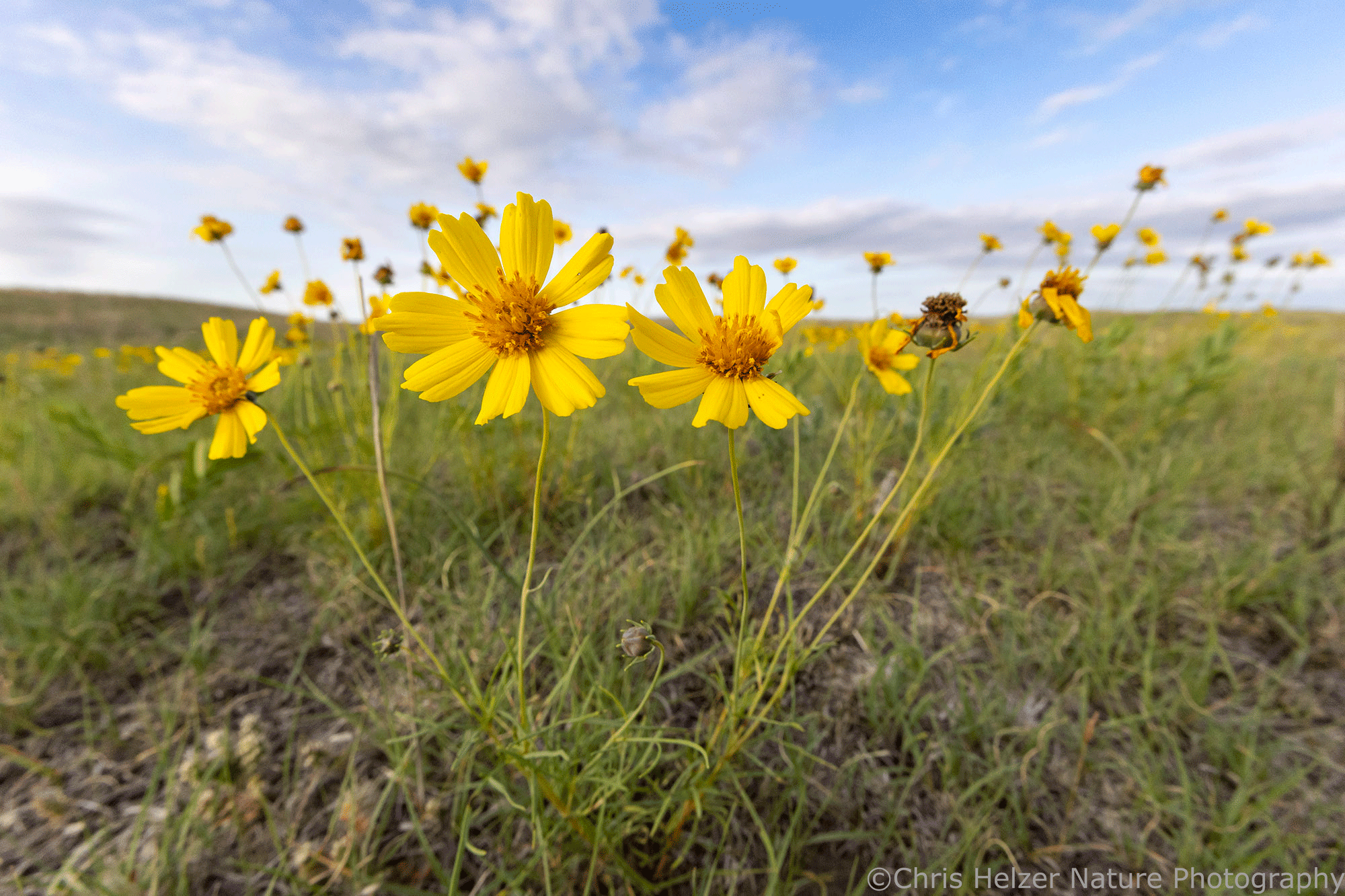
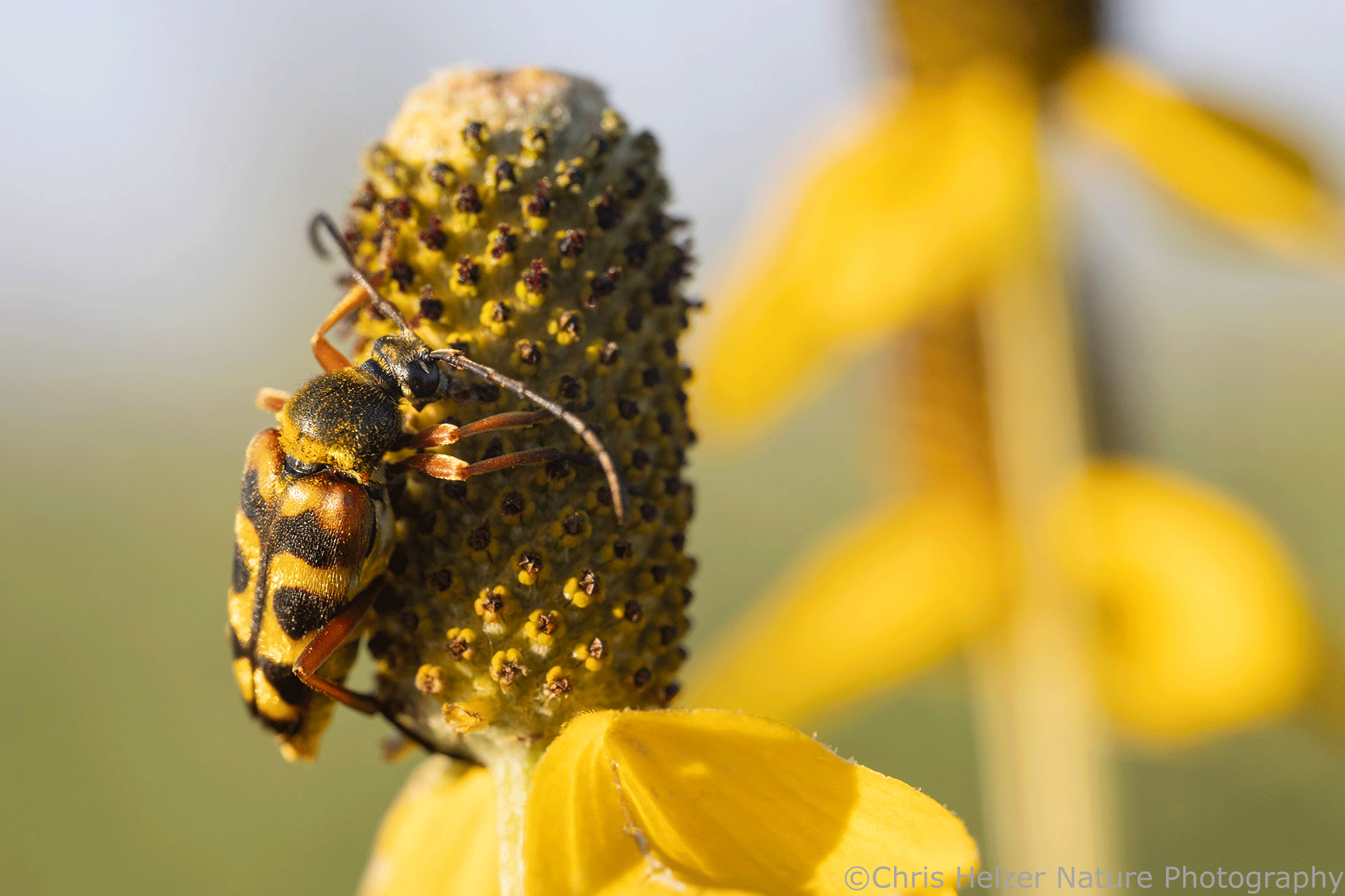
I visited the plot throughout the winter, though not as often as I had during the 2024 growing season. As this spring came on and the prairie started to green up again, I ramped up my visits again. I was anxious to grab everything I could from the final weeks. Here are some of the photos I took during (roughly) the final month of the project.

Maximilian sunflower seed head.
Yellow woodsorrel (Oxalis stricta)
A clover looper moth in late March
Another, smaller moth – a grass miner moth of some kind, according to bugguide.net
Flies were almost always present in the plot. Telling one species from another was (and is) a huge challenge.
These springtails (Collembola) were only a millimeter or two long.
This was one of several itsy bitsy caterpillars I’ve seen this spring.
This is (unfairly) called a false milkweed bug. Naming injustices aside, it was a welcome burst of color this spring!
I photographed these lead plant buds many times as they began opening.
Kentucky bluegrass
Another fly. This one has red eyes. What species is it? I have no idea.
A ground beetle.
A four-spotted sap beetle (Librodor quadrisignatus)
Earthworm
This turkey vulture flew directly overhead. I counted it.
Ah, ticks. A wonderful sign of spring.
As soon as Maximilian sunflower started growing, ants started harvesting extrafloral nectar from it.
This little inchworm (geometer moth larva) was only about 4-5 mm long. I chased it around a long time before I finally got a few decent photos of it.
Short-beaked sedge (Carex brevior) on the final night (May 4, 2025).

Even though I’m now finished with the photography part of the project, I still have a lot of work to do. I’ve been very fortunate that a number of generous experts have helped me with species identification but that process is not yet complete. Currently, I think I photographed about 330 species over the year, which is a staggering number, but that number could still go up or down a fair amount as experts continue to weigh in. Regardless, it’s a lot bigger number than the 113 species I photographed (and felt proud of) when I first tried this project in 2018.

This second edition of the project came about because the managers of Lincoln Creek Prairie (Prairie Plains Resource Institute) burned the prairie last spring. That allowed me to find what was left of my flags from the 2018 project. I decided to re-mark the same plot with fresh flags while I had the chance – just in case I decided to come look at it again sometime. That pretty quickly led to a second full-fledged version of the photography project.

I loved every minute of it.

As I work through images and have time to absorb and synthesize this whole effort a little more, I’ll probably share more images and stories in various forms. I’m working with the amazing folks at Platte Basin Timelapse Project to create some kind of short film, and who knows what else will come out of all this. Stay tuned.

Meanwhile, here are a couple short video clips from my final night at the plot. The first is the tail end of my last hike into the plot. The second is a brief reflection on the whole effort as the sun disappeared behind the trees and marked the final moments of the 12-month period. (If the videos don’t work for you, click on the title of the post to open it online and activate the links.)

Thanks for tagging along with me on this. I hope you felt even a small fraction of the joy and wonder I got out of that tiny plot of grassland. Remember, if you’re impressed by how much beauty and diversity I was able to find in a single square meter of prairie, imagine how much exists at the scale of a whole prairie, including one that may be located close to where you live. For that matter, think about what you might be able to find by just looking more closely at your backyard, a local park, or even the potted plant on your apartment balcony.

Are Prairies Less Natural Because They Need Us?

What if I told you tallgrass prairie is a human construct?

Would you think it’s less important?  Less natural?  Less real?

I don’t know if “human construct” is a totally fair description, but it’s certainly true that tallgrass prairie in the central United States exists because of people.  In many places, it formed because of people, and throughout its range, it relies on human stewardship for its continued persistence.

Let’s step back in time a little. 

While the actual timing of human arrival in North America is still being debated, there is consensus that people were here well before the ice sheets receded from the center of the continent (between 8,000 and 12,000 years ago).  Those humans played pivotal roles in the ecosystems they lived in. They hunted, cultivated and transported plants, and, perhaps most influentially, actively used fire in many different ways. 

As the continent warmed and bloomed after the ice age, human stewardship shaped plant and animal communities. In particular, people burned the landscape around them enough to create grasslands in what otherwise would surely have been wooded landscapes.  That was particularly important in the eastern portions of the tallgrass prairie.  Lightning fires were part of that story, too, but they were much less significant than the frequent, intentional use of fire by people.

In other words, if it hadn’t been for people and their stewardship of the land, tallgrass prairies would not have existed across much of what is now the Midwestern United States.  Throughout subsequent millennia, people have continued their stewardship, allowing prairies to persist in places where trees would otherwise have moved in.

Chelsea Forehead ignites a prairie that will help keep woody plants from taking over this prairie landscape.

Today, the majority of tallgrass prairie has been lost, of course – mostly through conversion to row crops.  The prairie that remains still relies on continuous, thoughtful stewardship by people.  Without active management with prescribed fire, haying, grazing, and/or targeted invasive species suppression, tallgrass prairie transitions to something else – shrubland, woodland, or a low-diversity herbaceous community that no longer qualifies as “prairie”.

Does that reliance on people make tallgrass prairies unnatural?  Does it mean we should “let nature take its course” and allow tallgrass prairie to become what it’s supposed to become? 

You’re welcome to form your own opinion, of course, but I feel strongly that the answer to both questions is no.  Most ecosystems on earth are strongly tied to human stewardship and have been for tens of thousands of years.  It’s not that those ecosystems or the species that depend upon them would all be destroyed in the absence of people, but they’d change dramatically – and many species would suffer as a result. We humans have certainly not always done the best job at land management but that doesn’t mean we can or should abdicate our responsibility as stewards.

Speaking more locally, prairie is amazing, beautiful, and complex.  The incredible, diverse ecological communities that live in tallgrass prairie rely upon our continued attention and stewardship. Losing those would be an immense tragedy.

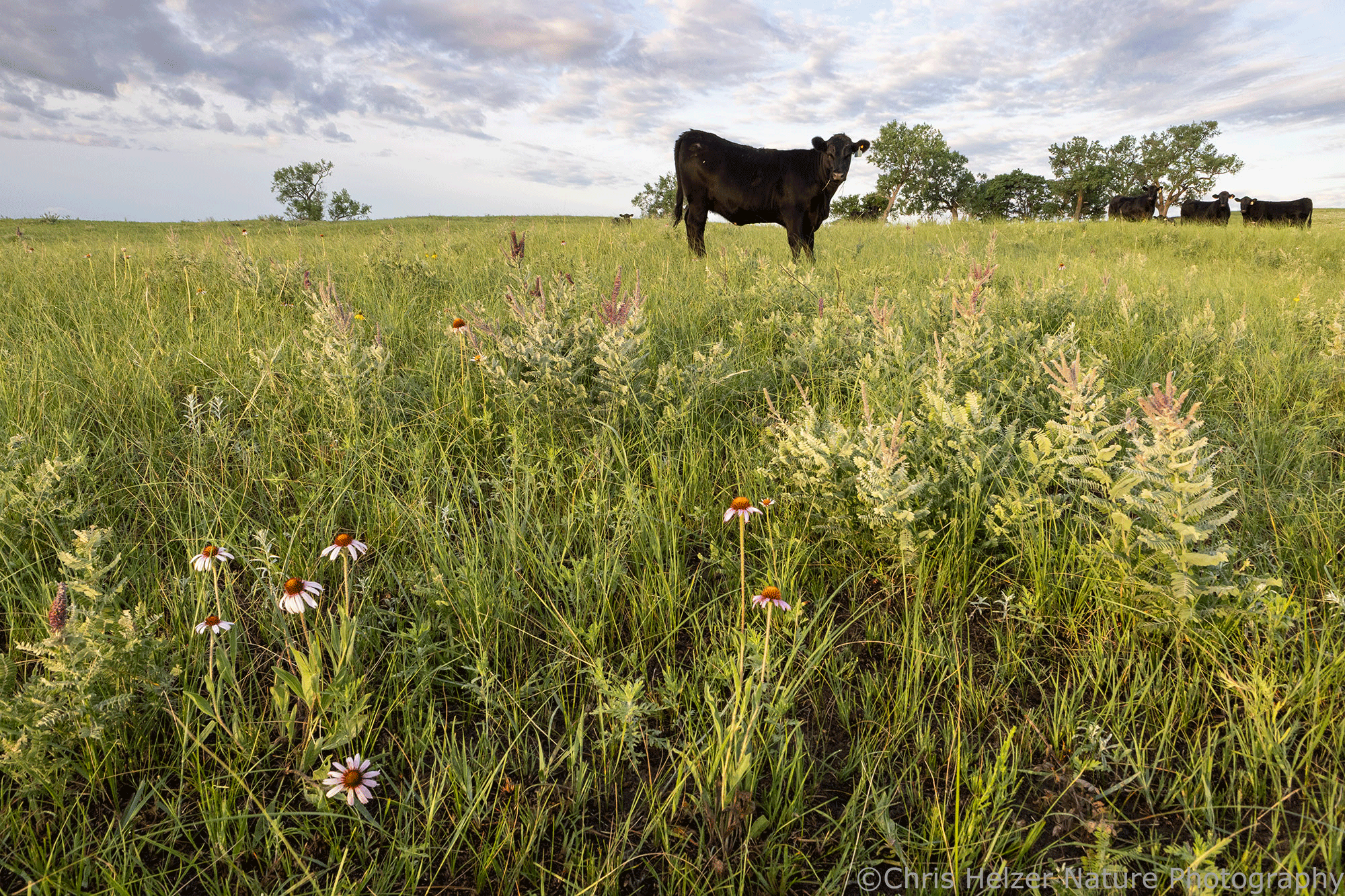
This photo captures the essence of prairie. The more you look, the more you see.

Tallgrass prairie isn’t less important, natural, or real because it relies upon humans.  Instead, our long-standing, interconnected, and interdependent relationship with the prairie should increase its relevance and value to us. 

Just as with any other worthwhile relationship, though, we can’t just ignore the prairie and hope for the best.  Only thoughtful, adaptable care will ensure we can keep this good thing going for a very long time.

Additional Reading. If you want to learn more about the long relationship between humans and nature (prairies and otherwise), here are a few recent journal articles you might enjoy. They’ll get you started and provide many other references you can dig into if you want to keep going:

Impacts of indigenous burning in the Great Plains

Presence of people after the North American ice sheets receded

The shaping of global ecosystems by people for more than 12,000 years