
Garden spiders, aka black and yellow argiopes, are one of the most recognizable spiders in many prairies (not to mention backyards). In fact, my kids spent several weeks this August doing daily checks on one big spider in our yard, feeding it every kind of insect they could find. They had a great time catching insects and figuring out the best way to toss them into the web so that the insect would get tangled up and the spider could rush over and finish it off.
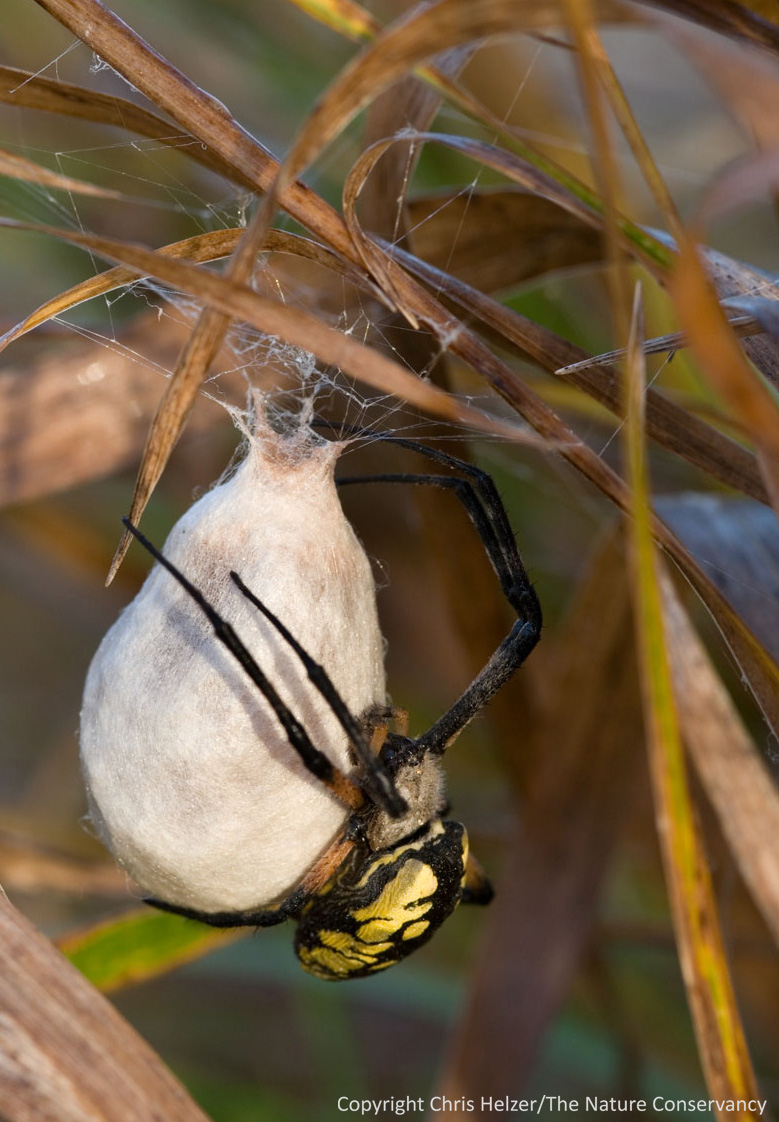
A black and yellow argiope (Argiope aurantia) with its egg sac. Lincoln Creek Prairie - Aurora, Nebraska. (For context, the egg sac was about an inch wide.)
A couple weeks ago, I took the above photo of a black and yellow argiope and its egg sac in a local prairie. Female argiope spiders typically lay several hundred or more eggs in the early fall, encase them in an egg sac, and die soon after. (Remember Charlotte’s Web?) In Nebraska, the eggs hatch in the fall, but the spiderlings remain in the egg sac over the winter before emerging the next spring. The tough egg sac protects them from winter weather and helps protect the eggs and spiderlings from many predators.
I’ve spent this week at a big conference for scientists of The Nature Conservancy. One of the themes of our conference has been the need to do a better job of involving people – particularly kids – in conservation. Clearly, one of the keys to getting kids into conservation is helping them to make personal connections with nature. I’m convinced that intimate experiences like feeding a spider, holding a turtle, or watching a butterfly emerge from its chrysalis create long-lasting impressions that shape future convictions about the importance of nature. When my kids are older, I hope that memories of watching and feeding that big spider in our yard will be influential and inspirational to them, regardless of where they go or what they do. Now if we could just get a big spider in the backyard of every kid in the world…
Black and Yellow Argiopes – the new worldwide ambassador for conservation!



 The Prairie Ecologist