Every year at this time, I find myself defending goldenrod from unfair attacks by sneezy, watery-eyed, congested people looking for something to blame for their discomfort.
Poor goldenrod; for a showy native wildflower (actually numerous species of wildflower), it sure has public relations issues. Some species, particularly Canada goldenrod, tend to act pretty weedy – showing up quickly and abundantly in abandoned cropfields and chronically overgrazed pastures. In some cases, it can look much like an invasive plant, causing some (including me) to wonder about whether it warrants some control efforts.
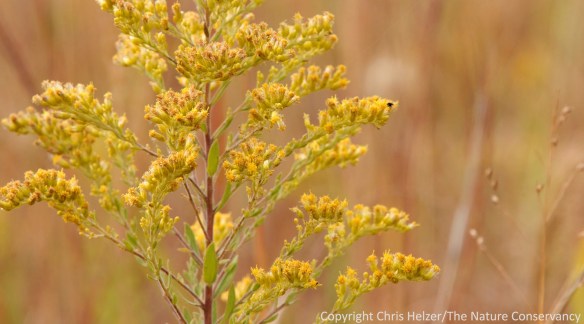
Canada goldenrod (Solidago canadensis). A very pretty flower with a checkered reputation.
But it’s during allergy season that goldenrod’s reputation takes the biggest hit. When people start to sneeze and wheeze in the late summer/early fall, they look around (through their red puffy eyes) for the culprit, and goldenrod is the tallest, showiest, weediest looking plant they see. Ah ha! That must be the problem plant!
Well, actually…
Allergic reactions to pollen are usually the result of breathing air that contains pollen grains. Our bodies react to the chemicals in those pollen grains, causing symptoms that include sneezing, itchy and watery eyes, congestion, and others. The pollen we breathe in comes from plant species that rely on the wind to transport their lightweight pollen from flower to flower. Those wind-pollinated species make a tremendous amount of pollen to increase the chance that at least some of their pollen grains will get blown toward other plants of the same species.

Grasses, including indiangrass (Sorghastrum nutans) don’t have showy flowers because they don’t need to attract insects to carry their pollen. The wind does the job instead.
In contrast to wind-pollinated plants, plants that are insect pollinated tend to create heavier, stickier, pollen grains that don’t get picked up by the wind. Instead, those plants rely on bees and other insects to carry pollen from flower to flower. To attract pollinators, insect-pollinated plants have to create big, showy, and colorful flowers. Wind-pollinated plants such as grasses, pine trees, and ragweed don’t need to spend resources making big fancy flowers. They just make lots of pollen and let it blow.
Now, consider goldenrod flowers. Definitely showy and colorful, right? That, and the numerous insects crawling around on the flowers make it pretty obvious that goldenrod is insect pollinated. When you walk through a patch of blooming goldenrod, you’ll never see a big poof of pollen come off the flowers as you knock into them. Instead the pollen sits tightly on the numerous little flowers, waiting to stick to a fuzzy bee or other insect.
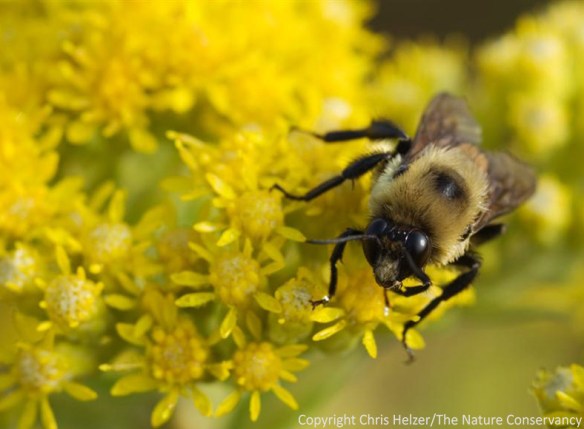
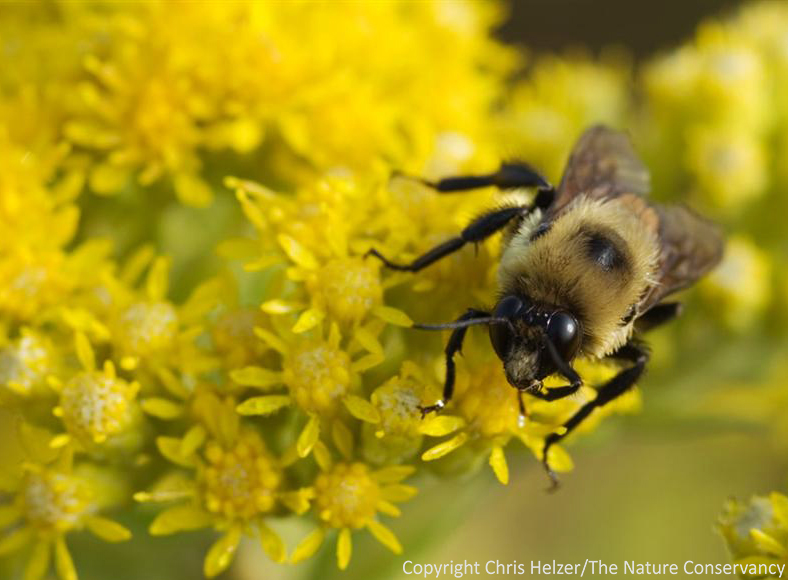
A bumblebee gathering pollen from stiff goldenrod (Solidago rigidus) in a restored prairie near Sutton, Nebraska.
When you look at the evidence, it seems obvious that goldenrod isn’t to blame for our itchy watery eyes and congested noses. How, then, did it become such a hayfever scapegoat?
I think of goldenrod as the kid in class who’s generally a good student, but always dresses a little too flashy and laughs a little too loud. Ragweed, on the other hand, is like the plain-dressed quiet kid who throws spitballs at the teacher when her back is turned. When the teacher whips around to see who’s responsible for the spitball in her hair, who do you think she’s going to blame? The loud kid who’s laughing uproariously, or the quiet kid pretending to read his lesson?
Exactly.
Poor goldenrod…
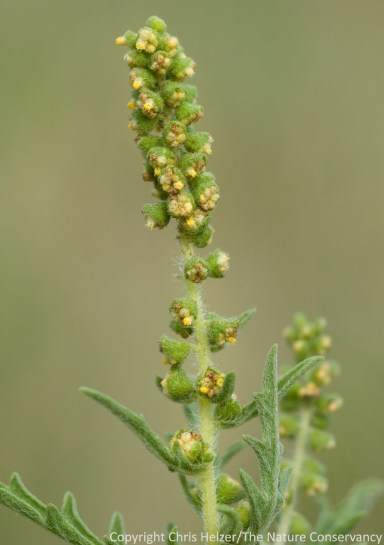
Western ragweed (Ambrosia psilostachya) has tiny non-descript flowers, but produces LOTS of pollen, which is released into the wind for transport. Ragweed species are a major contibutor to seasonal allergy attacks.
Well, now that you are in the know, maybe you can help me restore the good name of this much-slandered native plant. Just think of the popularity you’ll gain when you walk up to your puffy-eyed friends and explain to them (between their sneezing attacks) the ecology of wind and insect-pollinated plants! To really drive the point home, maybe you should grab a bouquet of goldenrod flowers and shake them in your friend’s face to prove that no pollen comes out.
Just be sure to check for bees first.



 The Prairie Ecologist