Volunteers are a critical part of our stewardship work at the Platte River Prairies. We don’t have a lot of them, but we’ve been lucky to have some great ones. All of our volunteers are appreciated, but we have special gratitude for those who commit so much time they are essentially staff – except we don’t have to pay them! One of those terrific volunteers over the last three seasons has been Sam Sommers, a high school student from Kearney, Nebraska. When his dad first approached us about Sam doing some volunteer work as a young high schooler, we wondered whether it would be worth our time, but figured that anyone with that much interest deserved our attention. And man did we get our money’s worth (so to speak)! He spent the vast majority of three summers working – very hard – alongside our stewardship staff.

Sam Sommers (left) helps last year’s Hubbard Fellow Anne Stine and (then) Missouri Dept of Conservation ecologist Mike Arduser with some bee collectionin 2013.
Sam is going off to study wildlife biology at the University of Wyoming this fall. They are lucky to have him. I could say a lot about how much we appreciate everything Sam has done for us – and we really do – but one of our Hubbard Fellows, Jasmine Cutter, stepped up to do it for me.
By Jasmine Cutter:
When I first got to the Platte River Prairies, I wasn’t sure who I was going to meet when I heard “Sam” mentioned. Based on Eliza’s (former Hubbard Fellow) enthusiasm – “Sam’s the best!!” – and Nelson’s nodded affirmation, I assumed that I was about to meet a celebrity. I have to say, Sam has lived up to the hype. He is tireless, curious, knowledgeable, and a real trouper! Sam is a master of the killstick, a seed-collector speedy enough to rival Chris (editor’s note: ok, he’s really good, but not THAT good), and a tireless thistle destroyer.

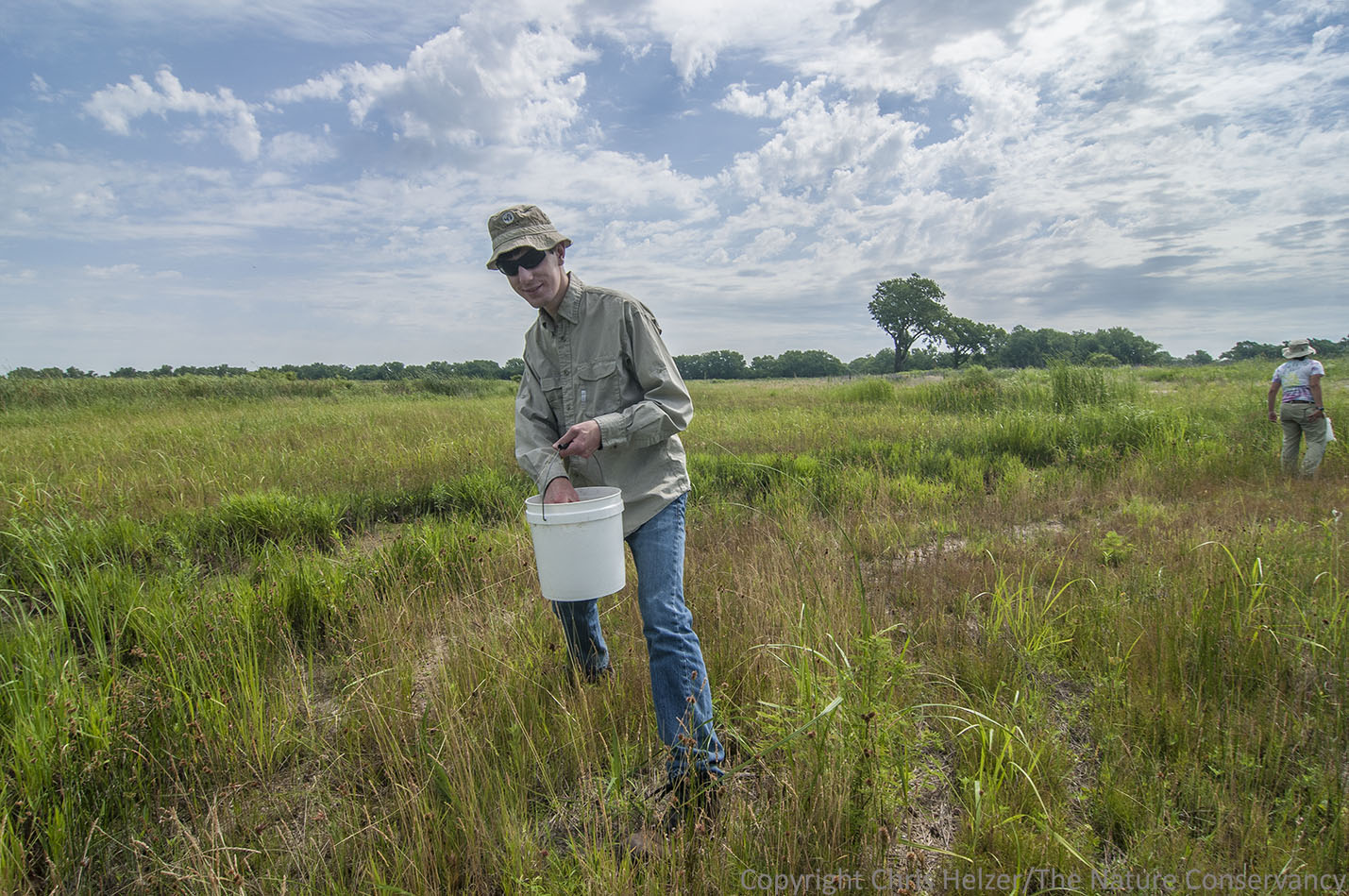
Here is Sam harvesting seeds along a restored Platte River wetland this summer.
Coming into our Hubbard Fellowship just as the growing season was starting to take off was pretty overwhelming – long days, many different invasive species to learn, new tools to master, not to mention trying to figure out where all the sites are. Dillon and I often relied on Sam’s seasons of experience working here. His advice and assistance allowed us to operate fairly independently from Nelson, freeing up Nelson to work on other projects. Our introduction to stewardship wouldn’t have been nearly as smooth without Sam’s help.
Really, the thing that impresses me the most about Sam – besides his competency – is his work ethic. He is out here every day dealing with exactly what we’re dealing with: battling the mosquitoes/ticks/chiggers, the sometimes dispiritingly large patches of thistles, the sweaty herbiciding goggles, the heat, the long days… It’s hard to fathom how much more Chris and Nelson have been able to accomplish with Sam here. He has removed hundreds of trees, killed thousands of thistles and other invasive plants, collected dozens of gallons of seeds, and completed myriad other tasks that never would have happened without Sam. With a work ethic like his, I have no doubt that Sam will do great in college – it might even be a restful experience after his stint here. We will greatly miss Sam, and I can’t wait to hear about what he gets up to in the future!

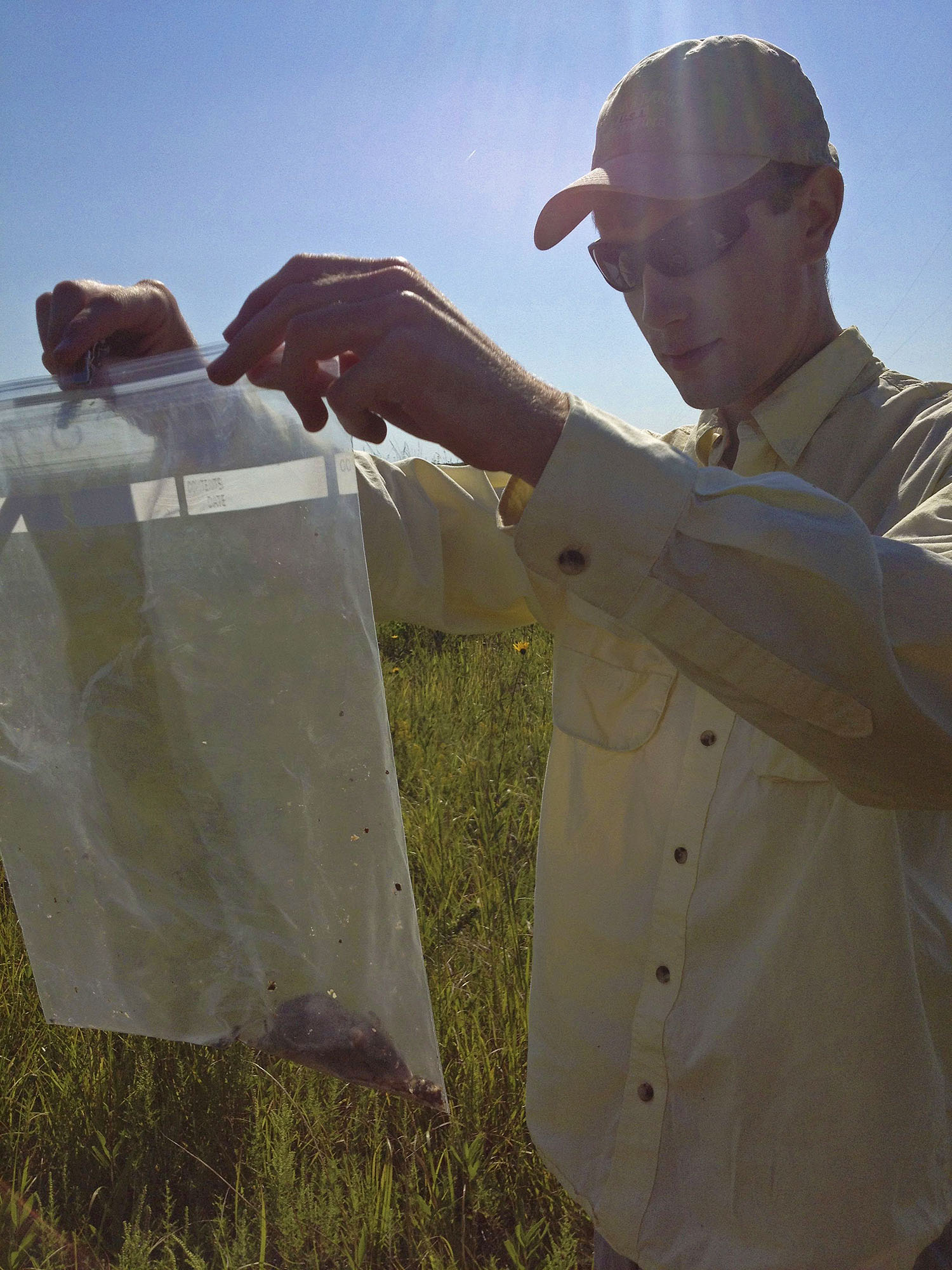
Sam helped Jasmine and Mike Schrad (Nebraska Master Naturalist) with some small mammal trapping this summer. Photo by Jasmine Cutter.
Sam, THANK YOU very much for everything, and have a great time at college! – Chris H