
An Ill Wind…

You know, it’s not hard to grow native plants in a greenhouse.  We’ve had pretty good luck over the years…  But that assumes that you HAVE a greenhouse.  Which we did – until early this morning, when a grain bin smashed it to smithereens.

We had big thunderstorms roll through last night.  Other than having to get up and shut off the weather alert radio at 4am, I didn’t think much about the storms until our land manager called me early this morning.  Then my plans for the day changed on the spot and I went out to help the guys clean up.
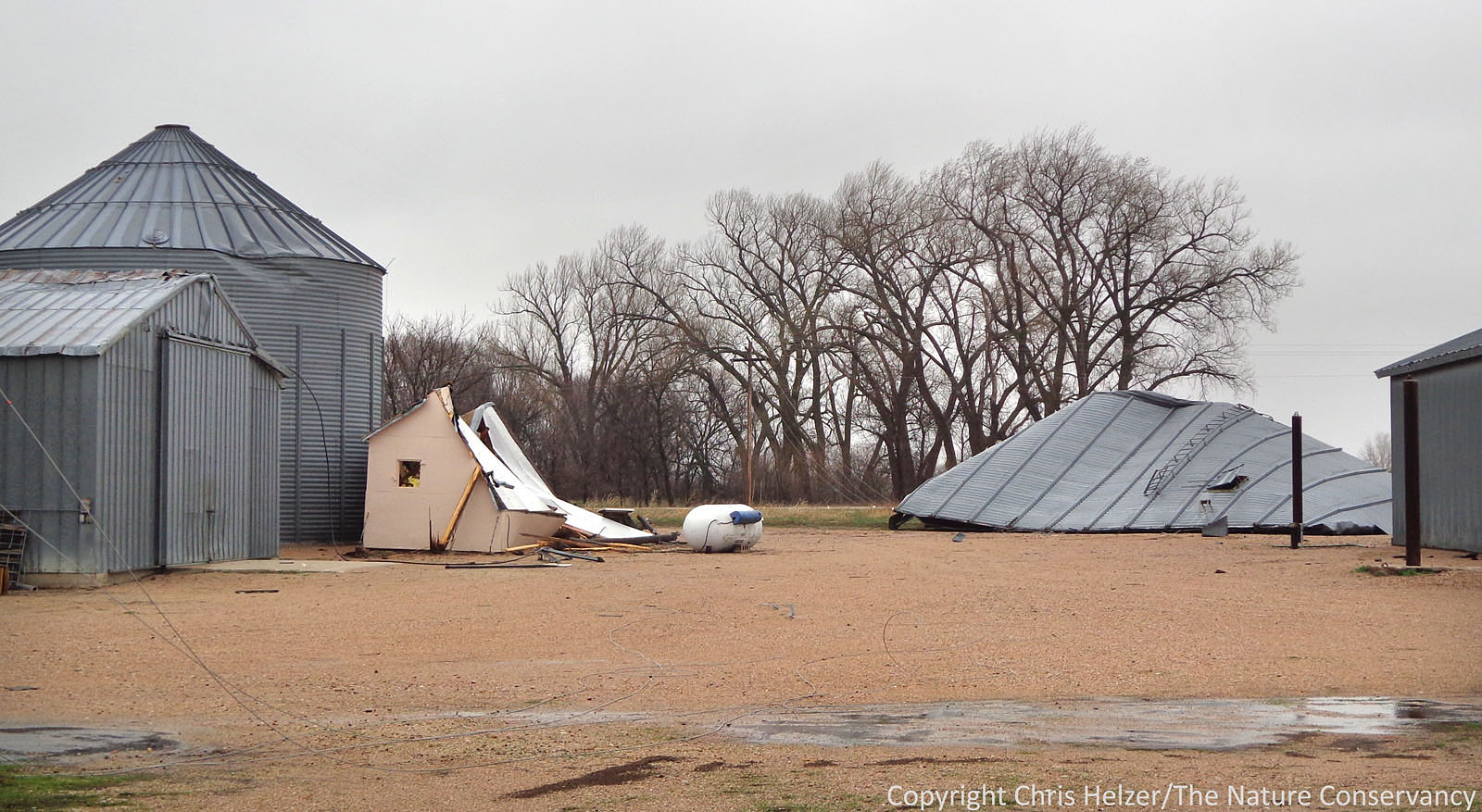
Storm damage at our shop this morning.

Storm damage at our shop this morning.  The grain bin caused most of the damage as it flew across the lot.  The Nature Conservancy’s Platte River Prairies – Nebraska.

The bad news: A flying (bouncing?) grain bin crushed our greenhouse, the doors to our main shop building won’t open (our trucks are in there), we’ve got dinner plate-sized holes in the roof of that same building, and we lost a lot of shingles from the house our seasonal crew lives in.  Oh, and we lost power.
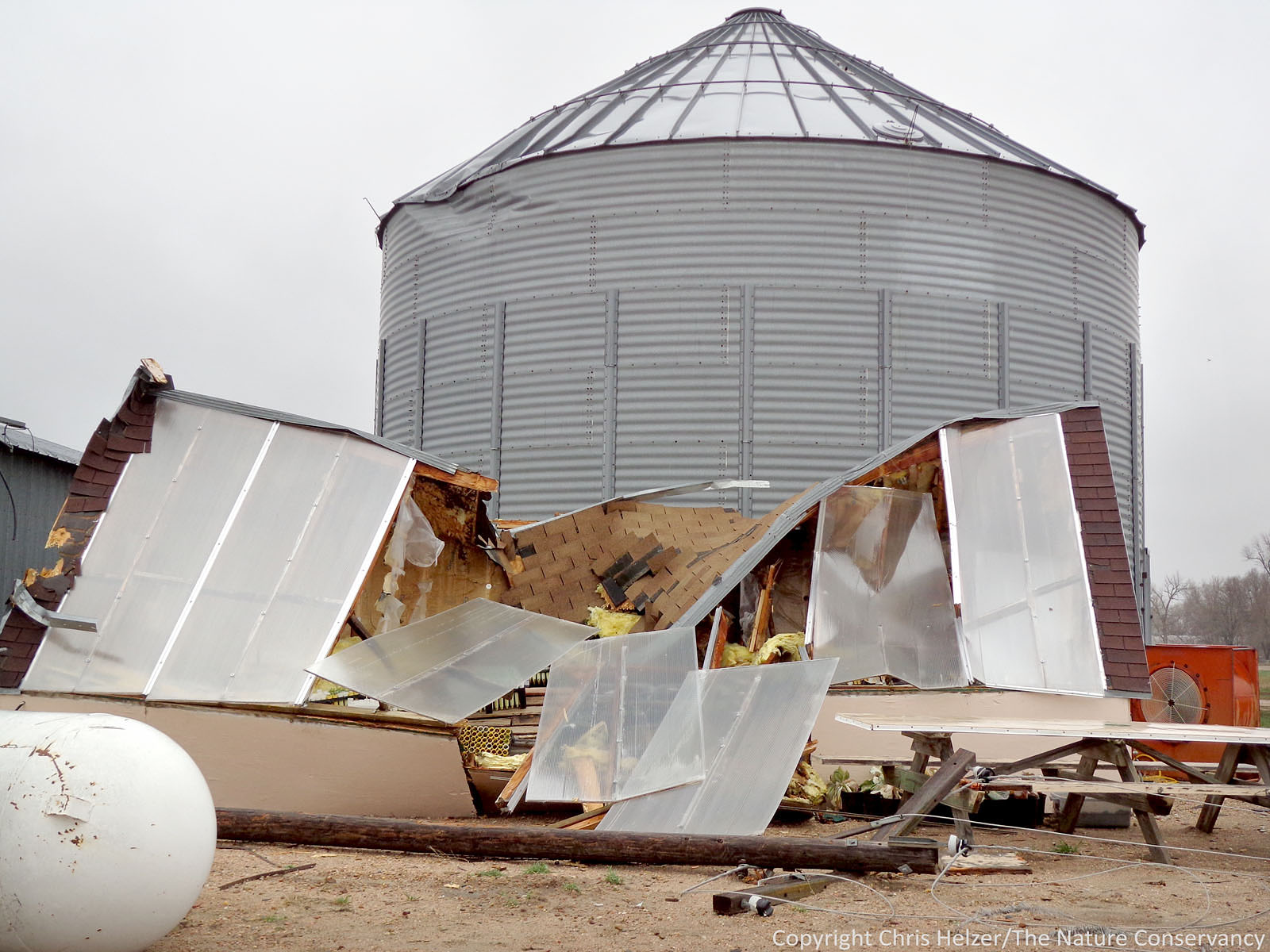
Our greenhouse was a total loss.

Our greenhouse was a total loss.  We had just put on new panels last fall…

.
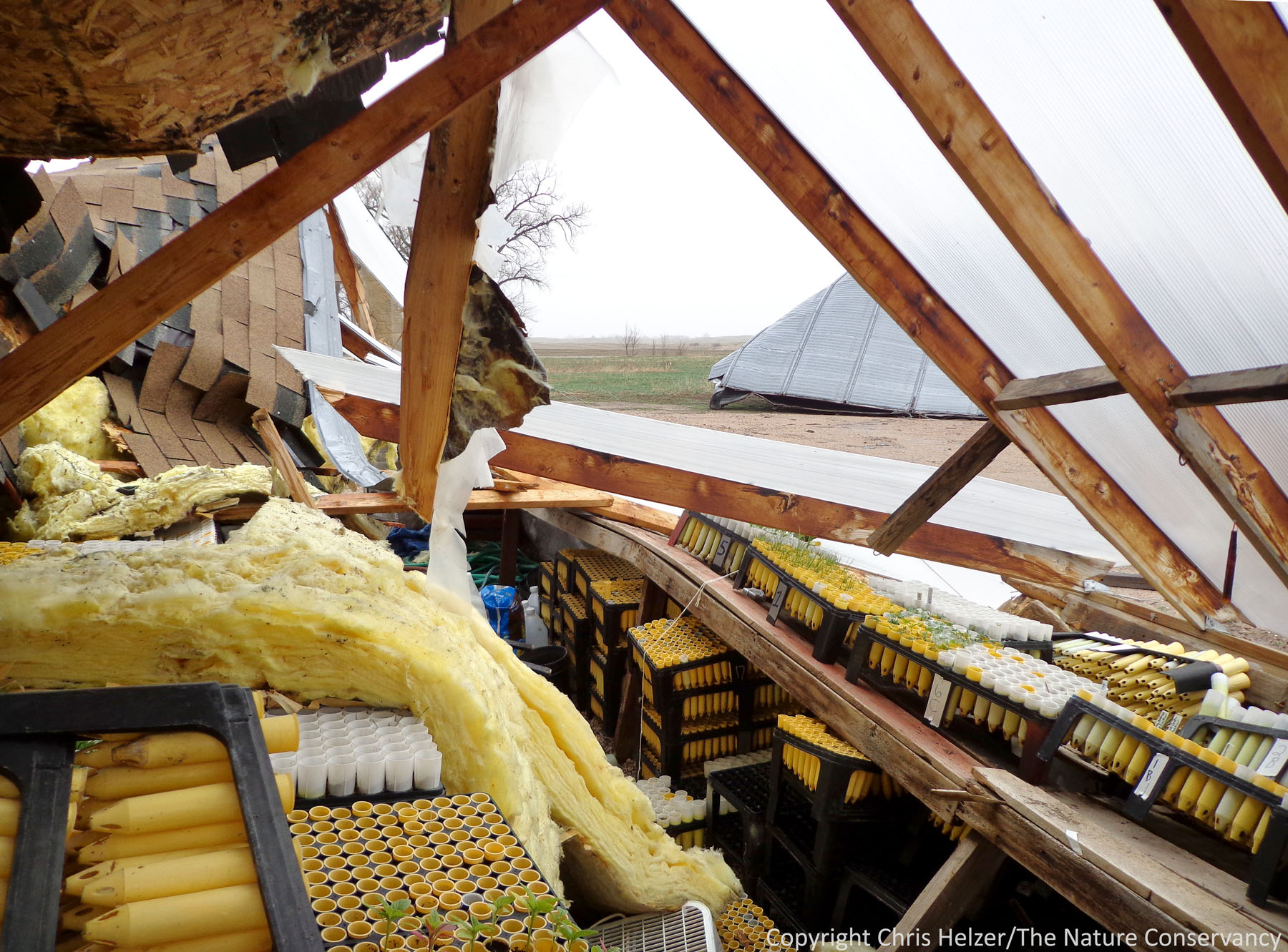
We did manage to salvage most of our plants from the greenhouse.

We did manage to salvage most of our plants from the greenhouse.  They’re now riding out the winter storm in a nice warm garage.

The good news: We were able to get most of the plants out of the greenhouse and into another building before the winter storm hit this afternoon.  We’ve got tarps on the crew quarters roof, so it should be watertight for the near term.  Most impressively, the crew from Southern Public Power District was on site within a half hour after I called them and were busily replacing broken power poles and lines.  (THANKS GUYS!)

The rest of the repair work can wait until the snow, ice, and wind subside a couple days from now.
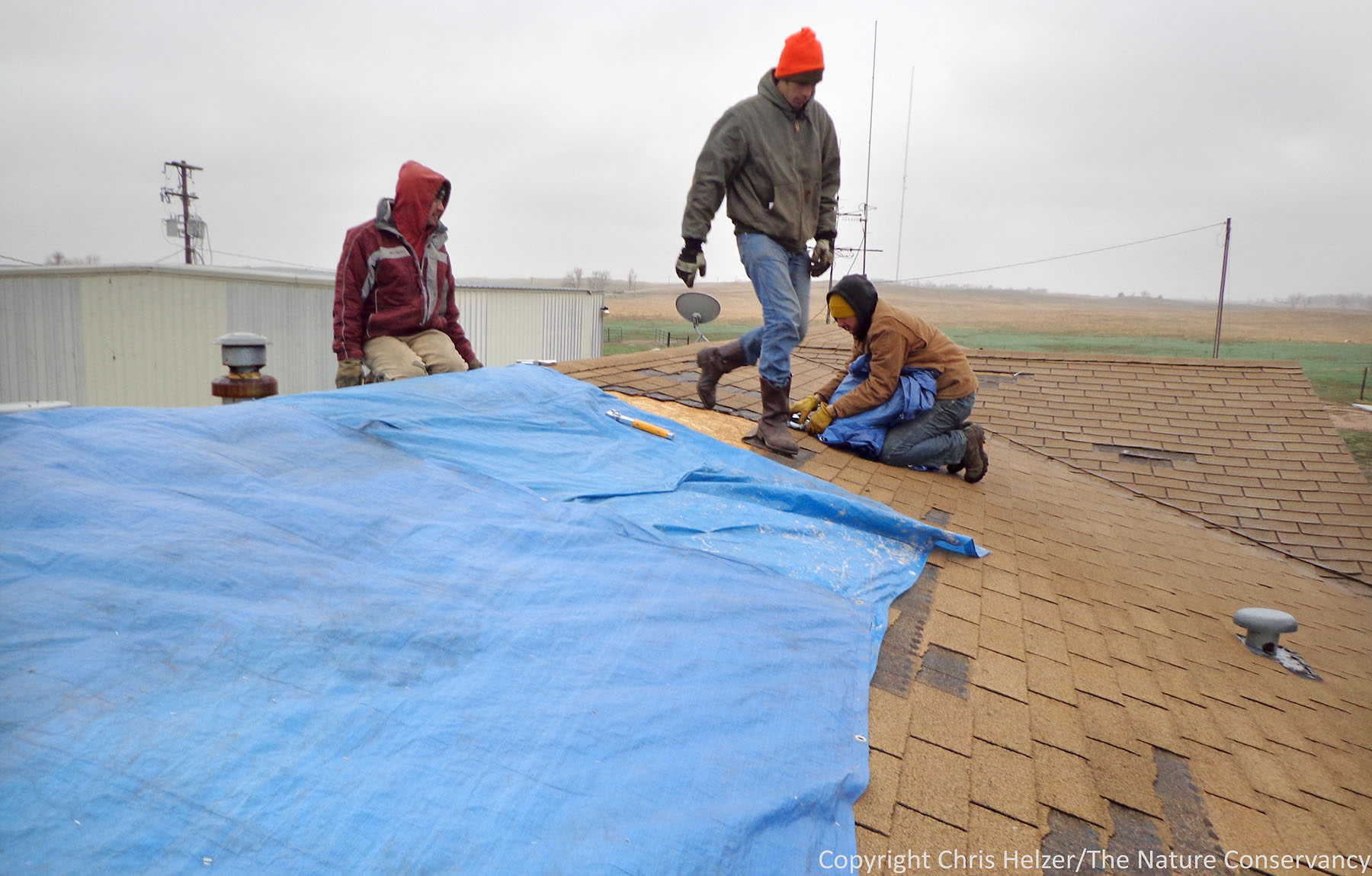
Stapling tarps to the roof of the crew quarters house at our shop facility.

Stapling tarps to the roof of the crew quarters.

It could have been a lot worse.  No one was hurt.  Our trucks, atvs, seed, and plants all seem to be ok.  Water damage in the house seems to have been limited to some small wet spots on the ceilings of two rooms.

And, while it was a high price to pay for it, I guess we did get some decent rain out of the storm…

Prairies Forever? Collaborative Conservation for Pheasants, Pollinators, and People.

Effective prairie conservation requires a collaborative effort among a wide variety of interests, including ecologists, naturalists, birdwatchers, ranchers, educators, hunters, and others.  Each of these might approach prairie conservation from a different perspective, but they have more in common than you might expect. 

People outside Nebraska might be surprised to learn that one of the strongest forces for prairie conservation in our state is Pheasants Forever.  Pheasants Forever, along with its sister organization Quail Forever, is helping protect, restore, and manage prairies in multiple ways, including:

–          Private lands biologists (17) who work with landowners on habitat projects, providing both advice and access to federal, state, and private cost-share assistance.

–          Promoting and facilitating the use of prescribed fire across the state by providing equipment and training opportunities, helping to establish and coordinate prescribed fire associations, and organizing landowner tours to showcase the value of prescribed fire.

–          Promoting the use of, and helping to provide, diverse native seed mixtures for habitat restoration/improvement projects.

–          Organizing workshops and field tours on habitat management, prairie restoration, plant identification, and pollinator conservation.

Pheasant hunters

These pheasant hunters enjoyed a very successful day in a recently-restored high-diversity prairie.  The Nature Conservancy’s Platte River Prairies, Nebraska.

The man who has provided most of the energy for these efforts for more than 20 years is Pete Berthelsen, who has just stepped into a new role for Pheasants Forever, Inc. and Quail Forever; the Director of Habitat Partnerships.  He is now charged with taking the kinds of habitat partnerships and statewide habitat programs he helped develop in Nebraska and replicating those programs across the organization at the national level.

Continue reading