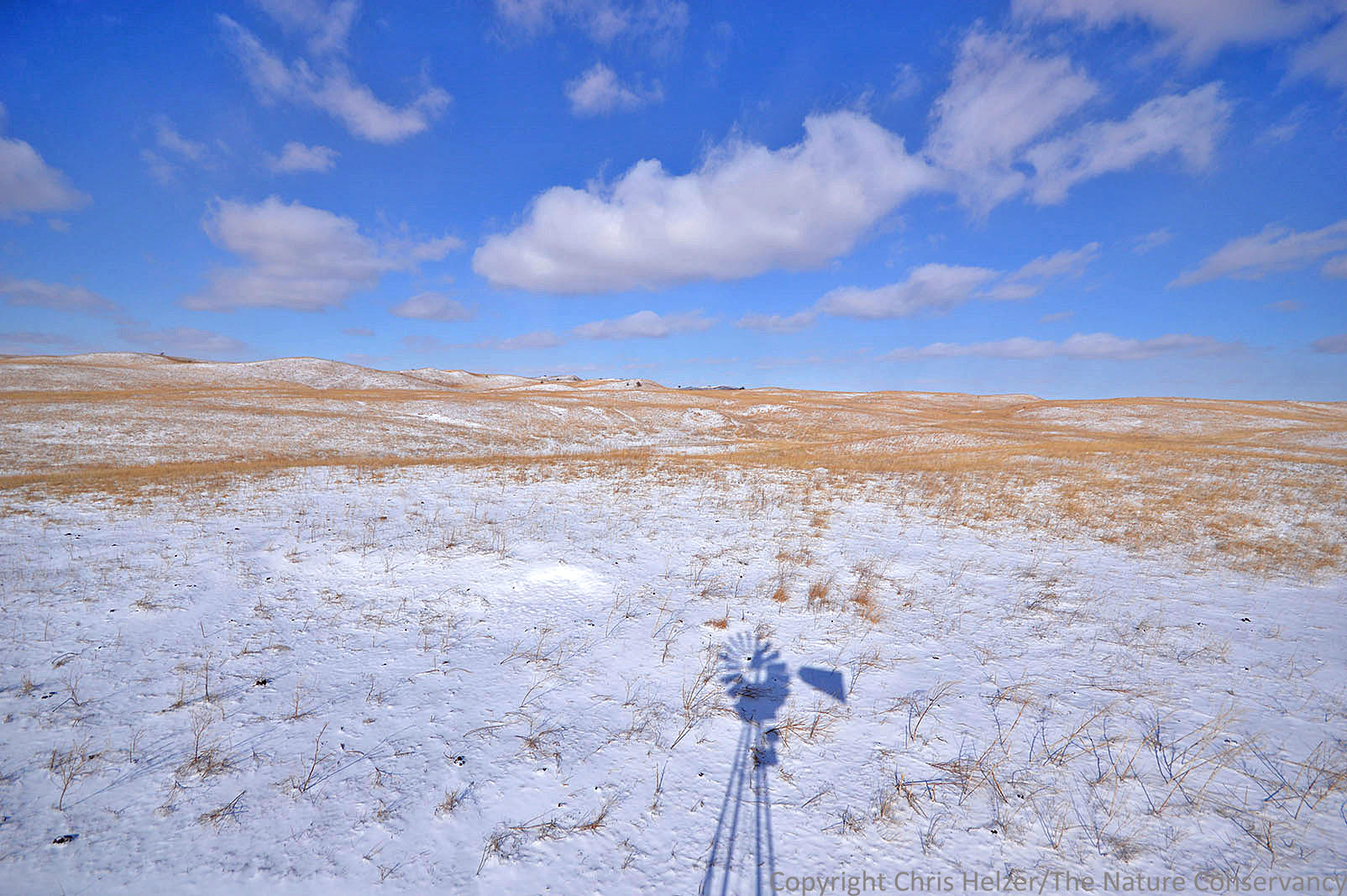
Photo of the Week – October 30, 2014

I’ve always had a difficult time taking pleasing landscape photos in heavy fog.  I love the way prairies and wetlands look on foggy days, but I rarely come away with a scenic photo I’m happy with.  Fortunately, I can (and usually do) fall back on close-up photos…

Water droplets, gerardia and spider silk on a very foggy morning at a Platte River Prairies wetland last week.

Water droplets, false foxglove and spider silk on a very foggy morning.

One foggy morning last week, I waded into the shallow water of a wetland at our Platte River Prairies.  Everything was dripping wet because of the dense fog.  There was a light breeze, but not quite enough to blow the droplets off the plants or spider silk strands.
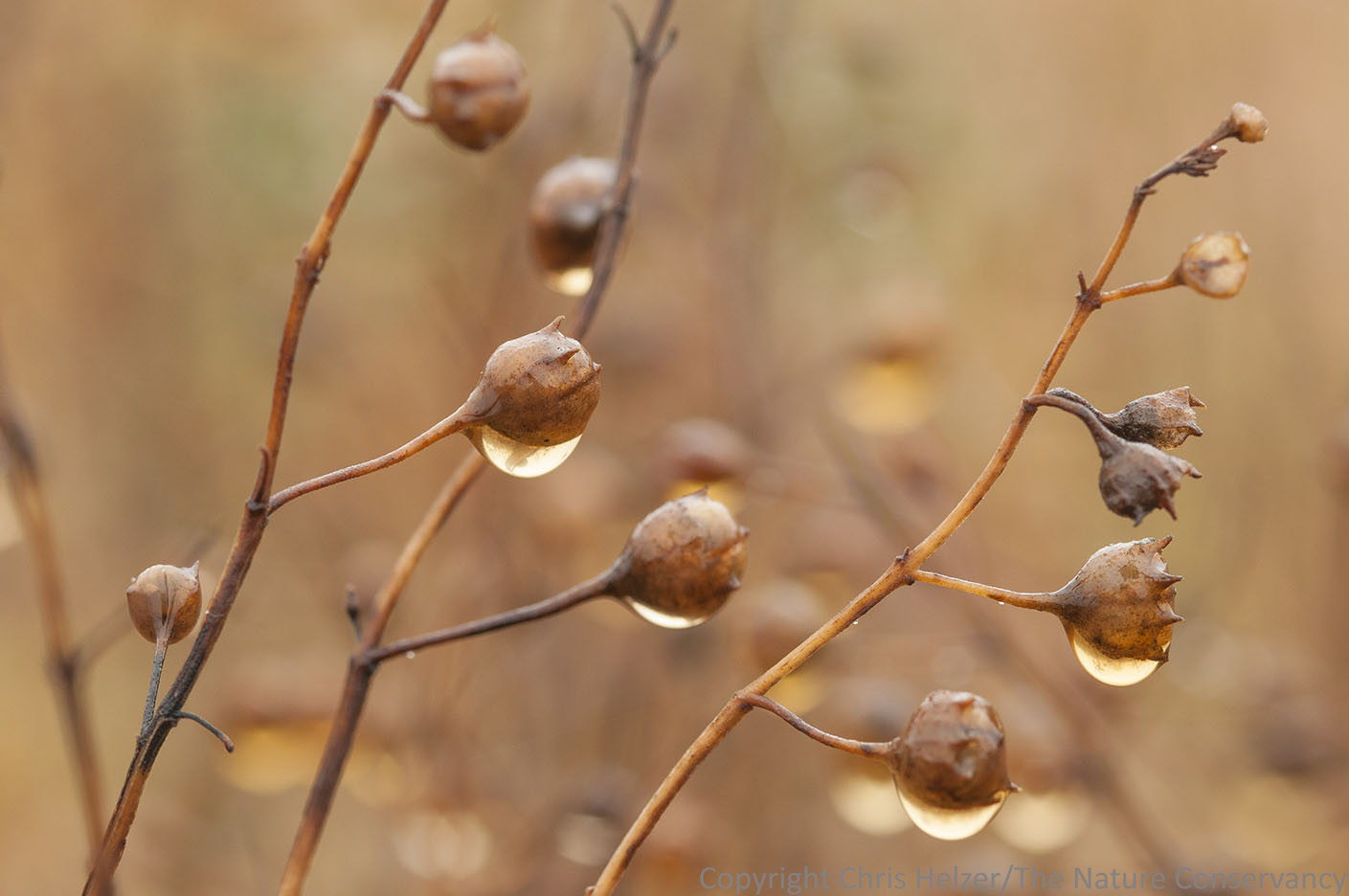
More gerardia in the fog.

More false foxglove in the fog.

Fog creates a “flat” light.  Flat light can be used for scenic photos, but it’s difficult to portray depth and texture because of the lack of any shadows.  However, that same light can work pretty well for close-ups, especially as the fog thins a little and the ambient light becomes a little brighter.
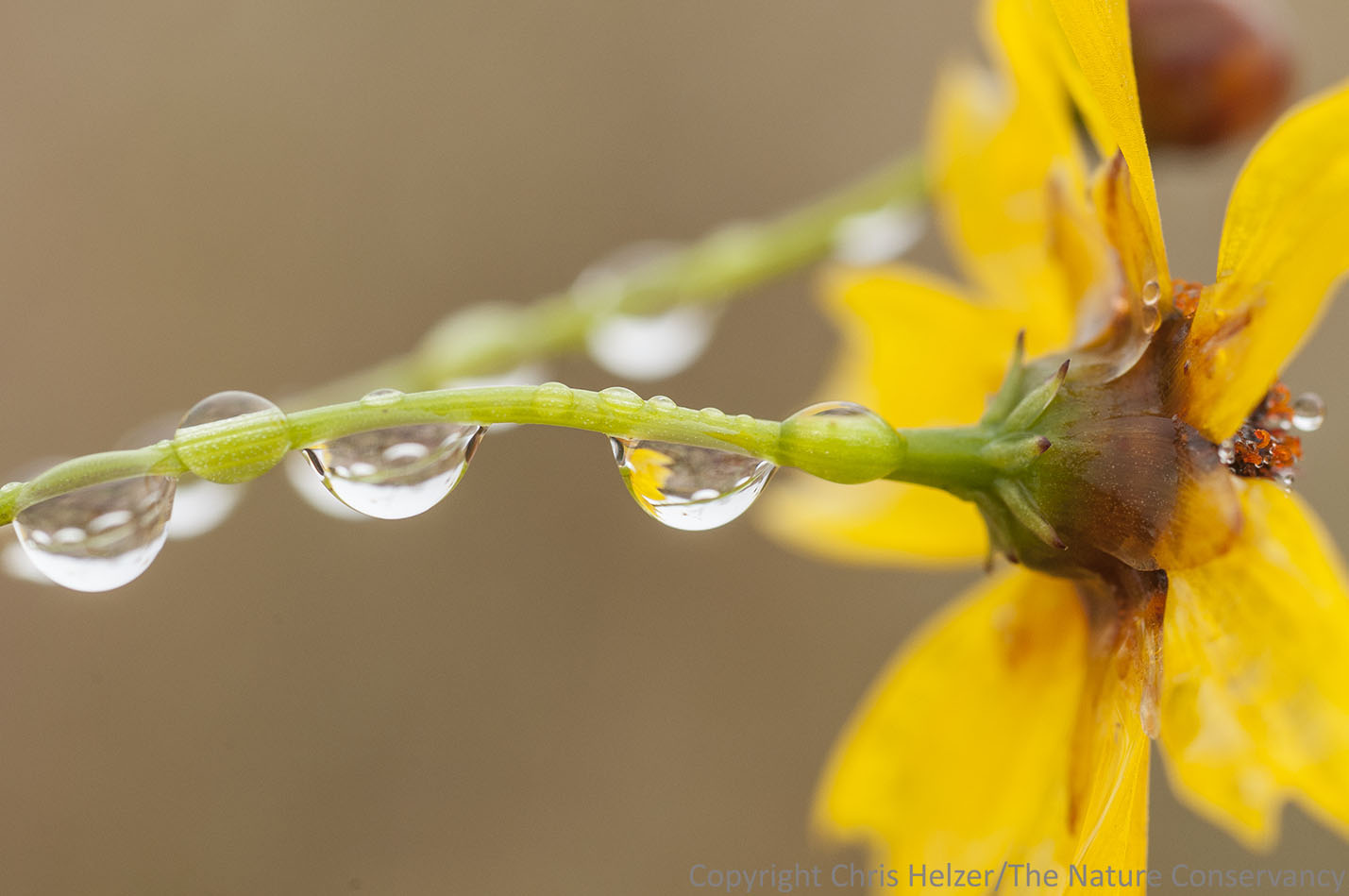
Droplets on a late-blooming plains coreopsis.

Droplets on a late-blooming plains coreopsis.

There were several patches of sand lovegrass along the sandy edge of the wetland last week.  The plants were bent almost to the ground under the weight of water drops.  Hidden among the sparkles was a cold wet grasshopper…

A grasshopper on a water-bejeweled sand lovegrass flower.

A grasshopper on a water-bejeweled sand lovegrass flower.

.
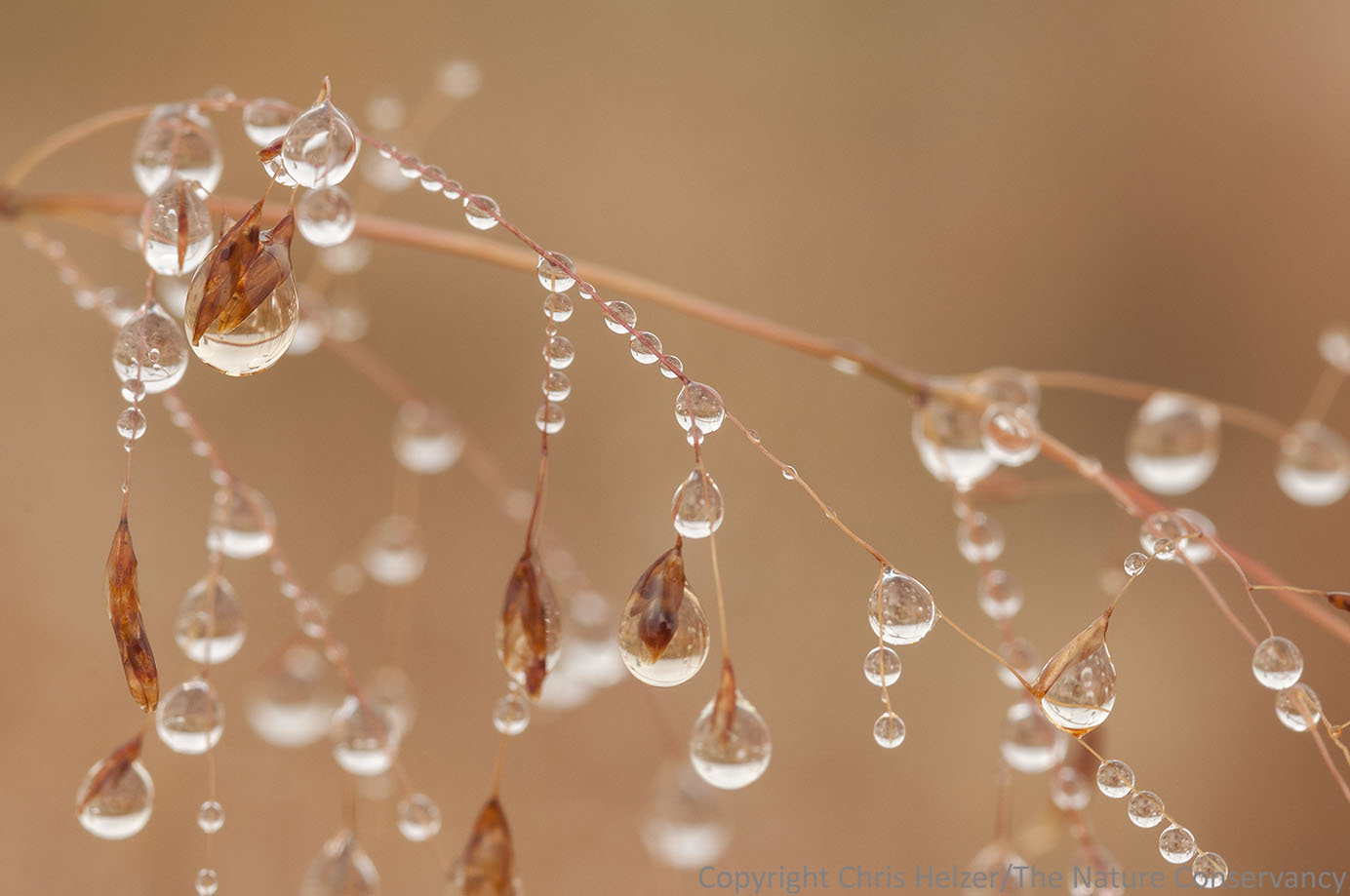
Sand lovegrass close-up.

Sand lovegrass close-up.

.

Sand lovegrass closer up.

Sand lovegrass closer up.

As the fog started to dissipate, the sun popped out periodically, providing a few opportunities for some landscape photos, but by then I was too intent on the little drops of water to pay much attention to the bigger picture.  I did take a few photos of the wetland, but quickly put the wide angle lens back away in favor of my macro lens.
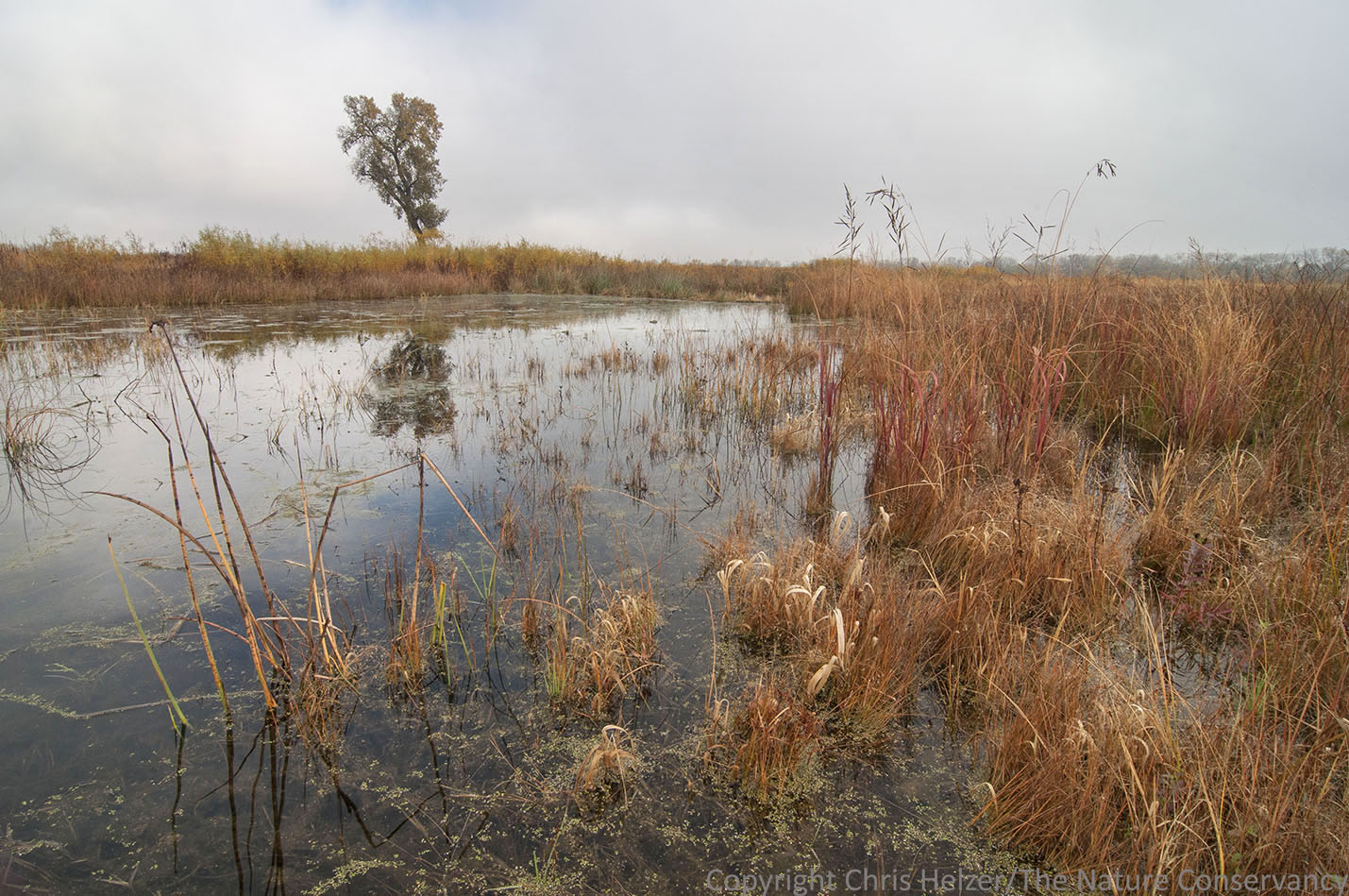
Here's what the wetland looked like as the fog started to lift.

Here’s what the wetland looked like as the fog started to lift…

.

Water droplets on spider silk.

…but it was the close-ups that continued to catch my eye.  Water droplets on the tip of a grass leaf and spider silk.
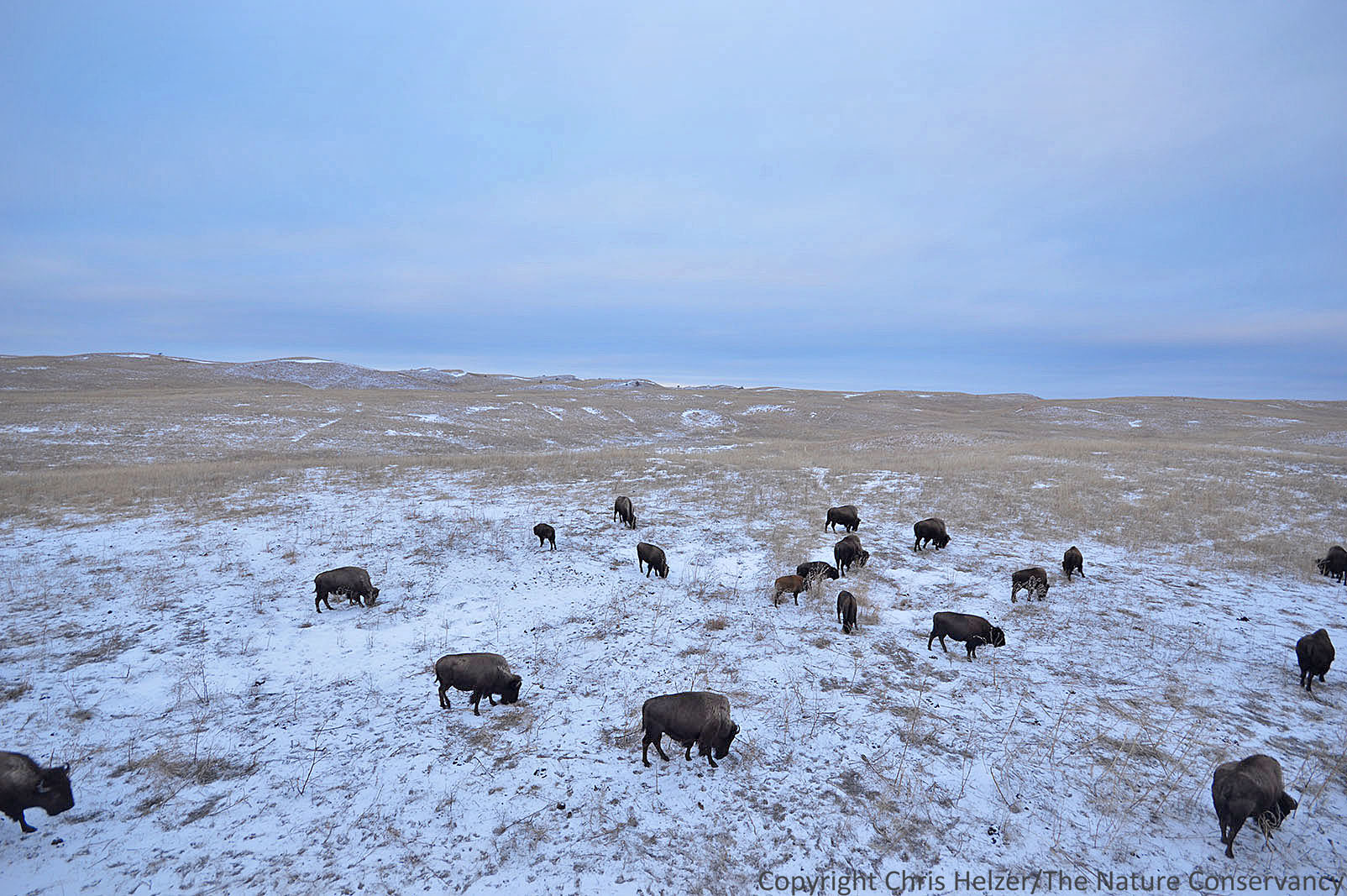
 

LANDSCAPE EXPERIENCES MAJOR SHIFTS IN APPEARANCE OVER SHORT TIME SPAN

As I was preparing to post this blog, I received the latest installment of Ian Lunt’s blog, which gives very good advice to science bloggers about how to capture and hold an audience’s attention.  Ironically, I’d just been worrying that my new post wasn’t as pithy as it could be, and had even asked my kids to read it and tell me what they thought.  I didn’t actually change the post after reading Ian’s advice, but I did change the “headline” to make it more snappy.  I hope Ian approves…  (The fact remains, however, that the following post is really just a series of pictures I thought were nice, so feel free to skip it and find something more productive to do.  The only good news is that there’s very little text to slog through…  So, with that sales pitch – here you go!)

I’ve been going through more timelapse images from the Niobrara Valley Preserve recently.  There are numerous story lines from the cameras there, all of which tell a tale of recovery and resilience following the big wildfire in 2012.  In a smaller way, however, looking through the images also demonstrates how much the appearance of a site changes from day to day.

In this post, I’m showing seven images taken by the same camera, from the same perspective, but on different days and at different times through the 2014 season.  The camera that took the photos is mounted high atop a windmill at the south end of a 10,000 acre bison pasture.  These seven images of sandhill prairie span an eight month period.

January 8, 2014.  6pm.

January 8, 2014. 6pm.

February 5, 2014.  3pm.

February 5, 2014. 3pm.

April 5, 2014.  7pm.

April 5, 2014. 7pm.

May 17, 2014.  7:30pm.

May 17, 2014. 7:30pm.

July 24, 2014.  9pm.

July 24, 2014. 9pm.


August 15, 2014.  9:30am.

August 15, 2014. 9:30am.

August 15, 2014.  8pm.

August 15, 2014. 8pm.

All of us who visit someplace regularly recognize that it never looks exactly the same twice, but we usually compare what we see today with what we remember from an earlier time.  Timelapse photos allow us to record those variations and compare them side by side.

Ok, sure, the presence or absence of bison helps distinguish some of these photos from others, but bison are also a part of (and a driver of) the changing landscape at the Niobrara Valley Preserve.  More to the point of this post, however, are the differences in the quality, direction, and intensity of light between photos; not to mention the varied appearances of the sky and the growth stage of the prairie vegetation.  The prairie can look starkly different even within the same day – as shown by the last two photos.

There are countless reasons a prairie changes in appearance from day to day, even from moment to moment.  More importantly, however, those changes should motivate us to get out and enjoy nature even more often.  After all, you never know what you’ll see!

As always, thanks to everyone at Moonshell Media for their help with this timelapse project.