This week our Platte River Prairies are in full autumn regalia. Everywhere you look, big yellow composite flowers, especially sunflowers and goldenrods, dominate the visual landscape. At least 15 different species of yellow flowers are blooming right now. They are set against the golds and purples of the warm-season grasses, which are also in full bloom.
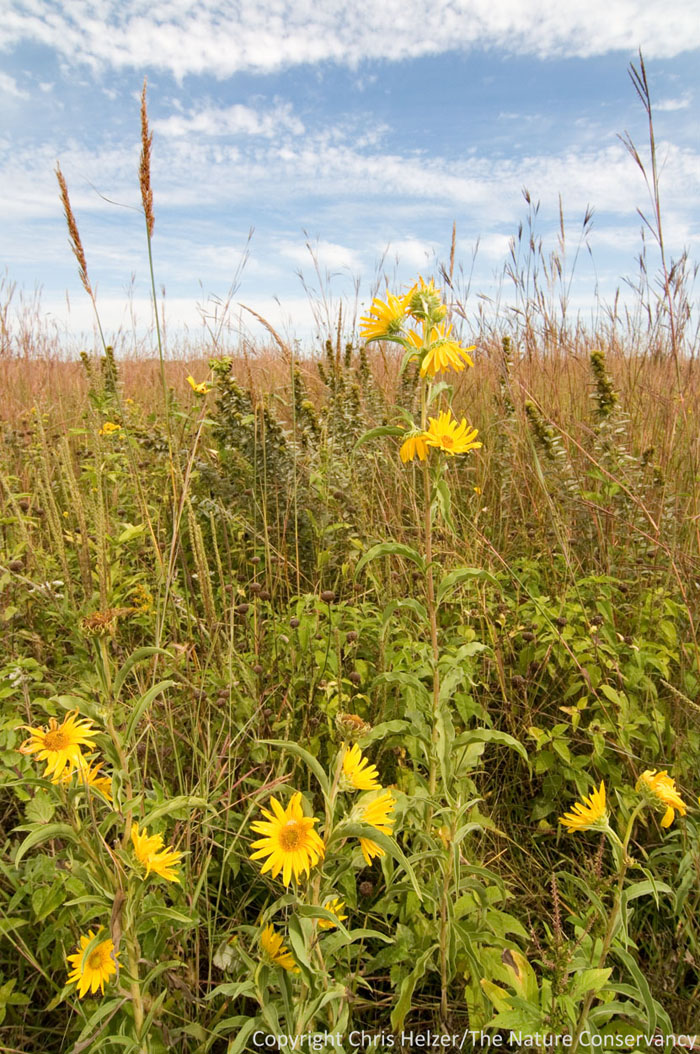
Maximilian sunflowers have just started to bloom, joining a crowded field of five other sunflower species in our prairies. (Click on the photo to see it full-screen)
.
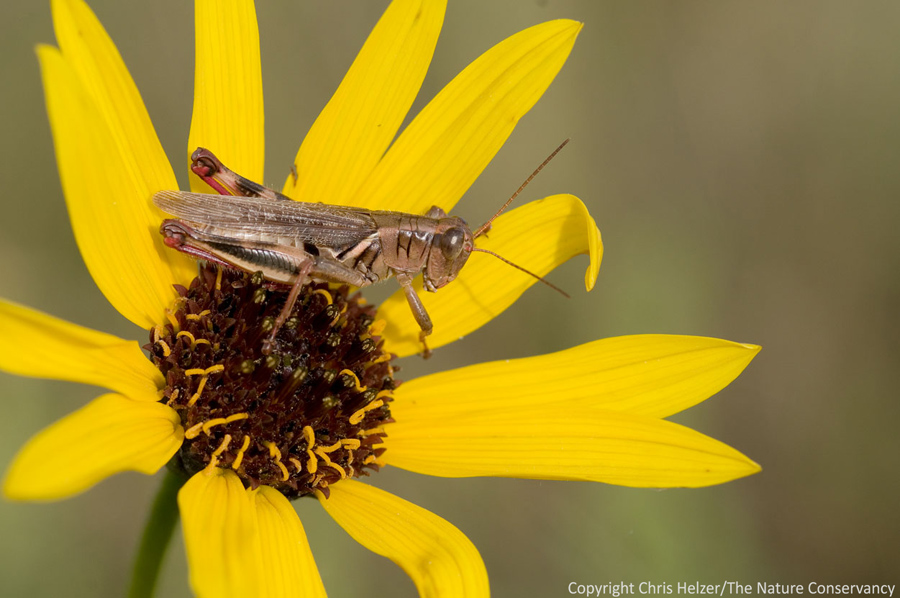
A grasshopper sits on one of the last remaining blossoms of stiff sunflower, an early blooming perennial sunflower - most common in the sandier soils of our prairies.
.

Our seed harvest crew is swimming through the tall grasses and late yellow flowers to find ripe seeds from shorter plants that bloomed earlier this year. In this photo, Mardell Jasnowski (left) and Nanette Whitten (right) look for black-eyed Susan seeds in the burned/grazed portion of a prairie. A light stocking rate and an unexpectedly wet season has left even this grazed area with plenty of tall growth.
.

The abundance of yellow makes flowers of any other color really stand out. In this photo, Mardell is harvesting seed near a particularly showy dotted gayfeather plant.
.
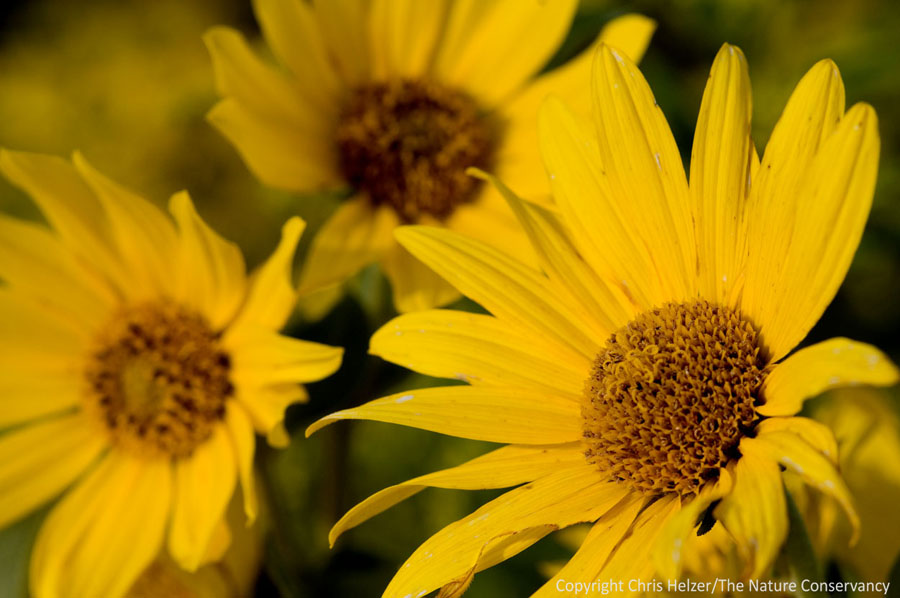
This cluster of Maximilian sunflower blossoms was arrayed nicely for a photo...
.
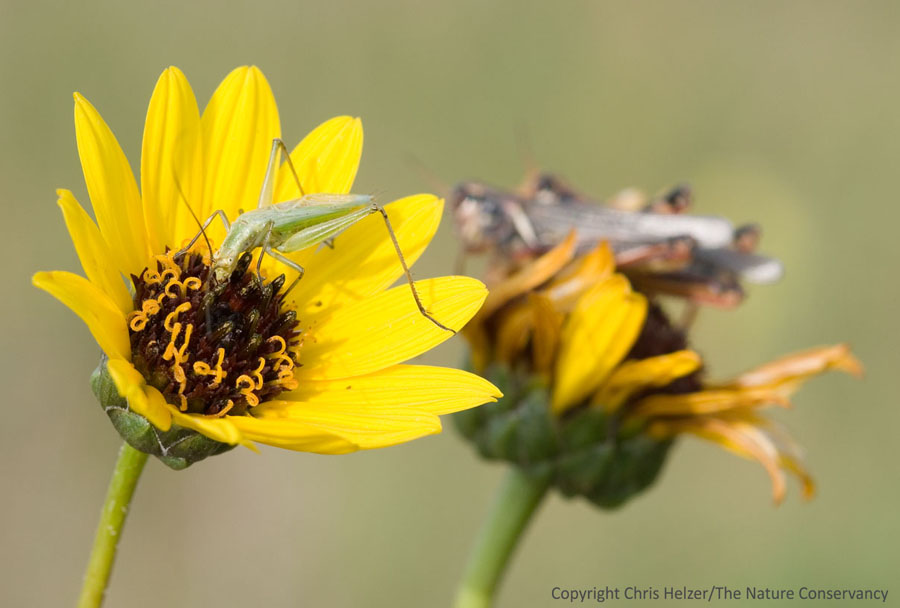
A tree cricket feeds on pollen from a stiff sunflower, while two grasshoppers do the same on another flower in the background. Tree crickets are omnivorous - feeding on both small insects and plant material.
In another week or so, some of the yellow flowers will start to fade, and the rest will be joined by the whites and lavenders of late season asters. In the meantime, yellow is definitely the color of the week.
Enjoy the autumn!

 The Prairie Ecologist