
A couple weeks ago, I arrived at our family prairie to find a couple milkweed plants being assaulted by Japanese beetles. That wasn’t a surprise. My understanding is that Japanese beetles have been in the U.S. since about 1916. They’re widely considered to be an invasive species because they are both non-native and because they can cause significant damage to both crops and native plants. I’ve been watching them in prairies for a while, paying attention to what plants they use and trying to decide how big a threat they might be.
As you can see from the photos below, a horde of the little buggers was really working over some of the common milkweed at our prairie. That seems bad, right? Maybe, but the more important question is, “What should we be doing about it?”
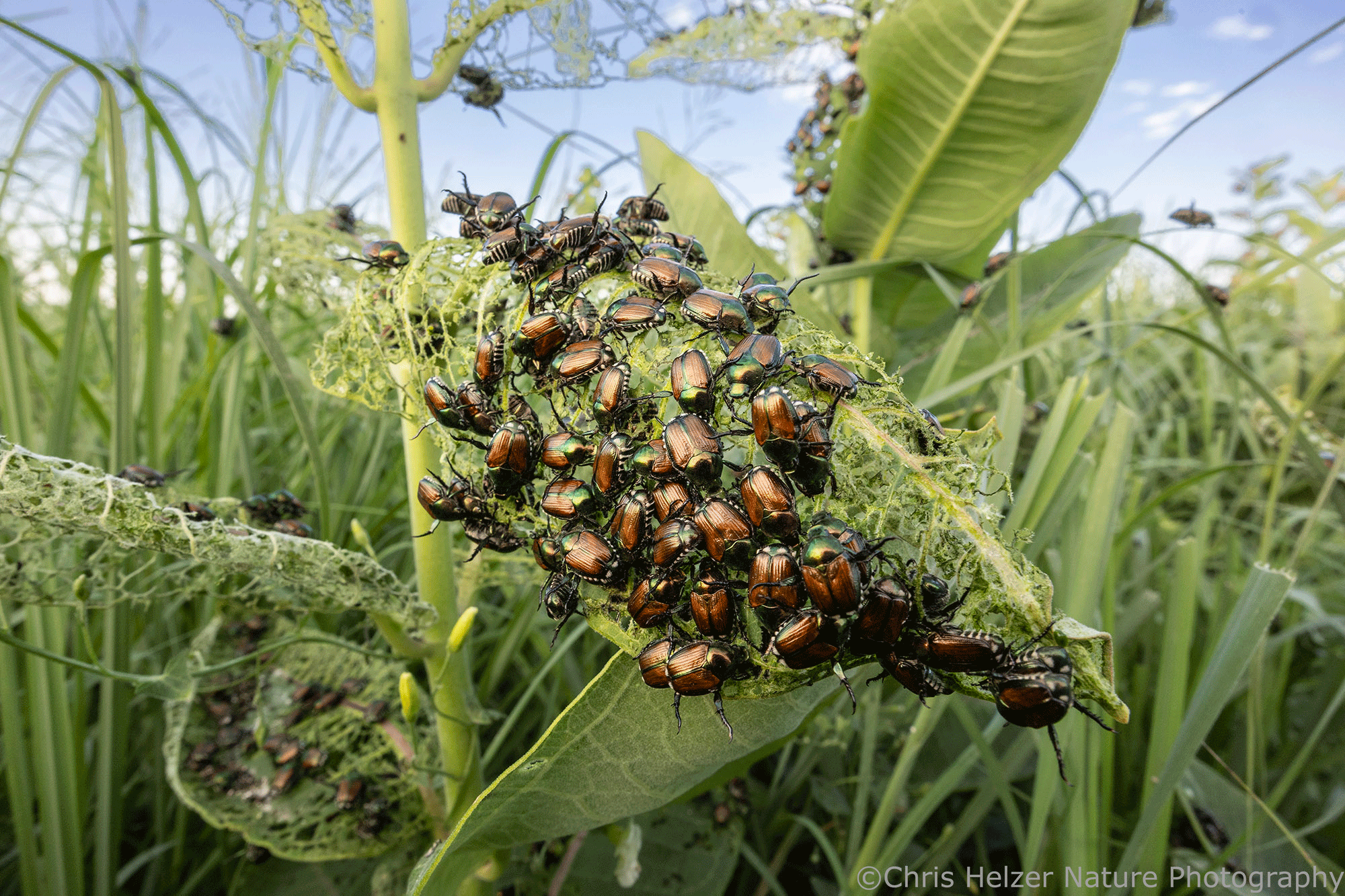
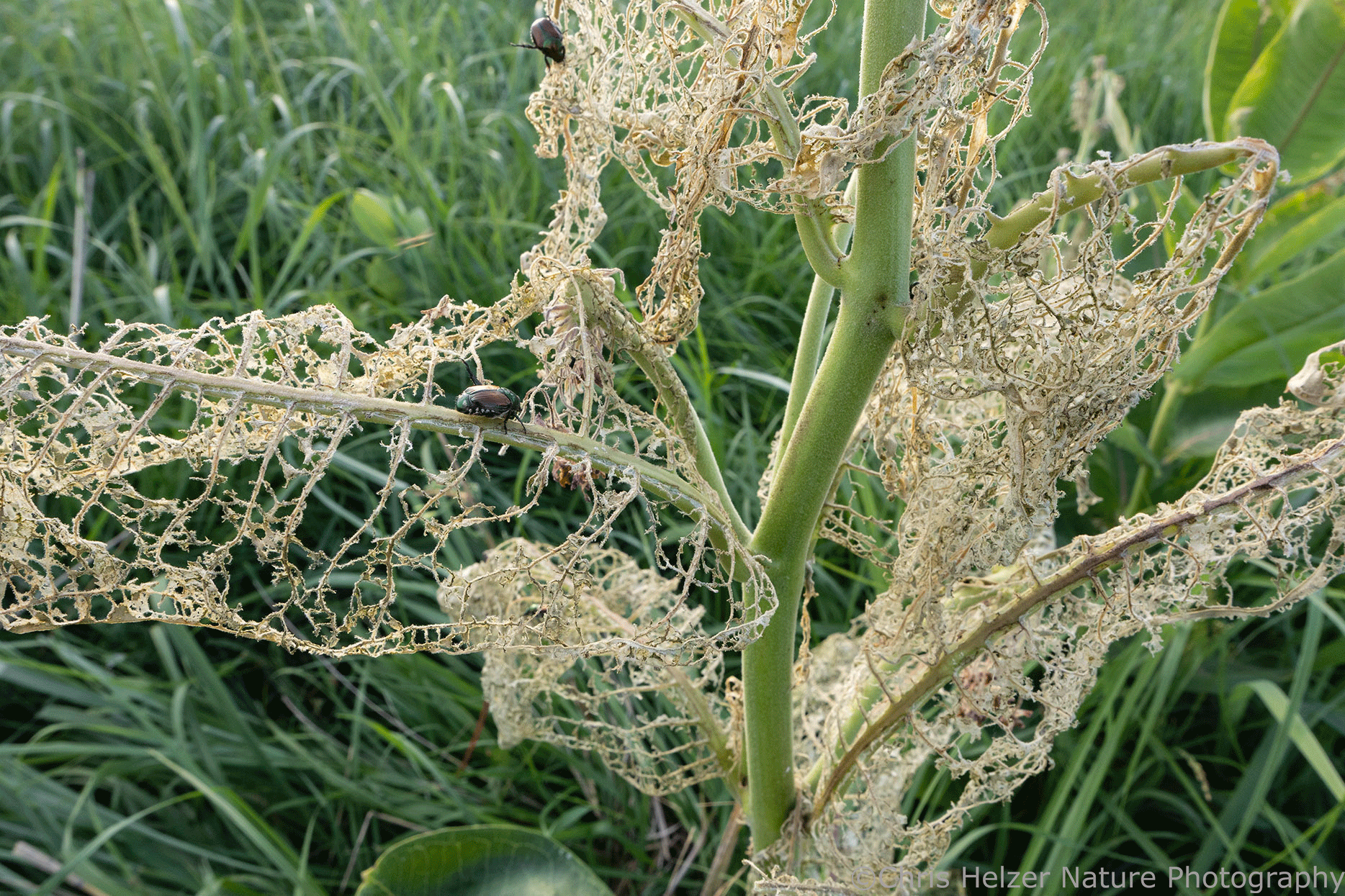
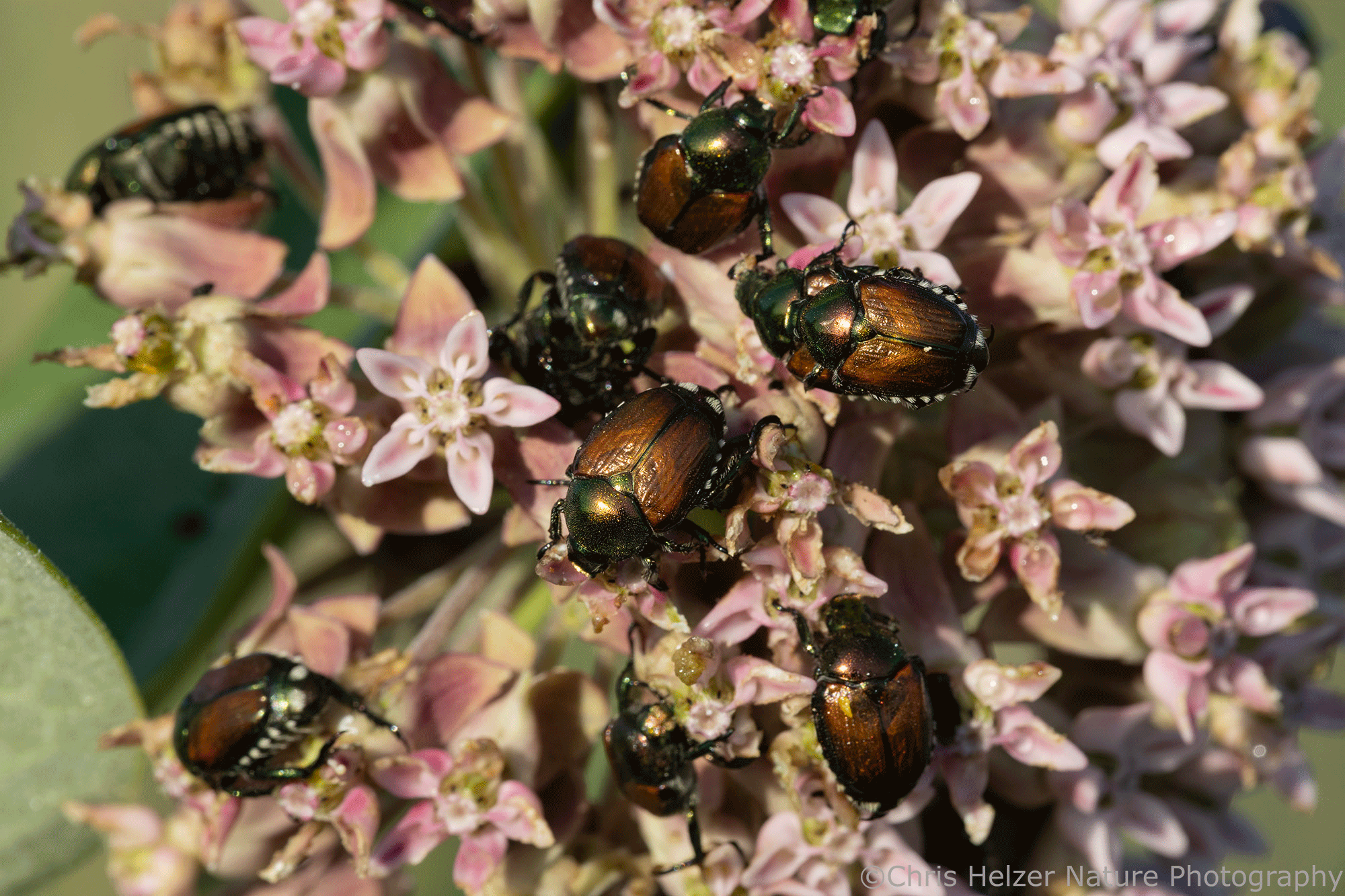
Japanese beetles feed on lots of other native prairie plants besides common milkweed. Some of their favorites around here include lead plant, round-headed bushclover, and tick clovers (aka tick trefoils), but there’s a very long list of prairie plant species I’ve seen Japanese beetles feeding on – often in large numbers.
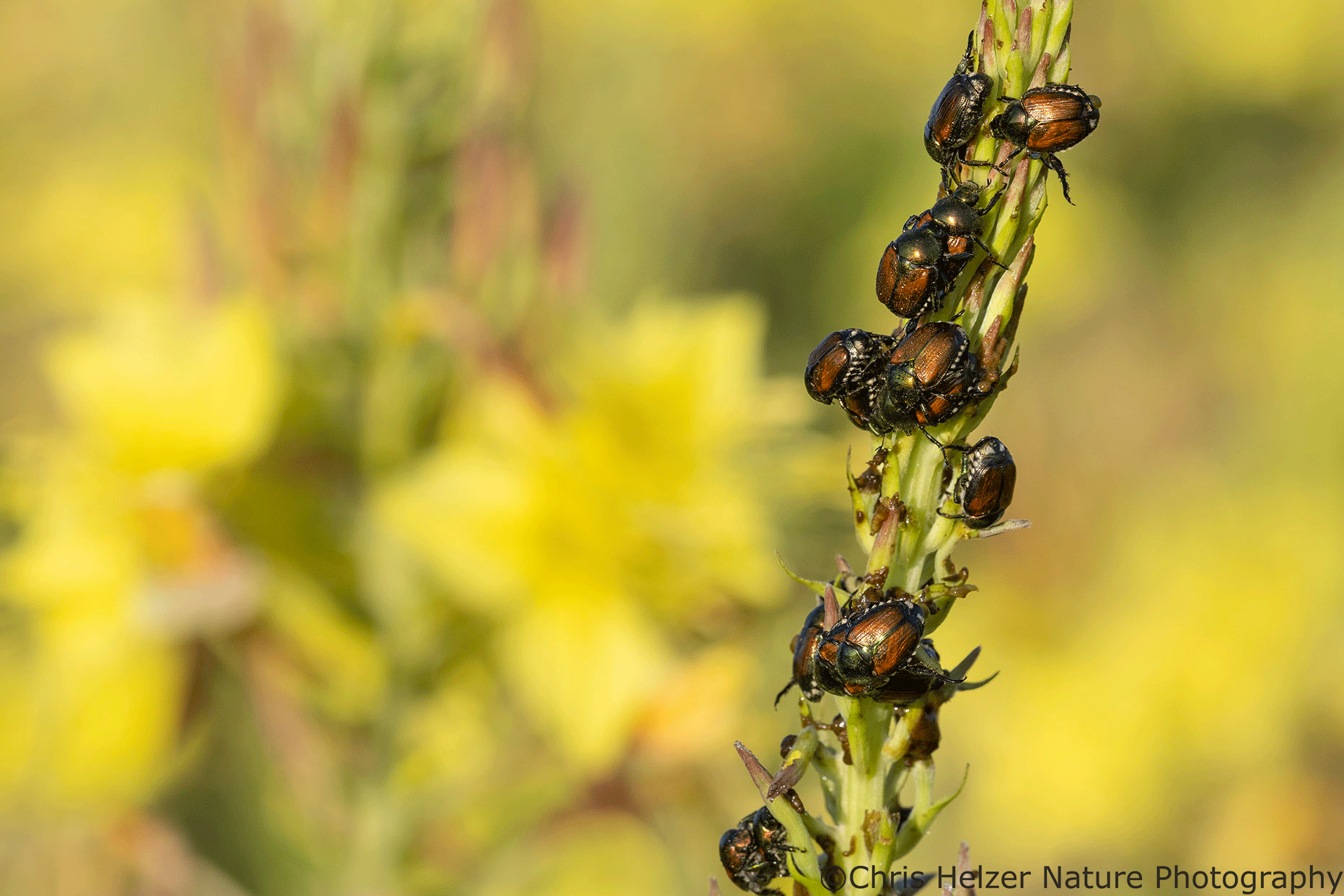
Several years ago, I wrote a post about my frustration with having to answer questions about whether certain insect species are beneficial or pests. I still don’t like those characterizations and I stand by what I wrote. In that same post, I also said that there are some truly invasive insect species in North America, though, and I listed Japanese beetles as an example. I still stand by that, too – they are invasive.
However, that still doesn’t answer the question about how to handle them.
Look at the photos below. They show a native sunflower (stiff sunflower) being ravaged by some little brown leaf beetles. You can see that the flowers are being functionally destroyed by the beetles – they’re eating all parts of the flower and it will be unable to produce seeds as a result. Is that bad? Does it matter that the beetle is a species native to North America? Should we do something about it?
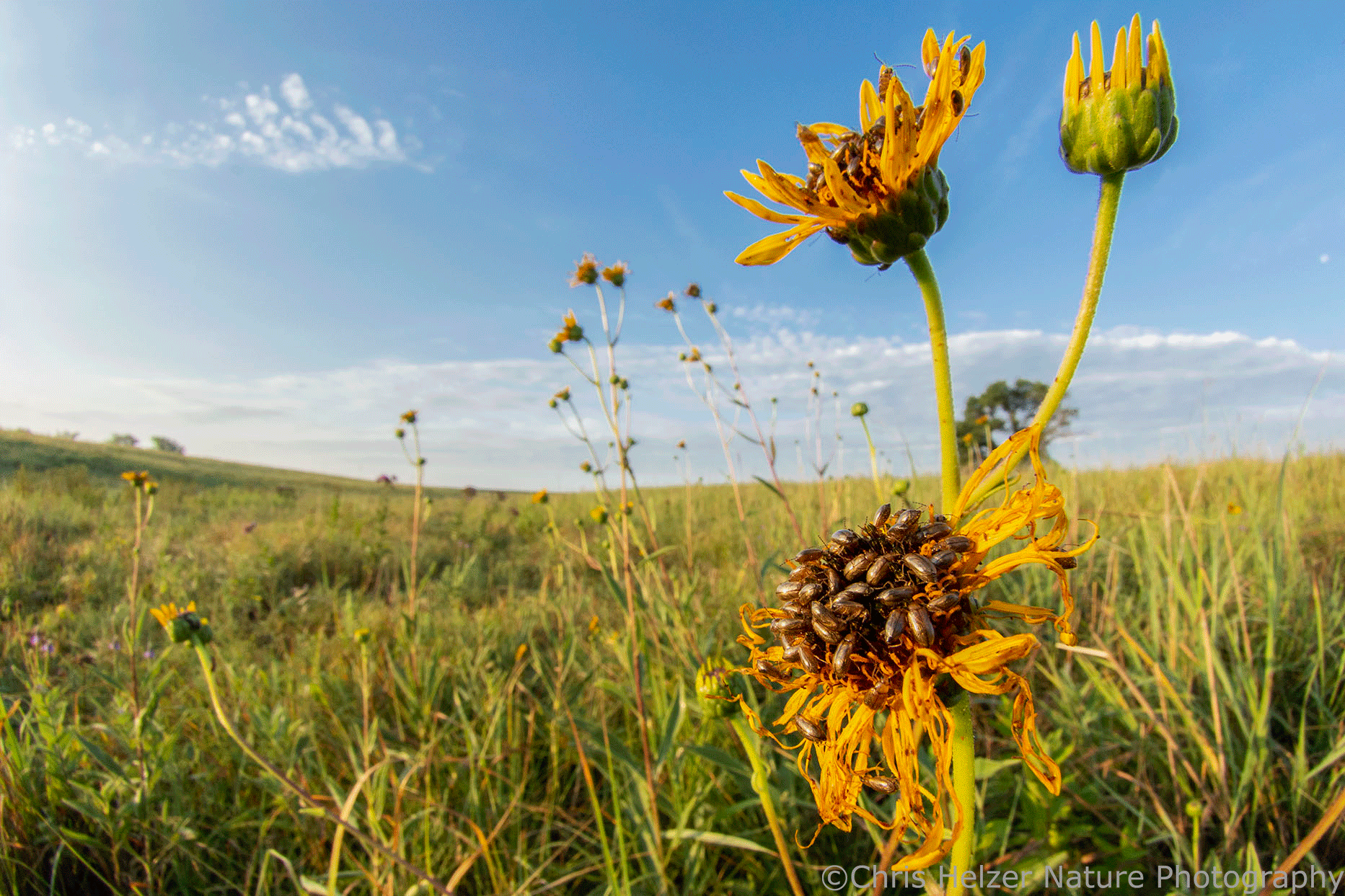
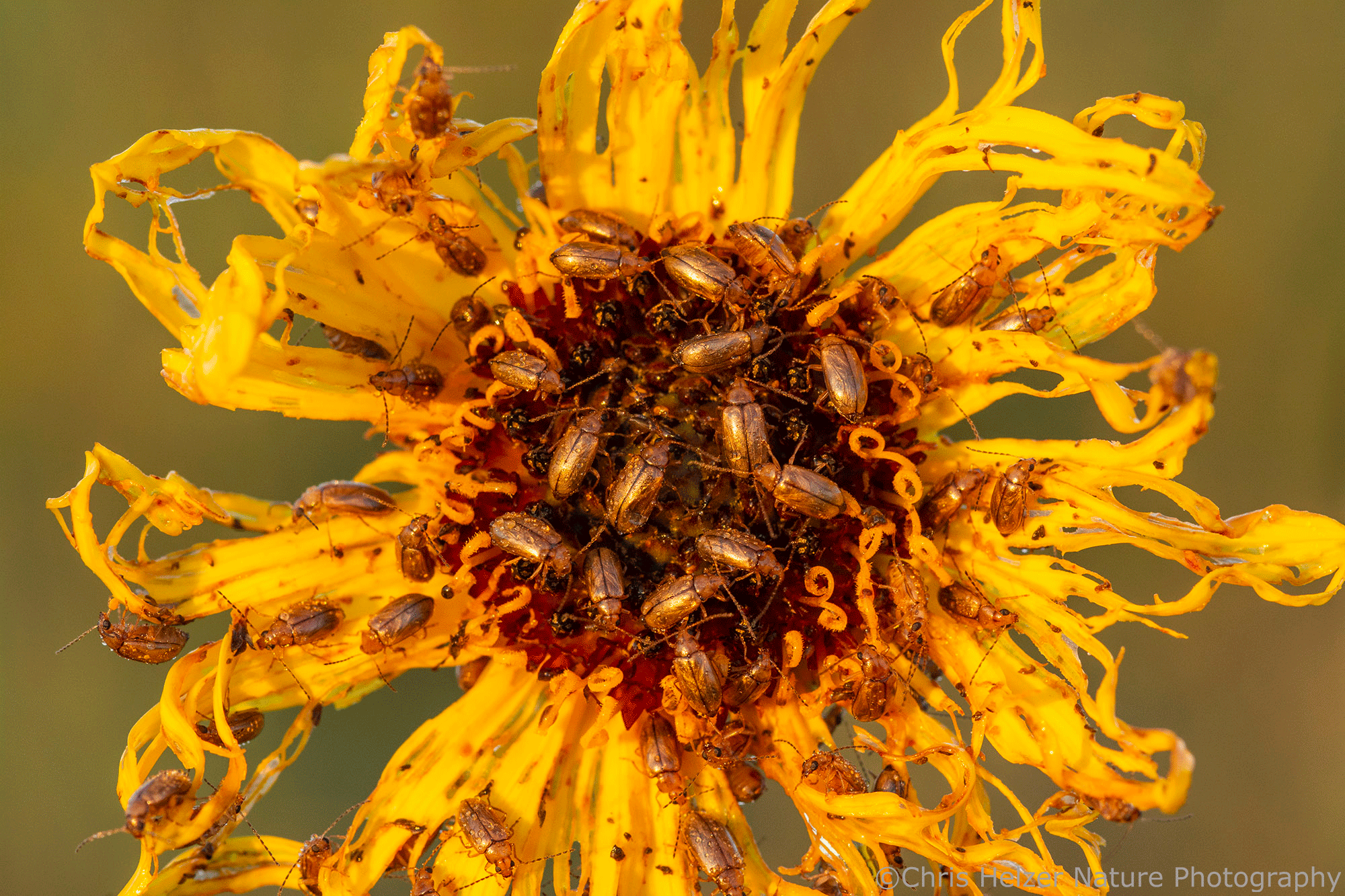
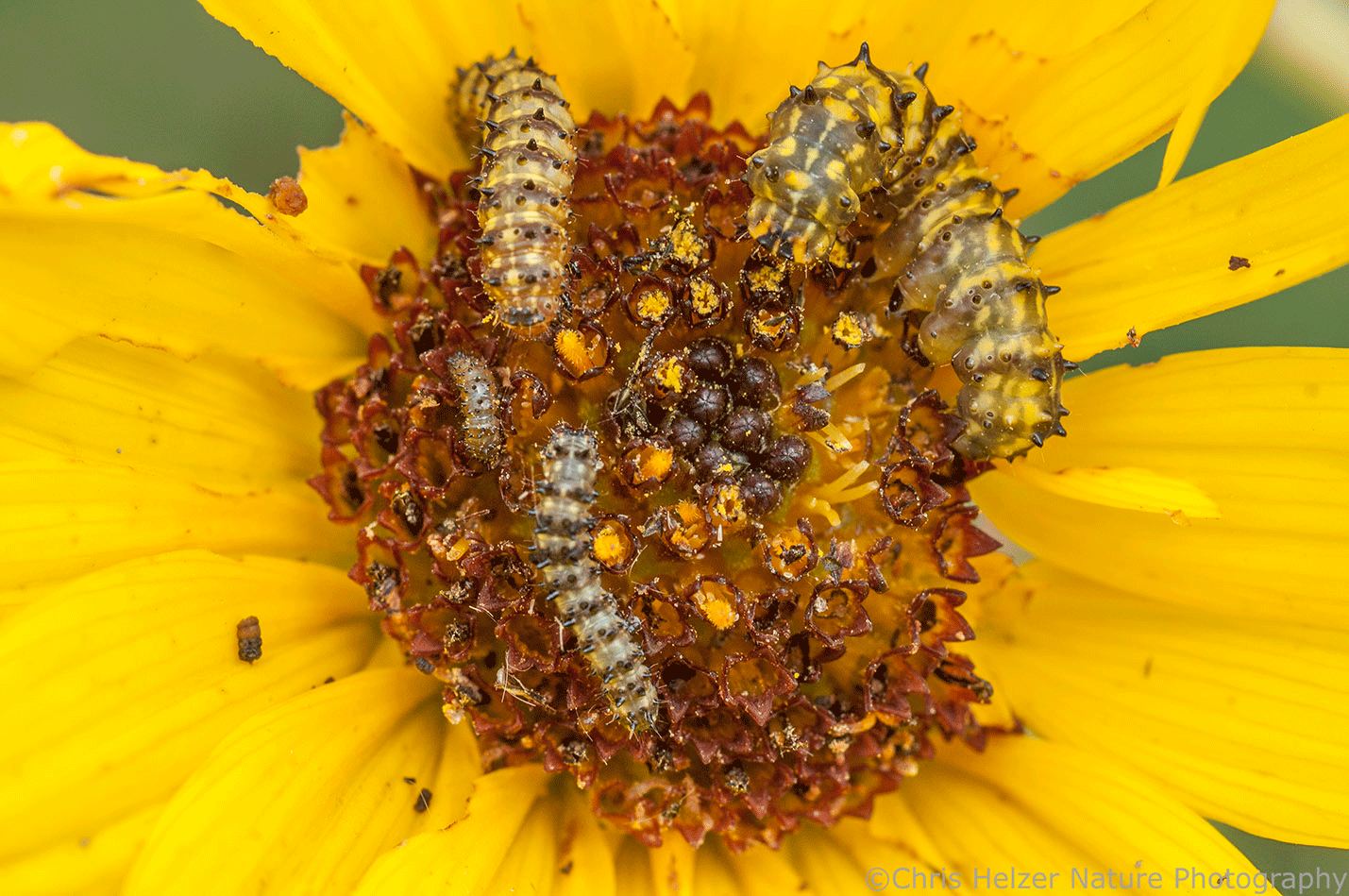
The photo below shows some yellow sunflower moth caterpillars feeding on stiff sunflower. They’re having a similar impact to the flower that the beetles in the above photos are having. The caterpillar is also a native species. Do we just let it happen or should we intervene?
There’s a lot of discussion these days about what species are invasive or pests and which aren’t. Does it matter whether they’re native or not? Should we just stop even thinking about invasive species as problems and live with them? It’s a good discussion to have, though I think the answer to the last question is an easy “no” – or, at least, “no, we can’t just ignore all invasive species and hope things will turn out for the best.”
Again, the real question is “what do we do?” As a land steward, my answer to this hinges on whether a species is working against my big objectives. My biggest objective is to facilitate ecological resilience, which largely depends on species diversity and the size and connectivity of habitat. As a result, when I’m thinking about how to respond to a plant or animal that seems potentially problematic, I ask myself if it seems to be decreasing resilience. Is it fragmenting habitat and decreasing the ability of prairie species to use or thrive in that area? Is it monopolizing resources and simplifying the plant or animal community it has moved into? If the answer is yes, I feel like action needs to be considered. Those questions, by the way, apply to both native and non-native species.
In the case of plant species that are reducing the diversity of the plant community, sometimes my response is to try to kill and/or eradicate them from a site. That’s usually only the strategy if the species has just started to invade and I think we can still get rid of it without undue harm from whatever approach we plan to take (often either manual removal or herbicide treatment). More often, the strategy is to make sure our larger management actions are helping to prevent them from becoming dominant enough to cause problems. Sometimes, that means targeting the plants with mowing, fire, or grazing outside our larger stewardship approach. Other times, the general way we’re managing for plant diversity does the job just fine.
Returning to insects… At the moment, I’m not doing any invasive insect control efforts at my family prairie, nor are we doing anything like that on lands we manage at The Nature Conservancy here in Nebraska. The simplest reason is that none of the insects appear to be causing enough negative impact to warrant any action. Japanese beetles definitely hit some plants hard, but I’ve never seen them take out the majority of plants in a population. When I took the above photos of Japanese beetles, there were lots of milkweed and/or evening primrose plants nearby that weren’t being visited by the beetles. Plus, I’ve noticed some plant species (lead plant is a great example) that look really bad when the beetles are done with them, but still produce seeds by the end of the year.
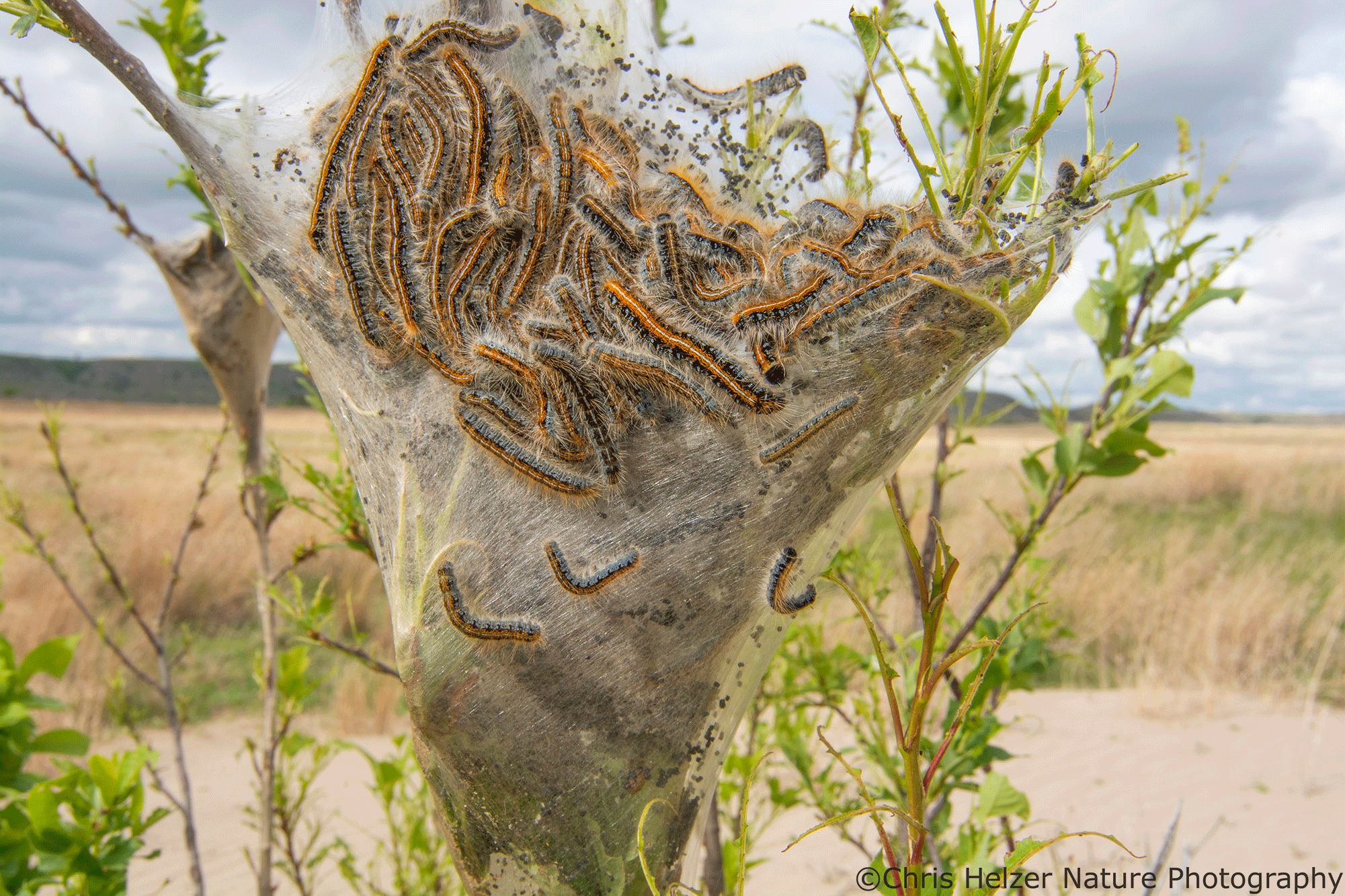
And, of course, if I’m not going to do anything about Japanese beetles, I’m also not going to do anything with native leaf beetles or caterpillars eating stiff sunflowers, tent caterpillars eating willows, or any other similar examples – even if some of the effects can look pretty dramatic. The reason is the same. I’m not seeing any evidence those species are affecting the species diversity or resilience of the ecological communities I’m managing.
Saying all this, I’m not trying to say no one should ever worry about invasive or other insects that cause potentially negative impacts. Different standards apply to insect damage to food crops, for example. In our home garden, we sometimes take action to save our spinach or squash plants from being destroyed by insects. We sometimes pick Japanese beetles off our zinnias and rhubarb and dump them in soapy water to save those plants.
Most times, however, we’re happy to see (or at least are fine with) insects devouring the flowers, seeds, leaves, or stems of the plants in our yard. We have a diversity of native plants (and some non-native flowers and shrubs) in our yard BECAUSE we want to help invertebrates and other wildlife, so the fact that those plants are being used as food is a success.
Our farmer neighbors have to make difficult decisions about whether an insect population is going to have enough effect on their yield that they need to do something about it. Those decisions are then followed by similarly difficult decisions about what action might look like (pesticide application? biocontrol introduction? inclusion of field boundaries planted with vegetation that might reduce insect damage to crops?)
In ecological systems, though, I’m comfortable with the standard I’m applying. If a species is reducing the resilience of a site we’re managing, we have an obligation to mitigate that. It can be hard to divorce ourselves from the emotion of seeing a plant get decimated by a crawling mass of invertebrates. Stepping back to put that scene in context with the broader area, though, usually helps answer the question about whether or what to do anything about it. After all, one of the benefits of facilitating ecological resilience is that it gives prairies the ability to adapt and absorb impacts, including Japanese beetles shredding some plants here and there.


What a thoughtful approach. Thank you for articulating this so beautifully.
We got our first wave of Japanese beetles around Kansas City about 10 years ago, and they were initially really destructive. I remember seeing a large basswood tree get totally defoliated one year, and they also loved to defoliate cultivated grape vines. That said, the last few years they’ve been barely noticeable. I’m not what changed–maybe birds realized they were easy pickings?–but what seemed like it would be an ongoing problem at first hasn’t been one lately.
That’s very interesting. I think I’m seeing something similar here, but they also seem to late this year, so I’m trying to make sure I’m not celebrating early…
Great post, Chris. I’ve heard that Japanese beetles are eating more different types of plant species than they previously did. Do you know if that is true? I often talk to my friends and family about garden/plant/insect stuff so I’ll definitely be thinking about this post.
Chris,
I like the way you encourage folks to consider the bigger picture when there are issues with invasive species and insects.
I wonder if praying! Mantis eat enough Japanese beetles to make a difference.
I really appreciate this post. I’ve been strongly moved by “Wild Souls”, written by Emma Marris, and this blog made me think of some of the conclusions she came to.
We had Japanese beetles eating our garden and our grapevines three years ago, but I never observed them in our prairie. They looked like they were pretty destructive but I didn’t take any extensive measures. Anyway, in the 3 growing seasons since we haven’t seen a single Japanese beetle. I don’t know if that is typical, but if it were it would seem their damage would be limiting.
Wow! what photos! they made me squirm…
So interesting to hear that Japanese beetle populations are fluctuating from year to year and it makes me think that ecological time is different from people time – we are too quick to try to correct!
I also liked reading the previous post about labeling insects as beneficial or pests. Maybe we need to apply the same ruler to ourselves – am I a beneficial or a pest in my environment?
I’d like to use your good definition for invasive thresholds, but have not been able to. You correctly point out that it’s a difficult thing to pin down. If invasions reach the point where casual observation reveals major native species loss, it’s often too late for management to do much good, due to lack of resources and/or the control methods must be high intensity, which can do more harm than good. So the control decision should be made early in the invasion, but the only way to accurately assess native species loss at that point is to do statistically robust annual monitoring to detect trends. Most sites don’t have the expertise or funds to pull that off.
The best (and inadequate) solution I’ve come up with so far is to limit my invasive work to higher quality areas that have the best chance of recovery. That reduces the workload so I can use a different definition that doesn’t require formal monitoring: if a plant appears to dominate any higher quality parcel in my area & it’s density appears to be increasing over a period of several years, I’ll consider controlling it in all my higher quality parcels of similar community type, whether it currently dominates or not. An exception is well known invasives like crown vetch. If invasives like those are not yet firmly entrenched, they get controlled no matter where they are in the preserve, even if only a few plants.
Interesting observations and thoughts on invasive species.
I have been working in native areas restoration for over 30 years and have done a lot of invasive species control. My comments here relate to experience in my own yard.
For nearly 20 years I have had issues with Japanese beetles. I have a prairie/savanna planting of over 120 native species. In this planting, I see the beetles but they usually hit only a few particular species of plants hard most years, especially Desmodium, but otherwise have had little impact on any of the other species. However, I also have Corylus americana and Parthenocissus inserta in my yard and they get hammered by the beetles. When the beetles first showed up here, those were the species most heavily impacted. However, as you mentioned, these plants usually recover after the beetle run their course later in the season.
A local university entomologist who works with invasive species control that includes Japanese beetles, has suggested that newly arrived invasive species often increase dramatically when first arriving, then drop in numbers the following years. They are still present, but at lower, less destructive numbers.
I thought I observed that here, but this year seems to be the highest population of Japanese beetles that I have observed in my yard since they first arrived years ago and after insignificant numbers last year. I suspect that a lot of this fluctuation occurs due to weather, especially rainfall amounts and winter temperature lows. Of course, weather is changing unpredictably now and could lead to conditions favoring invasive insects being able to survive further north or from year to year.
One observation I have made this year for the first time since dealing with Japanese beetles is that the birds have been aggressively feeding on them while in the past they paid little or no attention to them. Also interesting is that the birds being the most aggressive were primarily house sparrows, another invasive species. Robins, chickadee and house finches were also preying on them.
Why the birds are suddenly using the beetles as a food source is hard to say. It could be because our birds had a good breeding season, based on numbers of juveniles observed, that coincided with the beetle influx when other food may have been in low supply. Beetles are not great food for nestlings, adult birds usually concentrating predominantly on moth larvae to feed their young, which seems to indicate a lack of preferred foods.
There is a positive relationship between Japanese beetle populations and the abundance of cultivated lawn where eggs and larvae of the beetle are deposited and produced. In urban areas or in areas where fragmented native habitats are being surrounded by turf grasses the populations are likely to increase as development increases. Sometimes I feel we are managing symptoms rather than problems.
I should add that I do usually try to control the beetles to a certain extent by knocking them into soapy water. I feel that the foliar damage they do, if extensive, probably reduces the number of native insects that might be predators, caterpillars, or pollinators and since it did not seem as though any predation was occurring on the beetles, at least not until this year, I want to reduce their impact.
One last thing I would like to add, relating to a question from one of your other commenters about praying mantis helping the situation, I think it would be important to everyone to be aware that the two large mantis species that most people are familiar with are both exotic species that have negative impacts on natural areas, both in terms of native insects populations and even small vertebrates.