Those bugs are eating my flowers! What do I do?

A couple weeks ago, I arrived at our family prairie to find a couple milkweed plants being assaulted by Japanese beetles. That wasn’t a surprise. My understanding is that Japanese beetles have been in the U.S. since about 1916. They’re widely considered to be an invasive species because they are both non-native and because they can cause significant damage to both crops and native plants. I’ve been watching them in prairies for a while, paying attention to what plants they use and trying to decide how big a threat they might be.

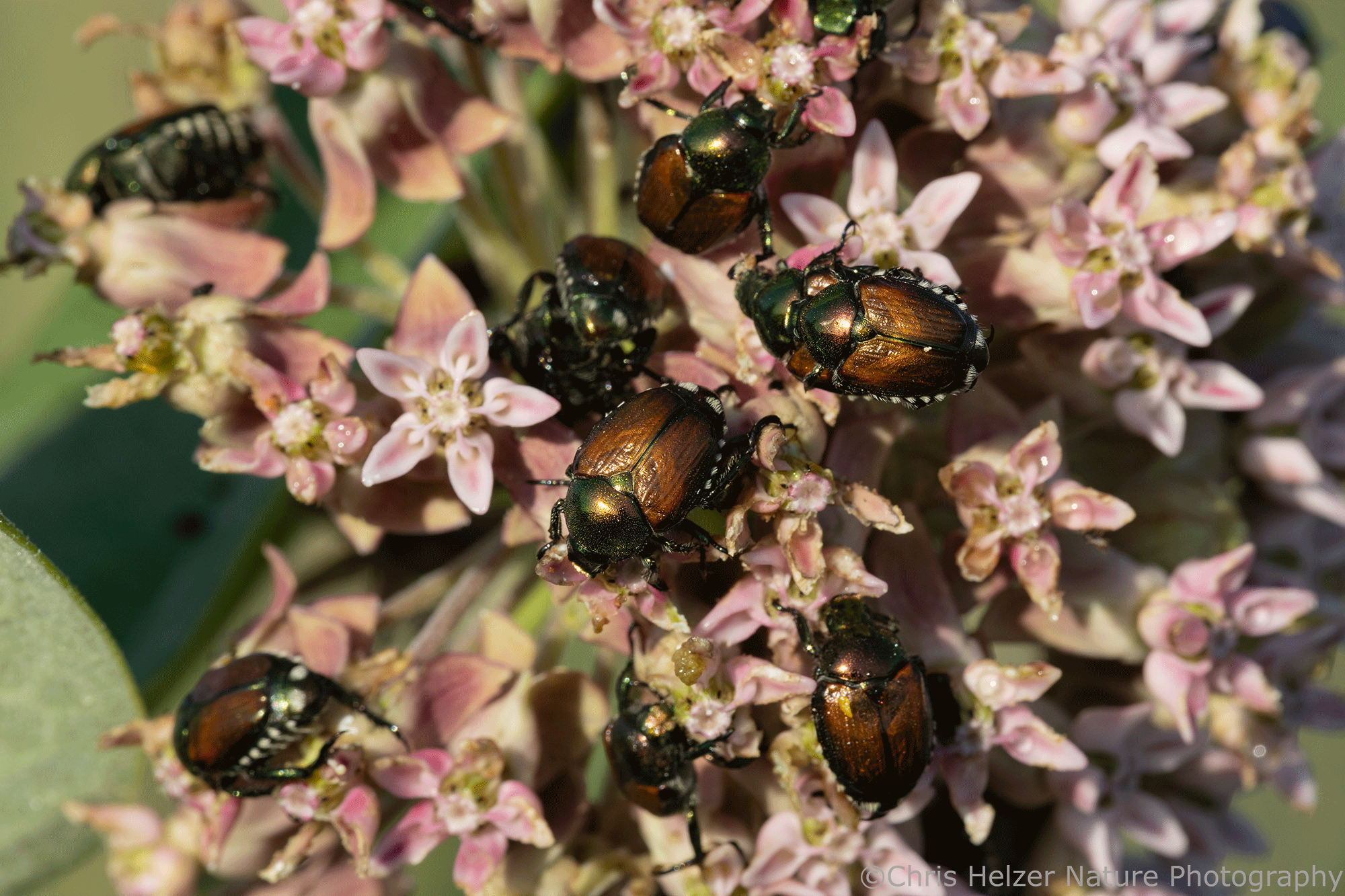
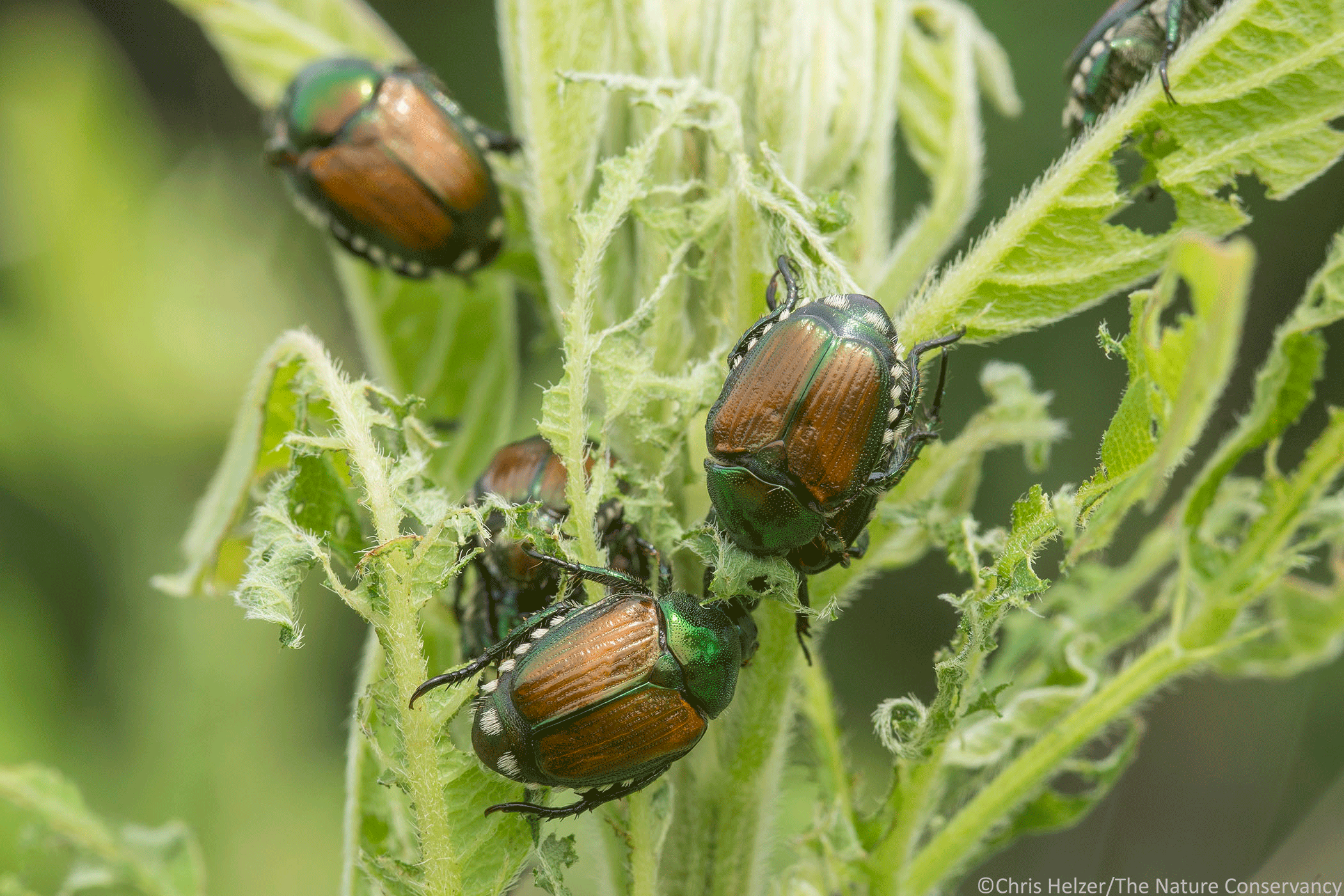
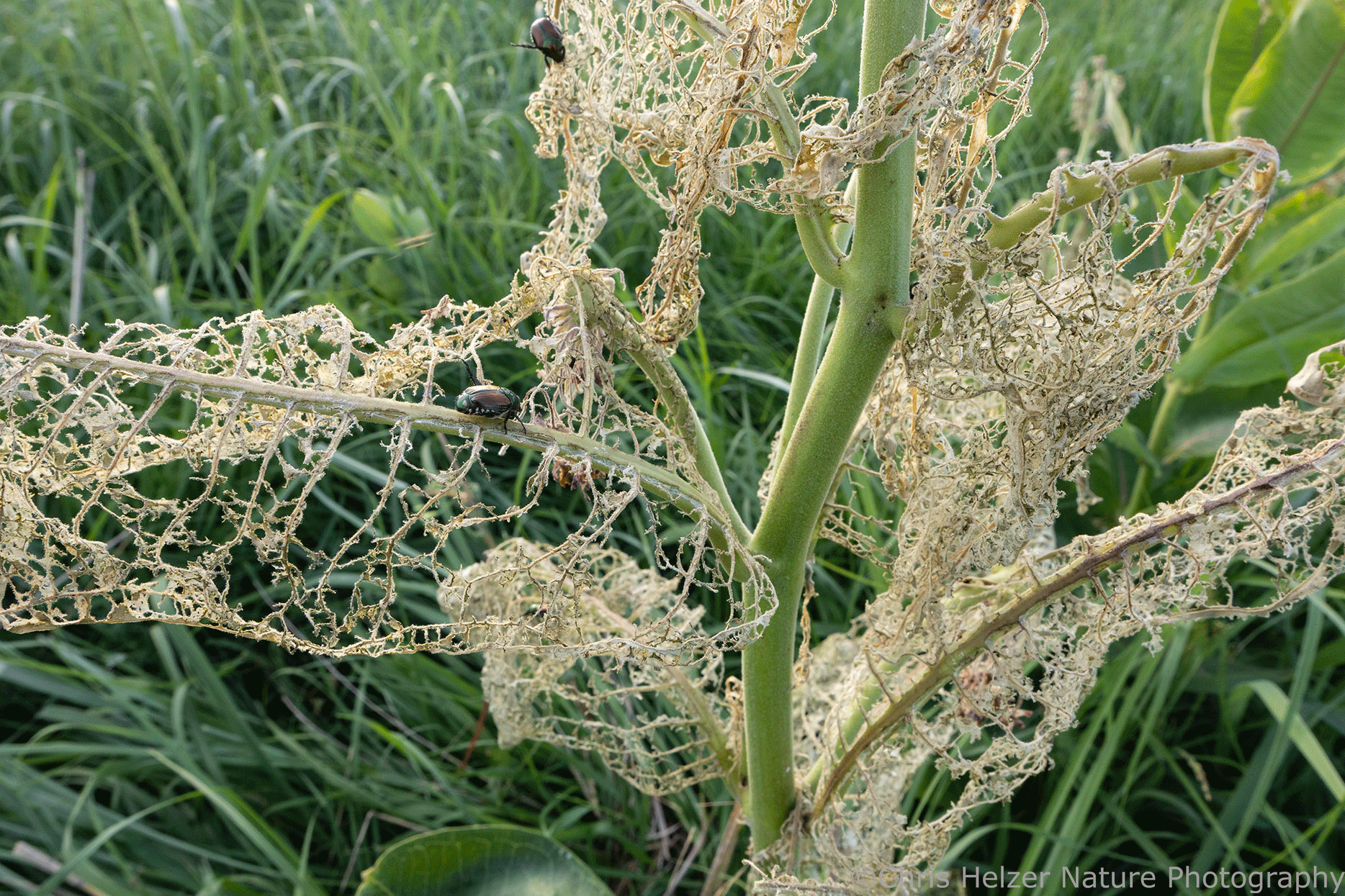
As you can see from the photos below, a horde of the little buggers was really working over some of the common milkweed at our prairie. That seems bad, right? Maybe, but the more important question is, “What should we be doing about it?”
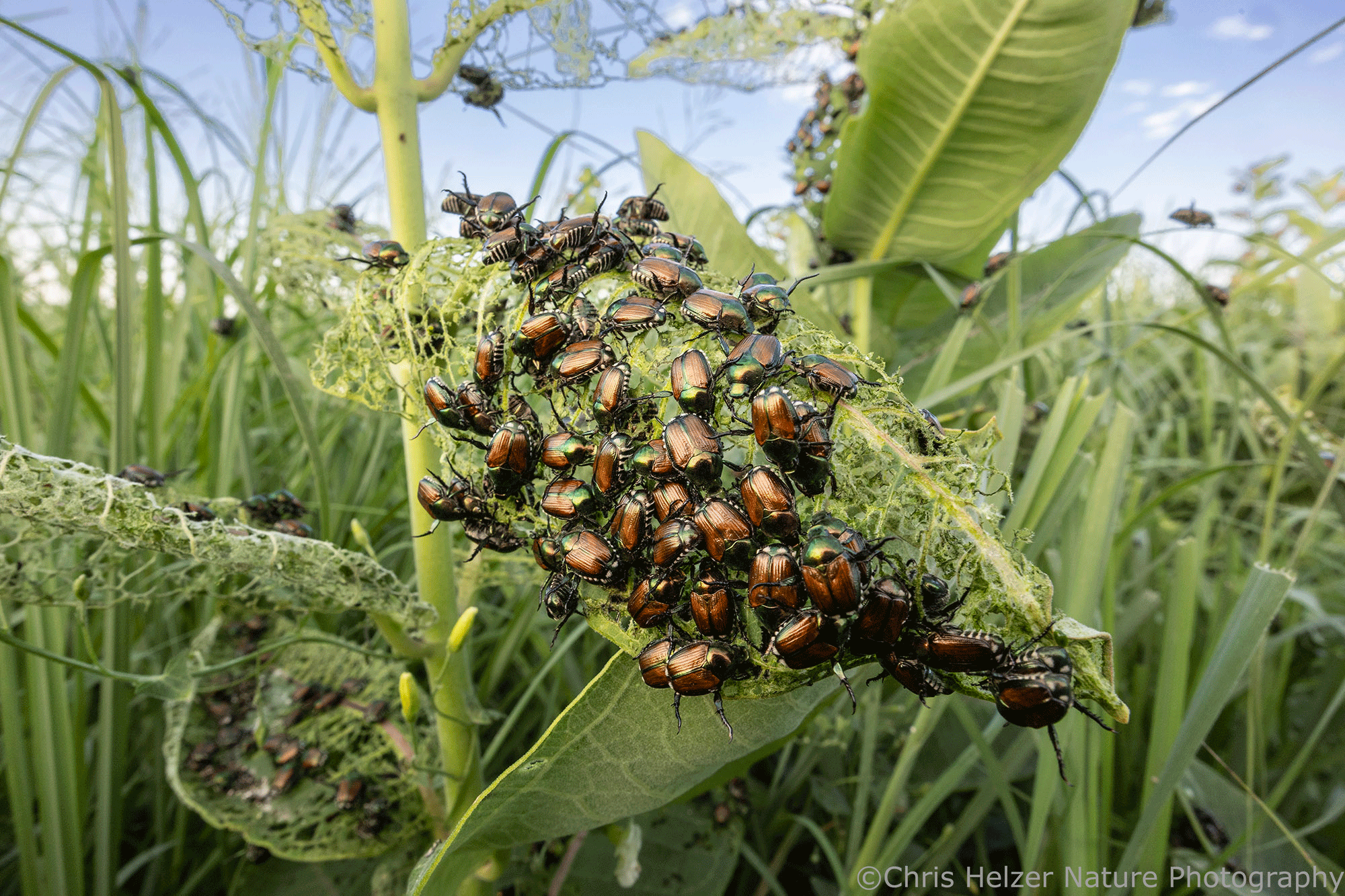
Japanese beetles feeding on the leaves of common milkweed
The aftereffects of Japanese beetles on a nearby common milkweed plant
They also eat the flowers

Japanese beetles feed on lots of other native prairie plants besides common milkweed. Some of their favorites around here include lead plant, round-headed bushclover, and tick clovers (aka tick trefoils), but there’s a very long list of prairie plant species I’ve seen Japanese beetles feeding on – often in large numbers.
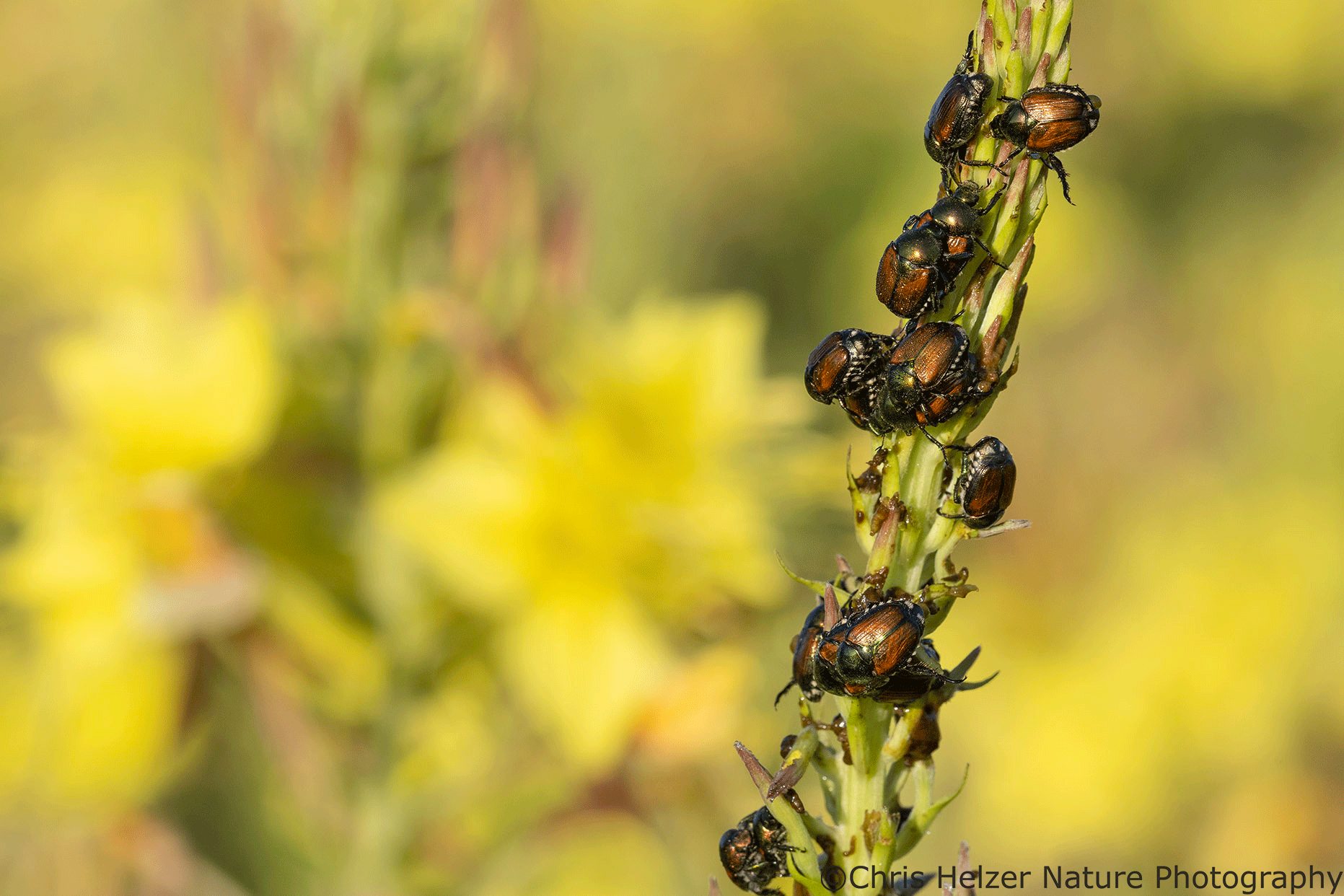
Japanese beetles on fourpoint evening primrose at The Nature Conservancy’s Platte River Prairies this summer

Several years ago, I wrote a post about my frustration with having to answer questions about whether certain insect species are beneficial or pests. I still don’t like those characterizations and I stand by what I wrote. In that same post, I also said that there are some truly invasive insect species in North America, though, and I listed Japanese beetles as an example. I still stand by that, too – they are invasive.

However, that still doesn’t answer the question about how to handle them.

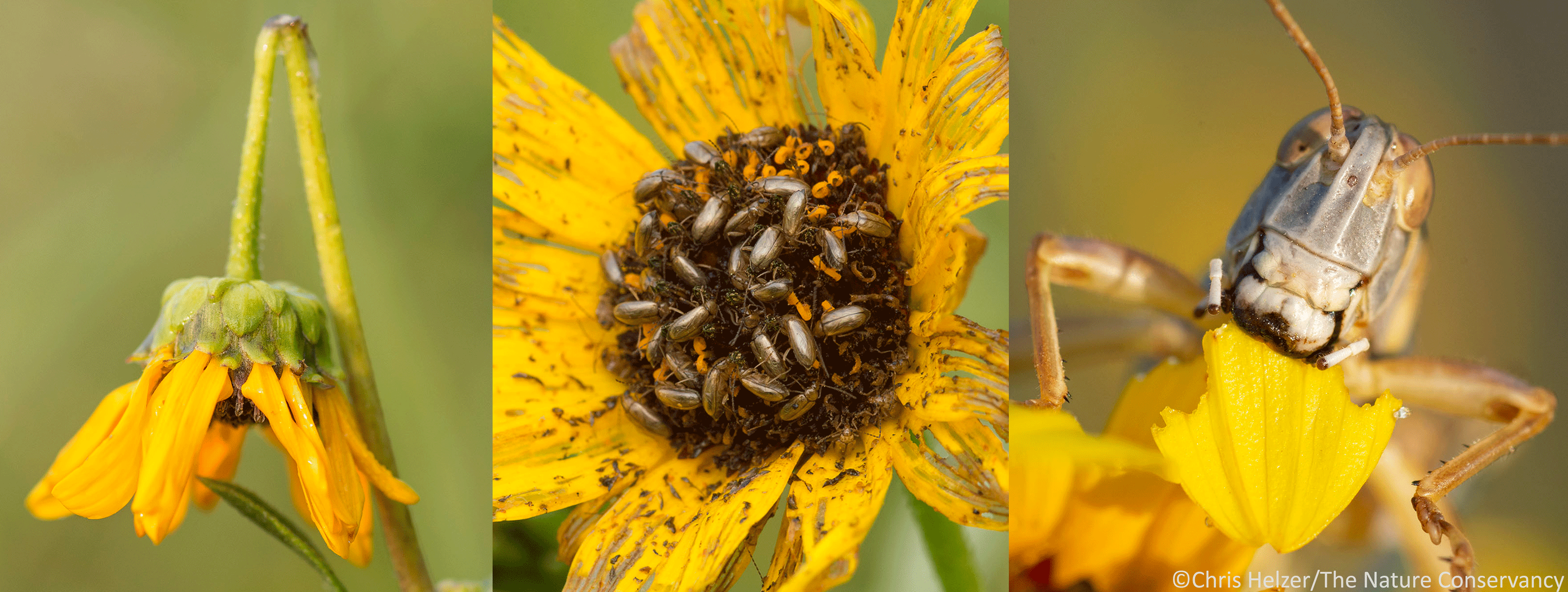
Look at the photos below. They show a native sunflower (stiff sunflower) being ravaged by some little brown leaf beetles. You can see that the flowers are being functionally destroyed by the beetles – they’re eating all parts of the flower and it will be unable to produce seeds as a result. Is that bad? Does it matter that the beetle is a species native to North America? Should we do something about it?
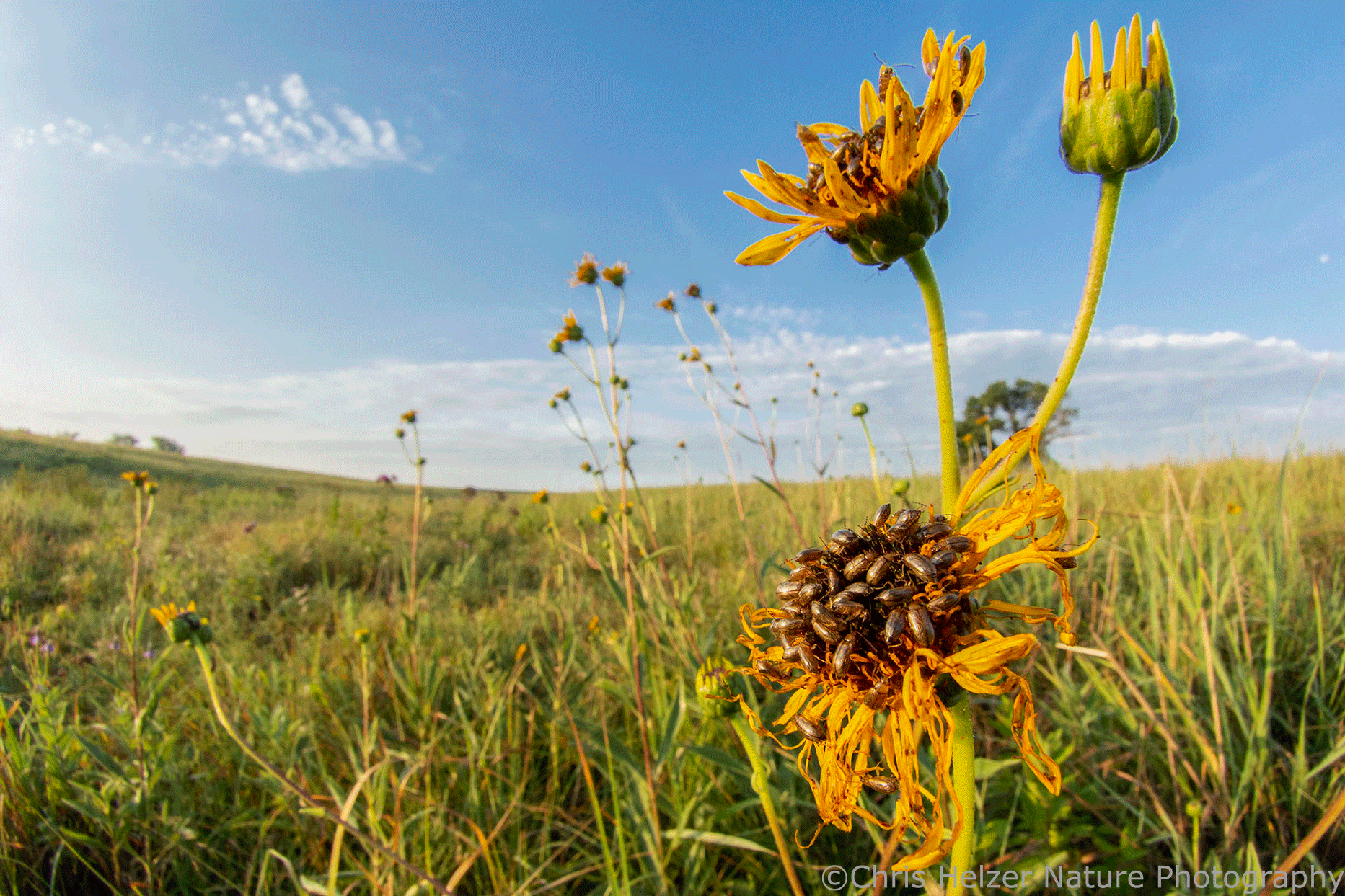
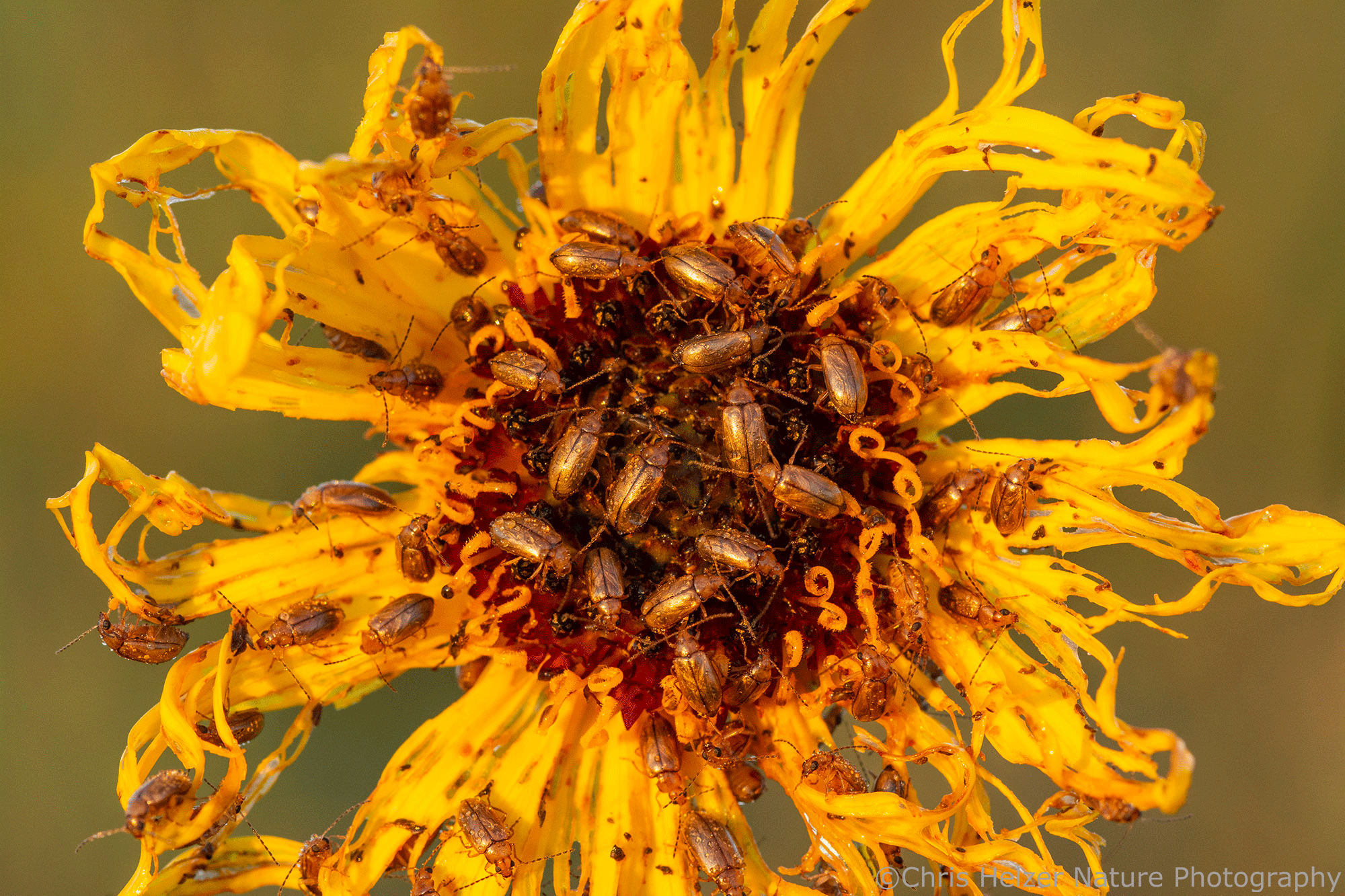
Leaf beetles (Metrioidea) on stiff sunflower
The little beetles are really working that flower over

The photo below shows some yellow sunflower moth caterpillars feeding on stiff sunflower. They’re having a similar impact to the flower that the beetles in the above photos are having. The caterpillar is also a native species. Do we just let it happen or should we intervene?
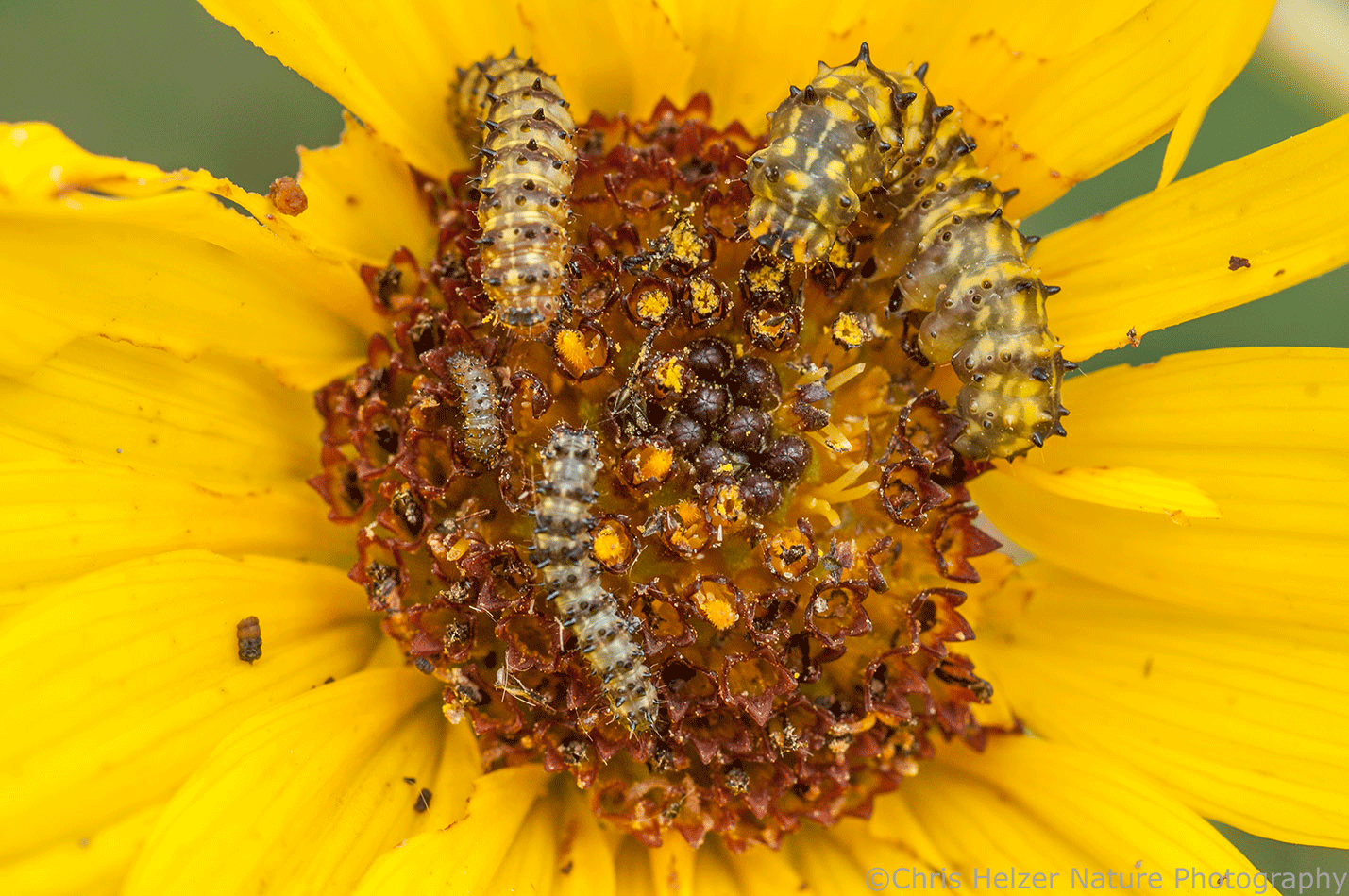
Yellow sunflower moth caterpillars on stiff sunflower

There’s a lot of discussion these days about what species are invasive or pests and which aren’t. Does it matter whether they’re native or not? Should we just stop even thinking about invasive species as problems and live with them? It’s a good discussion to have, though I think the answer to the last question is an easy “no” – or, at least, “no, we can’t just ignore all invasive species and hope things will turn out for the best.”

Again, the real question is “what do we do?” As a land steward, my answer to this hinges on whether a species is working against my big objectives. My biggest objective is to facilitate ecological resilience, which largely depends on species diversity and the size and connectivity of habitat. As a result, when I’m thinking about how to respond to a plant or animal that seems potentially problematic, I ask myself if it seems to be decreasing resilience. Is it fragmenting habitat and decreasing the ability of prairie species to use or thrive in that area? Is it monopolizing resources and simplifying the plant or animal community it has moved into? If the answer is yes, I feel like action needs to be considered. Those questions, by the way, apply to both native and non-native species.

In the case of plant species that are reducing the diversity of the plant community, sometimes my response is to try to kill and/or eradicate them from a site. That’s usually only the strategy if the species has just started to invade and I think we can still get rid of it without undue harm from whatever approach we plan to take (often either manual removal or herbicide treatment). More often, the strategy is to make sure our larger management actions are helping to prevent them from becoming dominant enough to cause problems. Sometimes, that means targeting the plants with mowing, fire, or grazing outside our larger stewardship approach. Other times, the general way we’re managing for plant diversity does the job just fine.
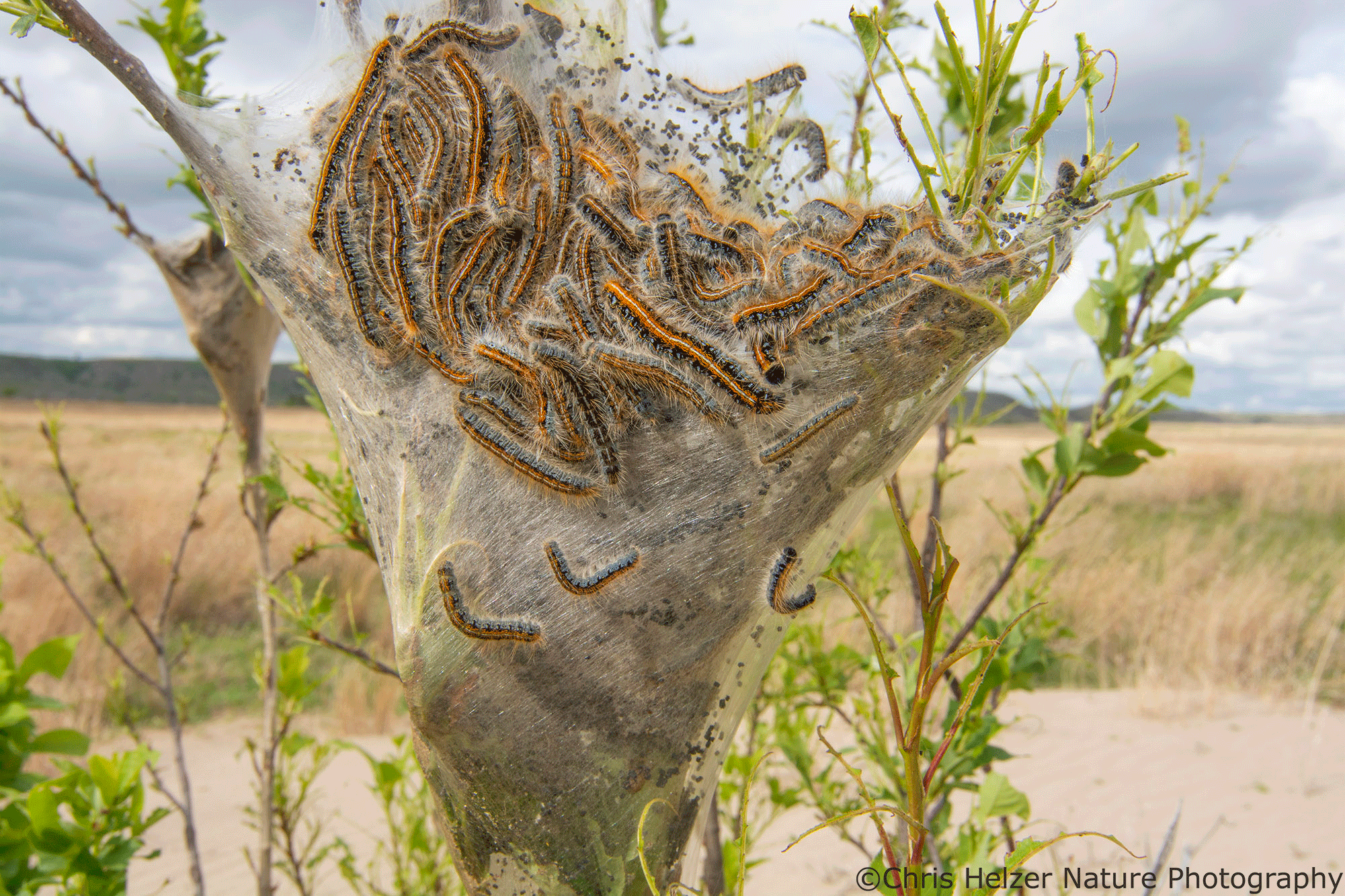
Eastern tent caterpillars (a native species) dismantling large chunks of a willow copse at The Nature Conservancy’s Niobrara Valley Preserve

Returning to insects… At the moment, I’m not doing any invasive insect control efforts at my family prairie, nor are we doing anything like that on lands we manage at The Nature Conservancy here in Nebraska. The simplest reason is that none of the insects appear to be causing enough negative impact to warrant any action. Japanese beetles definitely hit some plants hard, but I’ve never seen them take out the majority of plants in a population. When I took the above photos of Japanese beetles, there were lots of milkweed and/or evening primrose plants nearby that weren’t being visited by the beetles. Plus, I’ve noticed some plant species (lead plant is a great example) that look really bad when the beetles are done with them, but still produce seeds by the end of the year.

And, of course, if I’m not going to do anything about Japanese beetles, I’m also not going to do anything with native leaf beetles or caterpillars eating stiff sunflowers, tent caterpillars eating willows, or any other similar examples – even if some of the effects can look pretty dramatic. The reason is the same. I’m not seeing any evidence those species are affecting the species diversity or resilience of the ecological communities I’m managing.

Saying all this, I’m not trying to say no one should ever worry about invasive or other insects that cause potentially negative impacts. Different standards apply to insect damage to food crops, for example. In our home garden, we sometimes take action to save our spinach or squash plants from being destroyed by insects. We sometimes pick Japanese beetles off our zinnias and rhubarb and dump them in soapy water to save those plants.

Most times, however, we’re happy to see (or at least are fine with) insects devouring the flowers, seeds, leaves, or stems of the plants in our yard. We have a diversity of native plants (and some non-native flowers and shrubs) in our yard BECAUSE we want to help invertebrates and other wildlife, so the fact that those plants are being used as food is a success.

Our farmer neighbors have to make difficult decisions about whether an insect population is going to have enough effect on their yield that they need to do something about it. Those decisions are then followed by similarly difficult decisions about what action might look like (pesticide application? biocontrol introduction? inclusion of field boundaries planted with vegetation that might reduce insect damage to crops?)

In ecological systems, though, I’m comfortable with the standard I’m applying. If a species is reducing the resilience of a site we’re managing, we have an obligation to mitigate that. It can be hard to divorce ourselves from the emotion of seeing a plant get decimated by a crawling mass of invertebrates. Stepping back to put that scene in context with the broader area, though, usually helps answer the question about whether or what to do anything about it. After all, one of the benefits of facilitating ecological resilience is that it gives prairies the ability to adapt and absorb impacts, including Japanese beetles shredding some plants here and there.

Why Do Insects Have to Be Either ‘Beneficial’ or ‘Pests’?

I spend a lot of my time introducing people to insect species –  showing them a bug or caterpillar they’ve never seen before and/or revealing fascinating tidbits about that animal’s life.  Many times, after I share my story I’m met with the question, “So, is it a beneficial insect then?”

The term ‘beneficial insect’ has always bothered me.  The implication, of course, is that an insect either plays a role that directly helps us or it is a pest.  If it helps us, great!  If not, we squish it.  (Even if it helps us, we still might squish it, but we’ll feel a little bad about it.)

I don’t want to have to defend my favorite insect (camouflaged looper) from people who question whether it’s ‘beneficial’ or not.

The truth, of course, is that every insect species (along with other invertebrates, plants, microorganisms, and even vertebrates like birds, reptiles and mammals) is part of a complex web of interacting communities and ecosystems.  Every (native) species plays an integral role that would be missed if it were gone. 

Pollinators are getting a lot of deserved respect and attention these days, but that’s just one of many important roles played by insects.  For example, herbivores eat the leaves and stems of plants, granivores feed on seeds, and predators, parasites, and parasitoids feed on those herbivores and granivores.  Each helps keep populations of other species in check, and many rely upon each other for food or have otherwise developed complementary relationships that are mutually beneficial.  In years when some insect populations are down, other species can fill in for them, keeping important roles filled.  The whole system relies upon a broad diversity of species and a redundancy of contributions that ensures all necessary jobs are always filled.

These sunflowers aren’t being ‘attacked’ by insect pests, they are providing critical resources to insects that play vital roles in ecosystems. This is what’s supposed to happen. Plants that aren’t ‘damaged’ by insects are not providing any value to their surroundings.

Because a diversity of insects is so integral to the resilience and function of ecosystems, it seems obvious that we should do everything we can to support all those species, right?  So why are we so picky about which insects we celebrate?  More importantly, within our yards and gardens, why are we so insistent upon categorizing insects as either beneficial or pests?

Trying to keep insects away is backward thinking.  We should be designing our private spaces in ways that provide food and habitat for the species that keep the earth humming along.  The recent focus on pollinators has led to an increase in the use of native wildflowers and an attempt to make sure there are always a few flower species blooming across the seasons.  That’s terrific, and people are right to revel in the sight of bees, butterflies, and other insects harvesting pollen and nectar from those plants.  Many people have also planted milkweed in their yards to give monarchs a place to lay eggs so their caterpillars can have something to eat.  Again, excellent.

So, why are we ok with insects eating pollen from flowers, but not chewing on leaves?  Or why do we celebrate monarch caterpillars feeding on milkweed plants but reach for soapy water sprays (or worse) when other insects dare to make holes in the leaves, stems, or petals of plants?  What are those plants for anyway?  Are they really just for decoration?  If so, there are much less time intensive ways to decorate around your house.  Garden gnomes, for example.  There’s very little maintenance involved in statuary.

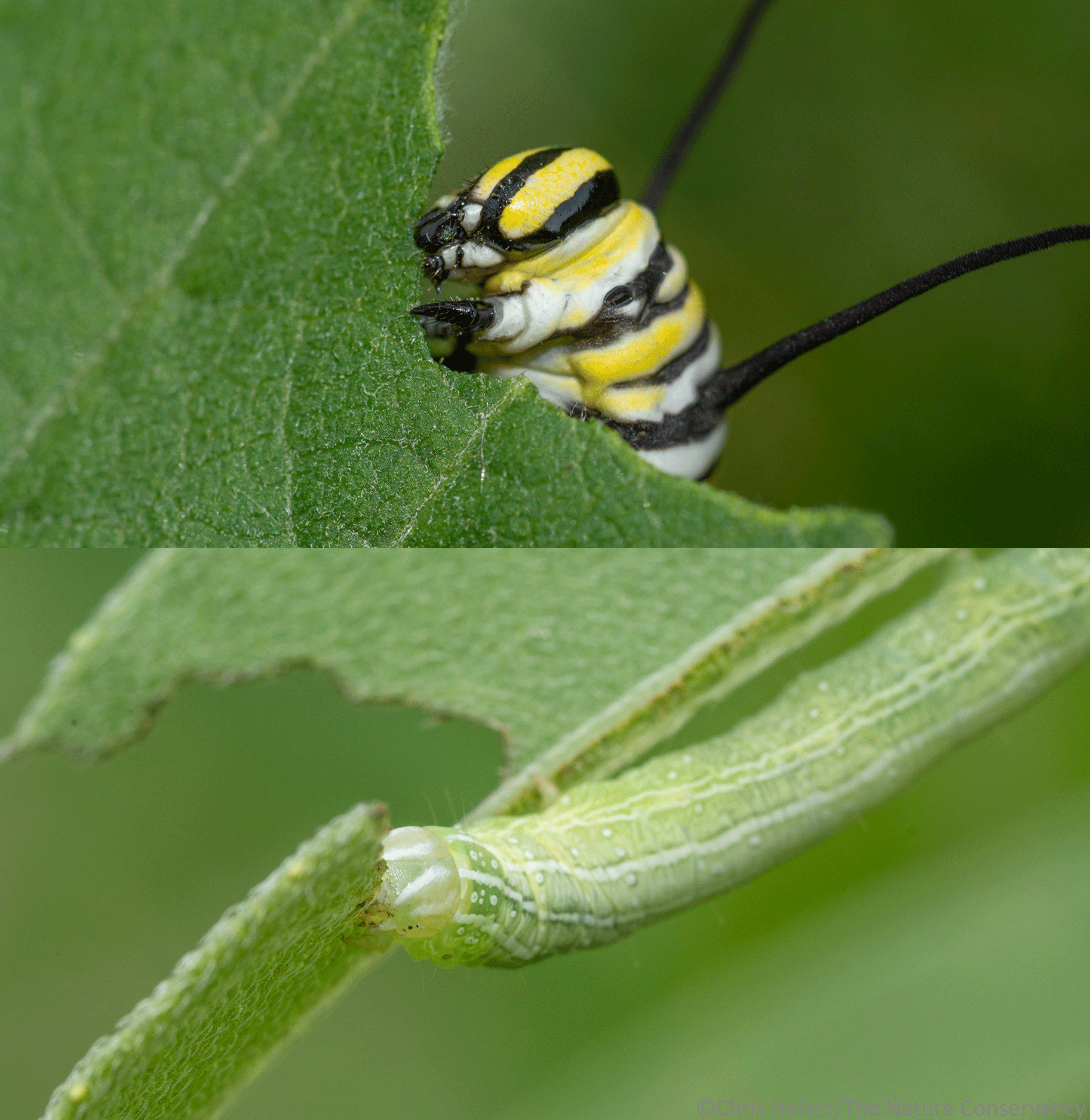
We happily plant milkweed so monarch caterpillars can ravage their leaves but tend to be bothered by other kinds of caterpillars chewing on yard/garden plants, including whatever the bottom caterpillar here is. I bet the second caterpillar is a more important food source for birds and other creatures (if nothing else, because it doesn’t taste like milkweed’s toxic latex).

Those of us who are lucky enough to influence plant and animal communities on small parcels of land should feel an obligation to use those parcels for good.  Plantings for pollinators is a good first step, but why can’t we apply that intent more broadly?  The presence and diversity of insects should be a measure of success, not a cause for concern. 

Now, because you’re already thinking it, I agree that food production is a special case.  If you’re trying to grow your own food, I understand the frustration of losing a crop to insects.  However, there’s a big difference between ‘cosmetic damage’ and total destruction.  Kale leaves with holes in them are still perfectly edible, and losing a few zucchini plants to vine borers – let’s be honest – often turns out to be a blessing later in the summer when we’re buried by the mountains of zucchini produced by the surviving plants.

As Kim, the gardener in our household, says, “If you think you’re going to have complete control of everything in a garden, you’re just setting yourself up for disappointment.”  A big part of gardening is watching and learning from what happens in a dynamic environment.  That process can be just as important and enjoyable as harvesting and eating tomatoes or green beans. 

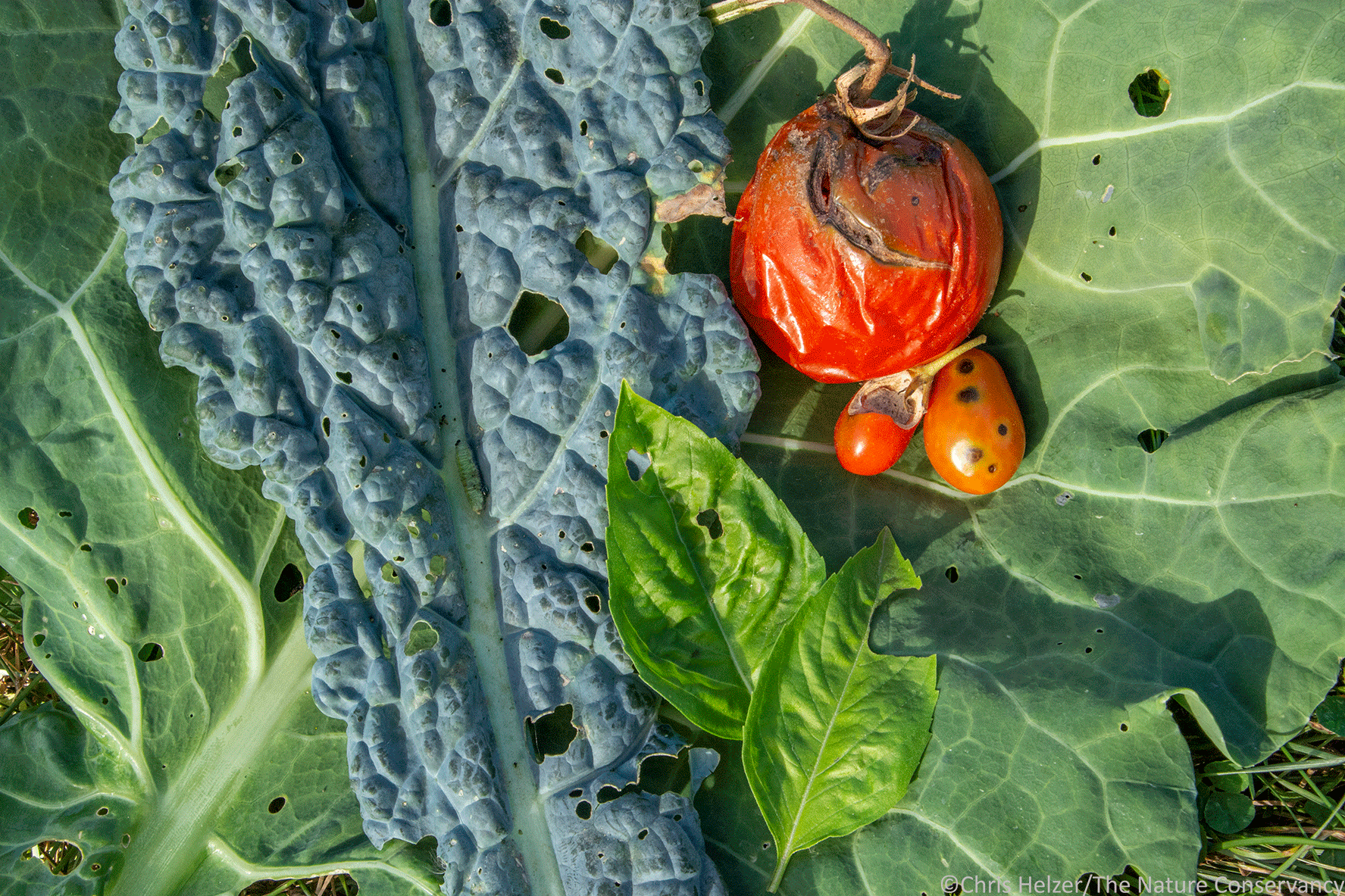
“Damaged” produce from our garden, including collards, kale, basil, and tomatoes. All have evidence of feeding by insects, but we are still getting plenty of food from each of these crops.

Every gardener has to make their own decisions about when/if to control insects on their crops, but some degree of tolerance should be part of that process.  Few of us rely on the food from our gardens for our survival, after all.  Viewing gardens as part of an ecosystem, rather than as a machine for creating perfect food, makes gardening a much more pleasant experience.

Now, having said that, there are some truly invasive insects that we should be treating as such.  Japanese beetles have recently entered our area of the country, and they’re no joke.  Other non-native insects like gypsy moth, spotted lantern fly, and emerald ash borer cause lots of damage too.  These insects are largely problematic because they haven’t been part of the ecosystem very long and aren’t part of the checks and balances.  Most native insects have predators, parasites and parasitoids, as well as disease organisms, that target them and suppress their populations.  Invaders work outside that system of control. 

Japanese beetles are spreading quickly across the U.S. and don’t seem to have an array of other species that act to suppress their populations.

Some of those invasive species came to the U.S. accidentally, but we’ve been our own worst enemy in other cases.  Asian ladybugs and Chinese praying mantises, for example, were both introduced as ‘beneficial insects’ before becoming established as invasive species.  Not only do we insist upon categorizing our insects as either ‘beneficial’ or ‘pests’, we go looking abroad for new species to tip the scales against those pesky insects that dare eat our plants.

The vast majority of insects in our yards, though, are native species with important contributions to the world around us.  If you’re fortunate enough to have a house with yard and/or garden, please consider your options carefully.  Why do you enjoy having that yard?  If the answer is that you just want it to look good for the neighbors, you’re missing out on a tremendous source of potential joy. 

Watching and admiring the intricate relationships between insects, plants, and other animals is endlessly fascinating.  In addition, you can make significant contributions to conservation in your yard, simply by aiming your efforts toward providing resources for nature.  Seeing birds at feeders or bees on flowers are only two examples of ways in which you can feel good about your yard’s impact.  In addition, while your plot of land might be small, collections of yards quickly add up to areas of habitat that matter in a very reason sense.

I loved learning this spring that false milkweed bugs feed on false sunflower seeds (shown here). I learned that because it was happening in my backyard prairie garden.

If you lean into the idea that you’re creating habitat for as many species as you can, success comes easily.  Instead of worrying about what’s eating your plants, you’ll start to notice which plants attract the most caterpillars or grasshoppers.  Then, you’ll notice where the crab spiders or assassin bugs like to hang out, trying to take advantage of that abundance of prey.  Birds will appear too, catching those insects to feed their families or fuel their migration flights.  A complex mass of dynamic interactions will be taking place literally in your back yard – and you’ll have a front row seat. 

Can we please stop trying to categorize insects as either beneficial or pests?  Let’s set ourselves up as providers instead of protectors.  A yard can be a place to relax and enjoy your own piece of the world, so why not make that piece as interesting as possible – and help out the world at the same time?  

And yes, garden gnomes are welcome too.