
Katydids are a diverse group of species – about 243 different species reside in the U.S. and Canada. We have about the same number of katydid species as we do grasshopper species in our Platte River Prairies, but grasshoppers tend to grab a lot more attention. In fact, katydids are often called “long-horned grasshoppers”, though they’re actually much more closely related to crickets than grasshoppers. Katydids are often difficult to see because of their camouflaged appearance, but it’s impossible not to hear the distinctive songs they make by rubbing their front legs together – especially in late summer.
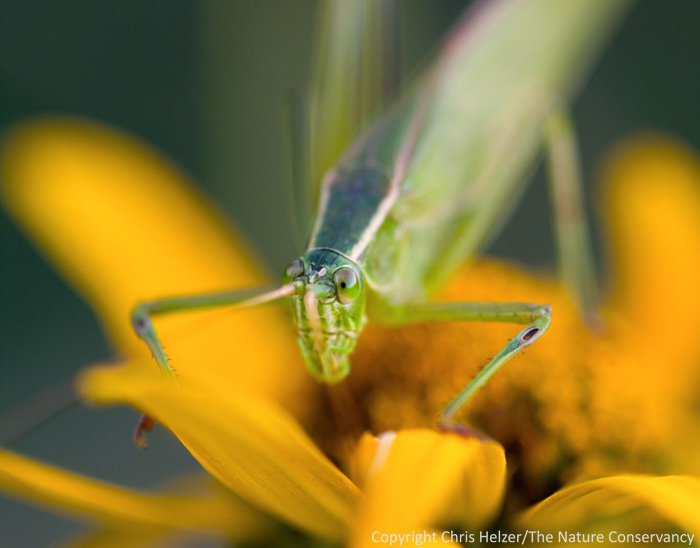
Katydid on false sunflower. Sarpy County, Nebraska.
In the above photo, you can see the tympana on the katydid’s front leg – right below its “elbow”. The tympana is the hearing organ katydids and crickets use to hear the songs of others of their kind.
Telling grasshoppers and katydids apart is usually as easy as looking at the antennae (see below). Grasshoppers have short antennae – much less than the length of their bodies. Katydids have very long antennae that usually exceed their body length.
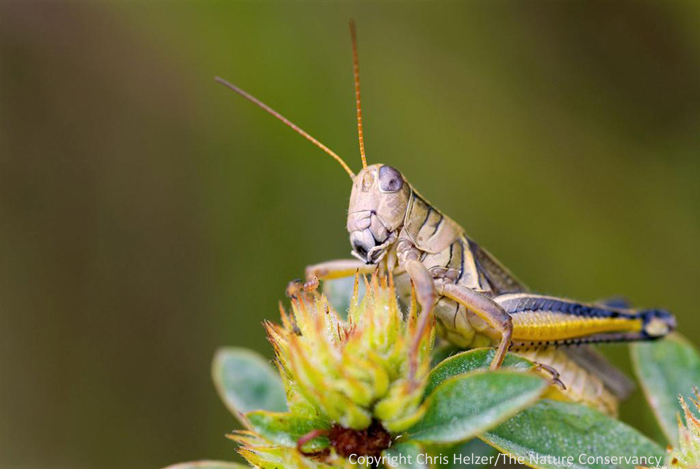
A grasshopper showing off its short antennae.
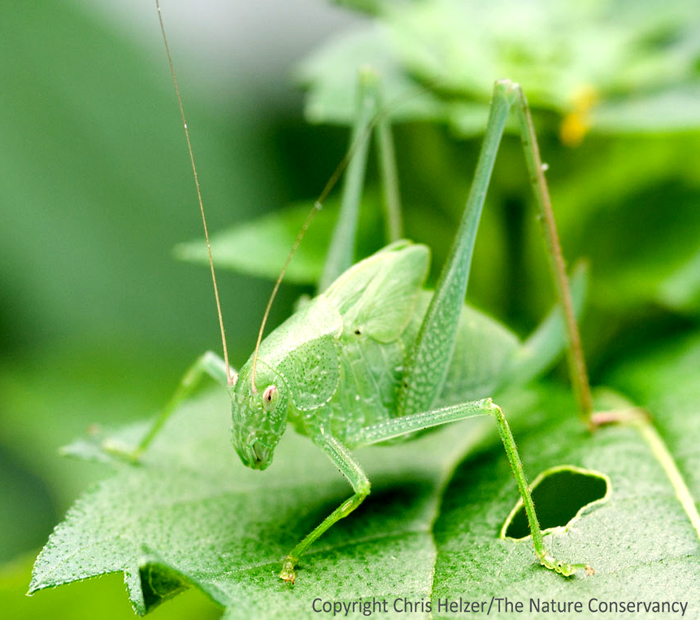
A katydid nymph (hence the short wings) with its long antennae - long enough I didn't capture their entire length in the photo.
 The Prairie Ecologist