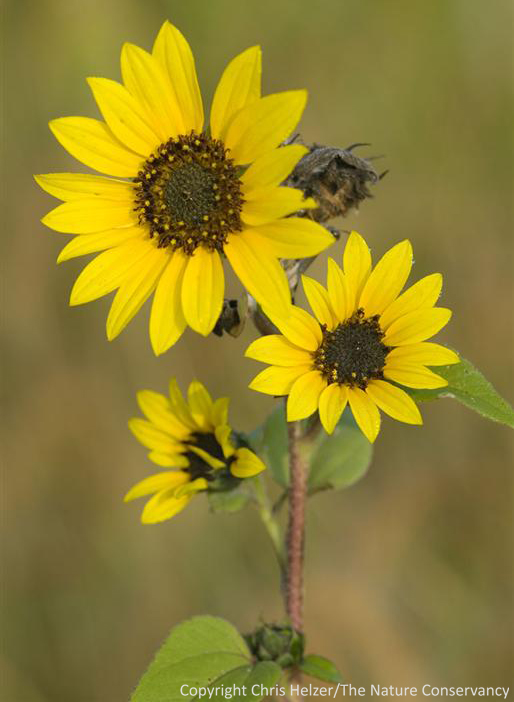
Do you suppose we’ll run out of wildflowers before the summer’s over?
I’m only half kidding. With the extraordinarily warm winter and spring we’ve had, it seems like everything is way ahead of schedule this year, and I really do wonder what will happen as the season progresses. Most wildflowers are blooming between two and four weeks earlier than average this year. A few individual plants are even further ahead than that, including the switchgrass plant I saw blooming last week and the patch of flowering Missouri goldenrod I saw yesterday. Dan Carter at Kansas State University wrote last week to say that in Kansas he’s seen big bluestem blooming – and even heath aster. Now that’s just crazy.
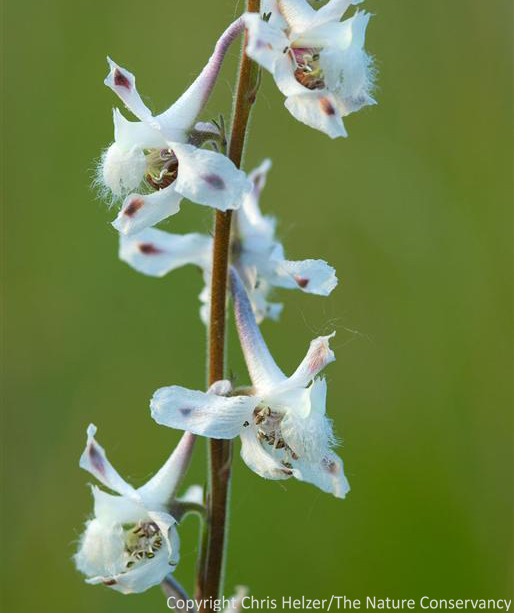
I photographed this prairie larkspur flower on June 18, 2009. This year, larkspur has already been blooming for a couple of weeks, and looks like it will be done before the 1st of June.