Prairie Noise

I just finished a great but very long day at the Niobrara Valley Preserve.  We were collecting sweep net data and counting flowering plants to evaluate the impacts of various fire and grazing treatments.  There was a lot of action in the prairie – an up close encounter with a pronghorn mother and twins, coyotes calling to each other just over the hill, 5 species of prairie clover blooming, wasps and bees everywhere, and loads of robber flies and assassin bugs going after those wasps, bees, and other insects.

However, what was most noticeable in the prairie today was the sound of cicadas.  The really loud incessant sound of cicadas.  They were calling to each other from perches on grasses, wildflowers, and shrubs, and flushing in front of us all day as we moved through the grassland.  The cicadas were most abundant and noisy in the depressions between hills, where they were protected from the moderate breeze.  I snuck up on one to get some video of it and then realized that I hadn’t yet figured out how to use the video function on my new camera.  After that cicada flew away unphotographed, I figured out the video function and then stalked a few more cicadas until I found one that let me get close enough to get both photographs and videos of it.

Often incorrectly called “locusts”, cicadas are pretty common during the heat of the summer, and they come in a variety of species.  As with many other animals, the males make loud sounds to attract females.  When a bunch of them are calling simultaneously, the sound can be incredibly loud, especially for such small insects.  Here’s a quick video from today:

Photo of the Week – July 14, 2017

We had a great time at the Grassland Restoration Network meeting at Konza Prairie this week.  The long-term research going on there is phenomenal, and we were blissfully overwhelmed with knowledge and data about prairie ecology.  I will try to synthesize some of that information into a blog post or two, but it might take me a while to digest it and figure out how to share it.

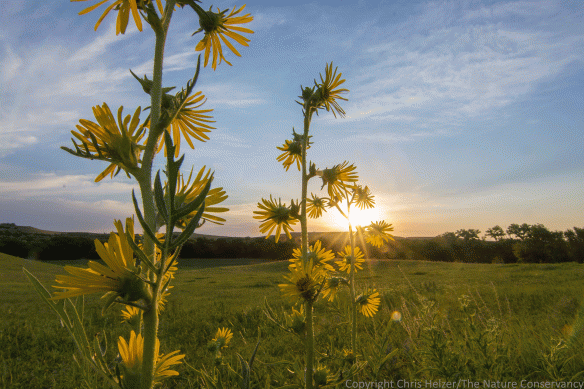
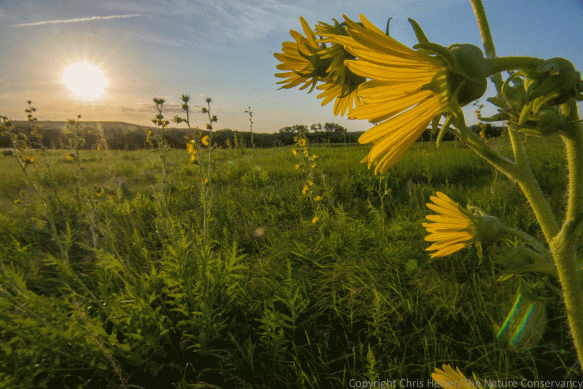
Compass plant at sunrise

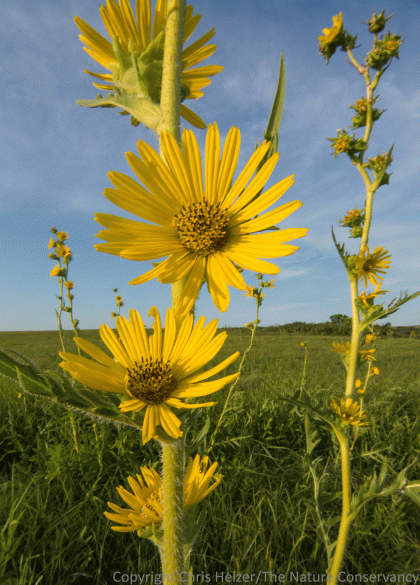
In the meantime, one of many highlights of the trip for me was the hour or so of early morning photography I managed to squeeze in right around the headquarters of Konza Prairie.  As the sun came up, I wandered around prairie full of compass plant (Silphium laciniatum), a plant that sorta looks like, but isn’t, a tall sunflower.  There were lots of other plants and animals around too, but compass plant was clearly the star of the show, standing at least three or four feet taller than the surrounding vegetation and blooming audaciously.  It was hard to point my camera toward anything else.  As a result, today’s post is a kind of tribute to compass plant…

A blooming compass plant is surrounded by the huge beautiful leaves of non-blooming companions.

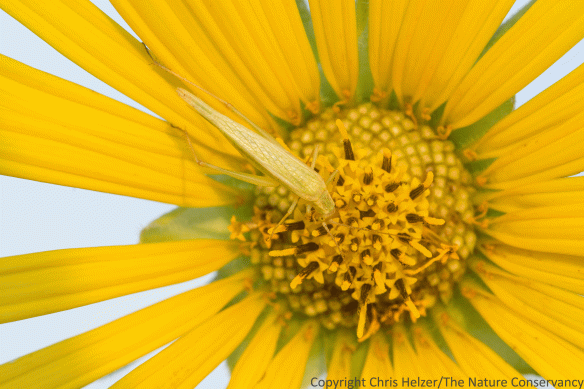
This tree cricket was one of many creatures, including lots of bees, enjoying the pollen of compass plant flowers.

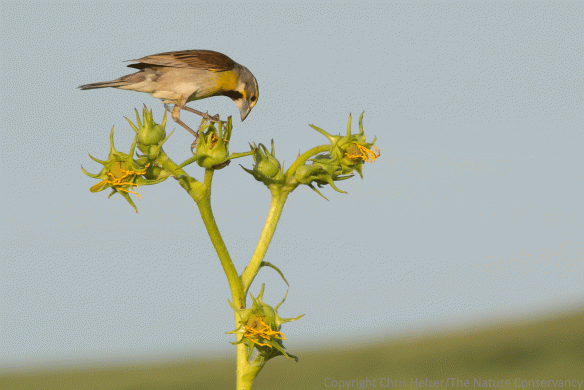
Dickcissels were using compass plant as singing perches, but occasionally seemed to be feeding on them as well (or maybe just trying to get the sticky rosin off their feet – I couldn’t really tell.

Few of our prairies in central Nebraska have compass plant – we’re on the far western edge of its range. It’s too bad. Compass plants add a great architectural structure to prairies that the sunflowers and other tall plants in our prairies don’t quite achieve.