I was looking through a couple batches of winter photos from recent years and found some images I’d never posted here. Since my camera hasn’t left its bag in the last week or so, I’ll post a few of those old photos today.
So – I hereby present:
“Miscellaneous photos I didn’t previously feel were worthy of posting but are better than nothing.”
Or maybe, “I bet you’ve never seen THESE photos before!”
Stiff sunflower (Helianthus pauciflorus) buried in snow. Aurora, Nebraska.
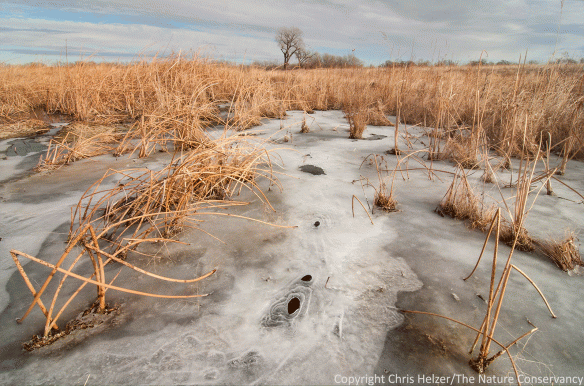
Frozen stream/wetland. The Nature Conservancy’s Platte River Prairies, Nebraska.
This post was written by Evan Barrientos, one of our Hubbard Fellows.Evan is a talented writer and photographer and I encourage you to check out his personal blog. If you would like to see more of his photographs, you can follow him on Facebook.
LeConte’s Sparrows are one of the most secretive sparrows in North America. Until this October I had only caught glimpses of two before. But last fall it seemed that while migrating through Nebraska these birds drop their reclusive habits and adopt the friendliness of rural Nebraskans. Two hundred yards from my house is a wetland that was restored by The Nature Conservancy, and as I birded it last October I was stunned to repeatedly find multiple LeConte’s Sparrows feeding in the tall wetland vegetation. Not only were they numerous (up to 7 at a time!) but they were also curious and approached me! As far as I know, LeConte’s Sparrows are not known for doing that. I took many walks reveling in this rare bird bonanza and even was even able to record a few videos of this gorgeous wetland recluse. I always wondered why this species had an orange coloration, but after seeing them in dry, yellow cattails bathed in the golden light of sunset I finally understood.
LeConte’s Sparrows breed in wet meadows of central Canada and the northern edge of midwestern U.S. Their remote location and preference to remain under cover of dense vegetation make them a notoriously difficult species to observe. In fact, their nest wasn’t documented until 100 years after the bird was first seen by Europeans. Each fall they discreetly migrate south through the U.S., occasionally delighting birdwatchers by exposing themselves, until reaching southeastern U.S., where they spend the winter. I look forward to seeing if they’re as friendly on their return trip in spring!
The restored wetland where I found several LeConte’s Sparrows last October.




 The Prairie Ecologist