The Great Thing About This Blog

Ok, here’s something I really love about this blog.  There are more than 1,400 people who subscribe, and quite a number of others who check in regularly.  That group of readers includes quite a few experts in various natural history and biological fields, which means that just about any question I pose can be answered.  And quickly!

Anne Stine posted some photos of insect eggs this afternoon, wondering what they might be.  It took less than THREE MINUTES for the first response to come back – including a link to more information.  A second response that confirmed the first came three minutes after that!  (A big thanks to Karen and Paul for being on-the-spot and helpful!)  Ah, the power of an intelligent and networked group of biologists!

On the other hand, having a large group of readers who are biologically-informed also means that when I post something about never having seen an otter in Nebraska, there is NO SHORTAGE of people who are just tickled pink to share happy stories of their own sightings… Gee, thanks.

P.S. – Anne’s mystery insect eggs belong to a native species of praying mantis.  Just so you know.
Hubbard Fellowship Blog – Mystery Eggs


A guest post by Anne Stine, one of our Hubbard Fellows.  All photos are by Anne.

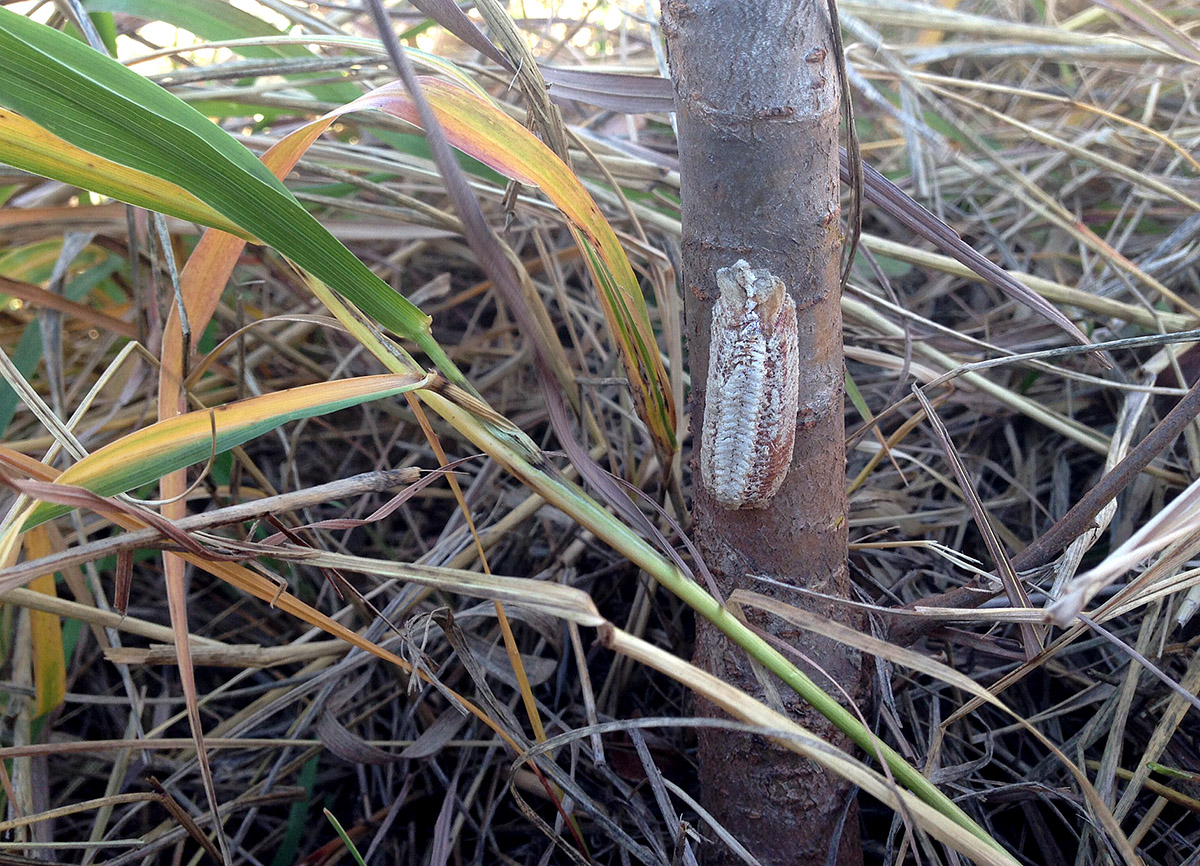
A couple of weeks ago (in mid-October) I noticed unusual egg cases about 2-3 inches off the ground on the base of Siberian elm saplings in one of our more tree-infested tracts.  I noticed the casings because I was basal bark treating their hosts. The placement of the cases and the size of the host trees were pretty uniform.  The egg cases themselves look like limpets and are about 1 cm wide by 2 cm long.  I know they’re egg cases and not cocoons because I snapped one open to see what was inside.

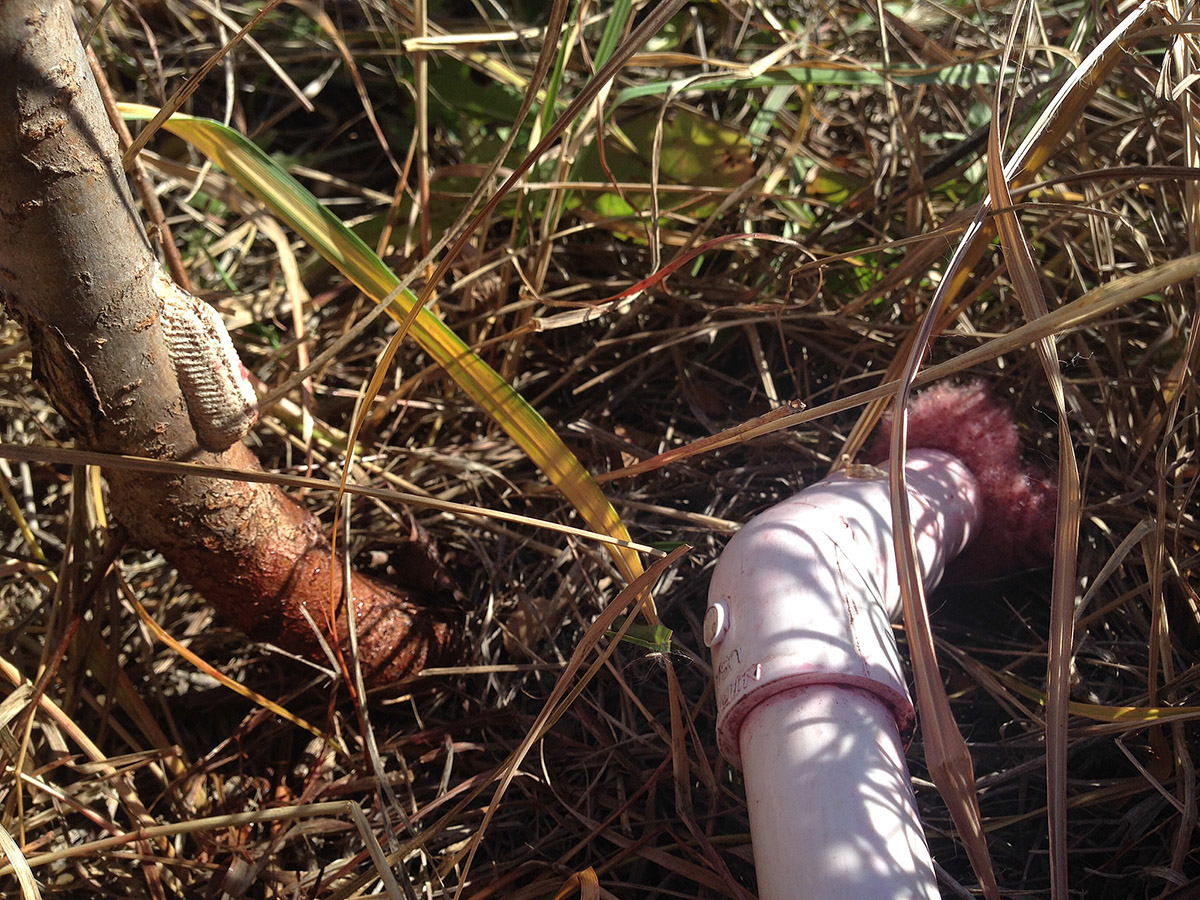
Egg case, with PVC kill-stick for scale.

Egg case, with PVC kill-stick for scale.

What species are these mystery eggs, and do they parasitize Siberian elms? If anyone has answers to these questions, I’d like to hear them.  It would be great if SOMETHING ate Siberian elms.  Combating invasive/aggressive trees is a major task here on the prairie. Deciduous trees are especially hard to kill.  Their root reserves make them more resistant to fire, and they sucker when girdled.  Because of these limitations, basal bark treatment (kill-sticking) in combination with removal of parent trees is often the most sensible course of action. Kill-sticking is problematic because it is extremely time consuming, and is ineffective on large saplings with thicker bark.  Here’s hoping these little eggs grow up to be hungry adults with a taste for elm!

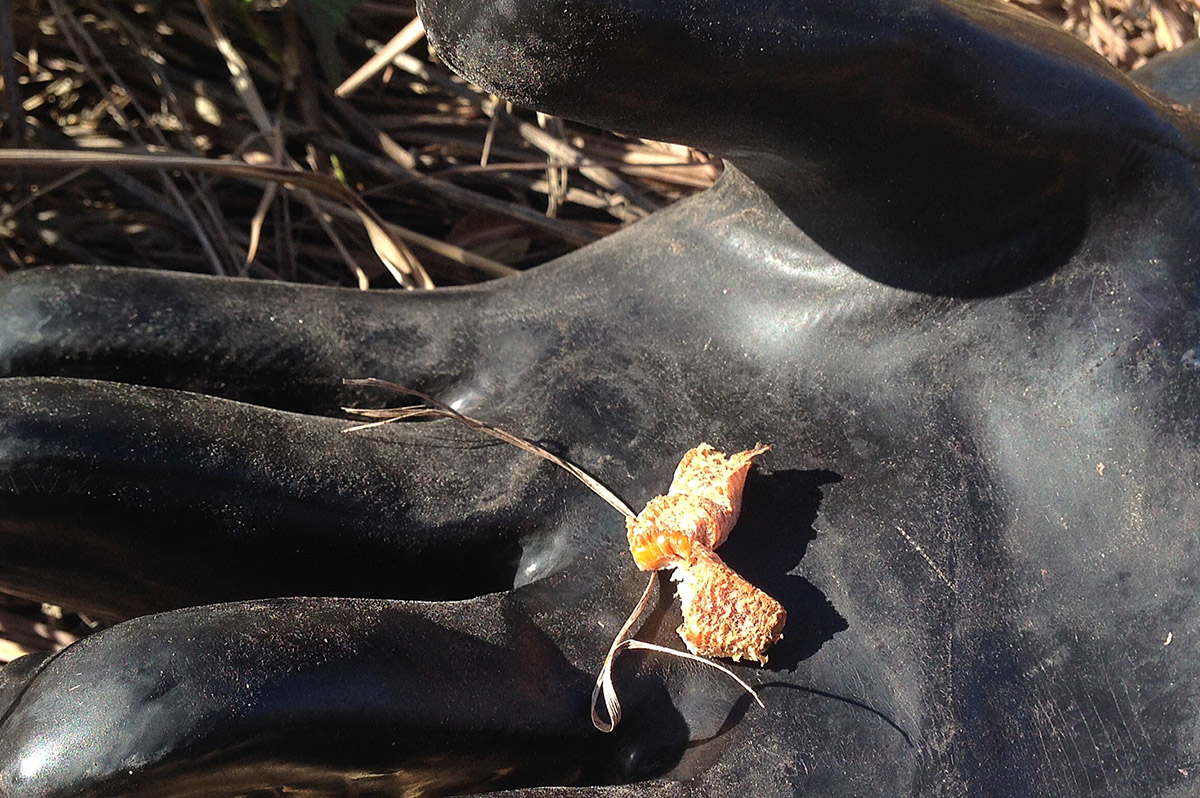
Open egg case on rubber herbicide glove (for science!). Back-side up.

Open egg case on rubber herbicide glove (for science!). Back-side up.

.

Egg case frontal view.

Egg case frontal view.

.