Ruminations on Tree Planting and Prairie Conservation

Trees are great, but trees in and around prairies can negatively impact habitat quality for many grassland plant and animal species and provide points of introduction for invasive species.  Encroachment by trees has become a major threat to prairie conservation in many landscapes.  

A few months ago, I cut across the courthouse lawn on my way home from the office (I was walking – it’s a small town).  On the west side of the courthouse, there are a number of statues and other monuments memorializing veterans of various wars.  In the midst of those, however, is a very different kind of memorial (pictured below).  This plaque-on-concrete memorial got me thinking – yet again – about our relationships with trees, our desire to plant and care for them, and how that affects our former, current, and future relationship with prairie.
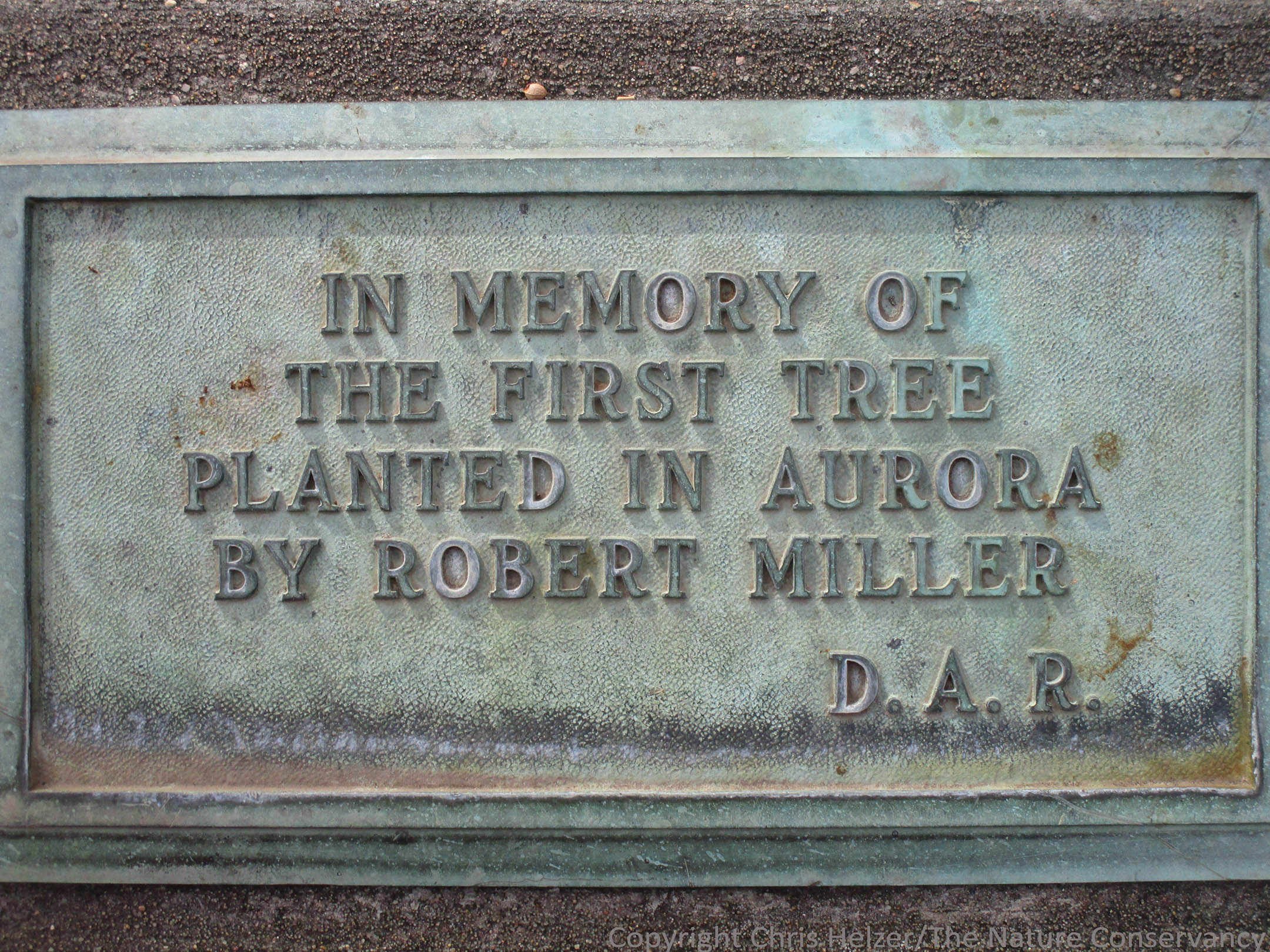
We love trees so much, we use them to memorialize important events and people in our lives.  Sometimes, we then create memorials to honor people who plant trees!

We love trees so much, we use them to memorialize important events and people in our lives. Sometimes, we even create memorials to honor the trees and the people who planted them!

I live in Nebraska, home of Arbor Day.  Early European settlers of Nebraska were enthusiastic tree planters for both practical and aesthetic reasons; our legislature even designated us as “The Tree Planters State” back in 1895.  There were good reason for all that tree planting.  It’s certainly nice to have shade around one’s house and yard, and a grove of trees provides a valuable shield from strong winter winds for both homes and livestock.  In addition, early settlers found the open prairie lacked adequate wood for fuel and building materials.  However, despite the numerous practical uses for trees, I think most tree planting was and is done primarily as a way to make the landscape more visually appealing.  People just like trees.

This brings me to my contemplation of tree planting and prairie conservation.  Research has shown that when given a choice, people seem most attracted to the aesthetics of a savanna-like landscape – one with scattered trees and short grass.  That mindset is evident in the way we design our yards and parks.  Not only do we enjoy having trees, we really like to plant them ourselves.  We gain immense satisfaction from the simple act of digging a hole and plopping a seed or small seedling in the ground, knowing that we and future generations will be able to watch that tree grow skyward.  The trees we plant often become almost family members in the way we celebrate their growth and mark time by how big the trees were when such and such happened.
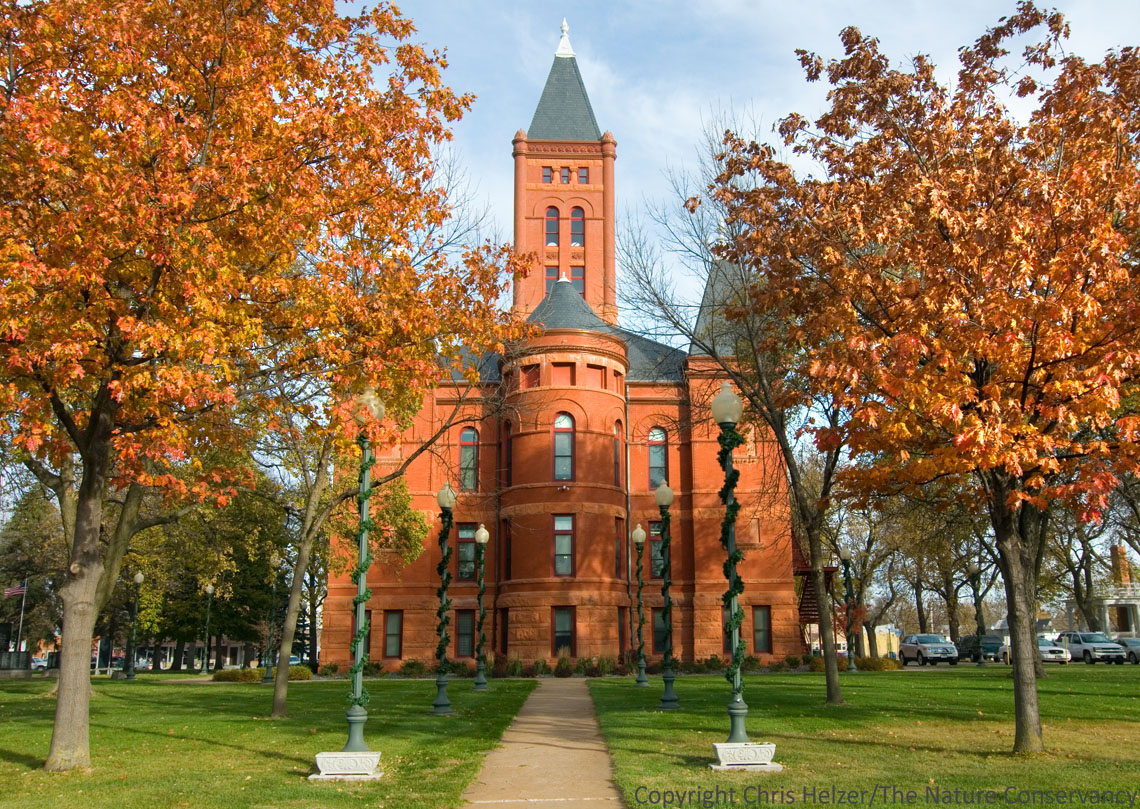
The landscaping around the Hamilton County, Nebraska courthouse (where the above plaque is located) is a great example of the kind of scattered trees/short vegetation landscape humans find aesthetically appealing.

The landscaping around the Hamilton County, Nebraska courthouse (where the above plaque is located) is a great example of the kind of scattered trees/short vegetation landscape humans find aesthetically appealing.

This brings up two issues for those of us working to conserve prairies.  First, we’re starting from a handicapped position when we advocate for prairie conservation because prairies are not what most people visualize when they think of natural beauty.  Given the choice between a treeless grassland and a park-like landscape dotted with trees, most people would choose the wooded park as a site to photograph, hike or picnic, or build a house.  In fact, there are countless examples in which people buy a small patch of prairie for a recreational property and immediately plant numerous trees to make it “look nicer.”  We really haven’t changed much from our European settler predecessors in that regard.

Second, we haven’t yet found a prairie-related analog to tree planting; a simple activity that creates something people can take ownership of, love and nurture.  Planting trees is so easy a child can do it, and with very little investment of time or money, someone can establish a couple trees that become treasured landmarks or memorials – – which further reinforces people’s love of trees and wooded areas.  In contrast, planting prairies is fairly complicated and requires more space.  It also takes a few years for a planting to grow out of its weedy phase and start to look like a prairie.  Prairie planting can certainly be rewarding, but it’s not nearly as simple, accessible, and instantly gratifying as tree planting.
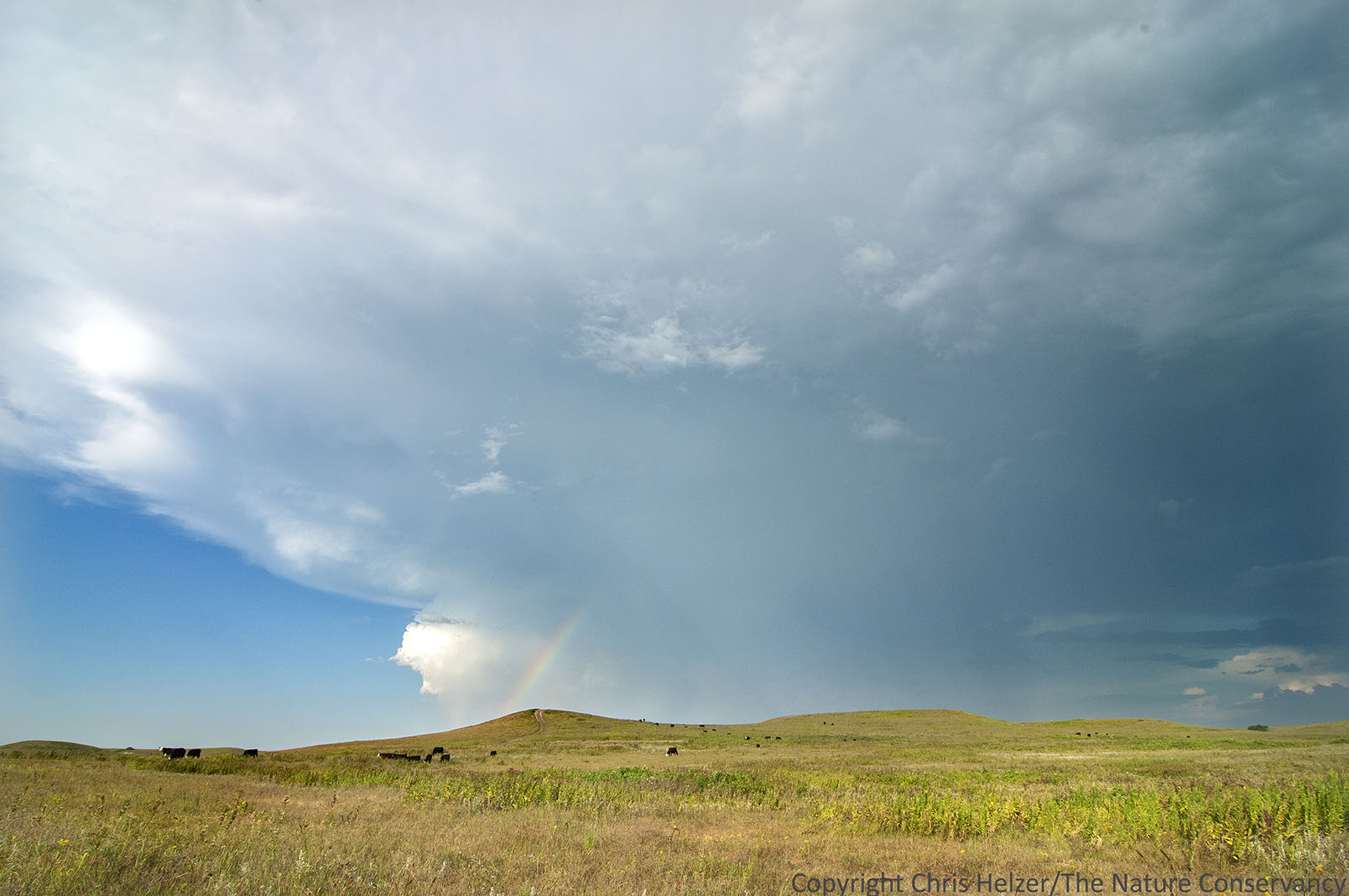
Many people find wide expanses of open prairie impressive, but not alluring.  How do we get people to care about and nurture landscapes and ecosystems they have to work to appreciate?

Many people find wide expanses of open prairie impressive but not alluring. How do we get people to care about and nurture landscapes and ecosystems they have to work to appreciate?

So how can we help people connect with prairies in the same way they connect with trees and wooded landscapes?  I don’t have all the answers, but here are a few ideas.

1) We need to encourage more people to spend time in prairies and make sure they enjoy themselves when they go. It can be a definite challenge to convince someone to take a walk in a prairie.  Even worse, when people do step foot in a prairie, many are unimpressed because they don’t really know what to look for or how to appreciate what they’re seeing.  As a result, they often walk away with an even less favorable opinion than before they came.  “It was just a lot of grass!  And I was pulling ticks off myself all night!”

A good naturalist and interpreter can lead someone on their first prairie excursion and make it a positive and thought-provoking experience.  There is no substitute for the expertise and enthusiasm of a good leader, but there aren’t enough of those people to go around.  Several Nebraska Master Naturalists approached me last year with an idea to create a “Prairie Exploration Guide” – a pamphlet/booklet designed to help newcomers to prairie see the beauty and complexity they might otherwise miss.  The guide is still in the development stage, but I have high hopes that it will be a useful tool when it’s done.

2) Using native prairie plants in landscaping is becoming increasingly popular. The public’s concern over population declines of bees and monarch butterflies is helping to spur the movement, as are issues such as water conservation.  There is no question that getting the public to buy, plant, and appreciate native prairie plants in their backyards is a major step toward building a prairie conservation constituency – and backyard prairie gardens also make real conservation contributions on their own.  Significant obstacles still hinder the movement, especially our cultural norms about what yards and gardens are “supposed” to look like, but I am optimistic about the future.

3) One successful method for engaging people in prairie conservation at our Platte River Prairies has been through seed harvesting. People identify with both the value of seeds and the idea of restoring lost habitats.  Harvesting seed is a tangible way people can contribute toward something important; they can measure that contribution by the amount of seed piling up in their buckets.  Ideally, harvesters come back and help plant the seed they picked, and then visit regularly to watch the prairie planting develop over time.
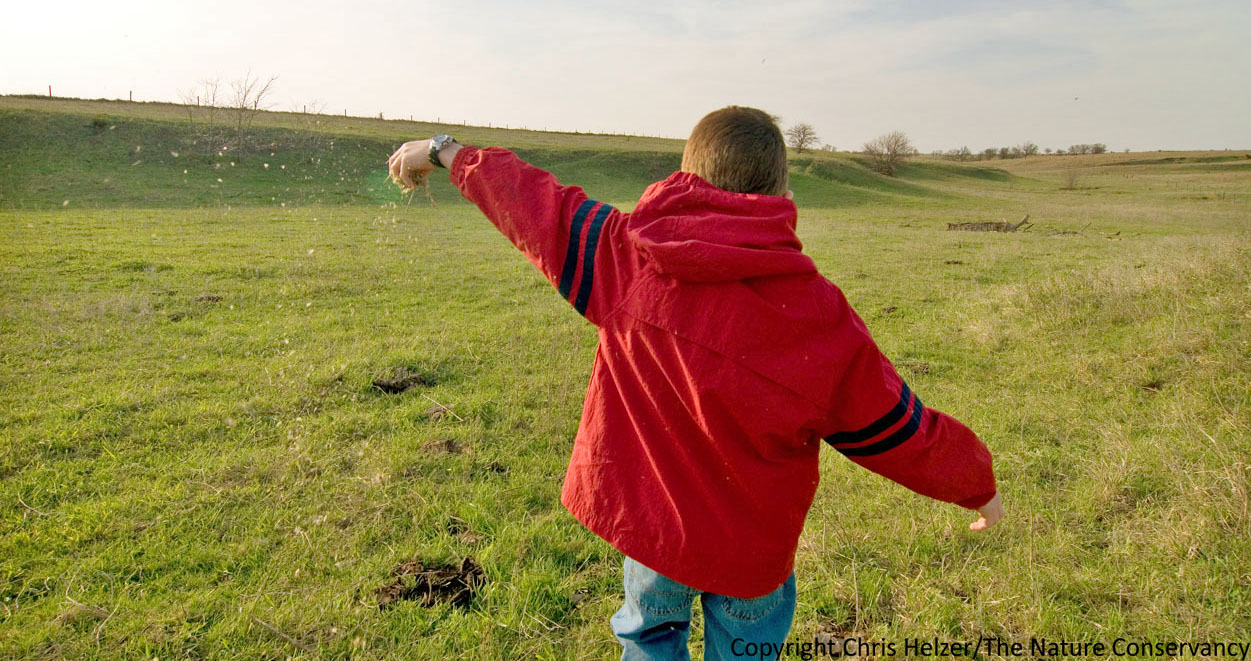
I hope that helping me harvest and plant seeds at our family prairie will help my kids develop a love for grasslands.

I hope that helping to harvest and plant seeds at our family prairie will help my kids develop a love for grasslands.

Along those lines, one of the most inspired strategies I’ve seen to engage people in prairie restoration was being done by Wayne Pauly in Dane County, Wisconsin.  I went on a tour of some of his prairie restorations back in 2004 and was very impressed with both his plantings and his involvement of volunteers. Most particularly I liked Wayne’s strategy of having volunteers “paint the prairie” with seeds during prairie plantings.  He’d give each volunteer a bucket of seeds of one prairie wildflower species and let them decide how and where to plant those seeds – allowing them to create a pattern or design of their choice (thus the idea of “painting”).  That is a brilliant idea, and one that should not only be fun on planting day, but should also draw those volunteers back in subsequent years to view the results of their work.

Humans have a long and strong relationship with trees, one that is likely embedded within our DNA.  Tree planting is an easy, accessible, and tangible way to contribute something to the natural world.  Unfortunately, tree planting doesn’t do anything to help prairies, and can sometimes be counterproductive if trees are planted in or near open grassland.  If prairie conservation is to succeed, we need to get the public excited about grasslands and combat the perception that prairies would look a lot prettier if they just had some trees growing in them.  More importantly, we need more strategies that actively connect people with prairies and give them the same sense of fulfilment they get from planting trees.  I think we’re getting better, but we have a long way to go.
What I Look For When I Walk Through My Prairies

Back in August, I posted some questions to readers about what they look for when evaluating their own prairies.  I got some excellent responses, which I really appreciated.  If you missed them, you can re-read that post and those comments here.

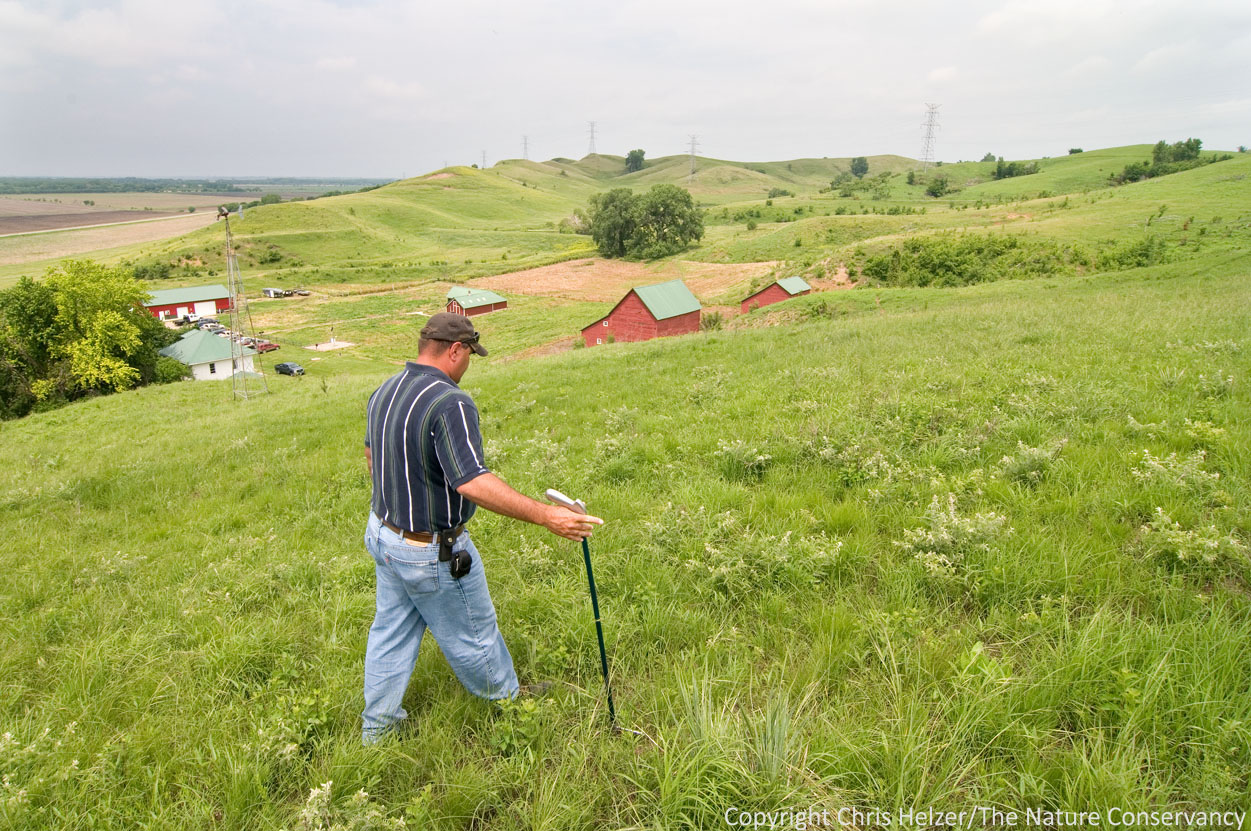
Walking around a prairie and getting a read on what's happening is probably the most important part of prairie management.  This is Scott Moats, The Nature Conservancy's Broken Kettle Grasslands, Iowa.

Walking around a prairie and getting a read on what’s happening is probably the most important part of prairie management. Scott Moats, The Nature Conservancy’s Broken Kettle Grasslands, Iowa.

As a follow up to that, here is more detail about what I think about as I walk around my family prairie, or one of our Platte River Prairies.  Of course, sometimes I just hike around and enjoy the day, but this post is about what I focus on when I’m evaluating our management and considering ideas for next steps.  We collect some relatively formal data on some sites, but most of our management decisions are really based on the kind of observation and evaluation I lay out here.  I’m certainly not trying to talk you into doing exactly what I’m doing – especially because what I look for is tied to my particular objectives, not yours.  Instead, I’m hoping that I might spark some ideas you can incorporate into your own decision making processes.

To start with, the basic objective at both my own prairie and those I help manage professionally is the same.  I want to provide a shifting mosaic of habitat structure patches (short, tall, mixed-height, etc.) so that the quilt pattern of those patches looks different each year.  I assume that a dynamic management regime like that will support high plant diversity because it doesn’t allow static conditions that allow a few plant species to become dominant.  I also assume that those shifting habitat patches will facilitate a healthy community of insects, birds, mammals, reptiles, and other life – above and below ground.  These are not blind assumptions; they are based on my own experience and research, along with that of many others.  (You can read more about those assumptions here.)

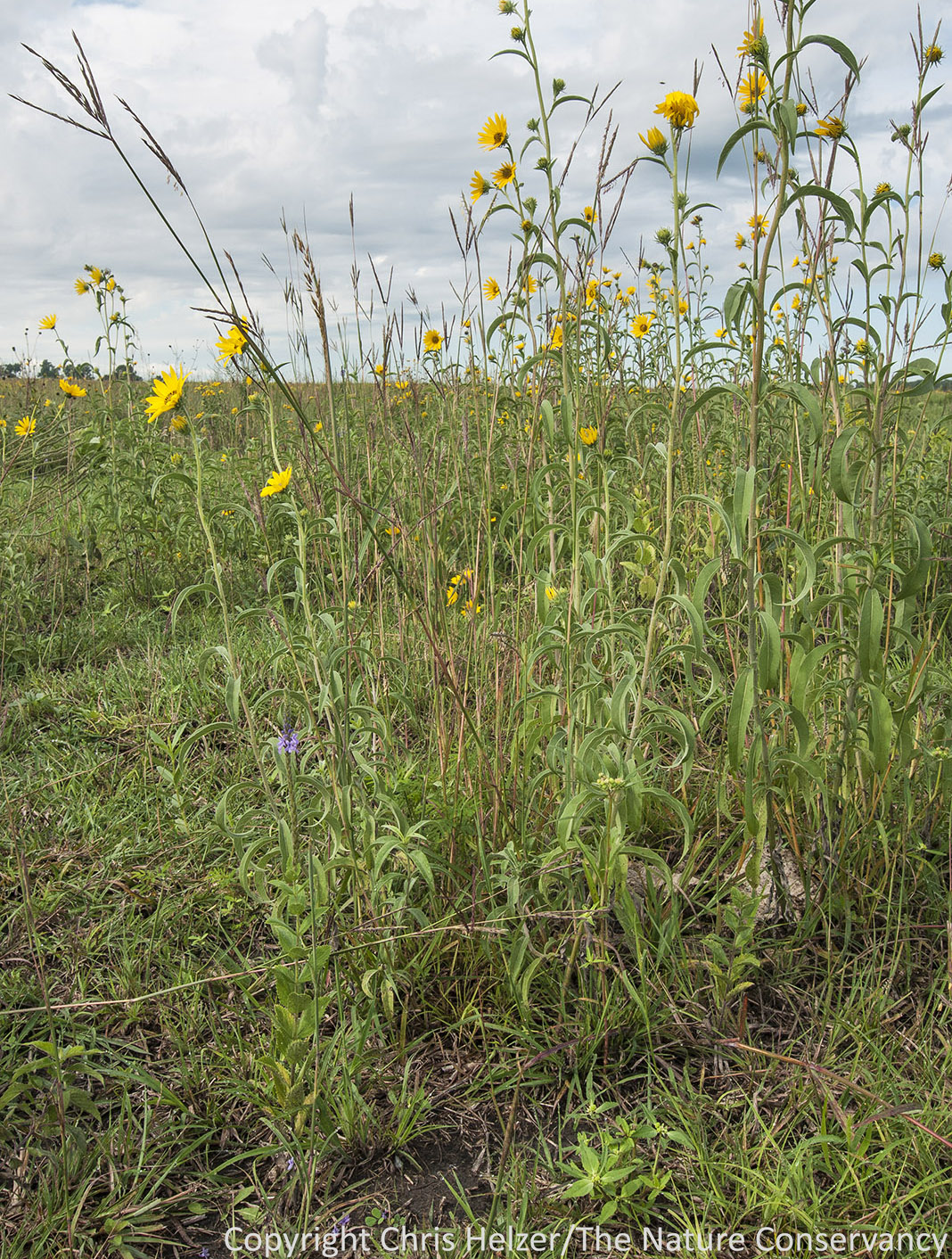
Grazing can create very important habitat structure such as this short grass/tall forb habitat at our Platte River Prairies.

Grazing can create very important habitat structure, including this short grass/tall forb habitat at our Platte River Prairies.  This habitat allows for easy movement along the ground, but provides plenty of overhead cover as protection from predators and the hot sun.

Not surprisingly, the first thing I look for, then, as I walk around a prairie is the pattern of habitat structure.  I hope to find the full range of variation, from tall and dense vegetation to almost bare ground.  Even more importantly, I want to see some of the important intermediate habitat types – especially short-cropped grass with tall forbs (wildflowers), which is incredibly important for many wildlife and insect species.  If I can find all of those habitat types, and they’re in different places than they were last year, I feel pretty good.

Next, I look at the plant community.  Plant diversity is an important foundation for invertebrate and wildlife diversity, so I want to see a rich diversity of plants as I walk around.  I also want to see that diversity at both large and small scales.  Across the whole prairie, I’d hope to find at least 100-200 plant species (though I certainly don’t count them every time) but I should also be able to count at least 10-15 plant species within arms’ reach if I kneel on the ground.  These numbers vary, of course, based on geography, soil type, etc., so they may or may not be reasonable at your particular site.

As I look at plant diversity, I want to see habitat patches with an abundance of “opportunistic” plants.  These are species that thrive in the absence of competition.  Depending upon your point of view, you might also call them “colonizers” or even “weeds”, but when they are abundant, it means that nearby dominant plants have been weakened.  We try to periodically knock back the vigor of dominant plants (especially grasses) through fire, grazing or mowing, to help less dominant plants maintain a foothold in the plant community.  A flush of opportunistic plants is an indicator of success because it shows that we successfully opened up that space and other plants are taking advantage of it – and not just the weedy ones.  Finding seed heads, and even new seedlings, of slower-to-colonize plant species (purple prairie clover, entire-leaf rosinweed, leadplant, etc.) within those weedy patches makes me feel even better.

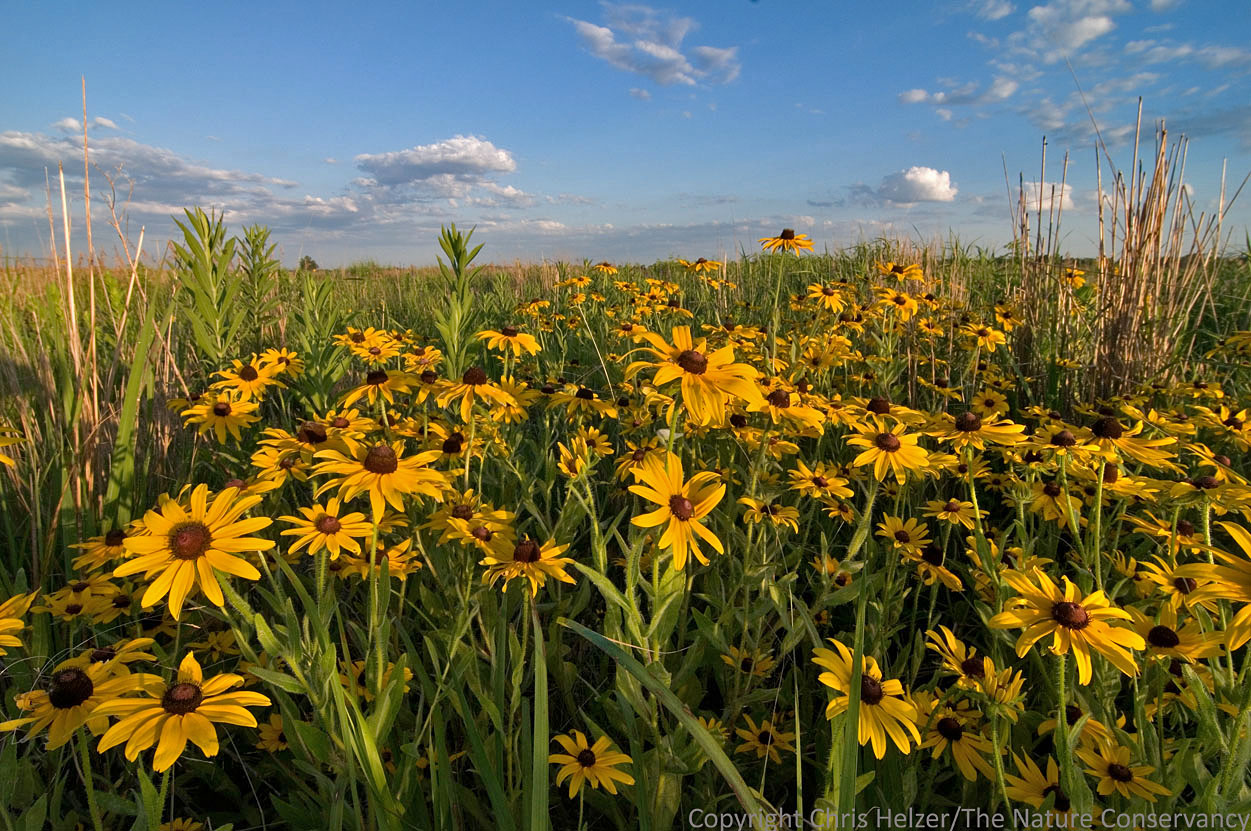
Black-eyed susan  is a showy example of an opportunistic plant species that thrives when surrounding vegetation is weakened.  Other species I look for include ragweeds, hoary vervain, annual sunflowers, ironweed, ragwort, annual thistles, and many others.

Black-eyed susan is a showy example of an opportunistic plant species that thrives when surrounding vegetation is weakened. Other  opportunists I look for include ragweeds, hoary vervain, annual sunflowers, ironweed, ragwort, annual thistles, and many others.

In sites where cattle are present, I spend time looking at what they’re eating and not eating, as well as which parts of the prairie are being grazed most and least.  In our patch-burn grazed prairies, we expect most grazing to take place in recently-burned areas, so I check to see if that’s happening.  Often, cattle target their favorite grass species first and then graze wildflowers only if they’ve already eaten the best parts of those grasses.  If I see something other than that pattern, it can tell me a lot about our stocking rate or other issues – not necessarily in a bad way.  There are also a few plant species that our cattle can’t seem to resist (some milkweeds, rosinweed, Canada milkvetch, and spiderworts) and we like to make sure those species get a release from grazing pressure every few years.  As a result, I pay special attention to whether or not – and how intensively – those plants are being grazed.  If I notice that they haven’t been allowed to grow and bloom for a few years, it’s time to change up our management and give them a rest.

The other group of plant species I look closely at is invasive species.  At our sites, invasive grasses such as smooth brome, Kentucky bluegrass, tall fescue, and others get special attention because of their ability to form monocultures, but there are plenty of others to watch as well.  I look not only at the current abundance and density of invasive plants, but also compare what I’m seeing to previous years to see how things are changing.  Finally, I pay attention to whether or not there are conditions that appear to be giving invaders an advantage.  For example, it would be important to know if cattle are grazing all the plants EXCEPT those invaders, allowing them to encroach upon weakened competition.

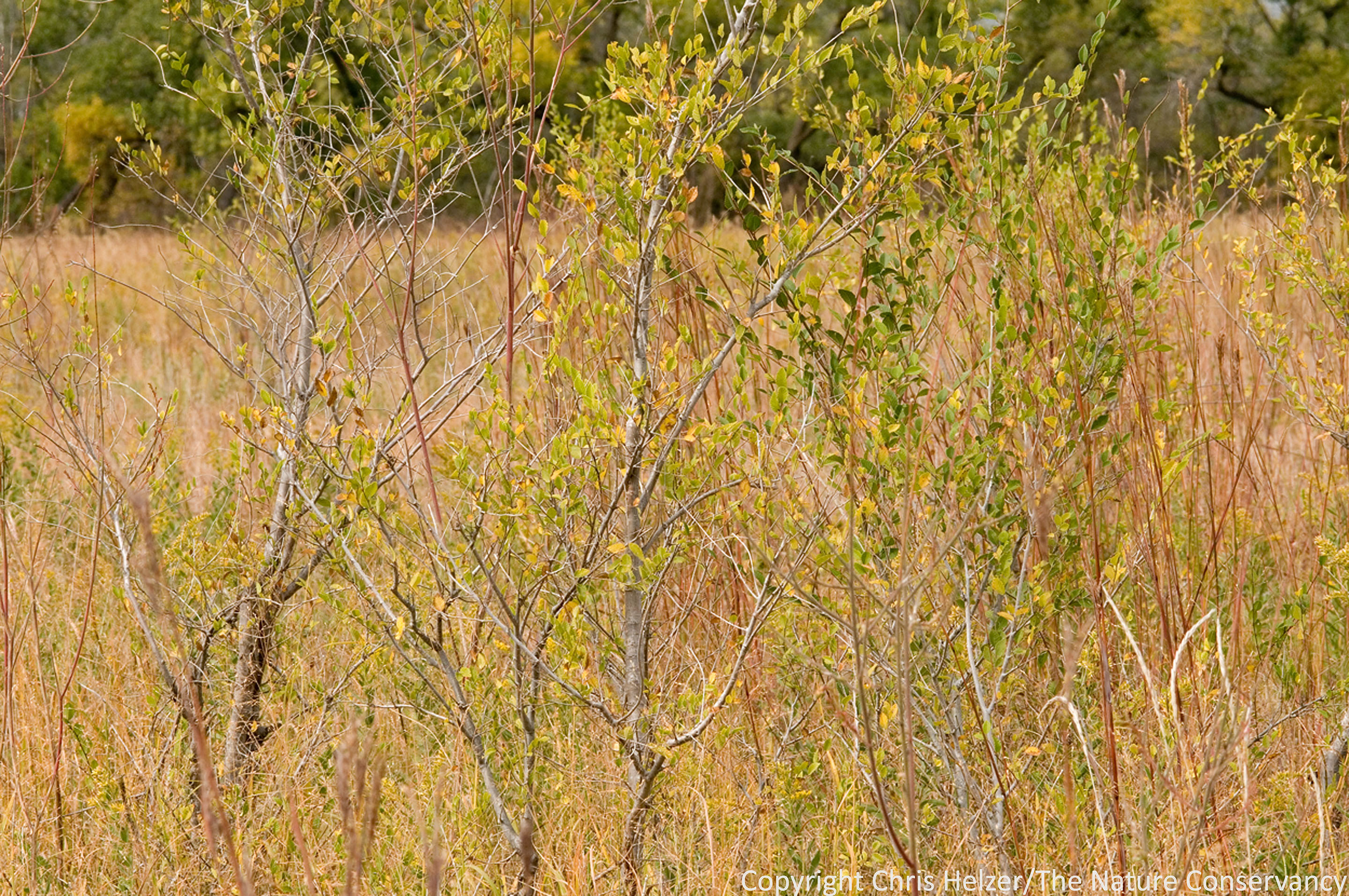
Siberian elm trees are a major pest in our prairies, and one we track closely and try to keep up with.

Siberian elm trees are a major pest in our prairies, and we have to be careful not to fall too far behind in our control efforts.

Field notes and photos are really helpful when trying to decide whether populations of invasive species are expanding or not.  They can also be helpful when comparing grazing impacts, responses from opportunistic plants, and other interesting phenomena.  I sometimes flip back to last year’s notes while I’m in the field to see if there’s anything I saw then that I should pay attention to.  Then, when I periodically enter my field notes into the computer, I can look at all the notes from other years and look for patterns.  I don’t take extensive field notes, but try to write enough to be useful.  (See here for more on field notes).

As I continue to learn more about the way various animal and invertebrate species see and utilize prairie habitat, I’ve gotten better at looking our prairies through the eyes of those species.  I wrote about wearing “bee goggles” a while ago, but I also try to step back and think about what life would be like in our prairies if I was a grasshopper, mouse, coyote, or other species.  Could I find food all year round?  Are there places to feed/hunt or hide/escape?  If the habitat I’m living in changed dramatically because of fire or grazing, would I be able to find and travel to other habitat nearby?  It’s a really interesting exercise, and helps me think about habitat needs in new ways.

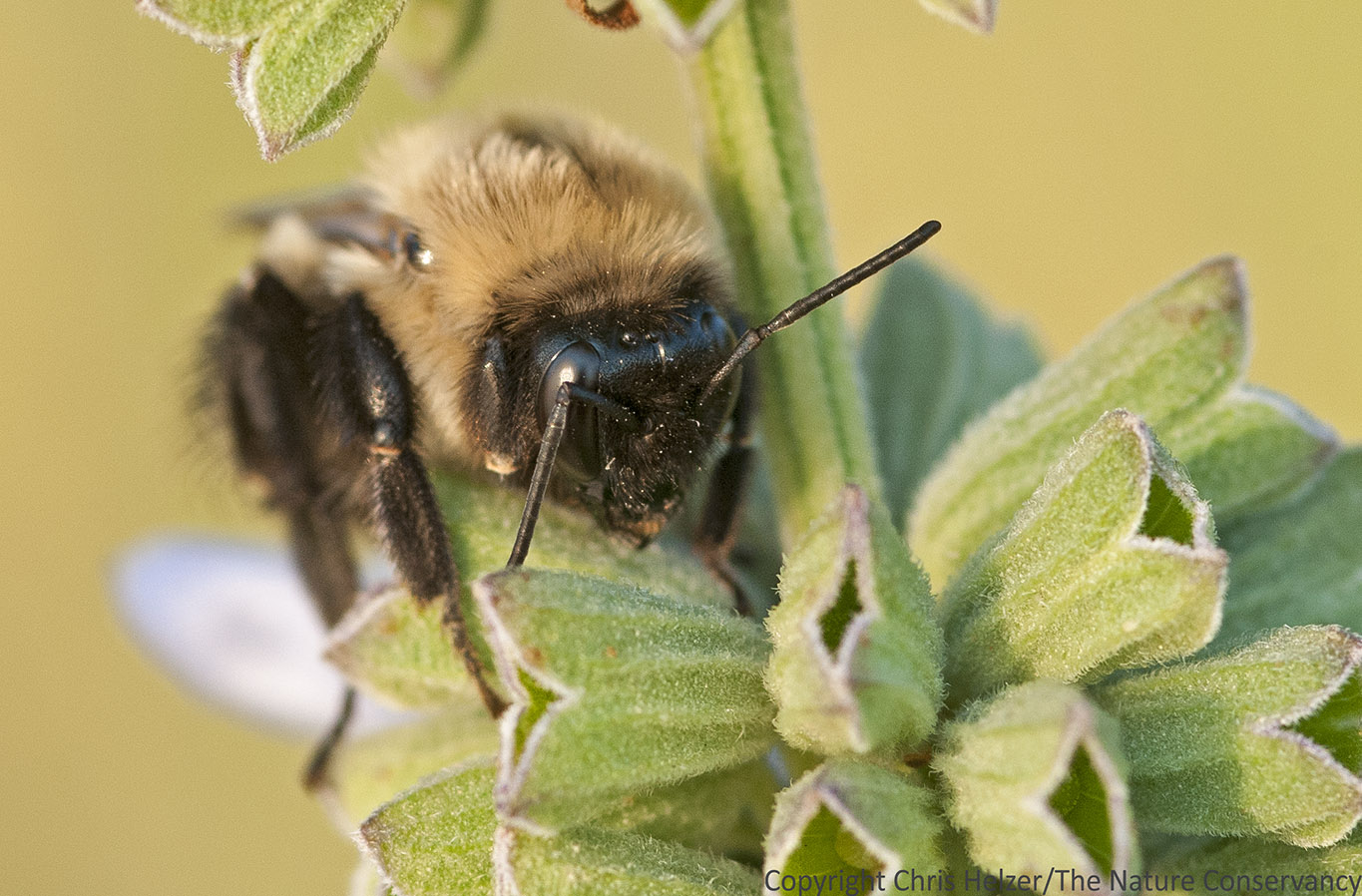
Looking at a prairie through (cute!) eyes of bees or other species is a great way to broaden your perspective.

Looking at a prairie through the eyes of bees or other species is a great way to broaden your perspective.

Finally, I try to look across the fences and note what is happening on neighboring lands.  In some cases, the prairie I’m walking in is the only real prairie habitat in the neighborhood, so it really needs to provide everything for every species living in it.  In other cases, there is more grassland habitat nearby, and I can think about how our prairie can help supplement and complement what’s available in those other sites.  For example, if all the neighbors graze pretty intensively, I might prioritize tall vegetation structure a little more than if that was the predominant habitat in the neighborhood.

So there you go – a quick look inside my head, for what that’s worth.  As I said at the beginning, what you look for should be tied to your objectives, but I also enjoy tagging along when other prairie managers walk their sites because I learn a lot from how they think.  I’d love to hear how similar or different my thought processes are from yours.